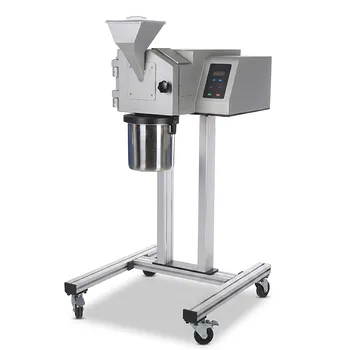
What role does a vertical bead mill play in the preparation of pharmaceutical nanocrystals? Enhance Bioavailability
Updated 4 months ago
A vertical bead mill is the primary mechanical engine used to transform bulk drug substances into stabilized pharmaceutical nanocrystals. It achieves this by using an agitation shaft to propel grinding media, creating high-energy collisions and intense shear forces that pulverize large drug particles down to the nanometer scale.
The vertical bead mill provides a high-efficiency, low-wear method for reducing poorly soluble drugs to the nanometer range, leveraging gravity for uniform media distribution. This process is essential for increasing the surface area of drug particles, which directly improves their dissolution rates and overall bioavailability.
The Mechanics of High-Energy Nanonization
Driving Media via Agitation
The agitation shaft within the mill transfers kinetic energy to small grinding beads, typically ranging from 0.1 mm to 0.6 mm in diameter.
These beads collide with the active pharmaceutical ingredient (API) at high frequencies.
This continuous energy input is the core driver required to overcome the cohesive forces of the drug particles, breaking them down into the nanometer range.
Particle Size Refinement
In pharmaceutical research, this equipment is capable of refining powders to precise sizes, often between 146 and 223 nm.
This size reduction is critical for creating a realistic physical model for subsequent experiments, such as studying desupersaturation in amorphous solid dispersions.
The resulting nanocrystals provide a significantly increased surface area, which is vital for the performance of poorly soluble drugs.
The Advantages of Vertical Design
Leveraging Gravitational Flow
The vertical orientation of the mill allows grinding beads to flow downward more uniformly within the grinding chamber.
This movement is naturally aided by gravity, ensuring a consistent density of grinding media throughout the chamber.
Uniform distribution prevents "dead zones" where particles might escape the high-energy grinding action.
Reducing Mechanical Wear and Contamination
The vertical design enables efficient grinding even at extremely low rotational speeds.
By maintaining efficiency at lower speeds, the mill significantly reduces mechanical wear on the internal components.
This is a critical advantage in pharmaceutical manufacturing, as it minimizes the risk of metal contamination in the final drug product.
Enhancing Drug Performance
Improving Dissolution and Bioavailability
The primary goal of using a bead mill is to enhance the dissolution rate of drugs that are otherwise difficult for the body to absorb.
By reducing the API to the nanometer scale, the mill increases the total surface area available for interaction with bodily fluids.
This process directly correlates to improved bioavailability, making the medication more effective for the patient.
Achieving Batch Uniformity
Industrial-scale vertical mills often utilize a circulation mode to process the drug suspension.
This ensures that every particle in the batch is subjected to the same level of mechanical energy.
Circulation also facilitates effective heat removal, which is necessary to protect temperature-sensitive pharmaceutical compounds.
Understanding the Trade-offs
Heat Generation and Stability
The intense mechanical forces required for nanonization inherently generate significant heat.
If heat is not managed through cooling jackets or circulation, it can lead to the degradation of the API or the destabilization of the suspension.
Maintaining the physical stability of the dispersion system is just as important as achieving the target particle size.
Media Attrition and Purity
While low rotational speeds reduce wear, they do not eliminate the risk of media attrition entirely.
Small fragments of the grinding beads can potentially break off and enter the drug formulation.
Selecting the correct bead material (such as yttria-stabilized zirconia) and size is essential to balance grinding efficiency with the required purity standards.
Making the Right Choice for Your Goal
If your primary focus is minimizing impurities: Utilize the vertical mill at low rotational speeds to take advantage of its gravity-assisted efficiency while reducing component wear.
If your primary focus is maximum dissolution speed: Choose the smallest possible grinding media (e.g., 0.1 mm to 0.2 mm) to achieve the highest energy density and the smallest possible particle size.
If your primary focus is industrial scalability: Implement a circulation-mode system to ensure batch uniformity and prevent localized overheating of the drug suspension.
By mastering the balance of mechanical energy and design efficiency, the vertical bead mill serves as an indispensable tool in modern pharmaceutical formulation.
Summary Table:
| Feature | Advantage | Pharmaceutical Impact |
|---|---|---|
| Vertical Orientation | Gravity-aided media distribution | Uniform particle size & low mechanical wear |
| High-Energy Agitation | Intensive shear & collisions | Precise nanonization (146–223 nm) |
| Low Rotational Speed | Reduced component friction | Minimized metal contamination & high purity |
| Circulation Mode | Continuous heat removal | Enhanced batch uniformity & API stability |
Achieve Precision in Your Pharmaceutical Formulations
To maximize drug bioavailability and ensure the highest purity standards, selecting the right nanonization equipment is vital. We provide complete laboratory sample preparation solutions for material science, specializing in advanced powder processing and compaction equipment.
Our extensive line includes high-efficiency vertical bead mills, planetary ball mills, jet mills, and rotor mills designed for sensitive API processing. Beyond milling, we offer a full spectrum of hydraulic presses—including Cold/Warm Isostatic Presses (CIP/WIP), XRF pellet presses, and vacuum hot presses—as well as sieve shakers and powder mixers.
Partner with us to refine your material processing and scale your research effectively. Contact our experts today to find the perfect equipment solution for your laboratory needs.
References
- Hironori Tanaka, Ken‐ichi Ogawara. Optimization of Milling Parameters for Low Metal Contamination in Bead Milling Technology. DOI: 10.1248/bpbreports.5.3_45
Mentioned Products
- Vertical Nano Bead Mill for Ceramic Materials with Permanent Magnet Motor and High Efficiency Grinding
- Horizontal Bead Mill for Nanoscale Grinding and Advanced Material Powder Processing
- Laboratory Horizontal Bead Mill for Nanomaterial Wet Grinding and Material Science Research
- Vertical Square Planetary Ball Mill for Laboratory Sample Preparation and Nanoscale Grinding
- Vertical Production Planetary Ball Mill for High Throughput Powder Processing
People Also Ask
- Why is it necessary to precisely control the grinding media loading ratio? Master Nanosuspension Yield & API Stability
- How does the bead filling rate affect the grinding performance and equipment wear in a bead mill? Optimization Guide
- Why is an external cooling circulation system necessary during the high-speed operation of a bead mill? Protect Integrity
- Why is a ceramic lining preferred over stainless steel for a bead mill? Protect Enzymes and Ensure Biomass Purity
- What is the significance of the stirring speed in Budesonide nano-milling? Master Kinetic Energy for Drug Refinement

Tech Team · PowderPreparation
Last updated on Jun 03, 2026
Related Products
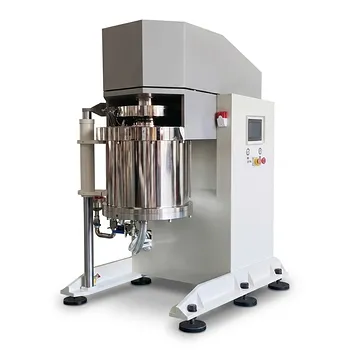
Vertical Nano Bead Mill for Ceramic Materials with Permanent Magnet Motor and High Efficiency Grinding
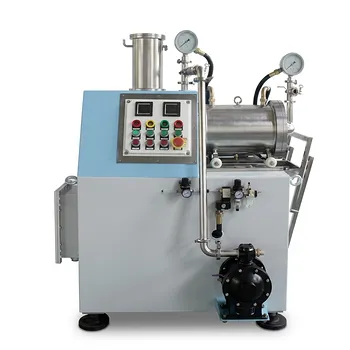
Horizontal Bead Mill for Nanoscale Grinding and Advanced Material Powder Processing
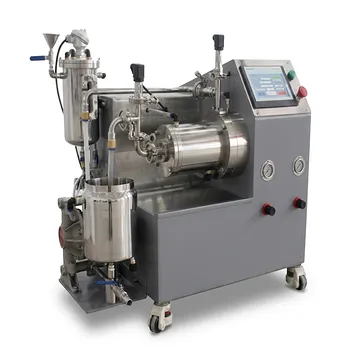
Laboratory Horizontal Bead Mill for Nanomaterial Wet Grinding and Material Science Research
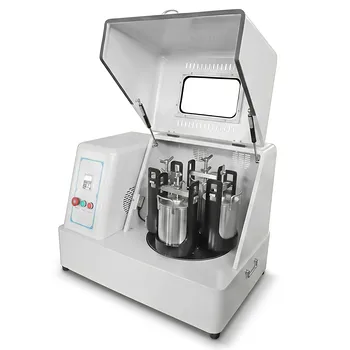
Vertical Square Planetary Ball Mill for Laboratory Sample Preparation and Nanoscale Grinding
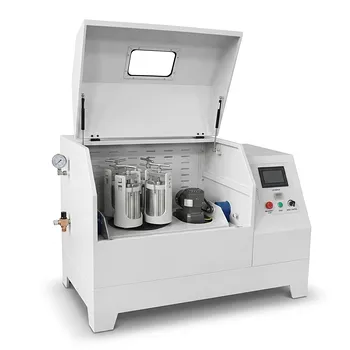
Vertical Production Planetary Ball Mill for High Throughput Powder Processing
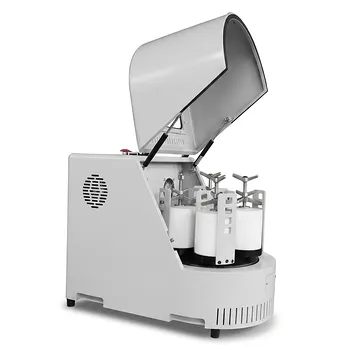
Vertical Semi Circular Planetary Ball Mill for Laboratory Precision Grinding
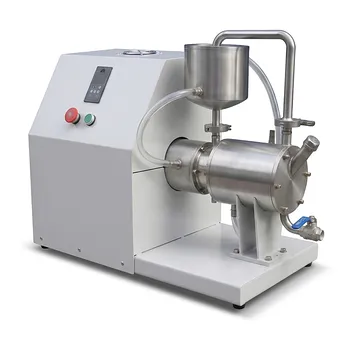
Laboratory Small Horizontal Sand Mill for Nano Materials Wet Grinding
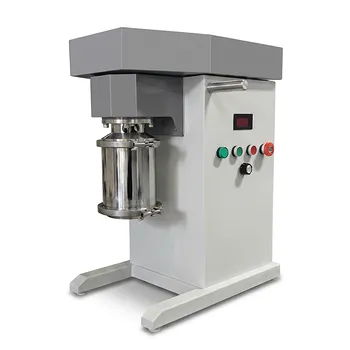
Nano Laboratory Bead Mill Desktop Sub Micron Sand Mill Screenless Seal Less Powder Grinder
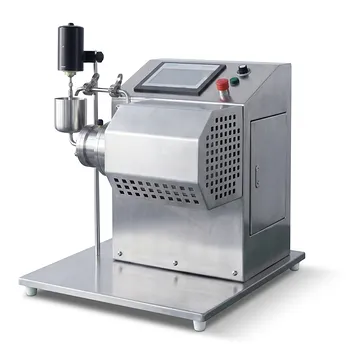
High Efficiency Laboratory Bead Mill Nano Powder Dispersion Sand Mill for Material Science Research
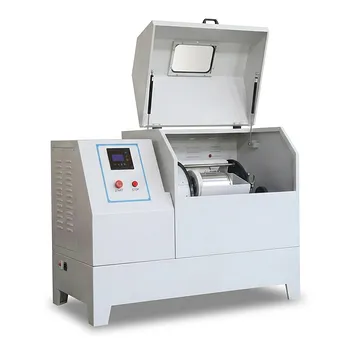
Heavy Duty Horizontal Planetary Ball Mill for Efficient Industrial Grinding and Sample Preparation
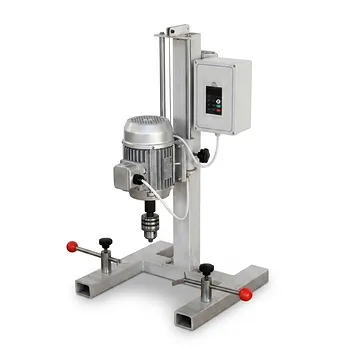
Laboratory Disperser and Sand Mill for Grinding Dispersing Emulsifying
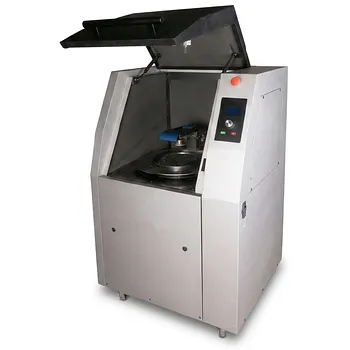
High Speed Vibratory Disc Mill for Spectral Analysis Sample Preparation and Rapid Powder Grinding
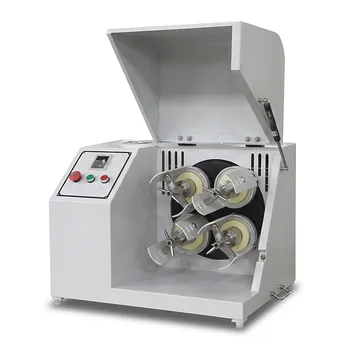
Horizontal Light Duty Planetary Ball Mill for Laboratory Sample Preparation
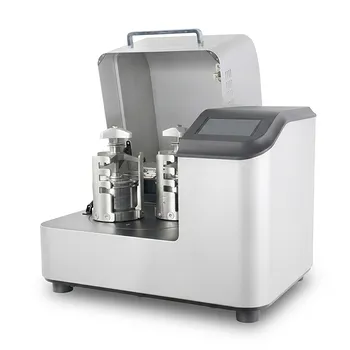
High Energy Planetary Ball Mill for Nano Scale Grinding and Mechanical Alloying
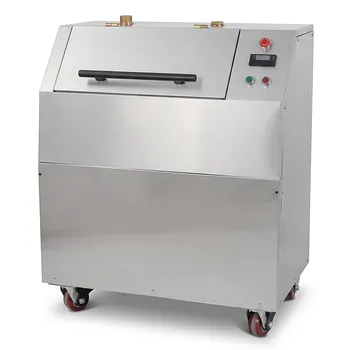
Vibratory Disc Mill for Rapid Fine Grinding and High Throughput Sample Preparation of Hard and Brittle Materials
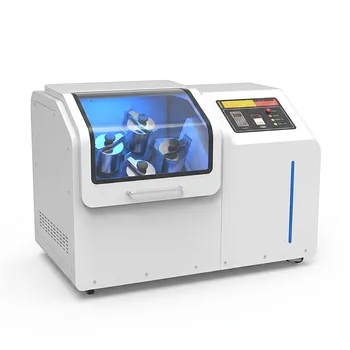
High Energy Omnidirectional Planetary Ball Mill 16L
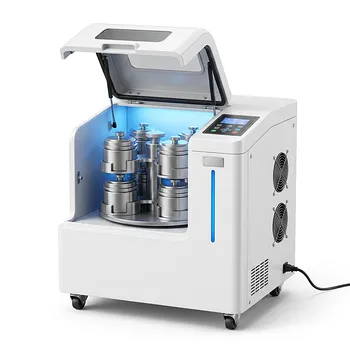
High Energy Omnidirectional Planetary Ball Mill 20L
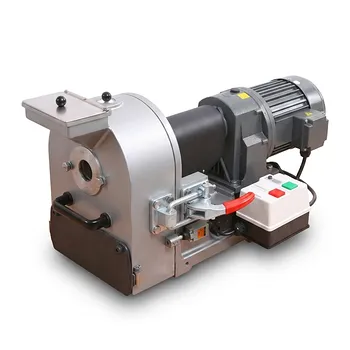
Laboratory Disc Mill for Fine Sample Preparation of Hard and Brittle Materials
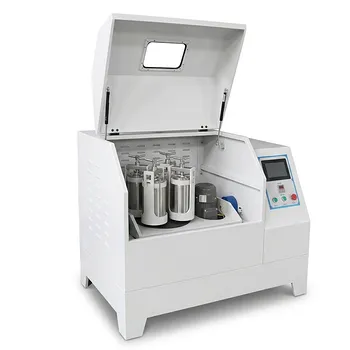
360° Rotating Omnidirectional Laboratory Planetary Ball Mill for Homogeneous Ultra-Fine Grinding and Mixing