Why are the selection of grinding media and BPR critical when ball milling high-entropy alloys? Master HEA Synthesis.
Updated 3 months ago
In the fabrication of high-entropy alloys (HEAs), the selection of grinding media and the ball-to-powder ratio (BPR) are the primary levers for controlling mechanical alloying kinetics and chemical integrity. These parameters dictate the energy density delivered to the powder, which is essential for overcoming thermodynamic barriers and achieving atomic-level homogenization. Precise control ensures that the resulting nanostructured powders meet strict stoichiometric requirements while minimizing deleterious contamination from media wear.
Core Takeaway: Success in HEA synthesis via ball milling requires a delicate balance between maximizing energy transfer to drive alloying and minimizing media wear to preserve chemical purity. The synergy between media hardness and BPR determines whether the system reaches a stable, single-phase solid solution or remains a contaminated elemental mixture.
Optimizing Energy Transfer and Alloying Kinetics
The Mechanics of Impact and Shear
The selection of grinding media determines the type of mechanical work applied to the powder. High-hardness grinding balls facilitate the transfer of intense kinetic energy through high-frequency impacts and shear forces.
While larger balls provide the impact energy necessary to fracture coarse raw materials, smaller balls increase the contact frequency. A combination of sizes, such as a 1:2 ratio of 10 mm to 6 mm balls, optimizes the refinement of the powder into a uniform morphology.
Achieving Atomic Homogenization
HEAs require the forced mixing of five or more elements, often with different crystalline structures. The mechanical energy provided by the media drives these components into a nanocrystalline state, eventually leading to atomic-level homogenization.
This process is critical for moving the system into a non-equilibrium state, allowing for the formation of solid solutions that would not occur through traditional casting. Without sufficient energy density, the elements will not fuse thoroughly at the atomic level.
Overcoming Thermodynamic Barriers
In systems with positive heats of mixing, such as Fe-Cu-based alloys, the energy input must be high enough to overcome thermodynamic barriers. Precise control of the energy intensity allows for the synthesis of complex phases like icosahedral quasicrystals.
By adjusting the BPR, researchers can ensure the thermodynamic driving force is sufficient to induce the desired phase transition. This prevents the precipitation of undesirable impurity phases that can degrade the alloy's performance.
The Critical Role of the Ball-to-Powder Ratio (BPR)
Regulating Energy Density
The BPR is the most influential parameter for determining the grinding energy density within the milling jar. A common ratio, such as 10:1 or 8:1 by weight, ensures that each powder particle receives enough collision events to undergo plastic deformation.
This energy distribution directly influences the final physical properties of the HEA. For example, the BPR is essential for controlling magnetic properties, such as saturation magnetization and coercivity, by refining the grain structure.
Thermal Management and Material Integrity
The BPR also acts as a regulator for the internal temperature of the milling process. An appropriate ratio prevents excessive temperature rises that could lead to powder oxidation or the material sticking to the jar walls.
If the BPR is too high, the resulting heat can trigger unwanted phase transformations or grain growth. Conversely, a ratio that is too low may fail to provide the deformation energy required for alloying, resulting in an incomplete reaction.
Understanding the Trade-offs and Pitfalls
The Contamination vs. Refinement Dilemma
Increasing the BPR or the milling duration generally leads to finer grain sizes and better homogenization. However, this comes with a significantly higher risk of media wear and powder contamination.
Wear debris from steel balls can introduce elements like iron (Fe) and chromium (Cr) into the mix. This is particularly problematic for alloys with strict stoichiometric ratios, as it can inadvertently alter the chemical composition and phase stability of the final product.
Material Selection Pitfalls
Using low-quality or low-hardness media results in rapid wear during the long-duration milling cycles required for HEAs. High-hardness bearing steel or high-strength alloy steel is preferred because it maintains its structural integrity under high-frequency impact.
Failure to match the hardness of the media to the hardness of the HEA components can lead to inefficient energy transfer. In such cases, the media may deform or wear down before the powder particles are sufficiently refined.
How to Apply This to Your Project
Recommendations for Process Design
- If your primary focus is Maximum Phase Purity: Utilize high-hardness bearing steel balls and maintain a moderate BPR (e.g., 8:1) to minimize wear debris while providing sufficient alloying energy.
- If your primary focus is Minimum Grain Size: Employ a higher BPR (e.g., 10:1 or 12:1) and a mixture of ball sizes to maximize collision frequency and shear action.
- If your primary focus is Thermal Stability: Opt for a lower BPR and implement "rest periods" during the milling cycle to prevent oxidation and material adhesion to the jar.
- If your primary focus is Complex Phase Synthesis: Precisely calibrate the BPR to the specific energy requirements of the target phase (e.g., quasicrystals) to overcome mixing enthalpy barriers.
By treating the selection of media and BPR as a precision engineering task rather than a secondary consideration, you ensure the technical integrity of the high-entropy alloy.
Summary Table:
| Key Parameter | Impact on HEA Synthesis | Critical Considerations |
|---|---|---|
| Grinding Media | Dictates impact energy & shear forces | Media hardness, size distribution (e.g., 1:2 ratio), and wear resistance. |
| Ball-to-Powder Ratio (BPR) | Regulates energy density & internal temperature | Common ratios (8:1 to 12:1) influence grain refinement and phase stability. |
| Energy Transfer | Drives atomic-level homogenization | Essential for overcoming thermodynamic barriers in non-equilibrium solid solutions. |
| Contamination Control | Affects stoichiometric purity | Balancing milling intensity with media wear to prevent Fe/Cr infiltration. |
Optimize Your Material Synthesis with Precision Equipment
Achieving the perfect high-entropy alloy requires more than just the right formula—it requires high-performance equipment that offers total control over your milling parameters. At [Company Name], we provide complete laboratory sample preparation solutions for material science, specializing in advanced powder processing and compaction technology.
Whether you are refining HEA powders or preparing pellets for analysis, our extensive product line is designed to ensure consistency and purity:
- Powder Processing: High-energy planetary ball mills, jet mills, and liquid nitrogen cryogenic grinders for superior refinement.
- Sample Preparation: Precision crushers (jaw/roll), sieve shakers (vibratory/air-jet), and high-performance powder mixers.
- Compaction Solutions: A full spectrum of hydraulic presses, including Cold/Warm Isostatic Presses (CIP/WIP), standard lab presses, and vacuum hot presses.
Ready to enhance your lab's efficiency and achieve superior material integrity? Contact our experts today to find the ideal solution for your specific research needs!
References
- Nirmal Kumar Katiyar, Saurav Goel. Emergence of machine learning in the development of high entropy alloy and their prospects in advanced engineering applications. DOI: 10.1007/s42247-021-00249-8
Mentioned Products
- High Energy Planetary Ball Mill for Nano Scale Grinding and Mechanical Alloying
- Laboratory Nano High Energy Ball Mill Ultrafine Grinding Mechanical Alloying
- Nanoscale High-Energy Vibratory Ball Mill for Laboratory Sample Preparation, Mechanochemistry, and Mechanical Alloying
- High Energy Planetary Ball Mill for Nano Scale Grinding and Colloidal Mixing in Material Science Research
- Vertical Production Planetary Ball Mill for High Throughput Powder Processing
People Also Ask
- Why is a high-energy planetary ball mill used for nano-milling As4Se3? Achieve Expert Structural Transformation
- What role do high-energy planetary ball mills play in FDM composite filament preparation? Optimize Material Performance
- What is the role of a high-energy planetary ball mill in the exfoliation of modified WSe2? Achieve Nano-Precision
- What is the function of a planetary ball mill in glass-ceramic sintering? Optimize Reactivity and Uniformity
- What is the role of a high-energy planetary ball mill in the preparation of high-performance nano-ceramics? Key Guide

Tech Team · PowderPreparation
Last updated on Jun 03, 2026
Related Products

High Energy Planetary Ball Mill for Nano Scale Grinding and Mechanical Alloying
Laboratory Nano High Energy Ball Mill Ultrafine Grinding Mechanical Alloying
Nanoscale High-Energy Vibratory Ball Mill for Laboratory Sample Preparation, Mechanochemistry, and Mechanical Alloying

High Energy Planetary Ball Mill for Nano Scale Grinding and Colloidal Mixing in Material Science Research

Vertical Production Planetary Ball Mill for High Throughput Powder Processing

Vertical Square Planetary Ball Mill for Laboratory Sample Preparation and Nanoscale Grinding

High Energy Laboratory Planetary Ball Mill for Nano Grinding and Colloidal Mixing of Hard and Brittle Materials

High Energy Laboratory Planetary Ball Mill for Nano Grinding and Material Science Sample Preparation

8L Planetary Ball Mill for Laboratory Grinding and Sample Preparation
Multi-Platform Nanoscale High-Energy Vibratory Ball Mill

High Throughput Micro Ball Mill for Cryogenic Grinding and Laboratory Cell Disruption

High Energy Omnidirectional Planetary Ball Mill 16L
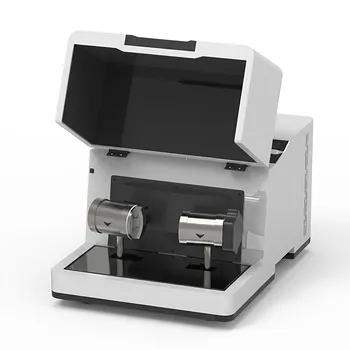
Ultra-Low Temperature Cryogenic High-Energy Vibratory Ball Mill

High Energy Omnidirectional Planetary Ball Mill 20L
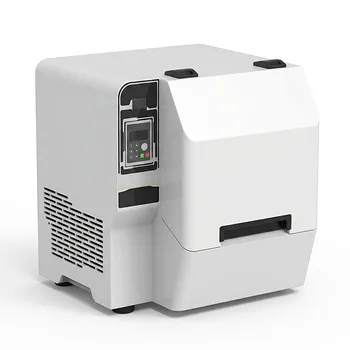
Nano High Energy Vibratory Ball Mill for Laboratory Sample Preparation
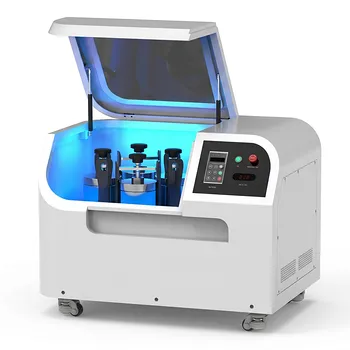
Planetary Ball Mill 12L
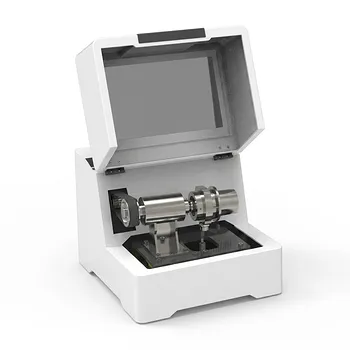
Single Tank High Energy Vibratory Ball Mill for Laboratory Grinding and Mixing
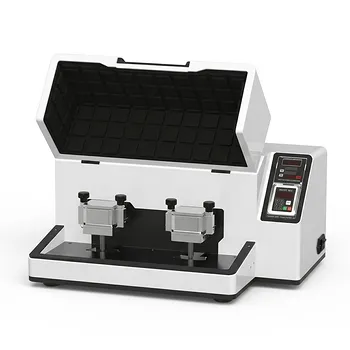
Nanoscale High Energy Vibratory Ball Mill Low Temperature

Dual Station Planetary Ball Mill 24L