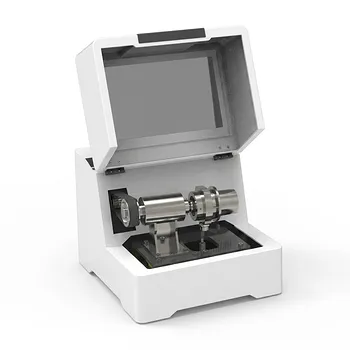
What role does ball milling play in ZTA powder preparation? Achieve Sub-Micron Homogenization & Sintering Activity
Updated 4 months ago
Ball milling is the critical mechanical process used to achieve sub-micron homogenization and surface activation in Zirconia Toughened Alumina (ZTA) powders. By subjecting alumina, zirconia, and additives to high-frequency impact and shearing, ball milling transforms raw materials into a highly reactive, uniform mixture. This preparation is essential for ensuring effective densification and a consistent microstructure during the subsequent sintering phase.
Ball milling serves as both a physical refiner and a chemical activator, breaking down hard agglomerates while increasing the surface energy of the particles. This dual action is the foundation for producing high-performance ZTA ceramics with superior mechanical properties.
Achieving Microscopic Homogenization
Uniform Component Distribution
Ball milling utilizes mechanical energy to distribute alumina and zirconia at a sub-micron level. This ensures that the zirconia particles are perfectly dispersed within the alumina matrix, which is vital for the transformation toughening mechanism of ZTA.
Integration of Additives and Binders
Beyond the primary ceramics, ball milling thoroughly incorporates binders like Polyvinyl Alcohol (PVAl) and lubricants into the mixture. This results in a stabilized suspension or slurry that is ready for advanced shaping processes like spray drying or extrusion.
Particle Refinement and De-agglomeration
Breaking Hard Agglomerates
High-temperature treatments, such as calcination or co-precipitation, often create hard agglomerates that can cause structural defects. The high-speed impact of grinding media effectively shatters these clusters, ensuring a narrow and uniform particle size distribution.
Reducing Particle Size to the Sub-Micron Scale
Ball milling can refine powders from micron-level dimensions down to approximately 0.34 μm. This reduction in size increases the specific surface area, which directly influences the reactivity of the powder during the heating process.
Enhancing Sintering Activity
Increasing Surface Activation Energy
The intensive mechanical action of a planetary ball mill introduces lattice stress and increases the surface energy of the powder. This "mechanical activation" allows the ceramic to reach full density at significantly lower temperatures, sometimes as low as 1050 °C.
Improving Densification Rates
By providing a high-activity raw material base, ball milling accelerates the densification rate during sintering. This prevents the overgrowth of grains, leading to a finer microstructure and improved fracture toughness in the final product.
Optimizing Slurry Properties
Achieving High Solid Content
For manufacturing techniques like 3D printing or casting, ball milling ensures a high solid content (often around 44%) while maintaining low viscosity. This balance is achieved through the continuous shearing action of the mill over durations of up to 24 hours.
Ensuring Stable Suspensions
The use of specific grinding media, such as zirconia or alumina balls, ensures high dispersion without introducing unwanted contaminants. This results in a stable ceramic slurry that resists sedimentation and maintains consistency throughout the production run.
Understanding the Trade-offs
Media Wear and Contamination
Extended milling durations can lead to the wear of the grinding balls and the mill lining, potentially introducing impurities into the ZTA powder. It is critical to match the composition of the grinding media to the ceramic matrix to minimize negative impacts on material purity.
Energy Consumption and Processing Time
Achieving sub-micron refinement requires significant mechanical energy and long processing times. Over-milling can lead to excessive heat generation or re-agglomeration of very fine particles, which can counteract the benefits of the initial grinding.
Applying Ball Milling to Your ZTA Production
Strategic Recommendations
Successful ZTA preparation requires balancing milling intensity with the specific requirements of your final application.
- If your primary focus is low-temperature sintering: Utilize high-energy planetary ball milling to maximize lattice stress and surface activation energy.
- If your primary focus is structural integrity: Prioritize the removal of hard agglomerates through wet milling to ensure a defect-free, uniform microstructure.
- If your primary focus is slurry-based forming: Use long-duration industrial ball milling to achieve a high solid content with a stable, low-viscosity dispersion.
By precisely controlling the mechanical energy of the ball milling process, manufacturers can dictate the final performance and reliability of Zirconia Toughened Alumina components.
Summary Table:
| Key Role | Mechanical Action | Primary Benefit for ZTA |
|---|---|---|
| Homogenization | Sub-micron distribution of Al2O3 & ZrO2 | Ensures consistent transformation toughening |
| Refinement | Breaking hard agglomerates to ~0.34 μm | Eliminates structural defects and voids |
| Activation | Increasing lattice stress & surface energy | Enables lower sintering temperatures (min. 1050°C) |
| Stabilization | High-shear mixing of binders & lubricants | Produces high-solid, low-viscosity slurries |
Elevate Your Material Research with Precision Powder Solutions
Achieving the perfect ZTA microstructure requires more than just raw materials—it demands high-performance processing equipment. We provide complete laboratory sample preparation solutions specifically designed for advanced material science and ceramic engineering.
Our specialized product range includes:
- Powder Processing: High-energy planetary ball mills, jet mills, and cryogenic grinders for sub-micron particle refinement.
- Mixing & Sifting: Vibratory sieve shakers, powder mixers, and defoaming mixers for stable slurry preparation.
- Advanced Compaction: A full spectrum of hydraulic presses, including Cold/Warm Isostatic Presses (CIP/WIP), vacuum hot presses, and XRF pellet presses for superior densification.
Whether you are refining ceramic powders or scaling up production, our equipment ensures the precision and reliability your lab deserves. Contact our experts today to find the ideal solution for your workflow!
References
- <p>Dan Liu, Dongsheng Li, Ya’nan Zhang, Junyi Ma, Guisheng Liang, Huiyao Wang</p>. Research on the Influence of Additives on the Mechanical Properties of Zirconia-Toughened Alumina Ceramics. DOI: 10.25236/ijfet.2025.070105
Mentioned Products
- Laboratory Nano High Energy Ball Mill Ultrafine Grinding Mechanical Alloying
- 8L Planetary Ball Mill for Laboratory Grinding and Sample Preparation
- Vertical Semi Circular Planetary Ball Mill for Laboratory Precision Grinding
- High Energy Planetary Ball Mill for Nano Scale Grinding and Colloidal Mixing in Material Science Research
- High Energy Laboratory Planetary Ball Mill for Nano Grinding and Colloidal Mixing of Hard and Brittle Materials
People Also Ask
- Role of Lab Ball Mills in Activating Coal Fly Ash for Cement: Enhance Reactivity and Strength
- What core function does a laboratory ball mill perform during phosphate ore grinding? Achieve Monomer Dissociation
- What are the primary functions of a laboratory ball mill or powder mixer when synthesizing multi-component standard reference materials?
- How does the size distribution of steel ball grinding media affect ore grindability? Optimize Energy & Lab Accuracy
- What role does a laboratory ball mill play in the study of chalcopyrite mineral liberation? Key for Recovery Success

Tech Team · PowderPreparation
Last updated on Jun 03, 2026
Related Products
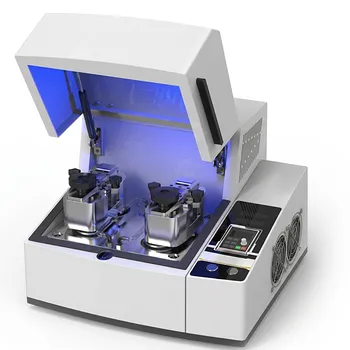
Laboratory Nano High Energy Ball Mill Ultrafine Grinding Mechanical Alloying
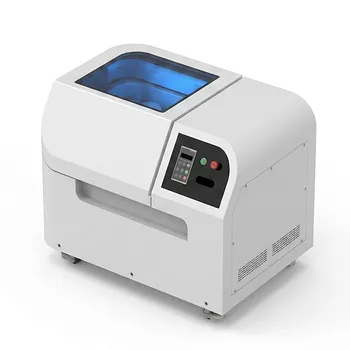
8L Planetary Ball Mill for Laboratory Grinding and Sample Preparation
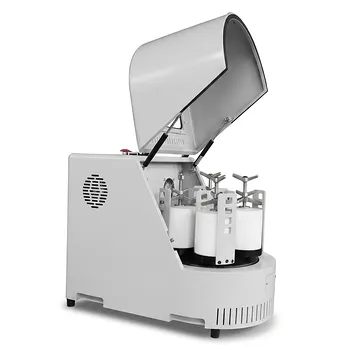
Vertical Semi Circular Planetary Ball Mill for Laboratory Precision Grinding
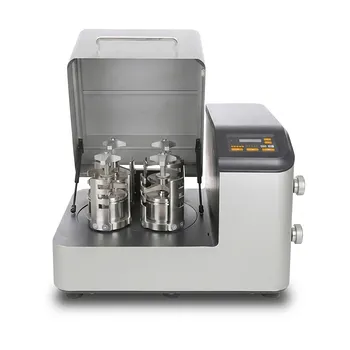
High Energy Planetary Ball Mill for Nano Scale Grinding and Colloidal Mixing in Material Science Research
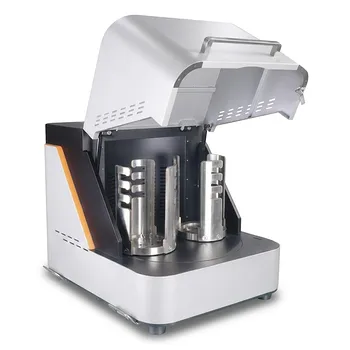
High Energy Laboratory Planetary Ball Mill for Nano Grinding and Colloidal Mixing of Hard and Brittle Materials
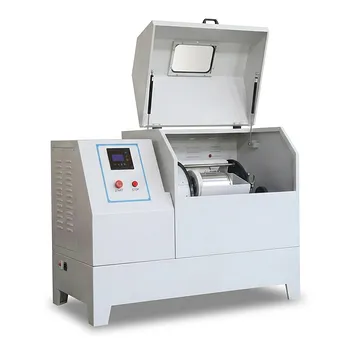
Heavy Duty Horizontal Planetary Ball Mill for Efficient Industrial Grinding and Sample Preparation
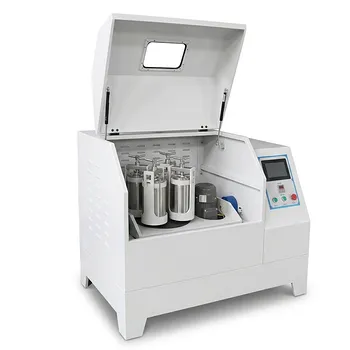
360° Rotating Omnidirectional Laboratory Planetary Ball Mill for Homogeneous Ultra-Fine Grinding and Mixing
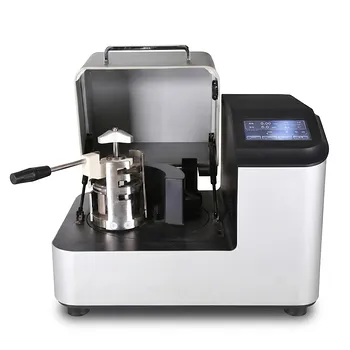
High Energy Laboratory Planetary Ball Mill for Nano Grinding and Material Science Sample Preparation
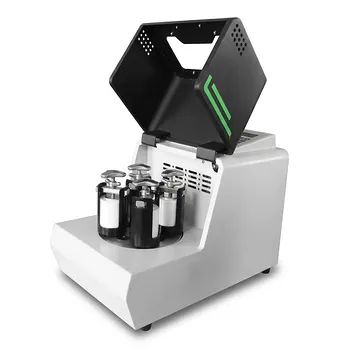
Miniature Planetary Ball Mill with Vacuum Grinding and High Efficiency for Laboratory Sample Preparation
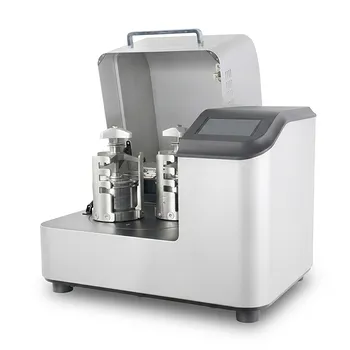
High Energy Planetary Ball Mill for Nano Scale Grinding and Mechanical Alloying
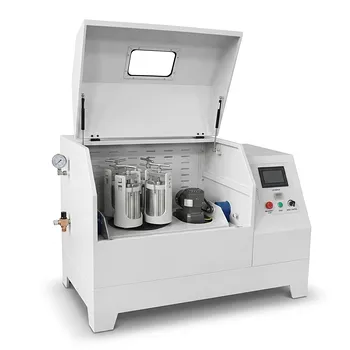
Vertical Production Planetary Ball Mill for High Throughput Powder Processing
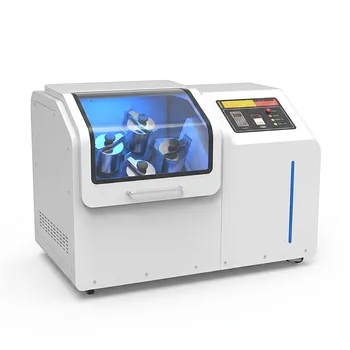
High Energy Omnidirectional Planetary Ball Mill 16L
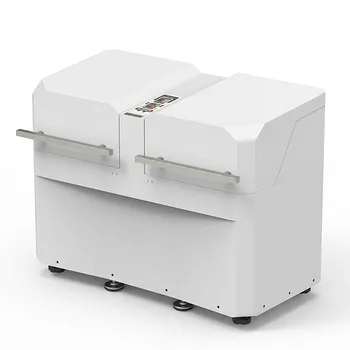
Dual Station Planetary Ball Mill 24L

High Throughput Micro Ball Mill for Cryogenic Grinding and Laboratory Cell Disruption
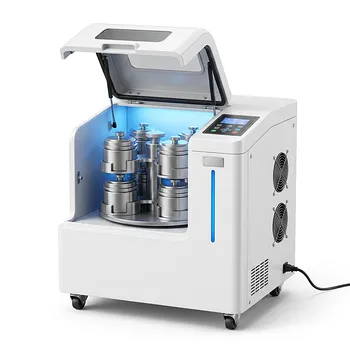
High Energy Omnidirectional Planetary Ball Mill 20L
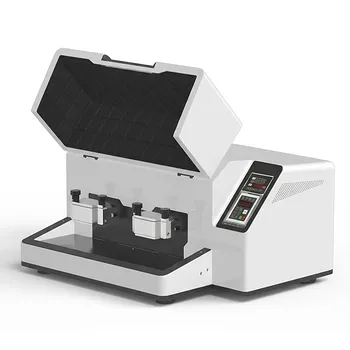
Nanoscale High-Energy Vibratory Ball Mill for Laboratory Sample Preparation, Mechanochemistry, and Mechanical Alloying
High Energy Hybrid Vibratory Ball Mill for Grinding Mixing and Cell Disruption
Nanoscale High Energy Vibratory Ball Mill Low Temperature
Multi-Platform Nanoscale High-Energy Vibratory Ball Mill