What physical conditions do industrial ball mills provide for grinding media loss research? Master Wear Mechanisms
Updated 4 months ago
Industrial ball mills function as dynamic reaction vessels that provide high-energy kinetic environments through controlled rotational motion. These mills create a complex interplay of collision, friction, and shear forces, allowing researchers to quantitatively measure media loss through erosion and abrasive wear under realistic processing conditions.
Industrial ball mills provide the essential mechanical forces—specifically collision, friction, and shear—necessary to simulate and measure grinding media wear. By adjusting operational parameters, researchers can generate the raw data required to evaluate media durability and optimize mineral processing efficiency.
The Mechanical Environment of the Ball Mill
Kinetic Energy Generation
The primary function of the mill is to convert rotational motion into kinetic energy. This energy is transferred to the grinding media, such as steel balls, enabling them to perform the work necessary for mineral liberation.
Simulating Collision Forces
As the mill rotates, the media are lifted and dropped, creating high-impact collisions. These impacts are the primary drivers of surface fatigue and catastrophic breakage in grinding balls.
Friction and Shear Stress
Continuous rotation causes the media to slide and roll against each other and the mill lining. This motion generates intense friction and shear, which are responsible for steady-state abrasive wear and surface erosion.
Controlled Parameters for Media Loss Research
Rotation Speed and Impact Energy
Researchers adjust the rotation speed of the mill to control the trajectory of the grinding media. Higher speeds typically increase impact forces, while lower speeds favor abrasive wear through cascading motion.
Ball Loading Volume and Interaction Frequency
The ball loading volume determines the density of the grinding charge within the mill. This parameter directly influences the frequency of media-to-media and media-to-liner contacts, affecting total wear rates.
Material Throughput and Slurry Dynamics
Throughput rates affect the residence time of the media and the consistency of the ore slurry. These factors dictate the level of "cushioning" provided to the media, which can significantly mitigate or accelerate erosion.
Understanding the Trade-offs and Limitations
Scaling Inconsistencies
While industrial mills provide the most realistic environment, they are difficult to monitor with the precision of laboratory equipment. Scaling results from pilot tests to full-scale industrial operations often introduces non-linear variables that complicate data interpretation.
Complexity of Force Isolation
It is virtually impossible to isolate a single wear mechanism within an active mill. Because collision, friction, and shear occur simultaneously, researchers must use advanced statistical modeling to determine which force is the primary contributor to media loss.
How to Apply This to Your Research Project
Making the Right Choice for Your Goal
- If your primary focus is Impact Resistance: Prioritize the adjustment of rotation speed to simulate maximum collision energy and evaluate media toughness.
- If your primary focus is Abrasive Longevity: Focus on ball loading volume and slurry density to maximize friction-based wear data and measure surface hardness retention.
- If your primary focus is Operational Cost-Efficiency: Analyze the relationship between material throughput and media consumption to identify the most economical operating point.
Mastering the physical environment within the ball mill is the essential step for predicting media lifespan and reducing long-term mineral processing costs.
Summary Table:
| Physical Condition | Mechanical Force | Impact on Media Loss Research |
|---|---|---|
| High-Speed Rotation | Impact & Collision | Drives surface fatigue and catastrophic breakage tests. |
| Ball Loading Volume | Friction & Shear | Measures steady-state abrasive wear and surface erosion. |
| Slurry Dynamics | Cushioning Effect | Analyzes how throughput affects erosion and media lifespan. |
| Kinetic Energy Transfer | Rotational Motion | Simulates realistic mineral liberation environments. |
Optimize Your Material Research with Precision Engineering
Are you looking to enhance your laboratory's sample preparation or accurately simulate industrial wear conditions? [Your Brand Name] provides complete laboratory sample preparation solutions for material science, specializing in advanced powder processing and compaction equipment.
From evaluating media durability to achieving perfect particle size distribution, our extensive product line is designed to meet the rigorous demands of researchers and industrial engineers:
- Advanced Milling: Planetary ball mills, jet mills, sand/bead mills, disc mills, and rotor mills.
- Size Reduction: Heavy-duty jaw and roll crushers and liquid nitrogen cryogenic grinders.
- Sieving & Mixing: Vibratory/air-jet sieve shakers and high-performance powder or defoaming mixers.
- Compaction Solutions: A full spectrum of hydraulic presses, including Cold/Warm Isostatic Presses (CIP/WIP), XRF pellet presses, and vacuum hot presses.
Ready to elevate your research efficiency? Contact our technical experts today to find the ideal equipment for your specific mineral processing or material science application.
References
- Asghar Azizi, Nader Mollayi. Modeling and prediction of wear rate of grinding media in mineral processing industry using multiple kernel support vector machine. DOI: 10.1007/s42452-020-03212-0
Mentioned Products
- Heavy Duty Horizontal Planetary Ball Mill for Efficient Industrial Grinding and Sample Preparation
- Vertical Production Planetary Ball Mill for High Throughput Powder Processing
- Dual Station Planetary Ball Mill 24L
- Vertical Square Planetary Ball Mill for Laboratory Sample Preparation and Nanoscale Grinding
- Vertical Semi Circular Planetary Ball Mill for Laboratory Precision Grinding
People Also Ask
- Why grind lime-pozzolan specimens for TG/DTA for 3 mins? Master sample prep for high-precision thermal analysis.
- What is the role of a planetary ball mill in the mechanical activation of ZTA powder? Boost Sintering Performance
- What is the function of a planetary ball mill in wollastonite ceramic prep? Achieve Molecular Homogenization & Reactivity
- How does a planetary ball mill contribute to the homogenization of trace elements? Achieve Sub-Micron Uniformity
- What is the function of a high-performance planetary ball mill in AMZ laminates? Master Ceramic Homogenization.

Tech Team · PowderPreparation
Last updated on Jun 03, 2026
Related Products
Heavy Duty Horizontal Planetary Ball Mill for Efficient Industrial Grinding and Sample Preparation
Vertical Production Planetary Ball Mill for High Throughput Powder Processing
Dual Station Planetary Ball Mill 24L
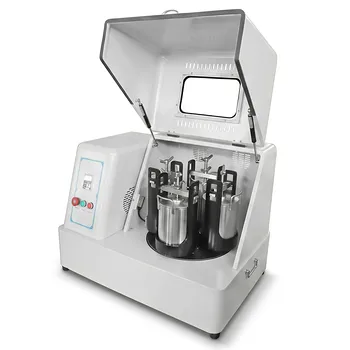
Vertical Square Planetary Ball Mill for Laboratory Sample Preparation and Nanoscale Grinding
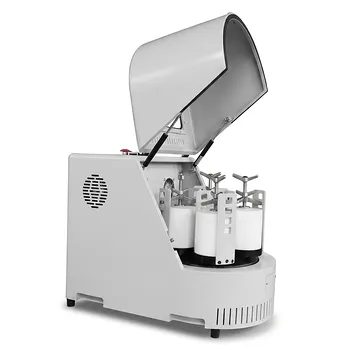
Vertical Semi Circular Planetary Ball Mill for Laboratory Precision Grinding
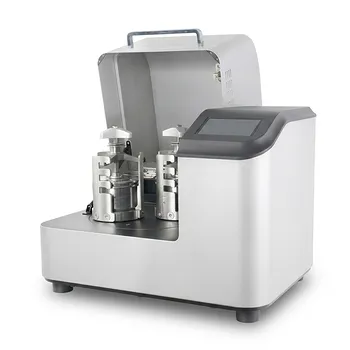
High Energy Planetary Ball Mill for Nano Scale Grinding and Mechanical Alloying
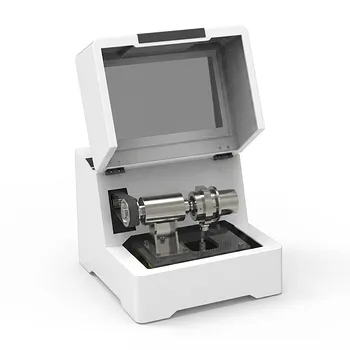
Single Tank High Energy Vibratory Ball Mill for Laboratory Grinding and Mixing
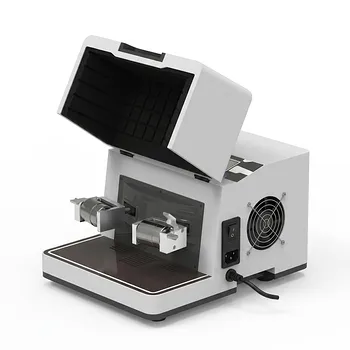
High Energy Hybrid Vibratory Ball Mill for Grinding Mixing and Cell Disruption
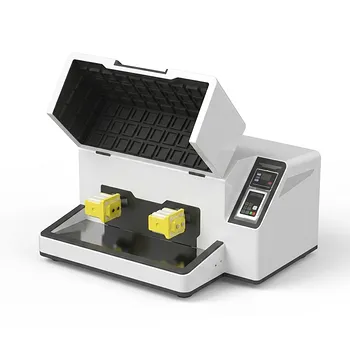
Multi-Platform Nanoscale High-Energy Vibratory Ball Mill
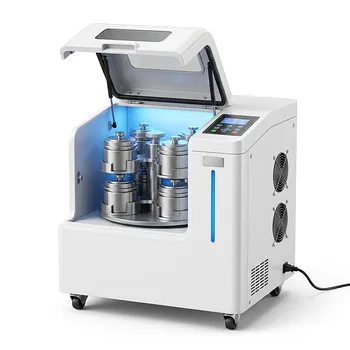
High Energy Omnidirectional Planetary Ball Mill 20L
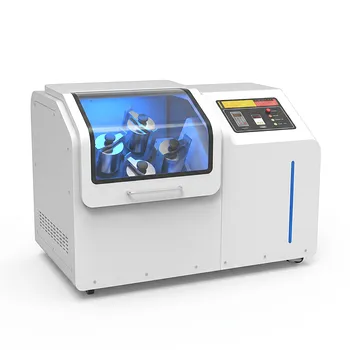
High Energy Omnidirectional Planetary Ball Mill 16L
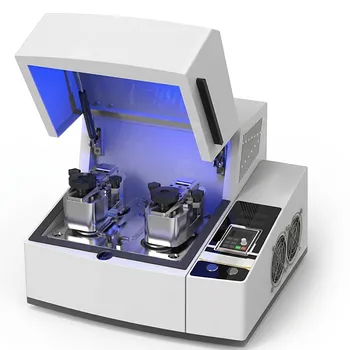
Laboratory Nano High Energy Ball Mill Ultrafine Grinding Mechanical Alloying
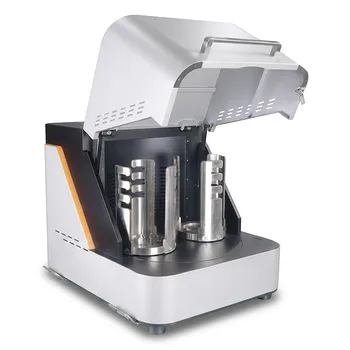
High Energy Laboratory Planetary Ball Mill for Nano Grinding and Colloidal Mixing of Hard and Brittle Materials
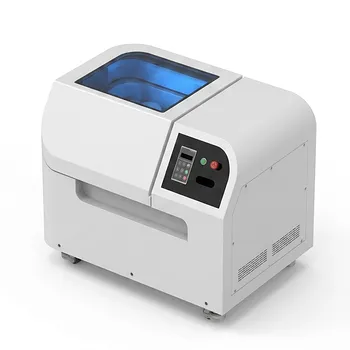
8L Planetary Ball Mill for Laboratory Grinding and Sample Preparation
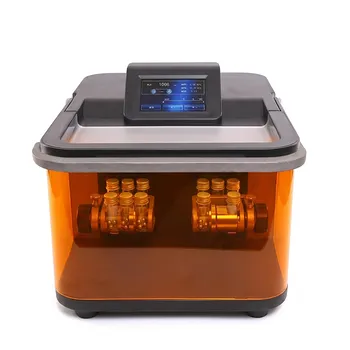
High Throughput Micro Ball Mill for Cryogenic Grinding and Laboratory Cell Disruption
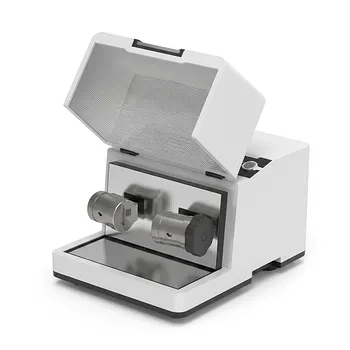
Heating Temperature Controlled High Energy Vibratory Ball Mill
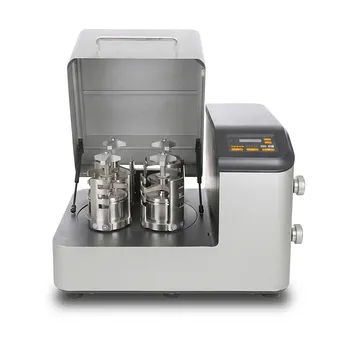
High Energy Planetary Ball Mill for Nano Scale Grinding and Colloidal Mixing in Material Science Research
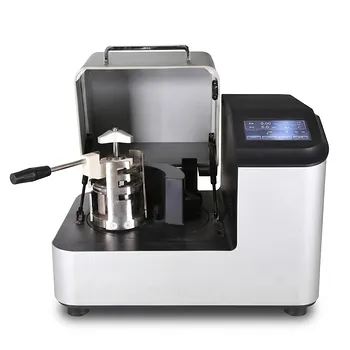
High Energy Laboratory Planetary Ball Mill for Nano Grinding and Material Science Sample Preparation
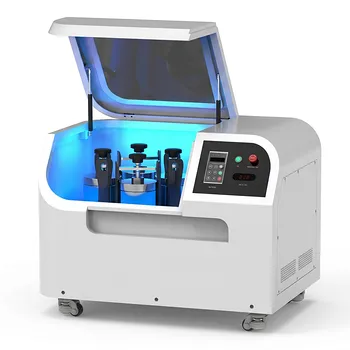
Planetary Ball Mill 12L