What is the technical necessity of configuring triaxial accelerometers within dry sieving apparatuses? Optimize Accuracy
Updated 4 months ago
Triaxial accelerometers are essential for quantifying the multi-dimensional kinetic energy applied to a sample during dry sieving. These sensors provide real-time verification of vibration intensity and frequency across three axes, ensuring that the mechanical energy delivered to the sieve stack remains consistent and repeatable. This high-fidelity data allows technicians to correlate specific vibration modes with particle behavior, directly influencing the efficiency and accuracy of the separation.
The technical necessity of triaxial accelerometers lies in their ability to transform a mechanical vibration process into a measurable, repeatable scientific procedure. By monitoring acceleration in three dimensions, they ensure experimental constancy while providing the data needed to optimize particle passage and prevent sieve blinding.
Real-Time Monitoring and Data Verification
Ensuring Constancy and Repeatability
The primary role of these sensors is to verify that the sieving platform maintains a uniform vibration profile throughout the entire test duration. Without this monitoring, subtle mechanical shifts or motor fatigue could lead to inconsistent results between different batches. Real-time data allows for immediate adjustments, ensuring that every experiment adheres to the same kinetic parameters.
Tracking Three-Dimensional Kinematics
Standard sieving often involves complex motions that are not limited to a single vertical plane. By recording acceleration data in three dimensions (X, Y, and Z axes), technicians can capture the full physical reality of the platform's motion. This comprehensive mapping is necessary to understand how lateral and vertical forces interact to move material across the mesh.
Optimizing Particle Separation Dynamics
Influencing Particle Rearrangement
Vibration modes dictate how particles are distributed and rearranged on the sieve surface. Triaxial accelerometers help identify the specific frequencies that promote optimal stratification, where smaller particles migrate toward the mesh. Proper rearrangement ensures that the sample is processed efficiently rather than simply bouncing erratically.
Increasing Passage Probability
The probability of a particle passing through a mesh opening is a function of its approach angle and velocity. Accelerometer data allows technicians to analyze how specific vibration intensities affect this probability. By fine-tuning these settings based on sensor feedback, the time required to reach an "end-point" in sieving can be significantly reduced.
Mitigation of Sieve Blinding
Sieve blinding, or clogging, occurs when particles become wedged in the mesh openings. Triaxial sensors help identify the vibration characteristics that effectively dislodge these particles. Monitoring the acceleration ensures that the energy is high enough to clear the mesh without being so violent that it damages the equipment or the sample.
Understanding the Trade-offs
Data Complexity and Signal Noise
While providing superior insight, triaxial accelerometers generate a significant volume of data that requires specialized analysis. High-frequency noise from the motor or external environment can sometimes obscure the relevant vibration signals. Users must implement robust filtering techniques to ensure the data accurately reflects the sieving action.
Sensor Placement and Integration
The physical placement of the accelerometer is critical, as data can vary depending on where the sensor is mounted on the platform. Incorrect mounting can lead to "ghost" readings or dampened signals that do not reflect the true energy experienced by the sample. Technical teams must ensure a rigid connection between the sensor and the sieving apparatus to maintain signal integrity.
Implementing Accelerometers for Process Excellence
To maximize the value of triaxial monitoring in your sieving workflows, consider your primary objective for the data collected.
- If your primary focus is regulatory compliance: Use the accelerometer data to generate a verifiable "vibration signature" for every test to prove equipment consistency.
- If your primary focus is process optimization: Analyze the correlation between X-Y axis movement and total sieving time to identify the most efficient vibration modes for your specific material.
- If your primary focus is equipment maintenance: Monitor for shifts in the baseline frequency over time to predict mechanical failures or motor wear before they cause downtime.
Precise measurement of vibration dynamics transforms dry sieving from a trial-and-error task into a highly controlled and repeatable analytical process.
Summary Table:
| Key Feature | Technical Function | Benefit to Particle Analysis |
|---|---|---|
| 3D Kinematics | Tracks X, Y, and Z axis acceleration | Captures full motion profile for complex particle movement. |
| Real-Time Monitoring | Verifies vibration intensity/frequency | Ensures experimental constancy and batch-to-batch repeatability. |
| Stratification Control | Optimizes particle rearrangement | Moves smaller particles to the mesh faster, reducing sieving time. |
| Blinding Mitigation | Identifies optimal dislodging forces | Prevents mesh clogging and protects equipment from excessive wear. |
Elevate Your Powder Analysis with Precision Engineering
Achieving repeatable and accurate particle separation requires more than just vibration—it requires control. At our facility, we provide complete laboratory sample preparation solutions tailored for material science. Whether you are refining powders or preparing samples for characterization, our expertise ensures your processes meet the highest scientific standards.
Our specialized equipment line includes:
- Sieving Excellence: Advanced vibratory and air-jet sieve shakers equipped with precision test sieves and meshes.
- Advanced Milling: Planetary ball mills, jet mills, and cryogenic grinders for superior particle size reduction.
- Sample Compaction: A full spectrum of hydraulic presses, including Cold/Warm Isostatic Presses (CIP/WIP), vacuum hot presses, and XRF pellet presses.
- Homogenization: High-performance powder mixers and defoaming mixers.
Don't let inconsistent vibration compromise your data. Contact our technical team today to discover how our high-fidelity sieving and powder processing equipment can transform your laboratory workflow.
References
- Gunter H. Just, Katherine Smith. Development and test of a Lunar Excavation and Size Separation System (LES<sup>3</sup>) for the LUVMI‐X rover platform. DOI: 10.1002/rob.22050
Mentioned Products
- Dry Three Dimensional Vibratory Sieve Shaker
- High Frequency Cabinet Type Three-Dimensional Rotary Vibrating Sieve Shaker for Dry Sieving and Particle Classification
- Heavy Duty Dry Three Dimensional Vibratory Sieve Shaker for Particle Separation
- Laboratory Dry and Wet Three Dimensional Vibratory Sieve Shaker for Particle Analysis
- Vibratory Sieve Shaker Electromagnetic 3D Motion Powder Particle Size Analyzer for Dry and Wet Sieving
People Also Ask
- How does a vibratory sieve shaker contribute to optimizing the performance of activated carbon? Enhance Adsorption Precision
- What is the specific role of a vibratory sieve shaker in ZnO membrane ceramic support pretreatment? Ensure Uniformity.
- Why is a laboratory-grade vibratory sieve shaker critical for characterizing recycled PVC powder? Ensure Precise PSD
- Why is a high-precision vibratory sieve shaker essential for analyzing recycled inorganic sand? Ensure Consistent PSD
- What is the significance of using standard test sieves and shakers? Enhance Slow-Release Pellet Precision & Yield

Tech Team · PowderPreparation
Last updated on Jun 03, 2026
Related Products
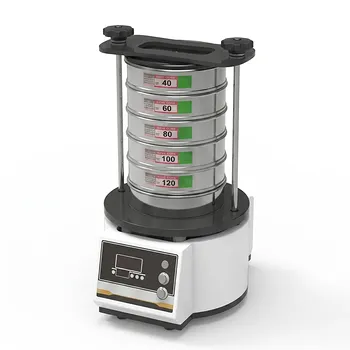
Dry Three Dimensional Vibratory Sieve Shaker
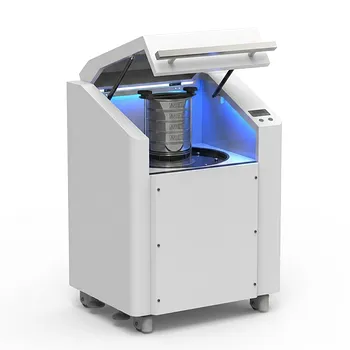
High Frequency Cabinet Type Three-Dimensional Rotary Vibrating Sieve Shaker for Dry Sieving and Particle Classification

Heavy Duty Dry Three Dimensional Vibratory Sieve Shaker for Particle Separation
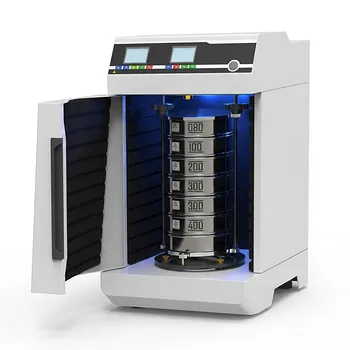
Laboratory Dry and Wet Three Dimensional Vibratory Sieve Shaker for Particle Analysis

Vibratory Sieve Shaker Electromagnetic 3D Motion Powder Particle Size Analyzer for Dry and Wet Sieving

三维电磁微量振动筛分仪
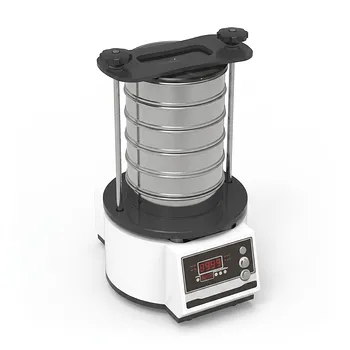
Tapping Oscillating Sieve Shaker for Dry and Wet Particle Size Analysis

High Frequency Wet Three-Dimensional Vibrating Sieve Shaker for Dry and Wet Particle Size Analysis

Three Dimensional Rotary Vibrating Sieve
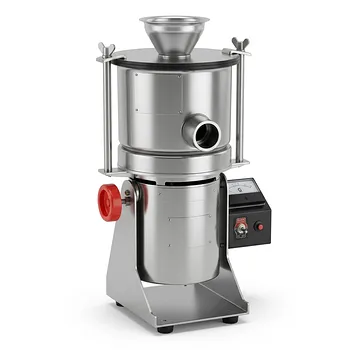
Laboratory Ultrafine Impact and Airflow Grinder for Precise Particle Size Control
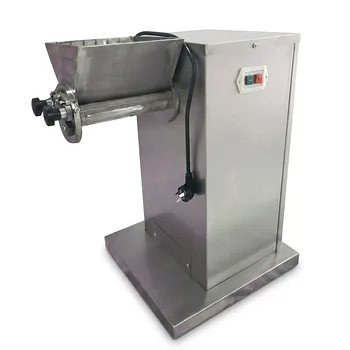
Small Laboratory Oscillating Granulator for Wet and Dry Granulation Processing
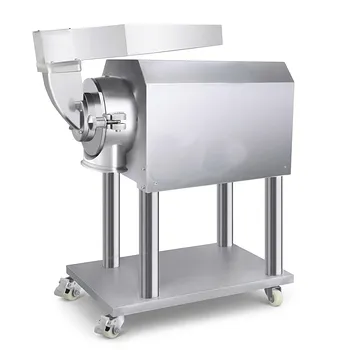
High Speed Small Laboratory Crusher for Dry Material Sample Preparation
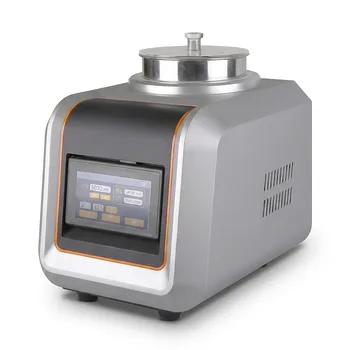
Laboratory Air Jet Sieving Machine for Fine Powder Particle Size Analysis and Deagglomeration

Small Laboratory Vibrating Sieve Shaker for Precise Particle Size Analysis

Stainless Steel Laboratory Vibratory Test Sieve Shaker

Laboratory Vibratory Test Sieve Shaker for Precision Particle Size Analysis and Powder Grading

Small Laboratory Vibratory Sieve Shaker for Powder Gradation and Particle Size Analysis
