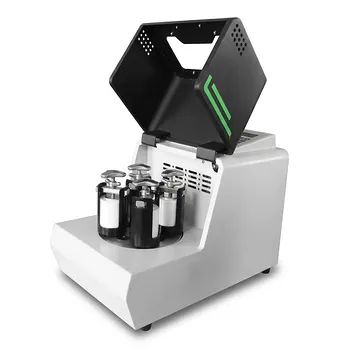
What are the advantages of using a jet mill compared to a ball mill for Sm-Co magnets? Purity vs. Performance
Updated 5 months ago
Jet milling offers superior control over powder characteristics compared to ball milling, specifically through the elimination of grinding media contamination and the achievement of a narrow particle size distribution. For Samarium-Cobalt (Sm-Co) magnets, jet milling utilizes supersonic airflow to drive particle-on-particle collisions, resulting in a highly pure, dispersible powder typically ranging from 4 to 8 µm. This precision is essential for maximizing magnetic domain orientation and overall magnet performance.
The primary advantage of jet milling for Sm-Co production lies in its ability to produce high-purity, uniform powders without the metallic contamination inherent in ball milling, directly leading to stronger and more consistent magnetic properties.
Superior Control of Particle Size Distribution
Achieving a Narrow Size Range
Jet mills use high-velocity gas streams to induce collisions, allowing for precise control over the final dimensions of the Sm-Co particles. This process consistently produces a narrow distribution range of 4–8 µm, which is the ideal size for modern high-performance magnets.
Enhancing Dispersibility for Alignment
The dry grinding nature of the jet mill creates powders with high dispersibility. This characteristic is critical during the subsequent pressing stages, as it allows for high-precision magnetic domain orientation when an external field is applied.
Preventing Over-grinding
Unlike ball mills, which can continue to crush material regardless of size, jet mills can be tuned to remove particles from the chamber as soon as they reach the target diameter. This prevents the formation of "superfines" that can lead to oxidation and reduced magnetic strength.
Purity and Contamination Prevention
The Advantage of Self-Pulverization
Jet milling relies on self-milling, where particles collide with one another rather than with grinding media like steel or ceramic balls. This mechanism drastically reduces the introduction of external impurities that are common in traditional milling.
Eliminating Wear-Related Impurities
In ball milling, the constant friction between the grinding media and the chamber walls inevitably introduces foreign metallic or ceramic particles into the Sm-Co mixture. Jet milling bypasses this issue entirely, ensuring the chemical integrity of the alloy remains intact.
Maintaining High-Purity Standards
For specialized applications where Sm-Co magnets must meet strict performance tolerances, even trace amounts of contamination from a ball mill can disrupt the crystal structure. Jet milling is the industry standard for maintaining the high purity required for these advanced magnetic materials.
Thermal Management and Stability
Leveraging the Joule-Thomson Effect
The expansion of compressed air within a jet mill creates a cooling effect known as the Joule-Thomson effect. This natural refrigeration keeps the material at a low temperature during the pulverization process.
Preventing Oxidation and Moisture Loss
Sm-Co alloys are sensitive to heat, which can accelerate oxidation or alter the material's composition. The low-temperature environment of a jet mill prevents the thermal degradation that often occurs due to the mechanical heat generated in a ball mill.
Preserving Material Properties
Because the process is rapid and cool, the raw material retains its original characteristics more effectively. This ensures that the final magnetic powder has the exact stoichiometry intended during the initial melting and alloying phases.
Understanding the Trade-offs
Comparing Energy and Speed
While jet mills offer superior purity, planetary ball mills are often noted for their high impact energy and ability to achieve target sizes in very short timeframes. If absolute purity is less critical than throughput, ball milling can be more time-efficient for certain multi-component mixtures.
Complexity of Operation
Jet milling requires a sophisticated setup involving high-pressure gas compressors and precise airflow management. This can result in higher initial capital expenditures and energy costs compared to the simpler mechanical operation of a ball mill.
Pre-treatment Requirements
For very hard or large starting materials, a jet mill may require a pre-treatment step, such as using a high-speed blade grinder or hydrogen decrepitation. Ball mills are generally more forgiving regarding the initial feed size of the raw material.
Making the Right Choice for Your Goal
When selecting a milling technology for Sm-Co production, your choice should be dictated by the required performance grade of the final magnet.
- If your primary focus is Maximum Magnetic Performance: Use a jet mill to ensure a narrow particle size distribution (4-8 µm) and optimal domain orientation.
- If your primary focus is High Purity and Low Contamination: Utilize the self-pulverization of a jet mill to eliminate metallic impurities from grinding media.
- If your primary focus is High Throughput for Less Sensitive Grades: A planetary ball mill may be more suitable due to its high-energy impact and faster processing times for multi-component blends.
- If your primary focus is Thermal Stability: Opt for jet milling to take advantage of the Joule-Thomson cooling effect and prevent oxidation.
By prioritizing the precision and purity of the jet milling process, manufacturers can produce Sm-Co magnets that meet the most demanding technical specifications.
Summary Table:
| Feature | Jet Milling | Ball Milling |
|---|---|---|
| Mechanism | Particle-on-particle collision (supersonic air) | Grinding media impact (balls/beads) |
| Particle Size Range | Narrow distribution (4–8 µm) | Broader distribution |
| Contamination | Ultra-low (no grinding media) | Risk of metallic/ceramic impurities |
| Thermal Control | Cooling effect (Joule-Thomson) | Mechanical heat generation |
| Best For | High-performance, high-purity magnets | High throughput, less sensitive grades |
Elevate Your Material Science Research with Precision Equipment
Are you looking to optimize the magnetic properties and purity of your Sm-Co alloys? At [Brand Name], we provide complete laboratory sample preparation solutions tailored for material science. We specialize in advanced powder processing and compaction equipment designed to meet the strictest technical specifications.
Our extensive product line includes:
- Milling Solutions: High-precision jet mills for ultra-pure powders and planetary ball mills for high-energy grinding.
- Pre-treatment & Sizing: Jaw/roll crushers, liquid nitrogen cryogenic grinders, and vibratory/air-jet sieve shakers.
- Compaction & Pressing: A full spectrum of hydraulic presses, including Cold/Warm Isostatic Presses (CIP/WIP), standard lab presses, and vacuum hot presses.
Whether you are refining magnetic domain orientation or scaling up production, our experts are here to provide the right tools for your specific workflow. Contact us today to find your solution!
References
- Leonardo Pierobon, Michalis Charilaou. Unconventional magnetization textures and domain-wall pinning in Sm–Co magnets. DOI: 10.1038/s41598-020-78010-0
Mentioned Products
- Benchtop Micro Air Jet Mill for Ultrafine Grinding of High Value Powders
- Laboratory Classification Jet Mill for Ultrafine Powder Grinding
- Water Cooled Pulse Jet Ultra Fine Pulverizer for Continuous Grinding
- Small Airflow Ultra-Fine Grinder for Laboratory Sample Preparation
- Water Cooled Pulse Jet Ultrafine Grinder
People Also Ask
- How does an air-jet mill enhance the performance of Mo2N when used as an electrocatalyst? Optimize Electrode Efficiency
- Why is secondary jet milling necessary for products processed through HME? Achieve Precision for Inhalation Delivery
- Why is a jet mill used for the co-milling of inhalable Itraconazole microparticles? Optimize Pulmonary Drug Delivery
- What are the advantages of a jet mill vs. a ball mill for high-purity ceramics? Achieve superior purity and precision.
- How does a laboratory jet mill function in the processing of crude char into rCB? Master High-Purity Particle Refinement

Tech Team · PowderPreparation
Last updated on May 14, 2026
Related Products
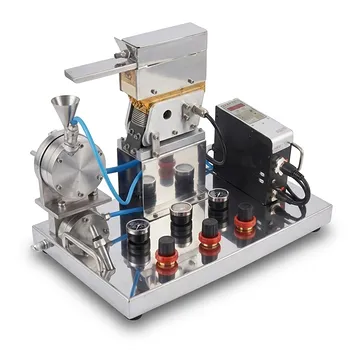
Benchtop Micro Air Jet Mill for Ultrafine Grinding of High Value Powders
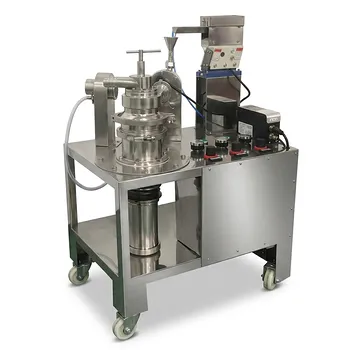
Laboratory Classification Jet Mill for Ultrafine Powder Grinding
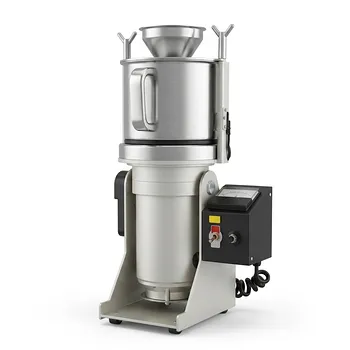
Water Cooled Pulse Jet Ultra Fine Pulverizer for Continuous Grinding
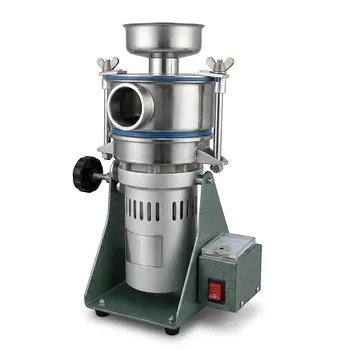
Small Airflow Ultra-Fine Grinder for Laboratory Sample Preparation
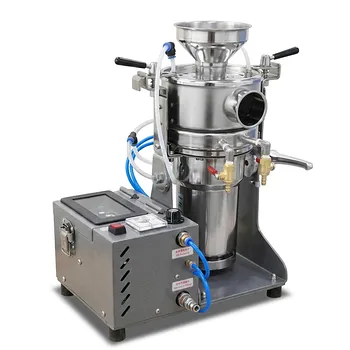
Water Cooled Pulse Jet Ultrafine Grinder
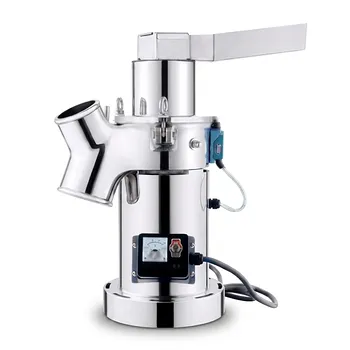
Airflow Ultrafine Pulverizer for Laboratory Ultra-fine Grinding
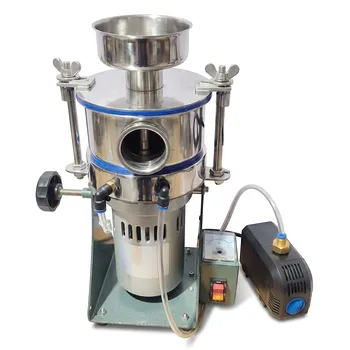
Water Cooled Airflow Ultra Fine Grinder for Low Temperature Material Processing
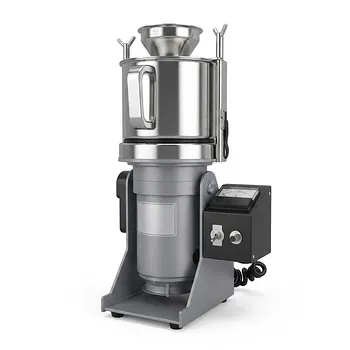
High Speed Air Induced Ultrafine Pulverizer Laboratory Superfine Powder Mill for Pharmaceutical and Material Science Sample Preparation

Laboratory Air Jet Sieving Machine for Fine Powder Particle Size Analysis and Deagglomeration
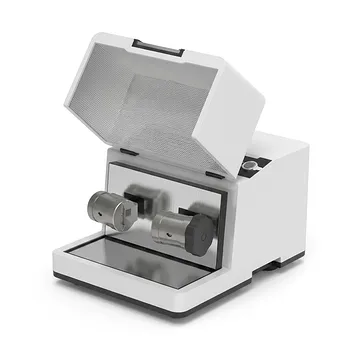
Heating Temperature Controlled High Energy Vibratory Ball Mill
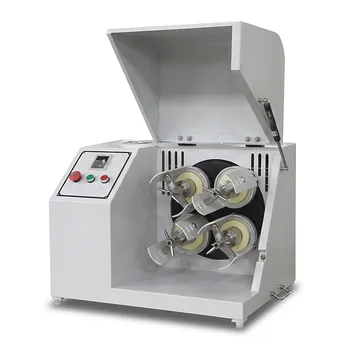
Horizontal Light Duty Planetary Ball Mill for Laboratory Sample Preparation
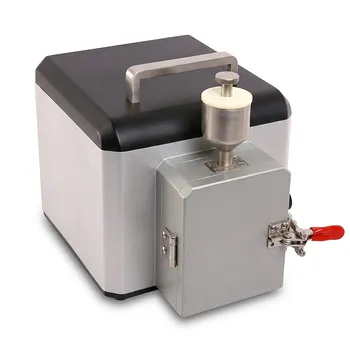
Portable Cutting Mill for Laboratory Sample Preparation and RoHS WEEE Compliance Testing
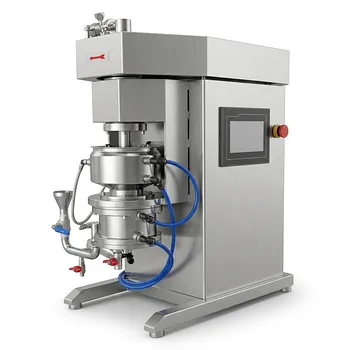
Small Ceramic Structure Laboratory Sand Mill Nanoscale Grinding Dispersion Equipment Seal-less Screen-less Design
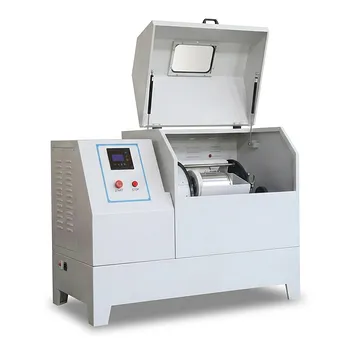
Heavy Duty Horizontal Planetary Ball Mill for Efficient Industrial Grinding and Sample Preparation
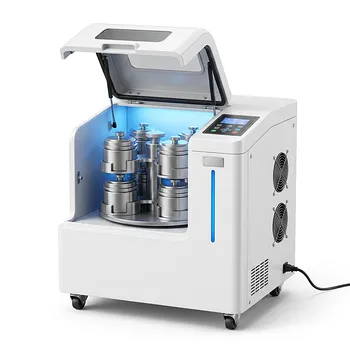
High Energy Omnidirectional Planetary Ball Mill 20L

High Energy Omnidirectional Planetary Ball Mill 16L
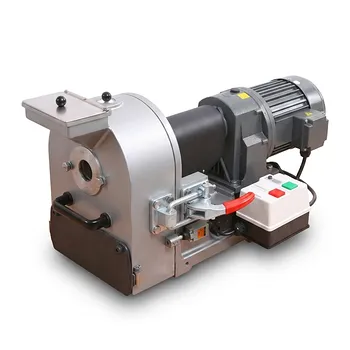
Laboratory Disc Mill for Fine Sample Preparation of Hard and Brittle Materials
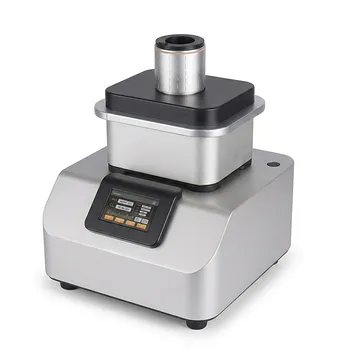
Ultra Centrifugal Mill High Speed Laboratory Grinder for Fibrous and Brittle Sample Preparation

High Energy Laboratory Planetary Ball Mill for Nano Grinding and Material Science Sample Preparation