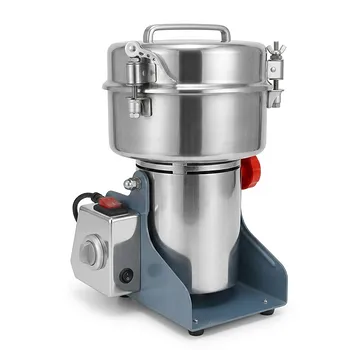
What is the function of a micronizing mill in the preparation of blended cement samples for XRD analysis? Accuracy Guide
Updated 5 months ago
The micronizing mill is the primary tool for reducing blended cement samples to a uniform, micron-level powder prior to X-ray diffraction (XRD) analysis. This specialized grinding process ensures that hydration-terminated samples are refined into an extremely fine micro-powder, typically reaching particle sizes between 1 and 30 microns. By achieving this level of fineness, the mill minimizes the "preferred orientation" effect, allowing for the precise quantitative identification of complex secondary reaction products and residual minerals.
Core Takeaway: A micronizing mill is essential for transforming cement samples into a statistically representative powder that eliminates particle-related distortions. This preparation is the prerequisite for high-resolution XRD patterns and accurate Rietveld refinement.
Enhancing Data Quality through Particle Refinement
Eliminating Preferred Orientation
In XRD, "preferred orientation" occurs when large or needle-like crystals align in a specific direction rather than being randomly oriented. This alignment causes certain diffraction peaks to appear disproportionately intense while others disappear, leading to incorrect mineral quantification. Micronizing mills break these particles down, ensuring they are small enough to settle randomly in the sample holder.
Minimizing Micro-absorption Effects
Large particles can absorb X-rays before they reach the detector, a phenomenon known as the micro-absorption effect. This reduces the overall intensity of the diffraction peaks and can hide minor phases in the cement blend. Uniformly grinding the sample to a sub-micron level produces sharper, more intense peaks that reveal the true mineralogical composition.
Achieving Statistical Representation
For an XRD pattern to be accurate, the X-ray beam must hit a sufficient number of crystal planes in all possible orientations. A micronizing mill increases the number of particles in the sample volume by orders of magnitude. This ensures that the diffraction intensities accurately reflect the true content of phases like quartz, feldspar, and dolomite.
Precision in Complex Phase Identification
Identifying Secondary Reaction Products
Blended cements contain complex secondary products such as ettringite and calcium monocarboaluminate that are sensitive to preparation methods. The high-resolution patterns produced after micronization allow researchers to distinguish these phases from the background noise. This is critical for understanding the chemical evolution of the cement paste over time.
Quantifying Residual and Amorphous Minerals
The mill enables the identification of residual clinker minerals and minerals like mullite and quartz found in fly ash or slag. Furthermore, when combined with internal standards, this level of refinement allows for the precise measurement of amorphous phases, such as Calcium Silicate Hydrate (C-S-H).
Improving Rietveld Refinement Accuracy
Rietveld refinement is a mathematical method used to quantify mineral phases based on the entire diffraction pattern. This method relies on the assumption that the sample is perfectly random and finely ground. Micronization provides the high-quality data foundation necessary for this refinement to produce reliable, reproducible results.
Understanding the Trade-offs
Risk of Crystalline Structure Damage
While fine grinding is necessary, high-energy pulverization can generate excessive heat or mechanical stress. This can damage the crystalline structure of sensitive minerals, particularly clay minerals or certain hydrated phases. To mitigate this, many experts utilize low-energy grinding or wet grinding technology to preserve the sample's integrity.
Sample Loss and Contamination
Wet grinding in a micronizing mill often requires the use of a solvent (like ethanol) to prevent hydration and agglomeration. If not managed carefully, this can lead to sample loss during recovery or potential contamination from the grinding media. Analysts must balance the need for fineness with the practicalities of sample recovery and purity.
How to Apply This to Your Analysis
Making the Right Choice for Your Goal
- If your primary focus is quantitative Rietveld refinement: Use a micronizing mill to reach a particle size of approximately 1 micron to ensure maximum peak resolution and random orientation.
- If your primary focus is preserving sensitive clay minerals: Opt for low-energy grinding settings or wet grinding to reduce particle size without destroying the underlying crystal lattice.
- If your primary focus is identifying amorphous content: Ensure the mill produces a highly uniform powder and incorporate an internal standard to accurately calculate the non-crystalline fraction.
By mastering the use of the micronizing mill, you transform a raw cement sample into a high-fidelity medium capable of revealing its full mineralogical secrets.
Summary Table:
| Key Function | Impact on XRD Analysis | Scientific Outcome |
|---|---|---|
| Particle Refinement (1-30μm) | Eliminates "preferred orientation" | Accurate mineral quantification |
| Increased Surface Area | Minimizes micro-absorption effects | Sharper, high-intensity peaks |
| Sample Homogenization | Enhances statistical representation | Reliable Rietveld refinement |
| Resolution Optimization | Reduces background noise | Identification of secondary phases |
Elevate Your XRD Accuracy with Precision Sample Prep
Achieving high-resolution Rietveld refinement starts with perfect powder consistency. At our facility, we provide complete laboratory sample preparation solutions for material science, specialized in advanced powder processing and compaction.
Whether you need to refine blended cement or complex minerals, our extensive equipment line includes:
- High-Efficiency Mills: Planetary ball mills, jet mills, and disc mills for sub-micron refinement.
- Processing Tools: Jaw/roll crushers and liquid nitrogen cryogenic grinders for sensitive samples.
- Compaction Excellence: A full spectrum of hydraulic presses, including Cold/Warm Isostatic Presses (CIP/WIP), standard lab presses, and vacuum hot presses.
Ready to eliminate particle-related distortions in your analysis? Contact us today to find the perfect milling solution!
References
- Grizelda du Toit, Elsabé P. Kearsley. Characterisation of the Hydration Products of a Chemically and Mechanically Activated High Coal Fly Ash Hybrid Cement. DOI: 10.3390/min12020157
Mentioned Products
- Laboratory Desktop Ultra Fine Powder Grinder High Speed Micronizing Pulverizer
- High Throughput Micro Ball Mill for Cryogenic Grinding and Laboratory Cell Disruption
- Nano Laboratory Bead Mill Desktop Sub Micron Sand Mill Screenless Seal Less Powder Grinder
- Water Cooled Pulse Jet Ultrafine Grinder
- Laboratory Micro Vibration Grinding Mill for Trace Sample Preparation
People Also Ask
- What role does a laboratory grinder play in the pretreatment of sunflower seed shell-based adsorbents? Boost Efficiency.
- How does a laboratory grinder or mill enhance the adsorption performance of agricultural waste materials? Boost Surface Area
- What is the function of a laboratory high-speed pulverizer in the preparation of eggshell powder? Essential Pretreatment
- Why is high-efficiency ultra-fine grinding required for Portland cement before XRD? Get Accurate Rietveld Results
- What is the function of a laboratory pulverizer in Boerhavia diffusa-based adsorbent prep? Maximize Surface Area

Tech Team · PowderPreparation
Last updated on May 14, 2026
Related Products
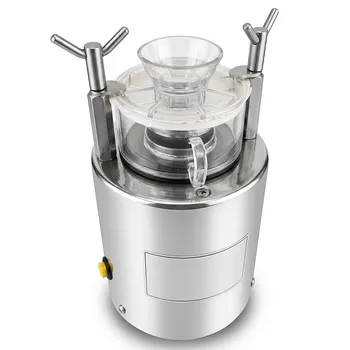
Laboratory Desktop Ultra Fine Powder Grinder High Speed Micronizing Pulverizer
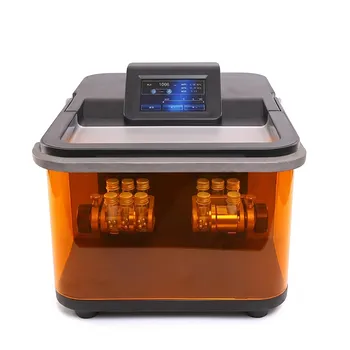
High Throughput Micro Ball Mill for Cryogenic Grinding and Laboratory Cell Disruption
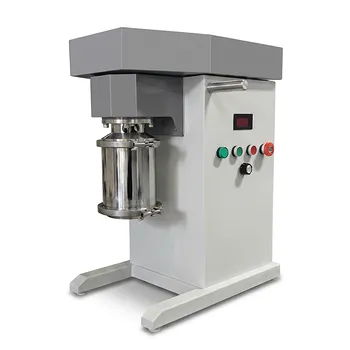
Nano Laboratory Bead Mill Desktop Sub Micron Sand Mill Screenless Seal Less Powder Grinder
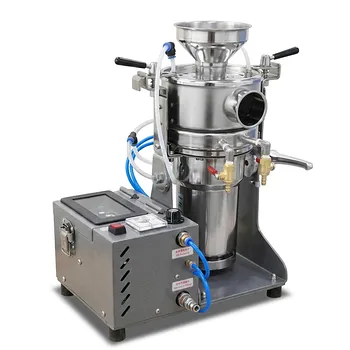
Water Cooled Pulse Jet Ultrafine Grinder
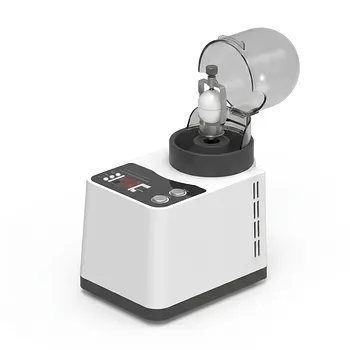
Laboratory Micro Vibration Grinding Mill for Trace Sample Preparation
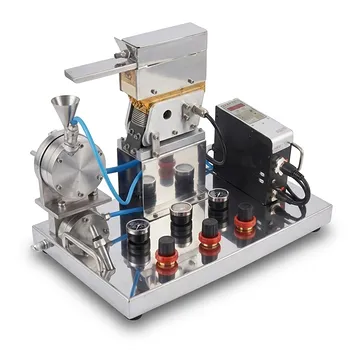
Benchtop Micro Air Jet Mill for Ultrafine Grinding of High Value Powders
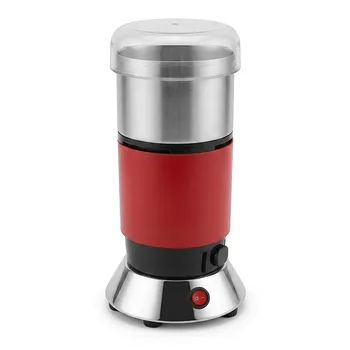
Micro Solid Sample Grinder High Speed Pulverizer for Laboratory Small Batch Grinding
Small Ceramic Structure Laboratory Sand Mill Nanoscale Grinding Dispersion Equipment Seal-less Screen-less Design
Miniature Planetary Ball Mill with Vacuum Grinding and High Efficiency for Laboratory Sample Preparation

High Energy Planetary Ball Mill for Nano Scale Grinding and Mechanical Alloying
Laboratory Small Horizontal Sand Mill for Nano Materials Wet Grinding
Small Laboratory Colloid Mill for Ultra-Fine Wet Grinding and Emulsification
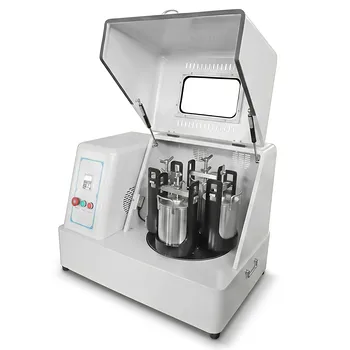
Vertical Square Planetary Ball Mill for Laboratory Sample Preparation and Nanoscale Grinding
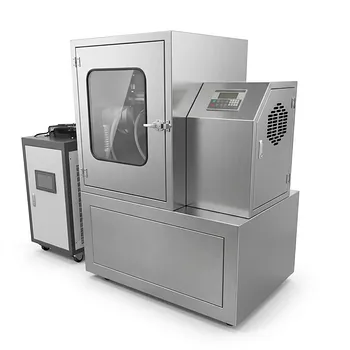
Vibratory Superfine Grinder for Ultra Fine Laboratory Powder Milling
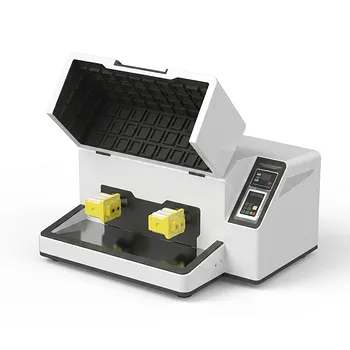
Multi-Platform Nanoscale High-Energy Vibratory Ball Mill
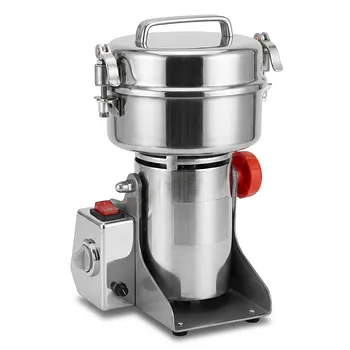
High Speed Laboratory Powder Grinder Small Batch Sample Preparation Mill
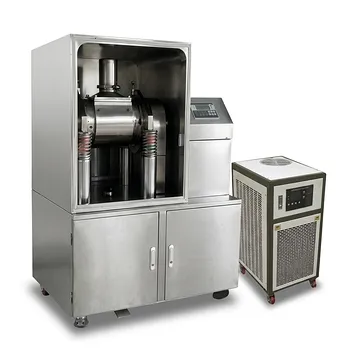
Small Vibrating Ultrafine Grinder for Traditional Chinese Medicine
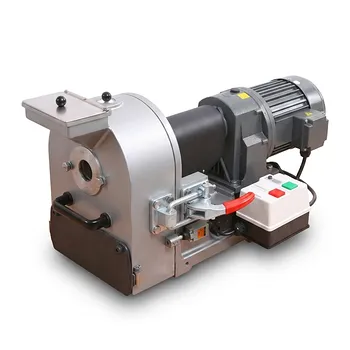
Laboratory Disc Mill for Fine Sample Preparation of Hard and Brittle Materials
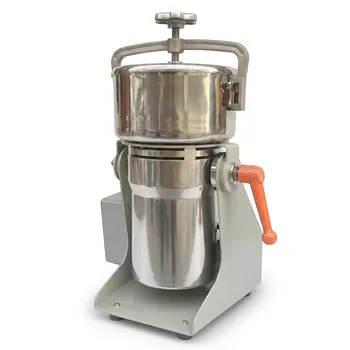
High Speed Laboratory Grinder Efficient Stainless Steel Powder Pulverizer Universal Material Science Mill for Sample Preparation