What is the role of a dry ball mill in the preparation of self-healing agents? Enhance TBC Uniformity & Performance
Updated 3 months ago
The dry ball mill is a critical mechanical processing tool used to de-agglomerate encapsulated self-healing powders during the preparation of thermal barrier coatings (TBCs). By applying controlled mechanical force, the mill breaks down clumps in dried molybdenum disilicide (MoSi2) powders, ensuring that the glass phase film layer—formed by the reaction between precursors and healing components—is distributed evenly. This step is essential for achieving the mixing uniformity required for the self-healing agents to function effectively within the coating matrix.
Core Takeaway: Dry ball milling eliminates powder agglomeration to ensure a uniform distribution of the glass phase film, which is vital for the consistent performance of self-healing mechanisms in thermal barrier coatings.
The Role of Mechanical Force in Powder Preparation
Breaking Up Agglomerated MoSi2 Powders
During the encapsulation process, dried molybdenum disilicide (MoSi2) powders naturally tend to form clusters or agglomerates. The primary role of the dry ball mill is to use mechanical impact and attrition to break these clusters back into individual, usable particles.
Ensuring Uniform Glass Phase Distribution
Self-healing agents rely on a reaction between components and precursors to form a glass phase film layer. The dry ball mill ensures this film is uniformly distributed across the powder surface, preventing localized concentrations that could weaken the coating.
Facilitating Consistent Particle Size
By refining the powder state, the milling process creates a more predictable particle profile. This consistency is necessary for the subsequent integration of the agents into the complex microstructure of a thermal barrier coating.
Impact on Thermal Barrier Coating Performance
Improving Mixing Uniformity
When self-healing agents are added to TBC precursors, they must be dispersed evenly to avoid "weak spots" in the final product. The dry ball mill prepares the powder so that it integrates seamlessly with other coating materials, resulting in a homogeneous composite.
Optimizing the Self-Healing Response
A thermal barrier coating’s ability to "heal" cracks depends on the self-healing agent being present exactly where damage occurs. Uniformly milled powders ensure that the MoSi2-based agents are available throughout the coating volume, providing reliable protection against thermal stress.
Enhancing Structural Integrity
Agglomerated particles can act as defect sites within a coating, leading to premature delamination or failure. By eliminating these clumps, dry ball milling contributes to a denser and more robust coating architecture.
Understanding the Trade-offs
Risk of Particle Degradation
While milling is necessary for de-agglomeration, excessive milling time or energy can damage the encapsulation layer. If the protective shell of the MoSi2 is compromised prematurely, the self-healing agent may react before it is actually needed.
Heat Generation During Milling
Dry ball milling generates friction, which can lead to localized heating of the powder. For temperature-sensitive precursors or specialized glass phases, this heat must be monitored to prevent unintended chemical changes during the preparation stage.
Making the Right Choice for Your Project
Recommendations for Powder Preparation
- If your primary focus is Maximum Healing Efficiency: Prioritize achieving the highest possible mixing uniformity through calibrated milling cycles to ensure the glass phase is perfectly distributed.
- If your primary focus is Structural Longevity: Focus on gentle de-agglomeration to ensure the encapsulated particles remain intact and do not introduce structural voids into the TBC.
Effective dry ball milling transforms raw encapsulated powders into a high-performance additive that significantly extends the operational lifespan of thermal barrier coatings.
Summary Table:
| Process Phase | Action of Dry Ball Mill | Impact on Coating Performance |
|---|---|---|
| De-agglomeration | Breaks clusters in dried MoSi2 powders | Prevents structural defects and voids |
| Distribution | Evenly spreads the glass phase film layer | Ensures consistent self-healing response |
| Integration | Refines particle size for better mixing | Creates a homogeneous composite matrix |
| Optimization | Controlled mechanical force application | Enhances structural integrity and lifespan |
Optimize Your Material Research with Precision Powder Solutions
Achieving the perfect dispersion for self-healing agents requires high-performance equipment. At [Company Name], we provide complete laboratory sample preparation solutions tailored for material science and advanced coatings.
Whether you are working with MoSi2-based agents or complex Thermal Barrier Coatings (TBCs), our extensive range of equipment ensures your powders meet the strictest uniformity standards:
- Advanced Milling: Planetary ball mills, jet mills, and disc mills for precise particle size control.
- Sample Preparation: Liquid nitrogen cryogenic grinders and various crushers for sensitive materials.
- Compaction & Pressing: A full spectrum of hydraulic presses, including Cold/Warm Isostatic Presses (CIP/WIP), hot presses, and vacuum hot presses.
- Sifting & Mixing: Vibratory sieve shakers and high-efficiency powder mixers for a homogeneous final product.
Ready to enhance your lab's efficiency and coating quality?
Contact our technical experts today to find the ideal equipment for your specific material processing needs.
References
- Soo-Hyeok Jeon, Yeon‐Gil Jung. Effects of Healing Agent on Crack Propagation Behavior in Thermal Barrier Coatings. DOI: 10.4191/kcers.2017.54.6.02
Mentioned Products
- Single Tank High Energy Vibratory Ball Mill for Laboratory Grinding and Mixing
- Vertical Square Planetary Ball Mill for Laboratory Sample Preparation and Nanoscale Grinding
- High Throughput Micro Ball Mill for Cryogenic Grinding and Laboratory Cell Disruption
- Heavy Duty Horizontal Planetary Ball Mill for Efficient Industrial Grinding and Sample Preparation
- Vertical Production Planetary Ball Mill for High Throughput Powder Processing
People Also Ask
- What is the primary purpose of using a vibratory ball mill in the preparation of respirable carbon fiber fragments?
- What is the purpose of using a vibratory ball mill for Al-Ni-Fe alloy ribbons? Achieve High Catalytic Activity
- Why is a vibratory ball mill preferred over a planetary ball mill for rapid powder particle refinement? High-Speed Impact
- How does a high-energy vibratory ball mill improve the performance of MgH2? Optimize Hydrogen Storage Kinetics
- What role do high-energy ball mills play in the preparation of reinforcements for hybrid metal matrix composites?

Tech Team · PowderPreparation
Last updated on Jun 03, 2026
Related Products
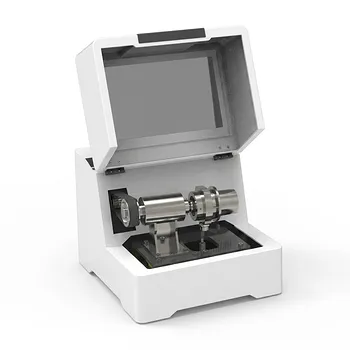
Single Tank High Energy Vibratory Ball Mill for Laboratory Grinding and Mixing
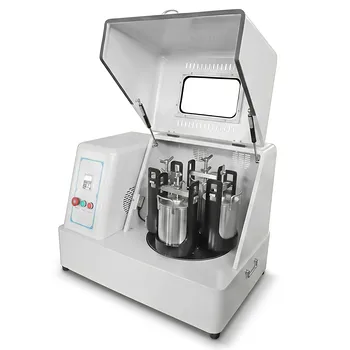
Vertical Square Planetary Ball Mill for Laboratory Sample Preparation and Nanoscale Grinding

High Throughput Micro Ball Mill for Cryogenic Grinding and Laboratory Cell Disruption
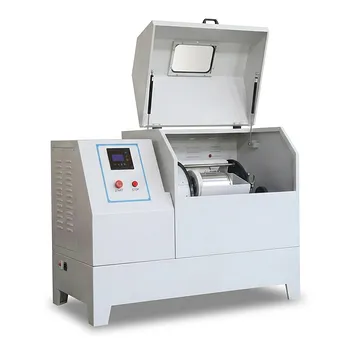
Heavy Duty Horizontal Planetary Ball Mill for Efficient Industrial Grinding and Sample Preparation

Vertical Production Planetary Ball Mill for High Throughput Powder Processing
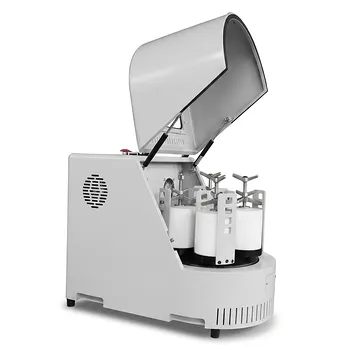
Vertical Semi Circular Planetary Ball Mill for Laboratory Precision Grinding

Dual Station Planetary Ball Mill 24L
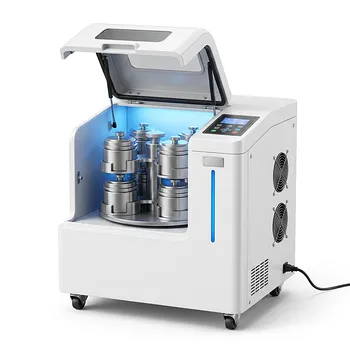
High Energy Omnidirectional Planetary Ball Mill 20L
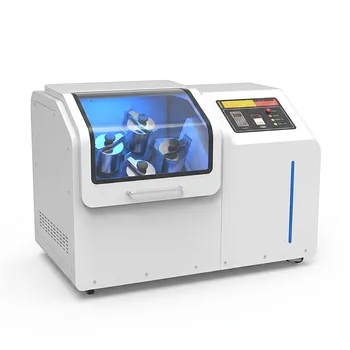
High Energy Omnidirectional Planetary Ball Mill 16L

8L Planetary Ball Mill for Laboratory Grinding and Sample Preparation
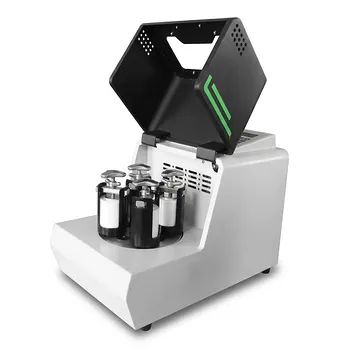
Miniature Planetary Ball Mill with Vacuum Grinding and High Efficiency for Laboratory Sample Preparation
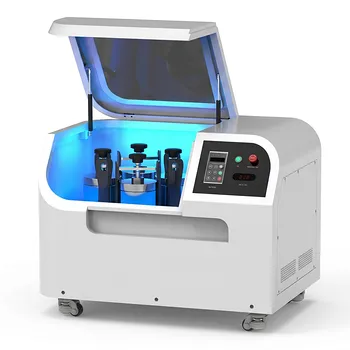
Planetary Ball Mill 12L

High Energy Planetary Ball Mill for Nano Scale Grinding and Mechanical Alloying
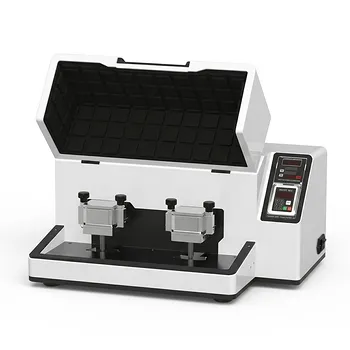
Nanoscale High Energy Vibratory Ball Mill Low Temperature

High Energy Laboratory Planetary Ball Mill for Nano Grinding and Material Science Sample Preparation
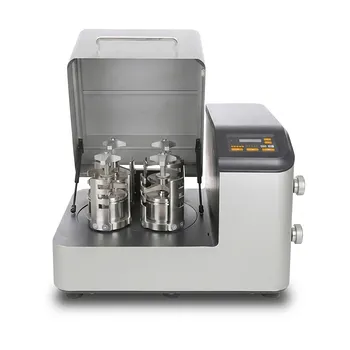
High Energy Planetary Ball Mill for Nano Scale Grinding and Colloidal Mixing in Material Science Research

360° Rotating Omnidirectional Laboratory Planetary Ball Mill for Homogeneous Ultra-Fine Grinding and Mixing

Dual Jar High Energy Vibratory Ball Mill

High Energy Hybrid Vibratory Ball Mill for Grinding Mixing and Cell Disruption