What is the purpose of using laboratory filters or sieves after ball milling alumina slurries? - Ensure Slurry Quality
Updated 4 months ago
Post-milling filtration is a critical isolation step in ceramic processing. Its primary purpose is to physically separate the homogenized alumina slurry from the grinding media, such as alumina balls, used during the milling cycle. This process ensures that the slurry is free from media fragments and foreign contaminants before it advances to sensitive downstream stages like ultrasonic degassing and molding.
The use of laboratory filters or sieves acts as a vital quality gate that preserves the integrity of the alumina slurry by removing physical obstructions and grinding debris. By isolating the refined suspension from the mechanical tools used to create it, manufacturers prevent structural defects and ensure chemical consistency in the final ceramic product.
The Mechanics of Slurry Refinement
Physical Separation of Grinding Media
The most immediate function of a sieve or filter is to intercept alumina grinding balls. While these media are essential for providing the impact and shear forces necessary to break down powder agglomerates, they must be completely removed before the slurry is cast.
Protecting Downstream Processes
Filtering serves as a transition to the ultrasonic degassing stage. By removing large particles and media fragments early, you prevent damage to delicate equipment and ensure that the degassing process can effectively remove air bubbles introduced during the high-energy milling phase.
Ensuring Slurry Purity
Even high-quality alumina media can undergo slight wear or fragmentation during extended milling cycles (e.g., 15-hour sessions). A precise filter captures these media fragments, ensuring that no large, non-homogenized solids compromise the uniform chemical composition of the suspension.
Enhancing Material Integrity
Eliminating Structural Defects
In the production of high-performance ceramics, even a single large foreign particle can act as a stress concentrator. By sieving the slurry, you ensure that the green body—the unfired ceramic shape—reaches a high level of internal density uniformity.
Facilitating Uniform Dispersion
Ball milling is used to distribute additives like sintering aids, dispersants, and binders evenly throughout the mixture. The subsequent filtration step confirms that the resulting suspension is a truly homogenized liquid phase, free from the "hard agglomerates" that often form during raw powder handling.
Optimizing Flow for Molding
Whether the goal is slip casting or dry pressing, the slurry must exhibit a stable viscosity and consistent flowability. Removing oversized debris via filtration ensures that the slurry fills the molds evenly, which is critical for achieving the final densification required for superior mechanical properties.
Understanding the Trade-offs
Mesh Size vs. Slurry Viscosity
Choosing a filter with a mesh that is too fine can lead to rapid clogging, especially in high-concentration slurries (e.g., 40 vol% alumina). Conversely, a mesh that is too coarse may allow smaller fragments of grinding media to pass through, potentially contaminating the final sintered body.
Pressure and Throughput Issues
Manual sieving is effective for small laboratory batches, but highly viscous slurries may require assisted filtration. Relying solely on gravity can be time-consuming and may lead to the settling of solid particles within the sieve, which disrupts the carefully balanced solid-to-liquid ratio.
Potential for Contamination
If the sieve material is not chemically compatible with the alumina matrix, it can introduce metallic or polymer impurities. It is standard practice to use stainless steel or synthetic mesh that matches the purity requirements of the specific alumina composite being produced.
Applying Filtration to Your Workflow
Selecting the Right Approach for Your Goal
- If your primary focus is maximum mechanical strength: Use a fine-mesh sieve (e.g., 60-mesh or finer) to ensure the total removal of all micro-fragments that could cause structural failure.
- If your primary focus is high-volume production efficiency: Prioritize a filtration system that can handle high-viscosity suspensions without clogging to maintain a steady transition to the degassing stage.
- If your primary focus is chemical high-purity: Ensure the filter housing and mesh material are non-reactive and thoroughly cleaned to prevent the introduction of foreign ions into the alumina-graphene or Al2O3/PVA matrix.
A disciplined approach to post-milling filtration is the bridge between raw mechanical processing and the creation of a refined, high-performance ceramic material.
Summary Table:
| Function | Key Benefit | Critical Consideration |
|---|---|---|
| Media Separation | Removes alumina balls and fragments to prevent contamination. | Mesh size selection vs. slurry viscosity. |
| Equipment Protection | Safeguards sensitive ultrasonic degassing and molding tools. | Prevention of sieve clogging/blinding. |
| Structural Integrity | Eliminates stress concentrators to ensure high green body density. | Material compatibility (SS vs. synthetic). |
| Chemical Homogenization | Ensures even distribution of binders and sintering aids. | Maintaining solid-to-liquid ratios. |
Optimize Your Ceramic Processing with Precision Equipment
Achieving high-performance material properties starts with flawless sample preparation. At our core, we provide complete laboratory sample preparation solutions for material science, specializing in the high-precision equipment needed to process and compact powders efficiently.
Whether you are refining alumina slurries or developing advanced composites, our extensive product line supports every stage of your workflow:
- Milling & Grinding: Planetary ball mills, jet mills, and liquid nitrogen cryogenic grinders for perfect homogenization.
- Sieving & Refining: Vibratory and air-jet sieve shakers equipped with precision meshes to ensure slurry purity.
- Advanced Compaction: A full spectrum of hydraulic presses, including Cold/Warm Isostatic Presses (CIP/WIP), vacuum hot presses, and XRF pellet presses.
Ready to enhance your lab's efficiency and material consistency?
Contact our technical experts today to find the ideal solution for your powder processing needs!
References
- Milan Vukšić, Lidija Curkovic. Composition Optimization of Alumina Suspensions which Contain Waste Alumina Powder. DOI: 10.2507/29th.daaam.proceedings.145
Mentioned Products
- Laboratory Basket Sand Mill for Wet Grinding and Dispersion of Viscous Slurries
- Laboratory Nano High Energy Ball Mill Ultrafine Grinding Mechanical Alloying
- Miniature Planetary Ball Mill with Vacuum Grinding and High Efficiency for Laboratory Sample Preparation
- Vertical Production Planetary Ball Mill for High Throughput Powder Processing
- High Energy Laboratory Planetary Ball Mill for Nano Grinding and Material Science Sample Preparation
People Also Ask
- What is the function of a laboratory mill in Cassia tora L. seed analysis? Master Precision Thermal Data Prep.
- What is the purpose of using a laboratory mill to grind dried precipitates? Optimize TiO2/AuNRs Catalyst Homogeneity
- What role does a laboratory mill play in the study of lignite coal co-combustion? Optimizing Fuel Blends and Reactivity
- Why is a sand mill used to process solid carbon-forming agents like PPVA and PER? Enhance Dispersion & Flame Retardancy
- What function does a laboratory mill serve in corn starch saccharification experiments? Optimize Surface Area & Reactions

Tech Team · PowderPreparation
Last updated on Jun 03, 2026
Related Products
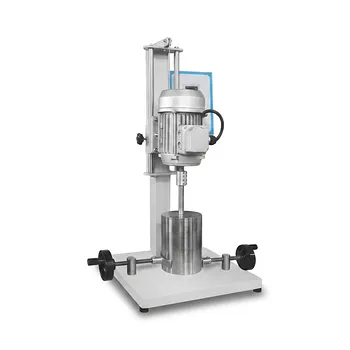
Laboratory Basket Sand Mill for Wet Grinding and Dispersion of Viscous Slurries
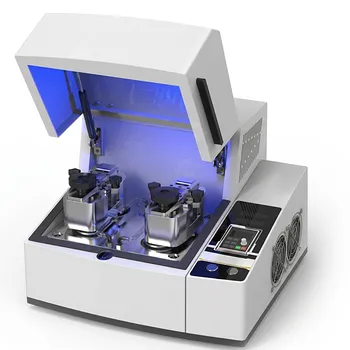
Laboratory Nano High Energy Ball Mill Ultrafine Grinding Mechanical Alloying
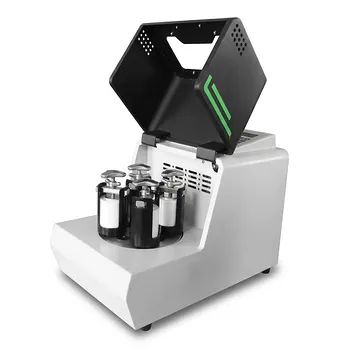
Miniature Planetary Ball Mill with Vacuum Grinding and High Efficiency for Laboratory Sample Preparation
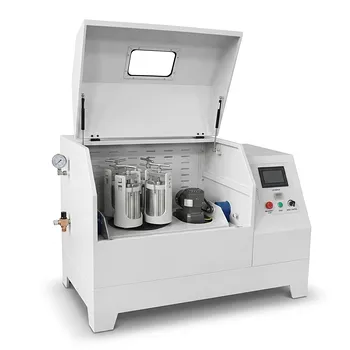
Vertical Production Planetary Ball Mill for High Throughput Powder Processing
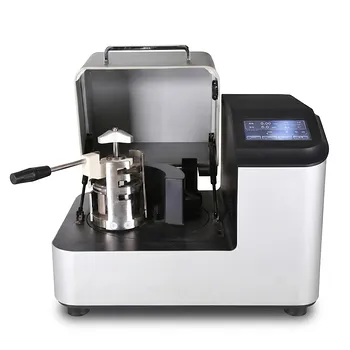
High Energy Laboratory Planetary Ball Mill for Nano Grinding and Material Science Sample Preparation
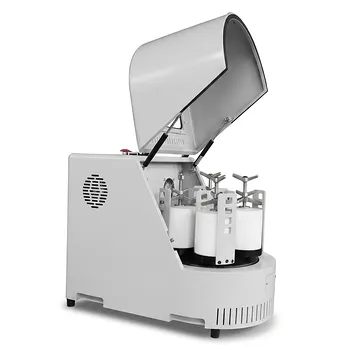
Vertical Semi Circular Planetary Ball Mill for Laboratory Precision Grinding
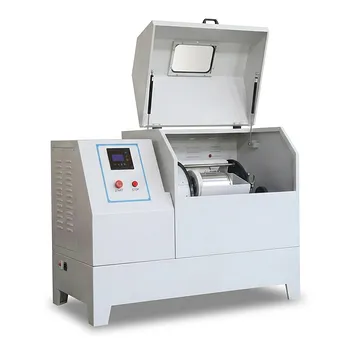
Heavy Duty Horizontal Planetary Ball Mill for Efficient Industrial Grinding and Sample Preparation
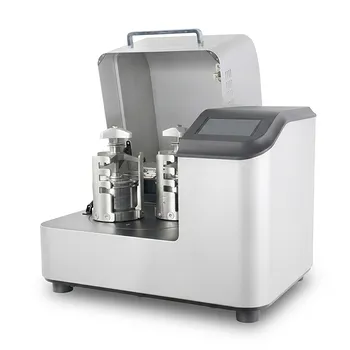
High Energy Planetary Ball Mill for Nano Scale Grinding and Mechanical Alloying
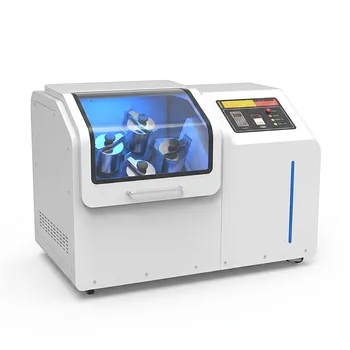
High Energy Omnidirectional Planetary Ball Mill 16L
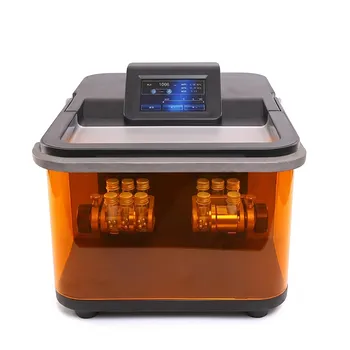
High Throughput Micro Ball Mill for Cryogenic Grinding and Laboratory Cell Disruption
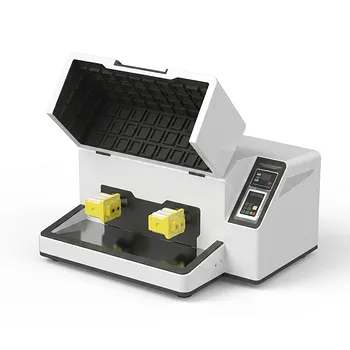
Multi-Platform Nanoscale High-Energy Vibratory Ball Mill