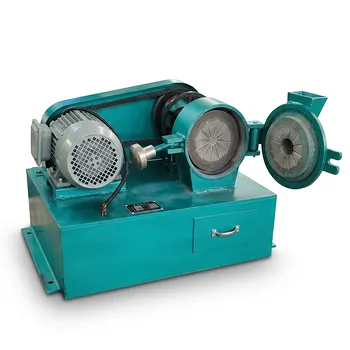
What role does a laboratory ball mill play in Bond Work Index (WI) testing? Key to Precise Mineral Grinding & Scaling
Updated 5 months ago
The laboratory-scale ball mill is the central apparatus used to quantify an ore's resistance to grinding by determining its Bond Work Index (WI). It performs standardized dry grinding cycles to measure the mass of product produced per revolution, a metric known as the Net Grams per Revolution (Gbp). This empirical data is then used in the Bond formula to calculate the energy requirements and specifications for industrial-scale milling equipment.
The Bond Work Index test uses a standardized laboratory ball mill to bridge the gap between small-scale ore samples and industrial-scale production. It provides a repeatable, quantitative measure of grindability that allows engineers to accurately size equipment and forecast power consumption.
Simulating Industrial Comminution at Scale
Precision Tooling and Dimensions
A standard Bond ball mill typically measures 300 mm x 300 mm with smooth liners. It utilizes a specific distribution of steel ball media and a fixed rotational speed to create a consistent, high-energy environment for every test.
Dry Grinding Mechanics
The mill operates under standardized dry grinding conditions, utilizing controlled mechanical impact and attrition. This setup mimics the crushing and grinding forces found in large-scale industrial circuits, allowing for a direct comparison between laboratory results and field performance.
Establishing the Grinding Environment
By controlling parameters such as media filling rate and rotational speed, the mill provides a stable output of mechanical energy. This environment is essential for identifying how different materials, from iron ore to gold-bearing quartz, react to mechanical stress.
The Path to Equilibrium through Cycle Grinding
Managing the Circulating Load
The test involves multiple grinding cycles designed to simulate a closed-circuit industrial operation. The mill is run in stages, with the undersize material removed and replaced by fresh feed after each cycle.
Reaching Steady-State Data
The process continues until a constant circulating load (typically 250%) is established. Once the mass of the product produced per revolution stabilizes, the material is considered at equilibrium, providing the "steady-state" data required for a reliable index.
Evaluating Resistance
This repetitive cycling identifies the material’s resistance to refinement. By measuring the energy required to grind the ore from a specific feed size to a target product size, the mill quantifies the difficulty of the comminution task.
From Mechanical Work to Mathematical Data
Measuring the Net Grams per Revolution (Gbp)
The laboratory mill allows for the precise measurement of the Gbp, which represents the material's specific grindability. This value is the most critical technical parameter derived from the physical grinding process.
Calculating the Work Index
The Gbp value, along with the 80% passing size of the feed and the product, is plugged into the Bond formula. The resulting Work Index (WI) quantifies the energy (in kWh/t) required to reduce the material from an infinite size to a specific fineness.
Comparative Analysis
In methods like the Berry and Bruce comparison, the mill provides an identical environment for both a reference ore and a test sample. This allows researchers to determine relative grindability by comparing the increase in particle surface area between the two materials.
Understanding the Trade-offs and Pitfalls
Sensitivity to Feed Preparation
The accuracy of the Work Index is highly dependent on precise feed preparation. If the initial sample size distribution is inconsistent or deviates from the standard, the resulting data may lead to the selection of incorrectly sized industrial mills.
Material Morphology Limitations
While the Bond test is the industry standard, it may struggle with highly heterogeneous materials or ores with unusual morphological features. In these cases, the laboratory ball mill results must be interpreted with caution and compared against multiple samples.
Static Nature of the Test
The standard Bond test provides a snapshot of grindability under dry conditions. If the intended industrial application involves wet grinding or specific chemical additives, the laboratory ball mill results may require additional correction factors to remain accurate.
Applying the Work Index to Your Project
Making the Right Choice for Your Goal
- If your primary focus is equipment selection: Use the laboratory mill data to determine the total power requirements (kW) needed for your industrial-scale circuit.
- If your primary focus is operational efficiency: Monitor changes in the Work Index over time to identify variations in ore hardness that may require adjustments to mill throughput.
- If your primary focus is feasibility studies: Utilize the Berry and Bruce comparison method to benchmark your ore against known standards to estimate potential processing costs.
The laboratory ball mill remains the indispensable tool for transforming raw ore characteristics into the actionable engineering data required for successful mineral processing.
Summary Table:
| Feature | Role in Bond Work Index (WI) Determination | Key Benefit |
|---|---|---|
| Standard Dimensions | 300 mm x 300 mm mill with smooth liners | Ensures repeatable, standardized mechanical stress. |
| Gbp Measurement | Calculates Net Grams per Revolution | Provides the specific technical metric for grindability. |
| Cycle Grinding | Simulates closed-circuit industrial operations | Establishes equilibrium for reliable steady-state data. |
| Bond Formula | Converts empirical data into kWh/t | Enables accurate industrial-scale equipment sizing. |
| Grinding Media | Standardized steel ball distribution | Mimics industrial crushing and attrition forces. |
Optimize Your Material Research with Expert Grinding Solutions
Precise Bond Work Index testing requires high-performance laboratory equipment that delivers repeatable results. We provide complete laboratory sample preparation solutions for material science, specializing in advanced powder processing and compaction equipment tailored for engineers and researchers.
Our extensive product line includes:
- Precision Mills: Planetary ball mills, jet mills, and liquid nitrogen cryogenic grinders.
- Size Reduction: Jaw and roll crushers for consistent feed preparation.
- Classification: Sieve shakers (vibratory/air-jet) and high-quality test sieves.
- Compaction Excellence: A full spectrum of hydraulic presses, including Cold/Warm Isostatic Presses (CIP/WIP), vacuum hot presses, and XRF pellet presses.
Whether you are conducting feasibility studies or optimizing industrial throughput, our tools ensure your data is accurate and actionable. Ready to enhance your lab’s efficiency? Contact our experts today to find the perfect solution for your mineral processing needs.
References
- Gerson Ferreira da Silva, Defsson Douglas de Araújo Ferreira. Tecnological tests of the pegmatites waste at Alto Dois Irmãos/PB in the Borborema Pegmatitic Province/BPP. DOI: 10.1590/0370-44672023770055
Mentioned Products
- 360° Rotating Omnidirectional Laboratory Planetary Ball Mill for Homogeneous Ultra-Fine Grinding and Mixing
- Vertical Semi Circular Planetary Ball Mill for Laboratory Precision Grinding
- High Energy Laboratory Planetary Ball Mill for Nano Grinding and Material Science Sample Preparation
- Laboratory Nano High Energy Ball Mill Ultrafine Grinding Mechanical Alloying
- Vertical Square Planetary Ball Mill for Laboratory Sample Preparation and Nanoscale Grinding
People Also Ask
- What role does an omni-directional planetary ball mill play in brass/cobalt antimonide pretreatment? Achieve Nano-Scale Homogeneity.
- What is the function of an omni-directional planetary ball mill? Achieve Streak-Free Glass Homogenization
- Why is an intermittent grinding process required for perovskites in a planetary ball mill? Ensure Stability & Purity
- Why is a planetary ball mill essential for SiBCN-rGO wet-spinning? Achieve Superior Dispersion and Spinnability
- What role does a planetary ball mill play in the synthesis of Li6PS5Cl (LPSCl)? Unlock High Ionic Conductivity

Tech Team · PowderPreparation
Last updated on May 14, 2026
Related Products
360° Rotating Omnidirectional Laboratory Planetary Ball Mill for Homogeneous Ultra-Fine Grinding and Mixing
Vertical Semi Circular Planetary Ball Mill for Laboratory Precision Grinding
High Energy Laboratory Planetary Ball Mill for Nano Grinding and Material Science Sample Preparation
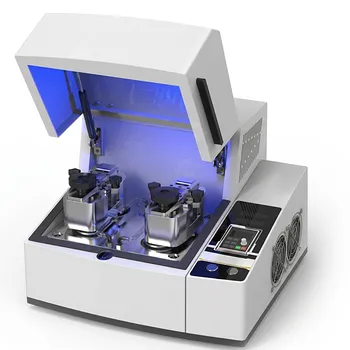
Laboratory Nano High Energy Ball Mill Ultrafine Grinding Mechanical Alloying
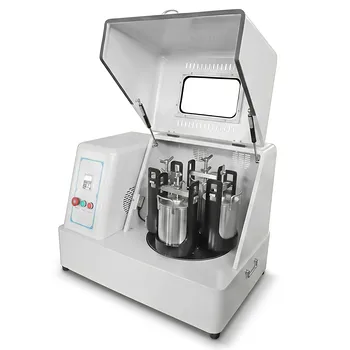
Vertical Square Planetary Ball Mill for Laboratory Sample Preparation and Nanoscale Grinding
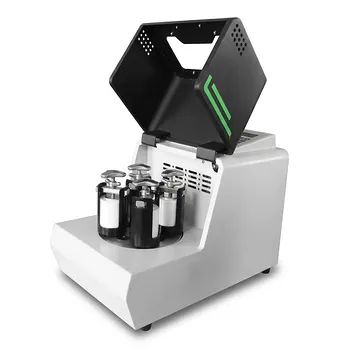
Miniature Planetary Ball Mill with Vacuum Grinding and High Efficiency for Laboratory Sample Preparation
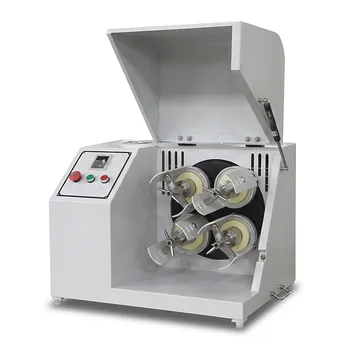
Horizontal Light Duty Planetary Ball Mill for Laboratory Sample Preparation
Single Tank High Energy Vibratory Ball Mill for Laboratory Grinding and Mixing

Nano High Energy Vibratory Ball Mill for Laboratory Sample Preparation
8L Planetary Ball Mill for Laboratory Grinding and Sample Preparation
Nanoscale High-Energy Vibratory Ball Mill for Laboratory Sample Preparation, Mechanochemistry, and Mechanical Alloying
Planetary Ball Mill 12L
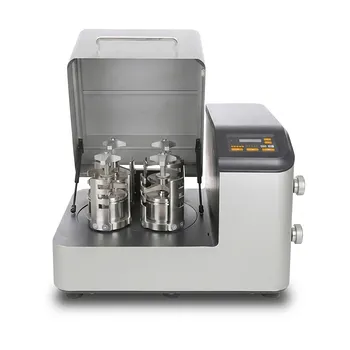
High Energy Planetary Ball Mill for Nano Scale Grinding and Colloidal Mixing in Material Science Research
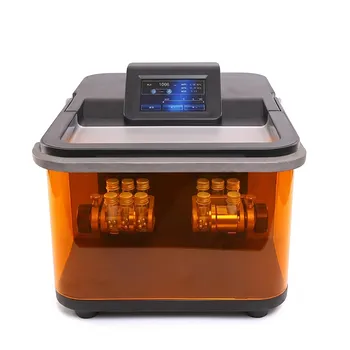
High Throughput Micro Ball Mill for Cryogenic Grinding and Laboratory Cell Disruption
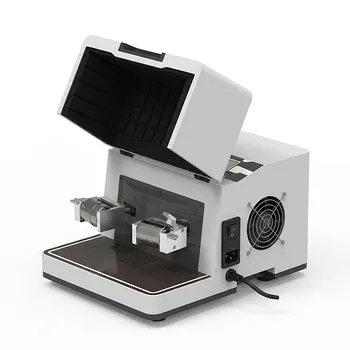
High Energy Hybrid Vibratory Ball Mill for Grinding Mixing and Cell Disruption
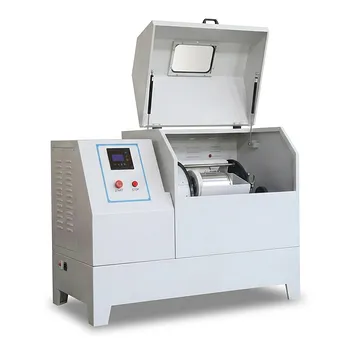
Heavy Duty Horizontal Planetary Ball Mill for Efficient Industrial Grinding and Sample Preparation
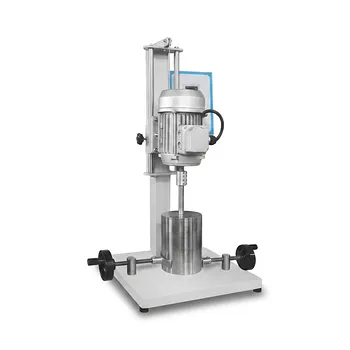
Laboratory Basket Sand Mill for Wet Grinding and Dispersion of Viscous Slurries

High Energy Planetary Ball Mill for Nano Scale Grinding and Mechanical Alloying
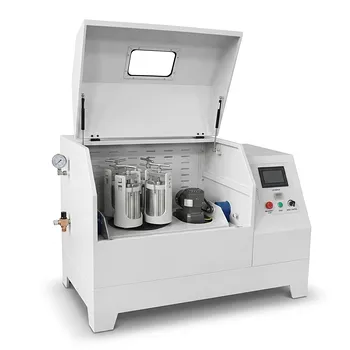
Vertical Production Planetary Ball Mill for High Throughput Powder Processing