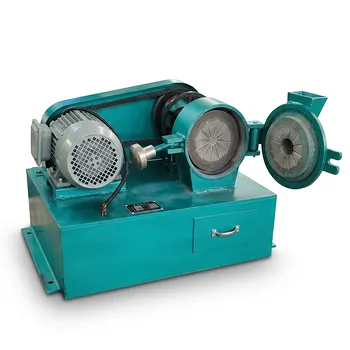
What is the function of a laboratory ball mill in glass-ceramic pretreatment? Optimize Homogeneity & Reactivity
Updated 5 months ago
In the pretreatment of CaO-MgO-Al2O3-SiO2 glass-ceramic raw materials, the laboratory ball mill functions as a critical mechanical processor used to refine coarse materials into micron-scale powders.
This equipment employs high-speed rotation to generate impact and shearing forces, which significantly increases the specific surface area of the raw materials. This physical transformation enhances the reaction activity and ensures that chemical components are uniformly distributed before the subsequent high-temperature melting process.
Core Takeaway: The laboratory ball mill is the foundational tool for achieving the precise particle size and compositional homogeneity necessary for glass-ceramic production. By reducing materials to the micron level, it lowers the energy barriers for chemical reactions during melting and phase formation.
The Mechanics of Particle Size Reduction
Achieving Micron-Scale Precision
A laboratory ball mill utilizes the kinetic energy of grinding media—typically ceramic or steel balls—to crush coarse precursors like coal gangue or iron ore. Through high-frequency impact and attrition, the mill reduces these materials to particles often smaller than 32–71 micrometers. This size reduction is essential for increasing the density of the material during initial processing stages.
Increasing Specific Surface Area for Reactivity
As the particle size decreases, the total specific surface area of the powder increases exponentially. This expanded surface area provides more contact points for chemical reactions to occur. In the CaO-MgO-Al2O3-SiO2 system, this increased reactivity is vital for ensuring the comprehensive formation of desired crystalline phases during melting.
Ensuring Compositional Homogeneity
Atomic-Scale Mixing of Diverse Oxides
Glass-ceramics require a precise blend of various oxides that often have different densities and hardness levels. The ball mill provides deep mechanical mixing that ensures these components are uniformly distributed at a microscopic, and sometimes atomic, scale. This level of homogeneity prevents localized chemical imbalances that could lead to defects in the final ceramic structure.
Facilitating Consistent Phase Formation
Consistent mixing ensures that the melt pool formed during high-temperature processing is chemically stable. This uniformity is a prerequisite for the formation of specific phases, such as Forsterite (Mg2SiO4) or cristobalite. Without proper ball milling, the final product may suffer from anisotropic microstructures or incomplete crystallization.
Understanding the Trade-offs
Risk of Media Contamination
While ball milling is highly effective, the mechanical wear on the grinding balls and the mill lining can introduce impurities into the raw material. These contaminants can alter the chemical profile of the CaO-MgO-Al2O3-SiO2 system, potentially affecting the color, strength, or thermal properties of the glass-ceramic. Selecting the correct grinding media hardness is critical to minimizing this risk.
Energy and Time Intensity
Achieving ultra-fine particle sizes requires significant energy input and extended milling durations. Over-milling can lead to particle agglomeration, where fine powders begin to clump together due to electrostatic forces, effectively reversing the benefits of the grinding process. Finding the optimal balance between milling time and energy input is a common challenge for researchers.
How to Apply This to Your Project
Effective pretreatment requires aligning your milling strategy with your specific material requirements and downstream goals.
- If your primary focus is maximizing chemical reactivity: Use high-energy planetary milling to achieve the smallest possible particle size, ensuring the highest specific surface area for melting.
- If your primary focus is material purity: Select high-purity alumina or zirconia grinding media to prevent metallic contamination during the refinement of oxide powders.
- If your primary focus is structural density: Focus on achieving a specific particle size distribution rather than just the smallest size, as a mix of sizes can often lead to better packing density in green bodies.
By mastering the mechanical pretreatment of your raw materials, you ensure a stable foundation for the complex chemical transformations that define high-performance glass-ceramics.
Summary Table:
| Key Function | Mechanical Action | Impact on Glass-Ceramic Production |
|---|---|---|
| Size Reduction | High-speed impact & attrition | Reduces particles to micron-scale (<71μm) for better density. |
| Surface Activation | Increasing specific surface area | Lowers energy barriers and accelerates chemical reactions. |
| Homogenization | Deep mechanical mixing | Ensures uniform oxide distribution and prevents structural defects. |
| Phase Promotion | Kinetic energy transfer | Facilitates consistent formation of phases like Forsterite. |
Elevate Your Material Research with Precision Powder Solutions
Achieving the perfect micron-scale distribution is critical for high-performance glass-ceramics. At [Our Brand Name], we provide complete laboratory sample preparation solutions tailored for material science, specializing in high-efficiency powder processing and compaction equipment.
Our extensive product line is designed to help you master every stage of the pretreatment process:
- Advanced Milling: Planetary ball mills, jet mills, and cryogenic grinders for superior particle refinement.
- Preparation & Sizing: Jaw crushers, sieve shakers (vibratory/air-jet), and precision powder mixers.
- High-End Compaction: A full spectrum of hydraulic presses, including Cold/Warm Isostatic Presses (CIP/WIP), vacuum hot presses, and XRF pellet presses.
Whether you are focusing on maximizing chemical reactivity or maintaining material purity, our expertise ensures your lab achieves consistent, repeatable results. Contact our technical team today to find the ideal solution for your specific application!
References
- Changlong Wang, Xiaowei Cui. Effects of Heat Treatment System on Mechanical Strength and Crystallinity of CaO-MgO- Al2O3-SiO2 Glass-Ceramics Containing Coal Gangue and Iron Ore Tailings. DOI: 10.14447/jnmes.v22i2.a02
Mentioned Products
- 360° Rotating Omnidirectional Laboratory Planetary Ball Mill for Homogeneous Ultra-Fine Grinding and Mixing
- Vertical Semi Circular Planetary Ball Mill for Laboratory Precision Grinding
- High Energy Laboratory Planetary Ball Mill for Nano Grinding and Material Science Sample Preparation
- Laboratory Nano High Energy Ball Mill Ultrafine Grinding Mechanical Alloying
- Vertical Square Planetary Ball Mill for Laboratory Sample Preparation and Nanoscale Grinding
People Also Ask
- What role does an omni-directional planetary ball mill play in brass/cobalt antimonide pretreatment? Achieve Nano-Scale Homogeneity.
- What is the function of an omni-directional planetary ball mill? Achieve Streak-Free Glass Homogenization
- Why is an intermittent grinding process required for perovskites in a planetary ball mill? Ensure Stability & Purity
- Why is a planetary ball mill essential for SiBCN-rGO wet-spinning? Achieve Superior Dispersion and Spinnability
- What role does a planetary ball mill play in the synthesis of Li6PS5Cl (LPSCl)? Unlock High Ionic Conductivity

Tech Team · PowderPreparation
Last updated on May 14, 2026
Related Products
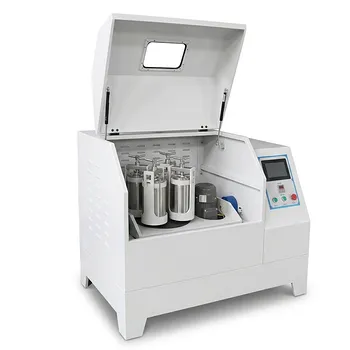
360° Rotating Omnidirectional Laboratory Planetary Ball Mill for Homogeneous Ultra-Fine Grinding and Mixing
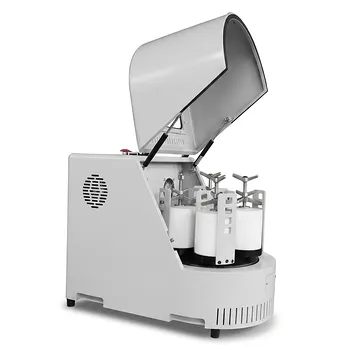
Vertical Semi Circular Planetary Ball Mill for Laboratory Precision Grinding
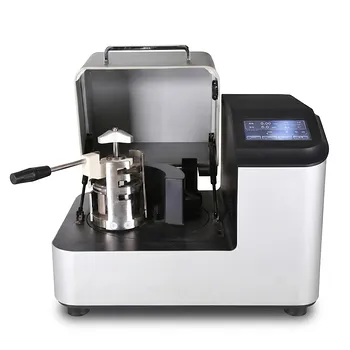
High Energy Laboratory Planetary Ball Mill for Nano Grinding and Material Science Sample Preparation
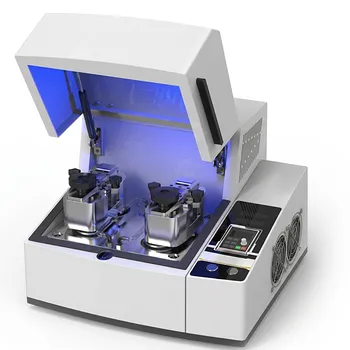
Laboratory Nano High Energy Ball Mill Ultrafine Grinding Mechanical Alloying
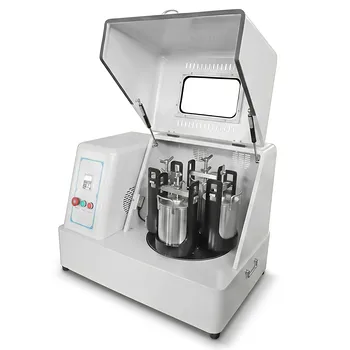
Vertical Square Planetary Ball Mill for Laboratory Sample Preparation and Nanoscale Grinding

Miniature Planetary Ball Mill with Vacuum Grinding and High Efficiency for Laboratory Sample Preparation
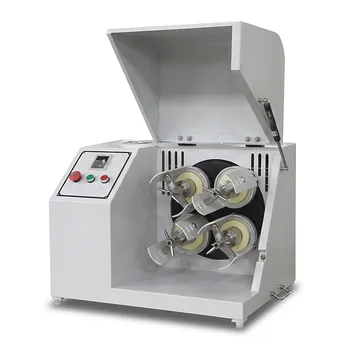
Horizontal Light Duty Planetary Ball Mill for Laboratory Sample Preparation
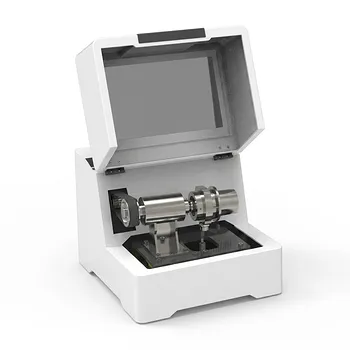
Single Tank High Energy Vibratory Ball Mill for Laboratory Grinding and Mixing

Nano High Energy Vibratory Ball Mill for Laboratory Sample Preparation

8L Planetary Ball Mill for Laboratory Grinding and Sample Preparation
Nanoscale High-Energy Vibratory Ball Mill for Laboratory Sample Preparation, Mechanochemistry, and Mechanical Alloying
Planetary Ball Mill 12L
High Energy Planetary Ball Mill for Nano Scale Grinding and Colloidal Mixing in Material Science Research

High Throughput Micro Ball Mill for Cryogenic Grinding and Laboratory Cell Disruption

High Energy Hybrid Vibratory Ball Mill for Grinding Mixing and Cell Disruption
Heavy Duty Horizontal Planetary Ball Mill for Efficient Industrial Grinding and Sample Preparation
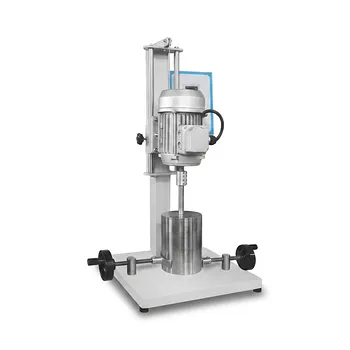
Laboratory Basket Sand Mill for Wet Grinding and Dispersion of Viscous Slurries
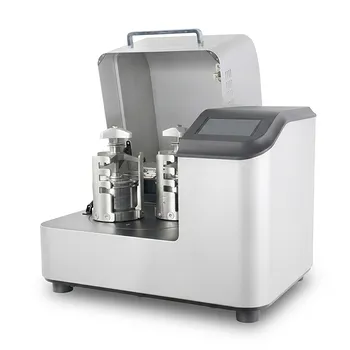
High Energy Planetary Ball Mill for Nano Scale Grinding and Mechanical Alloying
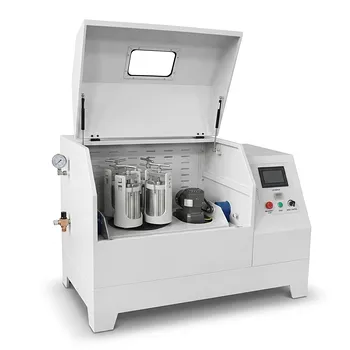
Vertical Production Planetary Ball Mill for High Throughput Powder Processing