What is the primary purpose of using alumina grinding balls during the ball milling process of alumina/graphene composite slurries?
Updated 4 months ago
The primary purpose of using alumina grinding balls is to achieve a perfectly uniform dispersion of graphene within the alumina matrix while ensuring zero chemical contamination of the final composite. This process utilizes high-energy impact and shear forces to coat alumina precursor particles with graphene nanosheets. By matching the chemical composition of the grinding media to the matrix material, manufacturers maintain the highest possible chemical purity required for superior mechanical performance.
Alumina grinding balls serve as a high-energy medium that facilitates the deep mixing and coating of graphene onto alumina particles. This specific choice of material prevents the introduction of foreign impurities, which is critical for maintaining the structural integrity and chemical purity of the resulting composite.
Achieving Structural and Chemical Homogeneity
Eliminating Foreign Impurity Contamination
Using grinding media with a chemical composition identical to the matrix material is the most effective way to minimize foreign impurities. During high-energy ball milling, a small amount of wear on the grinding balls is inevitable. Because the balls are made of alumina, any microscopic wear particles simply integrate into the alumina matrix without altering the chemical signature of the slurry.
Facilitating Graphene Coating
The primary objective in composite preparation is to ensure that graphene nanosheets fully coat the surface of the alumina precursor particles. The mechanical action of the alumina balls provides the necessary energy to force this contact. This thorough coating provides the foundation for producing dense sintered bodies with superior mechanical properties.
Ensuring Deep Mixing and Homogenization
High-purity alumina balls facilitate deep mixing and homogenization of the matrix powder, binders, and graphene. This level of uniformity is difficult to achieve through simple stirring or low-energy methods. Proper homogenization prevents the formation of "graphene-rich" or "graphene-poor" zones, which would otherwise create structural weaknesses.
Enhancing Slurry Properties through Mechanical Energy
Breaking Down Agglomerates
Graphene and alumina powders naturally tend to form aggregates or clumps that can ruin the consistency of a slurry. Alumina grinding balls use physical shear and impact forces to effectively break down these powder agglomerates. This results in a stable, uniform suspension that is essential for downstream processes like slip casting or 3D printing.
Optimizing Slurry Viscosity
By refining the ceramic components and ensuring uniform dispersion, ball milling achieves a stable and manageable viscosity. For example, high-concentration slurries (e.g., 40 vol%) require precise milling to reach a flowable state suitable for industrial application. This mechanical refinement ensures that the particles are well-distributed within the liquid medium and additives.
Increasing Contact Surface Area
High-energy ball milling increases the effective contact area between the ceramic powder and the graphene. This is often achieved through a step-by-step feeding process where the balls repeatedly strike the materials. Maximizing this surface contact is the "at-the-source" solution for the technical challenge of non-uniform graphene distribution.
Understanding the Trade-offs
Balancing Milling Time and Media Wear
While longer milling times (e.g., 15 hours) ensure better dispersion, they also increase the potential for media wear and energy consumption. Although the wear particles are chemically compatible, excessive wear can slightly alter the particle size distribution of the final powder. Engineers must find the "sweet spot" where the powder is fully de-agglomerated without over-milling the media.
Energy Density vs. Material Integrity
High-energy ball milling is necessary to break down tough graphene aggregates, but it can also damage the aspect ratio of the graphene nanosheets if too aggressive. If the impact energy is too high, the graphene flakes may be fragmented into smaller pieces, potentially reducing the thermal or electrical conductivity of the final composite. Selecting the correct size and density of alumina balls is vital to provide enough energy for mixing without destroying the graphene structure.
How to Apply This to Your Project
Maximizing Performance in Your Milling Process
To achieve the best results when milling alumina/graphene composites, your choice of media and process parameters should align with your final material requirements.
- If your primary focus is mechanical strength: Use high-purity alumina balls to ensure no metallic impurities compromise the grain boundaries during sintering.
- If your primary focus is electrical conductivity: Optimize milling time to ensure graphene is dispersed without being physically fractured by excessive impact energy.
- If your primary focus is slurry stability for casting: Prioritize de-agglomeration by selecting a variety of ball sizes to maximize the number of contact points during the milling cycle.
By strategically utilizing alumina grinding media, you ensure a high-purity, uniform precursor that is essential for high-performance ceramic composites.
Summary Table:
| Key Function | Role in the Milling Process | Primary Benefit |
|---|---|---|
| Chemical Matching | Matches media material to the ceramic matrix | Eliminates foreign impurity contamination |
| Mechanical Coating | Uses impact energy to coat particles | Ensures uniform graphene distribution |
| De-agglomeration | Breaks down powder clumps and aggregates | Creates a stable, homogenous suspension |
| Viscosity Control | Refines particles via shear forces | Optimizes slurry flow for casting or 3D printing |
Elevate Your Material Research with Precision Engineering
Achieving the perfect alumina/graphene composite requires more than just the right materials—it demands high-performance equipment that ensures purity and consistency. At [Company Name], we provide complete laboratory sample preparation solutions tailored for material science professionals.
Our specialized lineup includes:
- Advanced Milling: Planetary ball mills, jet mills, and cryogenic grinders for superior dispersion and particle refinement.
- Compaction Excellence: A full spectrum of hydraulic presses, including Cold/Warm Isostatic Presses (CIP/WIP), vacuum hot presses, and XRF pellet presses.
- Processing Tools: Precision crushers, vibratory sieve shakers, and high-efficiency powder mixers.
Whether you are focusing on mechanical strength or electrical conductivity, our equipment is designed to help you reach the "sweet spot" of material integrity. Contact our experts today to find the ideal solution for your powder processing and compaction needs!
References
- Hyo Jin Kim, Rodney S. Ruoff. Unoxidized Graphene/Alumina Nanocomposite: Fracture- and Wear-Resistance Effects of Graphene on Alumina Matrix. DOI: 10.1038/srep05176
Mentioned Products
- Vertical Semi Circular Planetary Ball Mill for Laboratory Precision Grinding
- Heavy Duty Horizontal Planetary Ball Mill for Efficient Industrial Grinding and Sample Preparation
- Vertical Square Planetary Ball Mill for Laboratory Sample Preparation and Nanoscale Grinding
- High Energy Laboratory Planetary Ball Mill for Nano Grinding and Material Science Sample Preparation
- 8L Planetary Ball Mill for Laboratory Grinding and Sample Preparation
People Also Ask
- What role does a planetary ball mill play in the synthesis of Li6PS5Cl (LPSCl)? Unlock High Ionic Conductivity
- Why is a planetary ball mill essential for SiBCN-rGO wet-spinning? Achieve Superior Dispersion and Spinnability
- Why is an intermittent grinding process required for perovskites in a planetary ball mill? Ensure Stability & Purity
- Why is a planetary ball mill required for PET micronization? Ensure Accurate Chemical Analysis of Reprocessed PET
- How does mechanized planetary ball milling compare to manual agate grinding? Optimize sulfide standard material precision.

Tech Team · PowderPreparation
Last updated on Jun 03, 2026
Related Products
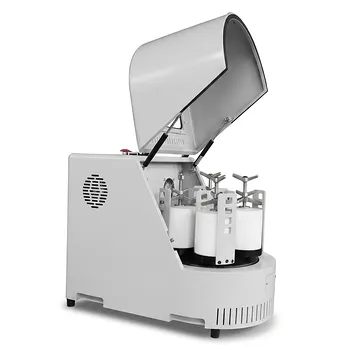
Vertical Semi Circular Planetary Ball Mill for Laboratory Precision Grinding
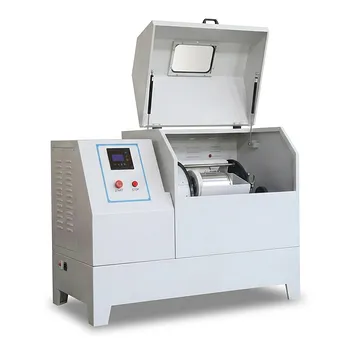
Heavy Duty Horizontal Planetary Ball Mill for Efficient Industrial Grinding and Sample Preparation

Vertical Square Planetary Ball Mill for Laboratory Sample Preparation and Nanoscale Grinding
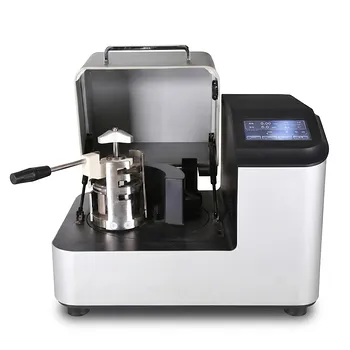
High Energy Laboratory Planetary Ball Mill for Nano Grinding and Material Science Sample Preparation
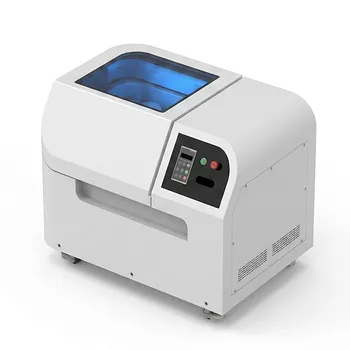
8L Planetary Ball Mill for Laboratory Grinding and Sample Preparation
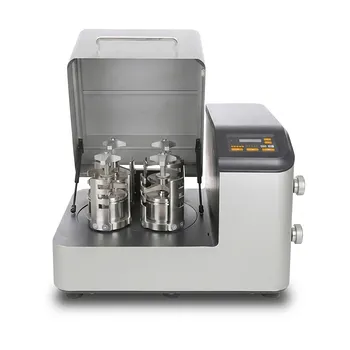
High Energy Planetary Ball Mill for Nano Scale Grinding and Colloidal Mixing in Material Science Research
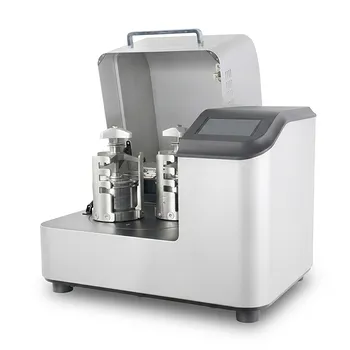
High Energy Planetary Ball Mill for Nano Scale Grinding and Mechanical Alloying
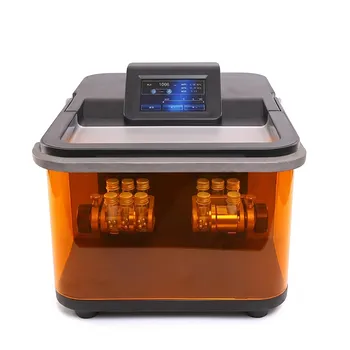
High Throughput Micro Ball Mill for Cryogenic Grinding and Laboratory Cell Disruption

360° Rotating Omnidirectional Laboratory Planetary Ball Mill for Homogeneous Ultra-Fine Grinding and Mixing
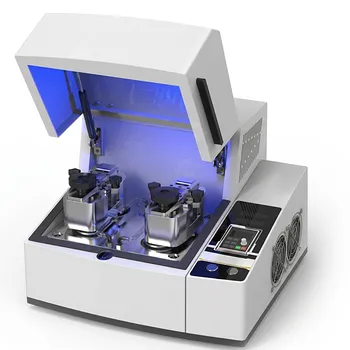
Laboratory Nano High Energy Ball Mill Ultrafine Grinding Mechanical Alloying
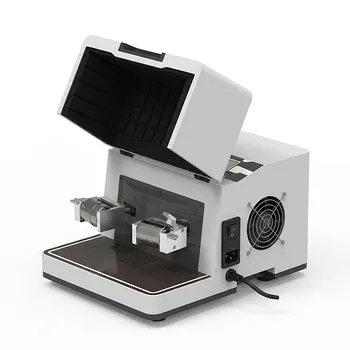
High Energy Hybrid Vibratory Ball Mill for Grinding Mixing and Cell Disruption

Miniature Planetary Ball Mill with Vacuum Grinding and High Efficiency for Laboratory Sample Preparation
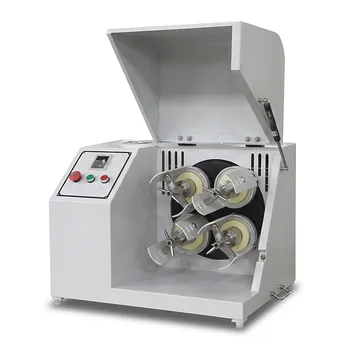
Horizontal Light Duty Planetary Ball Mill for Laboratory Sample Preparation
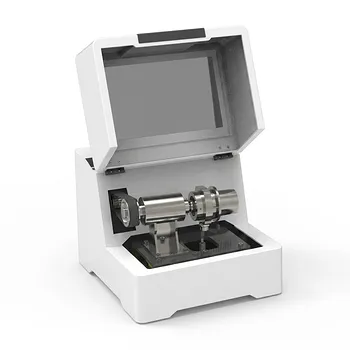
Single Tank High Energy Vibratory Ball Mill for Laboratory Grinding and Mixing
High Energy Omnidirectional Planetary Ball Mill 20L

Vertical Production Planetary Ball Mill for High Throughput Powder Processing

High Energy Omnidirectional Planetary Ball Mill 16L
Dual Station Planetary Ball Mill 24L
Nanoscale High Energy Vibratory Ball Mill Low Temperature