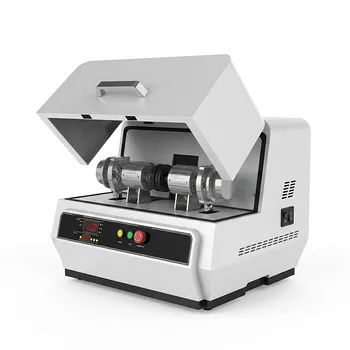
What role does a planetary ball mill play in KNTO ceramic refinement? Optimize Homogeneity & Reactivity
Updated 4 months ago
The planetary ball mill acts as the primary catalyst for achieving microscopic homogeneity and high chemical reactivity in KNTO-based ceramic precursors. By utilizing high-speed rotation to generate intense impact and shear forces, the mill refines $K_2CO_3$, $Ta_2O_5$, and $Nb_2O_5$ powders within an ethanol medium. This process ensures that the components are distributed uniformly at the atomic scale, providing a high-activity foundation necessary for subsequent solid-phase synthesis.
Core Takeaway: The planetary ball mill is essential for transforming coarse, heterogeneous raw materials into an ultra-fine, homogenized powder. This mechanical activation increases the reaction contact area and surface energy, which are critical for synthesizing high-quality ferroelectric ceramics with minimal compositional segregation.
The Mechanism of High-Energy Refinement
Impact and Shear Forces
The planetary ball mill operates through a complex motion where the grinding jars rotate on their own axes while simultaneously orbiting a central sun wheel. This dual-rotation generates centrifugal forces that propel the grinding media with extreme velocity, creating high-frequency impacts and intense shear against the raw material powders.
Particle Size Reduction
This high-energy environment effectively crushes coarse oxide particles, such as Tantalum and Niobium oxides, down to the micrometer or even sub-micrometer scale. By reducing the particle size, the mill significantly increases the specific surface area of the raw materials, which is a prerequisite for efficient chemical reactions.
Mechanochemical Activation
Beyond simple size reduction, the intense mechanical energy can induce mechanochemical effects, such as increasing the surface energy and creating lattice defects. This activation lowers the energy barrier for the subsequent sintering process, allowing for more complete phase formation at lower temperatures.
Achieving Microscopic Homogeneity
Eliminating Compositional Segregation
In ferroelectric systems like KNTO, even minor deviations in local stoichiometry can lead to "secondary phases" that degrade electrical performance. High-energy milling ensures that multiple cations are distributed with atomic-level uniformity, preventing the clustering of specific oxides that causes compositional segregation.
The Role of the Ethanol Medium
Wet mixing in an ethanol medium is used to facilitate a more fluid distribution of particles and to prevent the powders from agglomerating during the milling process. The liquid medium acts as a carrier, ensuring that the light $K_2CO_3$ and dense $Ta_2O_5/Nb_2O_5$ powders are blended into a consistent, "paint-like" slurry.
Deep Homogenization of Additives
When modifiers or dopants are added to the KNTO base, the planetary ball mill ensures these minor components are deeply integrated into the bulk material. This deep homogenization is vital for maintaining the high configurational entropy required for stable solid solutions in advanced ferroelectric materials.
Understanding the Trade-offs
Potential for Contamination
The primary downside of high-energy planetary milling is the potential for media wear, where small fragments of the grinding jars or balls (e.g., Alumina or Zirconia) contaminate the powder. This can introduce unintended impurities that may act as dopants, potentially altering the dielectric or ferroelectric properties of the final KNTO ceramic.
Thermal Management Challenges
The friction and impact generated during high-speed rotation produce significant heat, which can lead to the volatilization of ethanol or unwanted pre-reactions. If temperature is not managed—through intermittent milling cycles or cooling—it can lead to pressure build-up within the grinding jars or inconsistent powder characteristics.
How to Apply This to Your Project
Ensuring the success of the KNTO synthesis process requires balancing milling intensity with material purity and thermal stability.
- If your primary focus is Maximum Reactivity: Utilize higher RPMs and longer milling durations to maximize surface energy and particle refinement, provided you can mitigate heat build-up.
- If your primary focus is Material Purity: Select grinding media (such as Zirconia) that matches the ceramic's chemistry or exhibits high wear resistance to minimize unwanted contamination during high-energy cycles.
- If your primary focus is Consistent Batch Quality: Implement a standardized wet-milling protocol with specific ethanol-to-powder ratios to ensure repeatable microscopic distribution across different production runs.
By masterfully controlling the planetary ball milling process, you establish the physical and chemical foundation necessary for the synthesis of high-performance ferroelectric ceramics.
Summary Table:
| Feature/Mechanism | Impact on KNTO-based Raw Materials |
|---|---|
| High-Energy Impact/Shear | Refines oxides ($K_2CO_3, Ta_2O_5, Nb_2O_5$) to sub-micrometer scales. |
| Mechanochemical Activation | Increases surface energy & lattice defects, lowering sintering temperatures. |
| Microscopic Homogeneity | Eliminates compositional segregation at the atomic level for better electrical properties. |
| Ethanol-Based Wet Milling | Prevents agglomeration and ensures uniform distribution of light and dense powders. |
Elevate Your Material Synthesis with Precision Equipment
Achieving the perfect stoichiometric balance in KNTO-based ferroelectric ceramics requires more than just mixing—it demands high-performance sample preparation. At our facility, we provide complete laboratory solutions tailored for advanced material science and powder processing.
From high-energy planetary ball mills, jet mills, and rotor mills for achieving ultra-fine refinement, to our full spectrum of hydraulic presses (CIP/WIP, hot presses, and XRF pellet presses) for superior compaction, we empower researchers to eliminate contamination and ensure batch consistency.
Ready to optimize your powder processing workflow? Contact us today to discuss how our specialized crushers, mills, and mixers can enhance your material performance.
References
- Weiru Wen, Ke Wang. Machine learning-enabled atomistic insights into phase boundary engineering of solid-solution ferroelectrics. DOI: 10.1038/s41524-025-01829-6
Mentioned Products
- Vertical Semi Circular Planetary Ball Mill for Laboratory Precision Grinding
- High Energy Planetary Ball Mill for Nano Scale Grinding and Mechanical Alloying
- Heavy Duty Horizontal Planetary Ball Mill for Efficient Industrial Grinding and Sample Preparation
- Vertical Production Planetary Ball Mill for High Throughput Powder Processing
- 360° Rotating Omnidirectional Laboratory Planetary Ball Mill for Homogeneous Ultra-Fine Grinding and Mixing
People Also Ask
- What role does a planetary ball mill play in the synthesis of Li6PS5Cl (LPSCl)? Unlock High Ionic Conductivity
- Why is a planetary ball mill essential for SiBCN-rGO wet-spinning? Achieve Superior Dispersion and Spinnability
- Why is an intermittent grinding process required for perovskites in a planetary ball mill? Ensure Stability & Purity
- Why is a planetary ball mill required for PET micronization? Ensure Accurate Chemical Analysis of Reprocessed PET
- How does mechanized planetary ball milling compare to manual agate grinding? Optimize sulfide standard material precision.

Tech Team · PowderPreparation
Last updated on Jun 03, 2026
Related Products
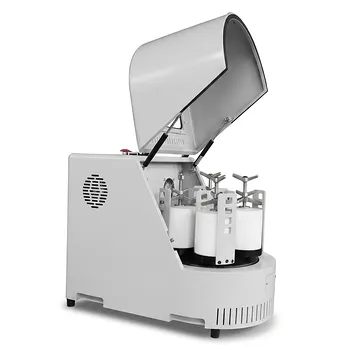
Vertical Semi Circular Planetary Ball Mill for Laboratory Precision Grinding

High Energy Planetary Ball Mill for Nano Scale Grinding and Mechanical Alloying
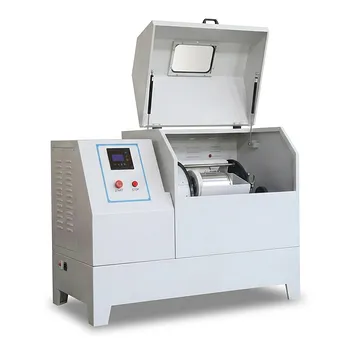
Heavy Duty Horizontal Planetary Ball Mill for Efficient Industrial Grinding and Sample Preparation

Vertical Production Planetary Ball Mill for High Throughput Powder Processing
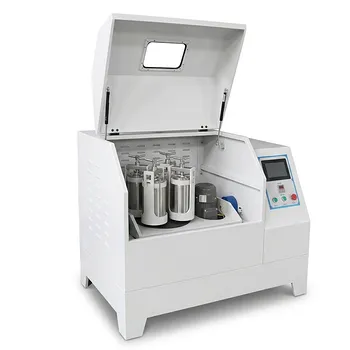
360° Rotating Omnidirectional Laboratory Planetary Ball Mill for Homogeneous Ultra-Fine Grinding and Mixing
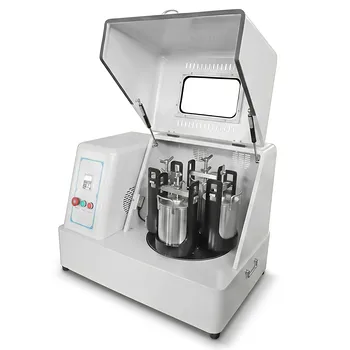
Vertical Square Planetary Ball Mill for Laboratory Sample Preparation and Nanoscale Grinding
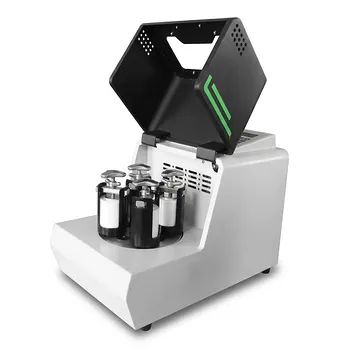
Miniature Planetary Ball Mill with Vacuum Grinding and High Efficiency for Laboratory Sample Preparation

High Energy Omnidirectional Planetary Ball Mill 16L
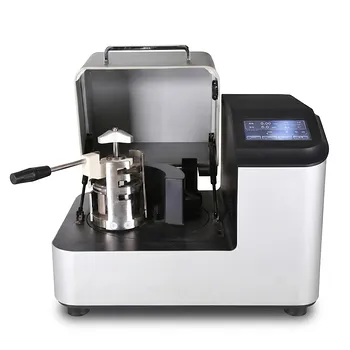
High Energy Laboratory Planetary Ball Mill for Nano Grinding and Material Science Sample Preparation
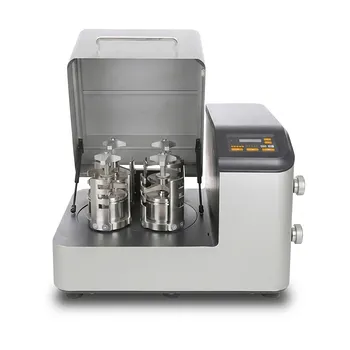
High Energy Planetary Ball Mill for Nano Scale Grinding and Colloidal Mixing in Material Science Research
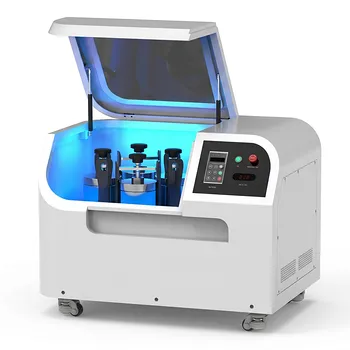
Planetary Ball Mill 12L
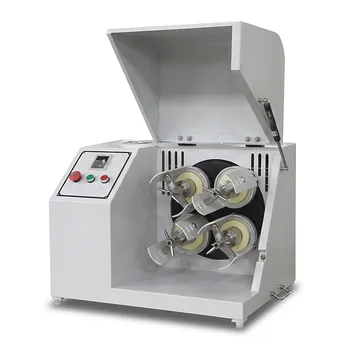
Horizontal Light Duty Planetary Ball Mill for Laboratory Sample Preparation
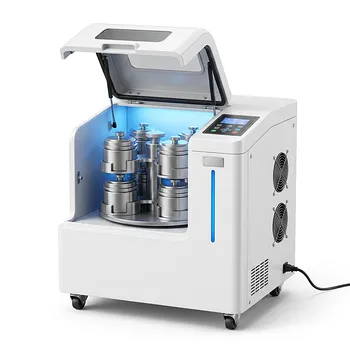
High Energy Omnidirectional Planetary Ball Mill 20L
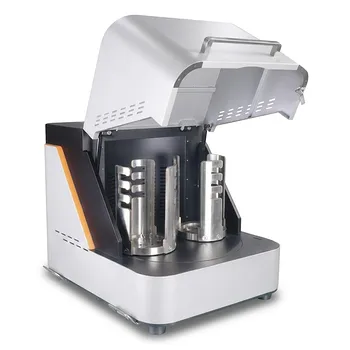
High Energy Laboratory Planetary Ball Mill for Nano Grinding and Colloidal Mixing of Hard and Brittle Materials
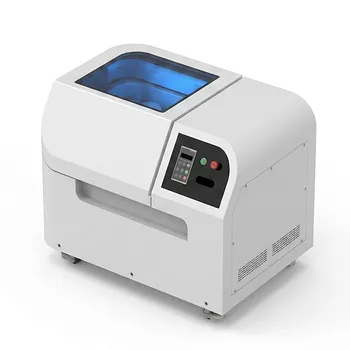
8L Planetary Ball Mill for Laboratory Grinding and Sample Preparation
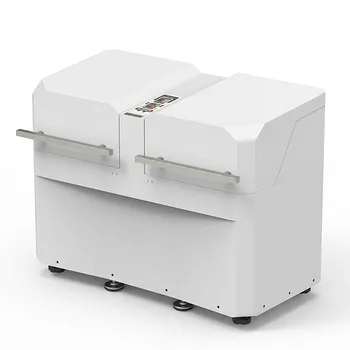
Dual Station Planetary Ball Mill 24L

Multi-Platform Nanoscale High-Energy Vibratory Ball Mill

Nano High Energy Vibratory Ball Mill for Laboratory Sample Preparation

High Energy Hybrid Vibratory Ball Mill for Grinding Mixing and Cell Disruption