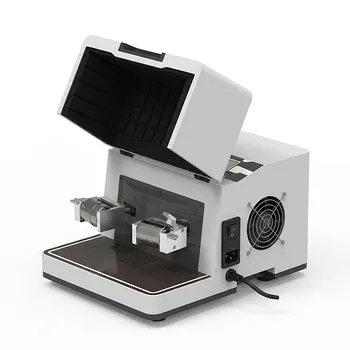
What role does a planetary ball mill play in the preparation of forsterite (Mg2SiO4) ceramic raw materials? Key Insights
Updated 5 months ago
The planetary ball mill serves as the critical engine for mechanical activation and homogenization in forsterite synthesis. By subjecting magnesium oxide (MgO) and talc powders to high-energy centrifugal and shear forces, the mill reduces particle sizes to a range between 3 μm and 35 μm. This process creates the precise kinetic conditions and intimate physical contact required for successful solid-state reactions during high-temperature annealing.
Core Takeaway: The planetary ball mill transforms inert raw powders into a highly reactive, homogenous precursor. It achieves this by combining extreme particle size reduction with mechanical activation, ensuring that the chemical components are positioned for a pure-phase transition during sintering.
The Mechanism of Mechanical Activation
Generating High-Energy Forces
The primary function of the planetary ball mill is to convert mechanical energy into chemical potential. Through high-speed rotation, the equipment generates intense centrifugal and shear forces that repeatedly impact the raw materials.
This high-energy environment does more than just break particles; it induces lattice distortions and increases the surface energy of the MgO and talc. This state of "activation" lowers the energy barrier required for the components to react chemically at later stages.
Precision Size Reduction
Forsterite synthesis requires a specific particle size distribution to ensure structural integrity. The mill effectively refines the raw powders to a distribution between 3 μm and 35 μm.
This refinement increases the specific surface area of the powders. A higher surface area facilitates faster diffusion rates, which is the primary driver of the solid-state reaction during the heating process.
Achieving Chemical and Physical Homogeneity
Eliminating Compositional Segregation
A significant challenge in ceramic preparation is the uneven distribution of magnesium and silicon. The planetary ball mill achieves deep homogenization, ensuring that MgO and talc are mixed at a microscopic level.
By preventing compositional segregation, the mill ensures that the final ceramic body has a uniform phase composition. This uniformity is vital for the reliability and mechanical strength of the finished forsterite product.
Enhancing Component Contact
Solid-state reactions depend entirely on the points of contact between different powder grains. The mill forces these disparate particles into intimate physical contact, creating a stable, homogeneous mixture.
This level of contact allows for atomic-level uniform distribution. Without this intensive mixing, the subsequent sintering process would likely result in incomplete reactions or the formation of undesirable secondary phases.
Understanding the Trade-offs
Contamination Risks
The high-energy nature of planetary milling can lead to abrasive wear of the grinding jars and balls. If the milling media is not compatible with the forsterite chemistry (e.g., using steel media for high-purity ceramics), impurities can be introduced.
Heat Generation and Phase Changes
Long-duration, high-speed milling generates significant thermal energy within the grinding chamber. If not managed through intermittent milling or cooling cycles, this heat can cause premature, uncontrolled reactions or the dehydration of raw materials like talc.
Over-milling and Agglomeration
While size reduction is the goal, excessive milling can lead to particle agglomeration. When particles become too fine, their high surface energy causes them to clump together, which can actually decrease the efficiency of the subsequent sintering process.
Optimizing the Milling Process for Your Goal
Recommendations for Forsterite Preparation
To achieve the best results in your ceramic synthesis, the milling parameters must be aligned with your specific performance requirements.
- If your primary focus is Phase Purity: Utilize longer milling durations at moderate speeds to ensure atomic-level mixing while avoiding excessive heat-induced pre-reactions.
- If your primary focus is Sintering Density: Aim for the lower end of the particle size range (near 3 μm) to maximize surface energy and drive faster densification during the firing stage.
- If your primary focus is Reducing Contamination: Use grinding media made of stabilized zirconia or forsterite-compatible materials to ensure that wear-and-tear does not introduce foreign oxides.
By mastering the mechanical activation provided by the planetary ball mill, you establish the fundamental physical conditions necessary for high-performance forsterite ceramics.
Summary Table:
| Key Role | Mechanism | Impact on Forsterite Synthesis |
|---|---|---|
| Mechanical Activation | Induces lattice distortions & high surface energy | Lowers the energy barrier for solid-state reactions |
| Size Reduction | Refines particles to a 3 μm - 35 μm range | Increases specific surface area and diffusion rates |
| Homogenization | Microscopic mixing of MgO and Talc powders | Prevents compositional segregation and phase impurities |
| Component Contact | Forces intimate physical/atomic contact | Ensures a stable, uniform pure-phase transition |
Optimize Your Material Synthesis with Professional Lab Equipment
Achieving phase purity and high density in forsterite ceramics requires precision at the powder preparation stage. We provide complete laboratory sample preparation solutions for material science, specializing in high-performance powder processing and compaction equipment tailored for researchers and manufacturers.
Our extensive product line includes:
- Advanced Milling: Planetary ball mills, jet mills, liquid nitrogen cryogenic grinders, and rotor mills.
- Size Analysis & Mixing: Sieve shakers (vibratory/air-jet), powder mixers, and defoaming mixers.
- Advanced Compaction: A full spectrum of hydraulic presses, including Cold/Warm Isostatic Presses (CIP/WIP), vacuum hot presses, and XRF pellet presses.
- Preparation Tools: Jaw/roll crushers and high-precision test sieves.
Ready to enhance your lab's efficiency and material quality?
Contact our technical experts today to find the perfect milling or pressing solution for your specific application!
References
- Hamza Milles, Khaled Toualbia. Hot corrosion behavior of Mg\(_{2}\)SiO\(_{4}\) ceramic exposed to molten Na\(_{2}\)SO\(_{4}\) at 900℃ to 1100℃. DOI: 10.55713/jmmm.v34i1.1777
Mentioned Products
- Vertical Semi Circular Planetary Ball Mill for Laboratory Precision Grinding
- High Energy Planetary Ball Mill for Nano Scale Grinding and Mechanical Alloying
- Heavy Duty Horizontal Planetary Ball Mill for Efficient Industrial Grinding and Sample Preparation
- Vertical Production Planetary Ball Mill for High Throughput Powder Processing
- 360° Rotating Omnidirectional Laboratory Planetary Ball Mill for Homogeneous Ultra-Fine Grinding and Mixing
People Also Ask
- What role does a planetary ball mill play in the synthesis of Li6PS5Cl (LPSCl)? Unlock High Ionic Conductivity
- Why is a planetary ball mill essential for SiBCN-rGO wet-spinning? Achieve Superior Dispersion and Spinnability
- Why is an intermittent grinding process required for perovskites in a planetary ball mill? Ensure Stability & Purity
- Why is a planetary ball mill required for PET micronization? Ensure Accurate Chemical Analysis of Reprocessed PET
- How does mechanized planetary ball milling compare to manual agate grinding? Optimize sulfide standard material precision.

Tech Team · PowderPreparation
Last updated on May 14, 2026
Related Products
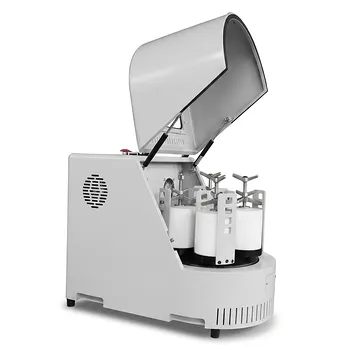
Vertical Semi Circular Planetary Ball Mill for Laboratory Precision Grinding

High Energy Planetary Ball Mill for Nano Scale Grinding and Mechanical Alloying
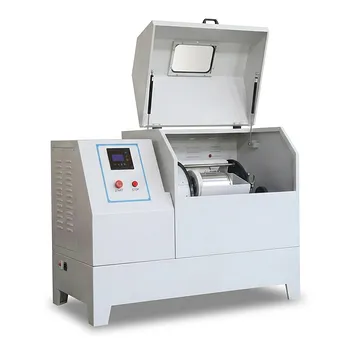
Heavy Duty Horizontal Planetary Ball Mill for Efficient Industrial Grinding and Sample Preparation
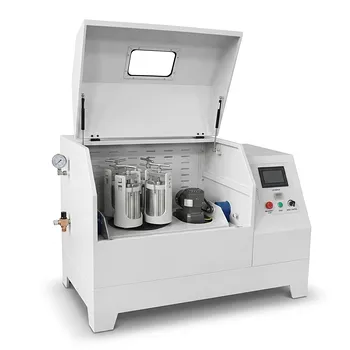
Vertical Production Planetary Ball Mill for High Throughput Powder Processing
360° Rotating Omnidirectional Laboratory Planetary Ball Mill for Homogeneous Ultra-Fine Grinding and Mixing
Miniature Planetary Ball Mill with Vacuum Grinding and High Efficiency for Laboratory Sample Preparation
Vertical Square Planetary Ball Mill for Laboratory Sample Preparation and Nanoscale Grinding
High Energy Omnidirectional Planetary Ball Mill 16L
High Energy Laboratory Planetary Ball Mill for Nano Grinding and Material Science Sample Preparation
Planetary Ball Mill 12L
High Energy Planetary Ball Mill for Nano Scale Grinding and Colloidal Mixing in Material Science Research
Horizontal Light Duty Planetary Ball Mill for Laboratory Sample Preparation
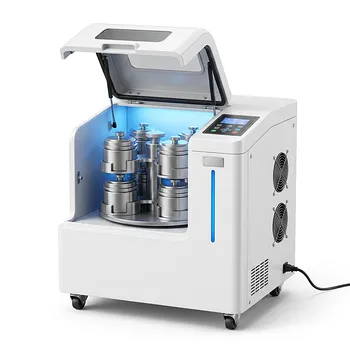
High Energy Omnidirectional Planetary Ball Mill 20L
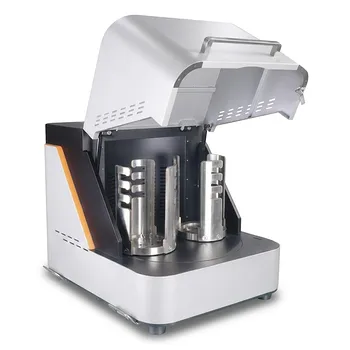
High Energy Laboratory Planetary Ball Mill for Nano Grinding and Colloidal Mixing of Hard and Brittle Materials

8L Planetary Ball Mill for Laboratory Grinding and Sample Preparation
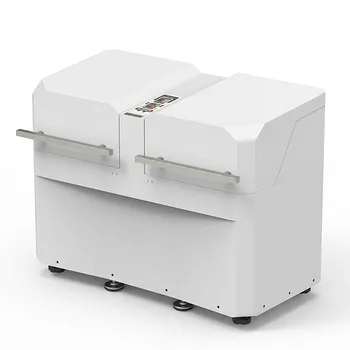
Dual Station Planetary Ball Mill 24L
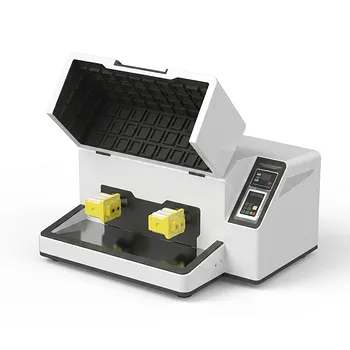
Multi-Platform Nanoscale High-Energy Vibratory Ball Mill

Nano High Energy Vibratory Ball Mill for Laboratory Sample Preparation
Dual Jar High Energy Vibratory Ball Mill