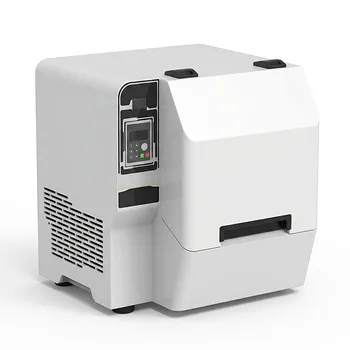
Why use high-energy ball milling for cordierite? Achieve micron-level refinement and prevent contamination.
Updated 3 months ago
The primary purpose of using a high-energy ball mill with zirconia media is to achieve micron-level particle refinement and highly uniform mixing of raw materials while preventing chemical contamination. This process ensures that the precursor powders—magnesium oxide, alumina, and silica—are physically optimized for the solid-state reactions required to form high-purity cordierite during sintering.
High-energy ball milling transforms coarse raw materials into a highly reactive, homogeneous precursor. By leveraging the density and hardness of zirconia, manufacturers can reduce particle size and ensure atomic-level distribution of components, which is critical for lowering sintering temperatures and achieving phase purity.
Achieving Precision Refinement and Uniformity
The mechanical energy provided by high-energy milling is the catalyst for preparing advanced ceramic precursors.
Micron-Level Particle Size Reduction
High-energy ball mills, such as planetary or stirred mills, utilize high-frequency impact and shear forces to crush raw materials. This process reduces particle sizes from hundreds of micrometers to the micron or sub-micron scale, significantly increasing the specific surface area. This increased surface area is essential because it provides the physical foundation for higher reaction activity during the subsequent heating stages.
Microscopic Mixing Homogeneity
For cordierite ceramics, the magnesium oxide, alumina, and silica must be distributed with extreme uniformity. The milling process achieves microscopic-scale mixing, ensuring that the different chemical components are in close physical contact. This "deep mixing" establishes the kinetic foundation for complete solid-state reactions, allowing the materials to transition into the desired cordierite phase more efficiently.
Elimination of Hard Agglomerates
During the processing of ceramic powders, hard agglomerates often form, which can lead to structural defects in the final product. The high-impact energy of the zirconia media effectively breaks down these agglomerates, ensuring a uniform particle size distribution. This uniformity is vital for creating stable suspensions and achieving high densification during the sintering process.
The Strategic Role of Zirconia Grinding Media
Selecting the right grinding media is as important as the milling equipment itself to maintain the integrity of the ceramic.
High-Density Impact Energy
Zirconia is chosen for its high density and hardness, which allows it to deliver sufficient kinetic energy to crush tough oxide powders. This efficiency speeds up the refinement process, reducing the time required to reach the target particle size. The high-energy input is a prerequisite for achieving the atomic-level distribution of chemical components.
Preventing Metallic Contamination
A critical requirement in cordierite preparation is the prevention of foreign impurities, particularly metals, which can degrade the ceramic's thermal and electrical properties. Zirconia's superior wear resistance and chemical stability ensure that it does not introduce metallic contaminants into the powder. This preservation of chemical purity is essential for ensuring the phase purity of the final cordierite structure.
Understanding the Trade-offs
While high-energy milling is highly effective, it requires careful management of process variables to avoid unintended consequences.
Heat Generation and Media Wear
The intense mechanical action of high-energy milling generates significant heat, which can sometimes lead to unwanted phase changes or oxidation if not managed. Additionally, while zirconia is highly wear-resistant, prolonged milling can still lead to "media loss," where microscopic amounts of zirconia are incorporated into the powder. In many cases, this is acceptable because zirconia is an oxide that may be compatible with the ceramic system, but it must be factored into the final chemical composition.
Energy Consumption and Processing Time
Achieving sub-micron refinement requires a high input of energy, making this one of the more cost-intensive steps in raw material preparation. Manufacturers must balance the duration of the milling—sometimes lasting up to 24 hours—against the diminishing returns of further particle size reduction. Over-milling can also lead to excessive powder surface energy, causing particles to re-agglomerate immediately after the process ends.
How to Apply This to Your Project
To maximize the benefits of high-energy ball milling, your approach should be dictated by your specific material requirements.
- If your primary focus is Phase Purity: Use high-purity zirconia media in an ethanol medium to prevent metallic contamination and ensure a clean solid-state reaction.
- If your primary focus is Lowering Sintering Temperatures: Extend the milling duration to maximize specific surface area and increase the sintering activity of the powder.
- If your primary focus is Structural Consistency: Prioritize the breakdown of hard agglomerates to ensure a narrow particle size distribution, which leads to higher densification.
Optimizing the milling process is the most effective way to ensure that your raw materials possess the chemical uniformity and physical activity necessary for high-performance cordierite ceramics.
Summary Table:
| Key Aspect | Benefit | Technical Outcome |
|---|---|---|
| Particle Refinement | Micron/sub-micron reduction | Increased surface area & sintering activity |
| Mixing Homogeneity | Atomic-level distribution | Complete solid-state phase transition |
| Contamination Control | High-purity zirconia media | Elimination of metallic impurities |
| Agglomerate Removal | Breaking hard clusters | Higher densification & fewer structural defects |
Elevate Your Ceramic Material Preparation with Precision Solutions
Achieving high-performance cordierite requires absolute control over particle size and purity. We provide complete laboratory sample preparation solutions for material science, specializing in advanced powder processing and compaction equipment tailored for researchers and manufacturers.
Our extensive product lines include:
- Advanced Milling: High-energy planetary ball mills, jet mills, and cryogenic grinders paired with high-wear-resistant zirconia media.
- Powder Processing: Crushing equipment (jaw/roll), vibratory sieve shakers, and high-efficiency defoaming mixers.
- Precision Compaction: A full spectrum of hydraulic presses, including Cold/Warm Isostatic Presses (CIP/WIP), XRF pellet presses, and vacuum hot presses.
Why choose us? We bring specialized expertise in powder processing to help you achieve atomic-level homogeneity and superior phase purity in your materials.
Contact our experts today to find the perfect solution for your laboratory!
References
- Jae-Seung Lee, Heesoo Lee. The Effect of the MgO/Al2O3 Ratio on the Thermal and Refractory Behaviors of Cordierite Ceramics. DOI: 10.3390/ma18010168
Mentioned Products
- High Energy Laboratory Planetary Ball Mill for Nano Grinding and Material Science Sample Preparation
- High Energy Planetary Ball Mill for Nano Scale Grinding and Mechanical Alloying
- High Energy Laboratory Planetary Ball Mill for Nano Grinding and Colloidal Mixing of Hard and Brittle Materials
- High Energy Planetary Ball Mill for Nano Scale Grinding and Colloidal Mixing in Material Science Research
- High Energy Hybrid Vibratory Ball Mill for Grinding Mixing and Cell Disruption
People Also Ask
- How does the size distribution of steel ball grinding media affect ore grindability? Optimize Energy & Lab Accuracy
- What role does a laboratory ball mill play in the study of chalcopyrite mineral liberation? Key for Recovery Success
- What are the primary functions of a laboratory ball mill or powder mixer when synthesizing multi-component standard reference materials?
- What core function does a laboratory ball mill perform during phosphate ore grinding? Achieve Monomer Dissociation
- What role does a laboratory ball mill serve in the Berry and Bruce modified Bond method? Standardizing Ore Analysis

Tech Team · PowderPreparation
Last updated on Jun 03, 2026
Related Products
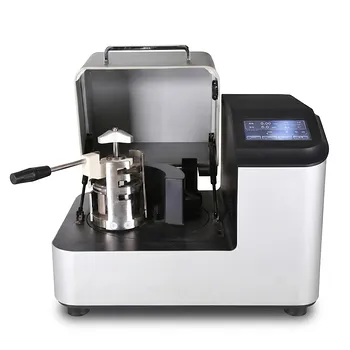
High Energy Laboratory Planetary Ball Mill for Nano Grinding and Material Science Sample Preparation
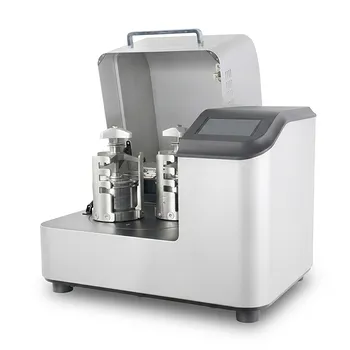
High Energy Planetary Ball Mill for Nano Scale Grinding and Mechanical Alloying
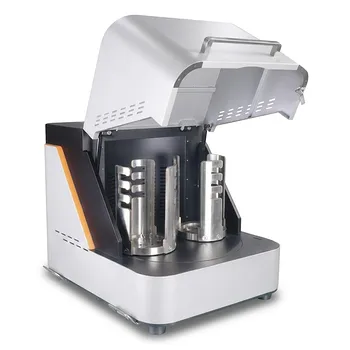
High Energy Laboratory Planetary Ball Mill for Nano Grinding and Colloidal Mixing of Hard and Brittle Materials
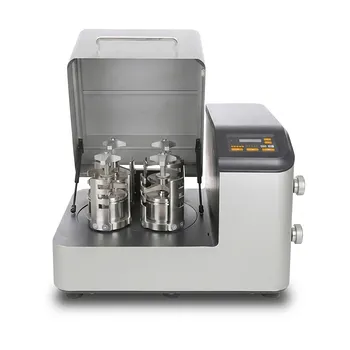
High Energy Planetary Ball Mill for Nano Scale Grinding and Colloidal Mixing in Material Science Research
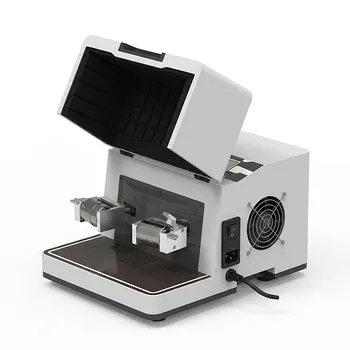
High Energy Hybrid Vibratory Ball Mill for Grinding Mixing and Cell Disruption
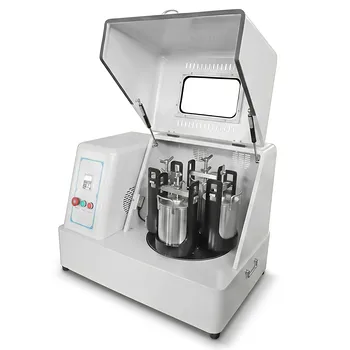
Vertical Square Planetary Ball Mill for Laboratory Sample Preparation and Nanoscale Grinding
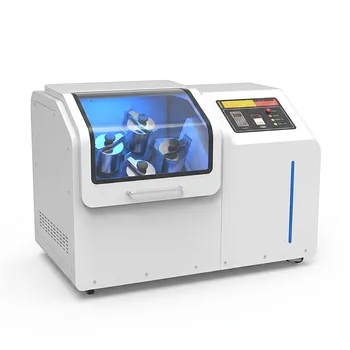
High Energy Omnidirectional Planetary Ball Mill 16L
8L Planetary Ball Mill for Laboratory Grinding and Sample Preparation
High Energy Omnidirectional Planetary Ball Mill 20L
Single Tank High Energy Vibratory Ball Mill for Laboratory Grinding and Mixing
Dual Jar High Energy Vibratory Ball Mill
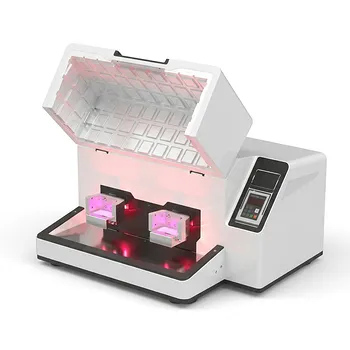
Nano High Energy Vibratory Ball Mill with Heating and Temperature Control
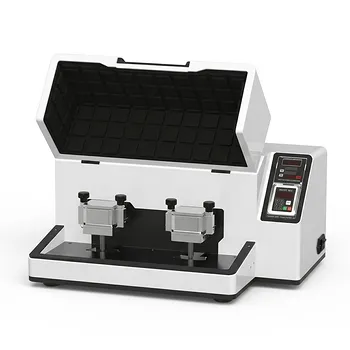
Nanoscale High Energy Vibratory Ball Mill Low Temperature
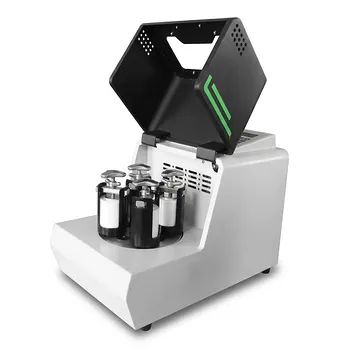
Miniature Planetary Ball Mill with Vacuum Grinding and High Efficiency for Laboratory Sample Preparation
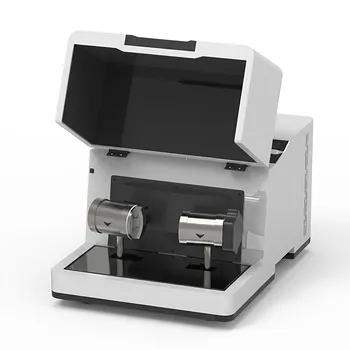
Ultra-Low Temperature Cryogenic High-Energy Vibratory Ball Mill
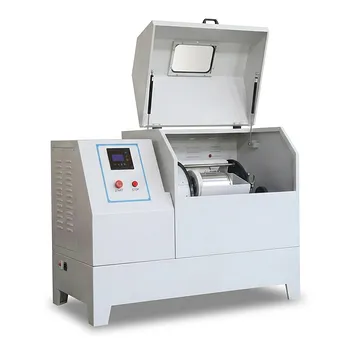
Heavy Duty Horizontal Planetary Ball Mill for Efficient Industrial Grinding and Sample Preparation

High Throughput Micro Ball Mill for Cryogenic Grinding and Laboratory Cell Disruption
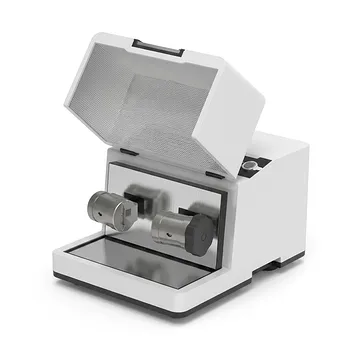
Heating Temperature Controlled High Energy Vibratory Ball Mill
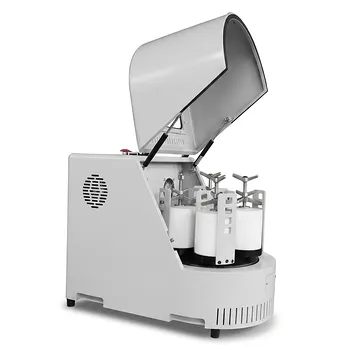
Vertical Semi Circular Planetary Ball Mill for Laboratory Precision Grinding