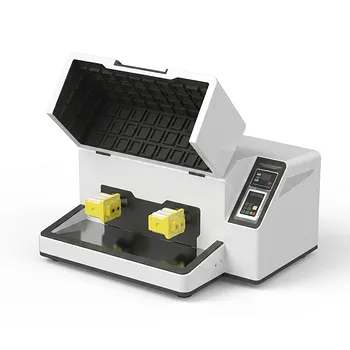
What role does a laboratory ball mill play in the study of chalcopyrite mineral liberation? Key for Recovery Success
Updated 3 months ago
The laboratory ball mill is the primary tool for reducing chalcopyrite ore to the specific particle size required for mineral liberation. It uses controlled mechanical energy—delivered through the impact and attrition of steel balls—to break down the ore matrix. This process ensures that chalcopyrite is physically detached from gangue minerals, providing the necessary material for flotation and recovery analysis.
The central role of the laboratory ball mill is to convert mechanical work into increased surface area, allowing researchers to find the "optimal liberation size." This is the point where valuable chalcopyrite is sufficiently exposed from the gangue matrix to enable effective separation without incurring the energy costs of over-grinding.
The Mechanics of Controlled Fragmentation
Impact and Attrition Mechanisms
The ball mill functions by rotating a drum containing the ore and grinding media, typically steel balls of varying diameters. As the drum turns, the media creates a combination of high-energy impacts and abrasive attrition.
These forces work together to fracture the ore along grain boundaries. This is essential for chalcopyrite, as the mineral is often locked within a complex matrix of gangue minerals like quartz or feldspar.
Precision Control of Particle Size Distribution
Researchers use the ball mill to manage grinding time, which directly influences the final particle size distribution. By adjusting the duration and media loading, the mill can reduce ore to specific micron-level sizes.
This precision allows for the creation of a "liberation product" that is uniform enough for reliable sieve analysis. This data is critical for determining how much energy is required to reach a specific degree of mineral exposure.
Achieving Mineral Liberation for Downstream Processes
Physical Separation of Mineral and Gangue
The primary goal of grinding in the study of chalcopyrite is liberation, the physical detachment of the copper-bearing mineral from the surrounding waste rock. Without sufficient liberation, the chalcopyrite remains "locked," making it impossible to recover during later stages.
The ball mill provides a stable output of mechanical energy to ensure that the sulfide minerals are exposed. This exposure is a prerequisite for any subsequent concentration tests, such as magnetic separation or flotation.
Exposing Fresh Surfaces for Reagents
In chalcopyrite studies, the ball mill serves a chemical purpose as well as a physical one. By grinding the ore, the mill exposes fresh mineral surfaces that have not yet been oxidized or contaminated.
These clean surfaces are necessary for the adsorption of flotation reagents. If the mineral is not properly liberated and exposed, the chemical collectors cannot attach to the chalcopyrite, leading to poor recovery rates in the final concentrate.
Understanding the Trade-offs and Pitfalls
The Risk of Over-Grinding and "Slimes"
While finer grinding increases liberation, it eventually reaches a point of diminishing returns known as over-grinding. This creates "slimes"—particles so fine that they interfere with the chemistry of flotation and are difficult to recover.
Over-grinding also represents a significant waste of specific power consumption. Researchers must use the laboratory mill to find the "sweet spot" where liberation is maximized but energy waste and slime production are minimized.
Media Wear and Contamination
The use of steel balls introduces the potential for media wear, which can subtly alter the chemistry of the ore pulp. In sensitive chalcopyrite studies, the iron abraded from the balls can change the electrochemical potential of the slurry.
This can affect how reagents interact with the chalcopyrite surface. To mitigate this, researchers must carefully select media material and monitor the media filling rate to ensure consistent results.
How to Apply These Findings to Your Project
Making the Right Choice for Your Goal
To effectively study chalcopyrite liberation, your use of the ball mill should be tailored to your specific research or industrial objectives.
- If your primary focus is industrial scaling: Use the ball mill to perform a modified Bond method test to compare your ore’s grindability against a reference material, allowing for accurate energy consumption projections.
- If your primary focus is maximizing recovery: Focus on incremental grinding intervals followed by flotation tests to identify the exact particle size where chalcopyrite recovery peaks.
- If your primary focus is reagent efficiency: Ensure the mill is used to produce freshly ground surfaces immediately before flotation to prevent surface oxidation from skewing your reagent dosage results.
By treating the laboratory ball mill as a precision instrument rather than a simple crusher, you can achieve the exact degree of liberation necessary for efficient mineral recovery.
Summary Table:
| Key Factor | Role in Chalcopyrite Study | Primary Benefit |
|---|---|---|
| Mechanical Energy | Impact and attrition forces | Efficiently breaks the ore matrix |
| Size Control | Micron-level precision | Reaches optimal liberation size |
| Surface Exposure | Creating fresh mineral faces | Maximizes flotation reagent efficiency |
| Energy Efficiency | Specific power consumption monitoring | Prevents over-grinding and "slimes" |
Optimize Your Mineral Processing with Expert Solutions
Precision in sample preparation is the foundation of successful mineral recovery. At [Insert Brand Name], we provide complete laboratory sample preparation solutions for material science, specializing in high-performance powder processing and compaction equipment.
Our extensive product lines are designed to meet the rigorous demands of mineralogy and metallurgy:
- Size Reduction: Advanced crushers (jaw/roll), liquid nitrogen cryogenic grinders, and a variety of mills (planetary ball, jet, sand/bead, disc, rotor).
- Classification & Mixing: Sieve shakers (vibratory/air-jet) with precision test sieves, alongside high-efficiency powder and defoaming mixers.
- Compaction & Pressing: A full spectrum of hydraulic presses, including Cold/Warm Isostatic Presses (CIP/WIP), standard lab presses, XRF pellet presses, and vacuum hot presses.
Whether you are refining chalcopyrite liberation protocols or developing new materials, our equipment ensures consistency, durability, and superior results.
Ready to enhance your lab’s efficiency? Contact us today to find the perfect solution for your project!
References
- Willie Nheta, Omoyemi O. Ola-Omole. Exploring the characterization, liberation and flotation response of a Nigerian low-grade copper ore. DOI: 10.46873/2300-3960.1374
Mentioned Products
- 360° Rotating Omnidirectional Laboratory Planetary Ball Mill for Homogeneous Ultra-Fine Grinding and Mixing
- High Energy Laboratory Planetary Ball Mill for Nano Grinding and Material Science Sample Preparation
- Laboratory Nano High Energy Ball Mill Ultrafine Grinding Mechanical Alloying
- Vertical Semi Circular Planetary Ball Mill for Laboratory Precision Grinding
- Vertical Square Planetary Ball Mill for Laboratory Sample Preparation and Nanoscale Grinding
People Also Ask
- What role does an omni-directional planetary ball mill play in brass/cobalt antimonide pretreatment? Achieve Nano-Scale Homogeneity.
- What is the function of an omni-directional planetary ball mill? Achieve Streak-Free Glass Homogenization
- Why is an intermittent grinding process required for perovskites in a planetary ball mill? Ensure Stability & Purity
- Why is a planetary ball mill essential for SiBCN-rGO wet-spinning? Achieve Superior Dispersion and Spinnability
- What role does a planetary ball mill play in the synthesis of Li6PS5Cl (LPSCl)? Unlock High Ionic Conductivity

Tech Team · PowderPreparation
Last updated on Jun 03, 2026
Related Products
360° Rotating Omnidirectional Laboratory Planetary Ball Mill for Homogeneous Ultra-Fine Grinding and Mixing
High Energy Laboratory Planetary Ball Mill for Nano Grinding and Material Science Sample Preparation
Laboratory Nano High Energy Ball Mill Ultrafine Grinding Mechanical Alloying
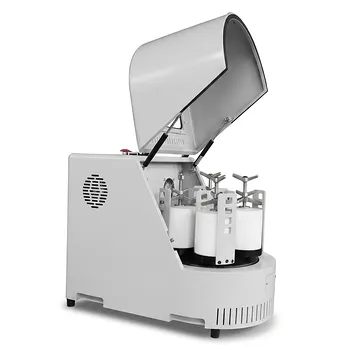
Vertical Semi Circular Planetary Ball Mill for Laboratory Precision Grinding

Vertical Square Planetary Ball Mill for Laboratory Sample Preparation and Nanoscale Grinding
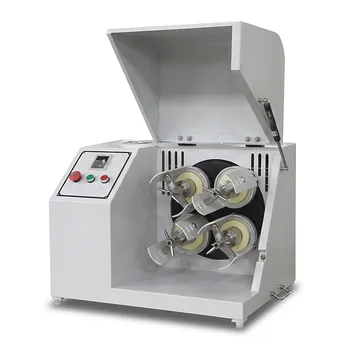
Horizontal Light Duty Planetary Ball Mill for Laboratory Sample Preparation
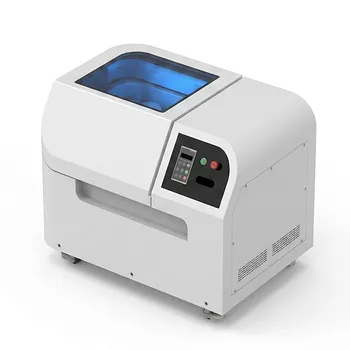
8L Planetary Ball Mill for Laboratory Grinding and Sample Preparation
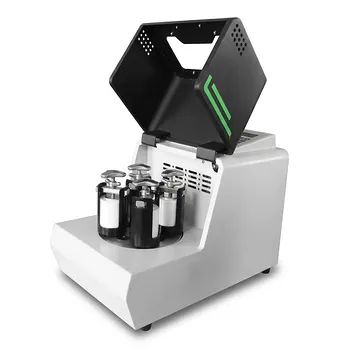
Miniature Planetary Ball Mill with Vacuum Grinding and High Efficiency for Laboratory Sample Preparation
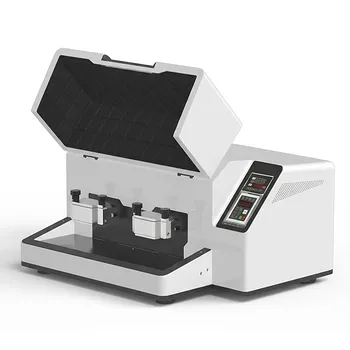
Nanoscale High-Energy Vibratory Ball Mill for Laboratory Sample Preparation, Mechanochemistry, and Mechanical Alloying

Nano High Energy Vibratory Ball Mill for Laboratory Sample Preparation
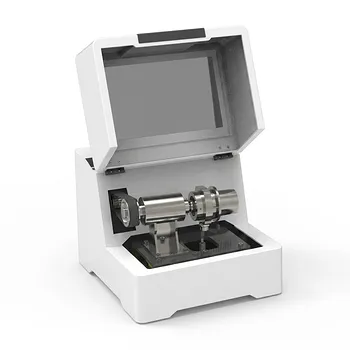
Single Tank High Energy Vibratory Ball Mill for Laboratory Grinding and Mixing
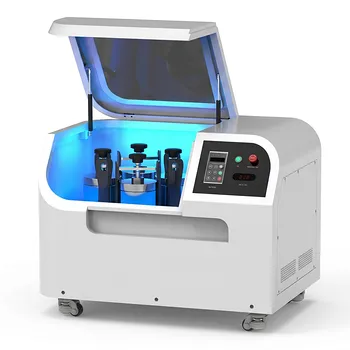
Planetary Ball Mill 12L
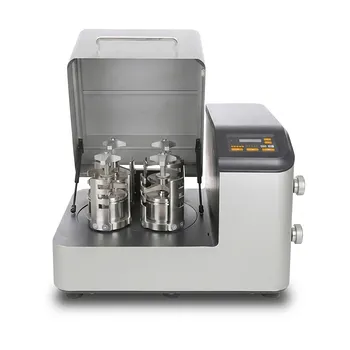
High Energy Planetary Ball Mill for Nano Scale Grinding and Colloidal Mixing in Material Science Research
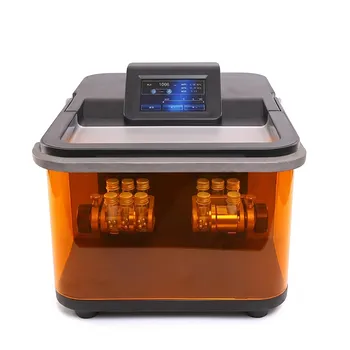
High Throughput Micro Ball Mill for Cryogenic Grinding and Laboratory Cell Disruption
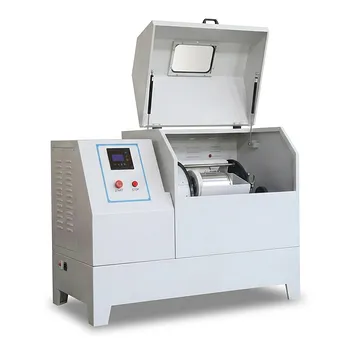
Heavy Duty Horizontal Planetary Ball Mill for Efficient Industrial Grinding and Sample Preparation
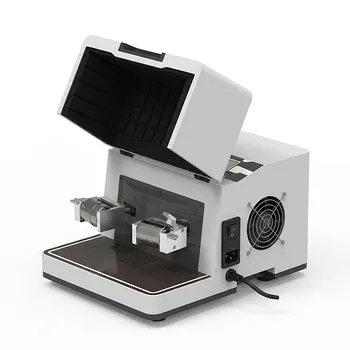
High Energy Hybrid Vibratory Ball Mill for Grinding Mixing and Cell Disruption
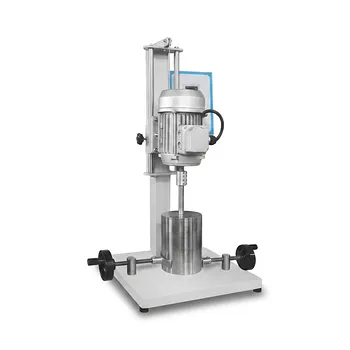
Laboratory Basket Sand Mill for Wet Grinding and Dispersion of Viscous Slurries
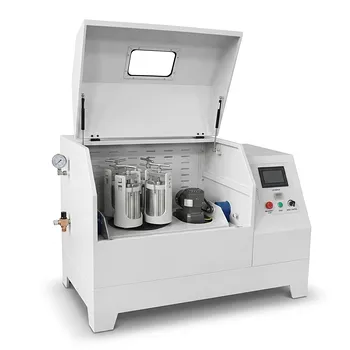
Vertical Production Planetary Ball Mill for High Throughput Powder Processing
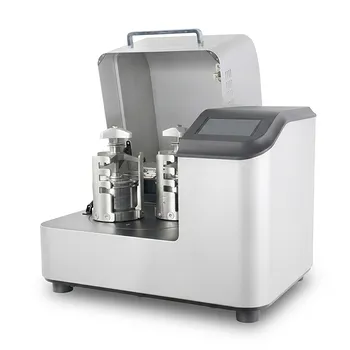
High Energy Planetary Ball Mill for Nano Scale Grinding and Mechanical Alloying