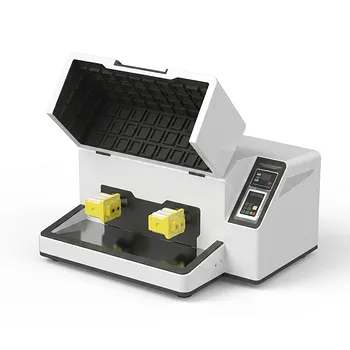
What are the primary functions of a laboratory ball mill or powder mixer when synthesizing multi-component standard reference materials?
Updated 4 months ago
The synthesis of multi-component standard reference materials relies on laboratory ball mills and powder mixers to achieve absolute homogenization. These devices use high-frequency motion and mechanical force to ensure that disparate components are distributed uniformly at precise ratios, establishing the foundation for accurate calibration curves and reliable quantitative analysis.
The primary role of these instruments is to transform heterogeneous raw materials into a statistically homogeneous mixture where any given sample accurately represents the bulk composition. This precision is essential for creating the "gold standard" benchmarks used in analytical chemistry and material science.
Achieving High-Level Homogenization
Establishing Component Uniformity
The most critical function of a laboratory mixer is the thorough blending of components, such as tire powders and road minerals, into a singular, uniform matrix. This prevents "hot spots" of high concentration, ensuring that every milligram of the reference material contains the exact chemical signature required for calibration accuracy.
Enabling Quantitative Reliability
By utilizing high-frequency motion, these mixers eliminate the risk of component segregation based on particle size or density. This uniformity allows laboratories to develop stable quantitative analysis results, particularly for complex substances like Tire and Road Wear Particles (TRWPs).
Precision Size Reduction and De-agglomeration
Controlling Comminution
Laboratory mills serve a dual purpose by facilitating comminution, which is the controlled reduction of solid materials into finer particles. Increasing the specific surface area of the sample ensures that all components can interact more effectively during subsequent analytical processes like dissolution or spectroscopy.
Breaking Particle Agglomerates
Nanoscale and micron-scale powders often form clumps, or agglomerates, due to electrostatic forces. The intense impact and shear forces of a ball mill break these clusters apart, ensuring a uniform spatial distribution of chemical components at a microscopic level.
Mechanical Surface Modification
Uniform Coating and Interaction
In advanced material synthesis, ball mills are used to mechanically coat one material onto another, such as applying binders or lubricants onto ceramic particles. This ensures that trace additives are distributed at a microscopic scale, which is vital for the flowability and compaction performance of the final reference material.
Enhancing Chemical Reactivity
High-energy milling, such as that found in planetary ball mills, refines particles to sub-micron or nanometer scales. This process increases the sintering driving force and shortens diffusion paths, which is critical when synthesizing complex materials like high-entropy ceramics or composite powders.
Understanding the Trade-offs and Pitfalls
Material Contamination
A significant risk in ball milling is cross-contamination from the grinding media (balls) and the vial walls. As the materials collide, microscopic fragments of the mill itself can be introduced into the sample, potentially altering the chemical profile of the standard reference material.
Thermal Degradation
The high-energy motion required for homogenization generates significant frictional heat. For heat-sensitive components, such as certain organic polymers or volatile compounds, this temperature rise can lead to thermal degradation or phase changes that compromise the integrity of the reference material.
Material Loss and Recovery
In small-scale laboratory settings, material loss during the transfer from the mixing vessel can be a concern. Fine powders often adhere to the surfaces of the grinding media, making it difficult to maintain the exact stoichiometric ratios required for high-precision standards.
How to Apply This to Your Project
Selecting the Right Equipment Strategy
Choosing between a simple mixer and a high-energy ball mill depends entirely on the physical characteristics of your raw materials and the required final fineness.
- If your primary focus is simple homogenization of dry powders: Utilize a high-frequency powder mixer to ensure statistical uniformity without significantly altering the original particle size.
- If your primary focus is synthesizing nanoscale composites: Deploy a planetary ball mill to leverage high-impact forces for de-agglomeration and particle size reduction below 1 µm.
- If your primary focus is preventing contamination: Use chemically inert grinding media, such as zirconia or tungsten carbide, and consider wet milling to dissipate heat and reduce media wear.
By mastering the mechanical functions of these instruments, you ensure the integrity and reproducibility of your standard reference materials.
Summary Table:
| Primary Function | Impact on Reference Materials | Key Benefit |
|---|---|---|
| Homogenization | Prevents component segregation | Ensures calibration accuracy |
| Comminution | Reduces particle size to fine scales | Increases specific surface area |
| De-agglomeration | Breaks clusters via impact & shear | Uniform microscopic distribution |
| Surface Modification | Uniform mechanical coating | Enhanced reactivity & flowability |
Elevate Your Material Synthesis with Professional Powder Solutions
Achieving the "gold standard" in multi-component reference materials requires precision-engineered equipment that guarantees absolute homogenization. At [Brand Name], we provide complete laboratory sample preparation solutions for material science, specializing in high-performance powder processing and compaction equipment.
Our extensive product lines are designed to meet the rigorous demands of analytical chemistry and material research:
- Advanced Milling: Precision planetary ball mills, jet mills, disc mills, and liquid nitrogen cryogenic grinders for sub-micron fineness.
- Mixing & Sieving: High-frequency powder mixers, defoaming mixers, and vibratory/air-jet sieve shakers for perfect uniformity.
- Compaction Excellence: A full spectrum of hydraulic presses, including Cold/Warm Isostatic Presses (CIP/WIP), standard lab presses, and XRF pellet presses.
- Preparation Tools: Robust jaw and roll crushers for primary size reduction.
Whether you are synthesizing complex ceramics or establishing calibration benchmarks, our tools ensure the integrity and reproducibility of your results.
Contact Our Technical Experts Today to find the perfect configuration for your laboratory!
References
- Tae‐Woo Kang, H. Kim. An Experimental Study on the Component Analysis and Variation in Concentration of Tire and Road Wear Particles Collected from the Roadside. DOI: 10.3390/su151712815
Mentioned Products
- 360° Rotating Omnidirectional Laboratory Planetary Ball Mill for Homogeneous Ultra-Fine Grinding and Mixing
- High Energy Laboratory Planetary Ball Mill for Nano Grinding and Material Science Sample Preparation
- Laboratory Nano High Energy Ball Mill Ultrafine Grinding Mechanical Alloying
- Vertical Semi Circular Planetary Ball Mill for Laboratory Precision Grinding
- Vertical Square Planetary Ball Mill for Laboratory Sample Preparation and Nanoscale Grinding
People Also Ask
- What role does an omni-directional planetary ball mill play in brass/cobalt antimonide pretreatment? Achieve Nano-Scale Homogeneity.
- What is the function of an omni-directional planetary ball mill? Achieve Streak-Free Glass Homogenization
- Why is an intermittent grinding process required for perovskites in a planetary ball mill? Ensure Stability & Purity
- Why is a planetary ball mill essential for SiBCN-rGO wet-spinning? Achieve Superior Dispersion and Spinnability
- What role does a planetary ball mill play in the synthesis of Li6PS5Cl (LPSCl)? Unlock High Ionic Conductivity

Tech Team · PowderPreparation
Last updated on Jun 03, 2026
Related Products
360° Rotating Omnidirectional Laboratory Planetary Ball Mill for Homogeneous Ultra-Fine Grinding and Mixing
High Energy Laboratory Planetary Ball Mill for Nano Grinding and Material Science Sample Preparation
Laboratory Nano High Energy Ball Mill Ultrafine Grinding Mechanical Alloying
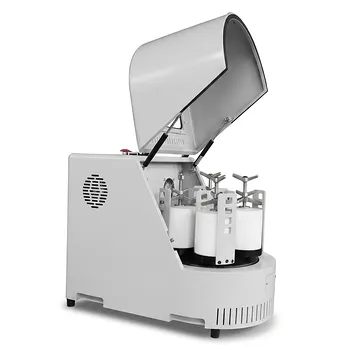
Vertical Semi Circular Planetary Ball Mill for Laboratory Precision Grinding
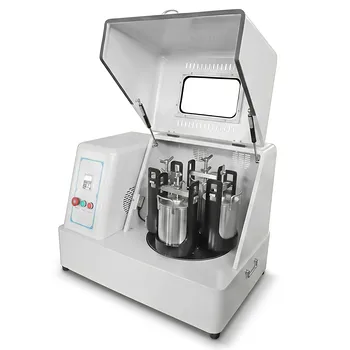
Vertical Square Planetary Ball Mill for Laboratory Sample Preparation and Nanoscale Grinding
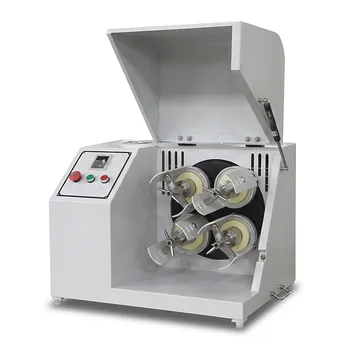
Horizontal Light Duty Planetary Ball Mill for Laboratory Sample Preparation
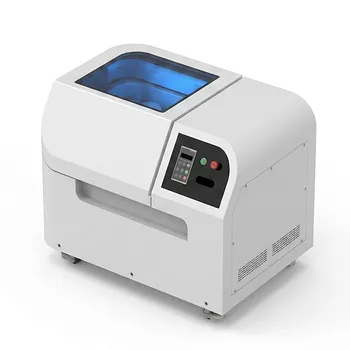
8L Planetary Ball Mill for Laboratory Grinding and Sample Preparation
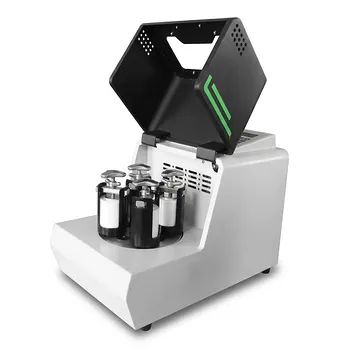
Miniature Planetary Ball Mill with Vacuum Grinding and High Efficiency for Laboratory Sample Preparation
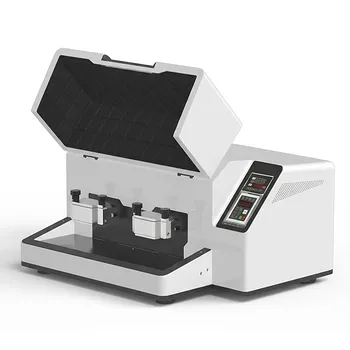
Nanoscale High-Energy Vibratory Ball Mill for Laboratory Sample Preparation, Mechanochemistry, and Mechanical Alloying

Nano High Energy Vibratory Ball Mill for Laboratory Sample Preparation
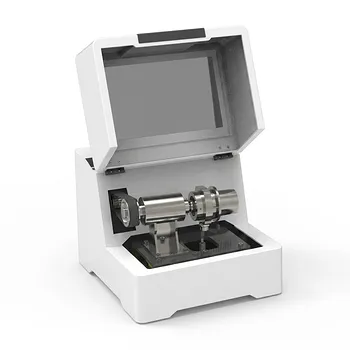
Single Tank High Energy Vibratory Ball Mill for Laboratory Grinding and Mixing
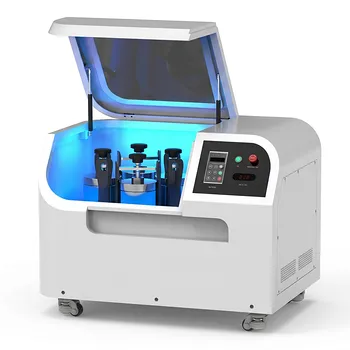
Planetary Ball Mill 12L
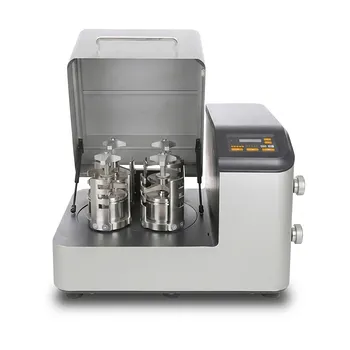
High Energy Planetary Ball Mill for Nano Scale Grinding and Colloidal Mixing in Material Science Research

High Throughput Micro Ball Mill for Cryogenic Grinding and Laboratory Cell Disruption
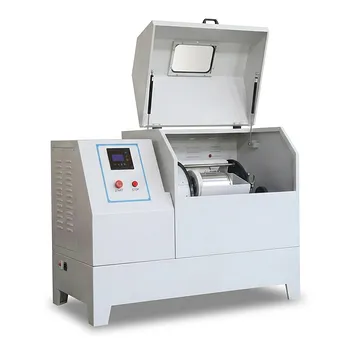
Heavy Duty Horizontal Planetary Ball Mill for Efficient Industrial Grinding and Sample Preparation
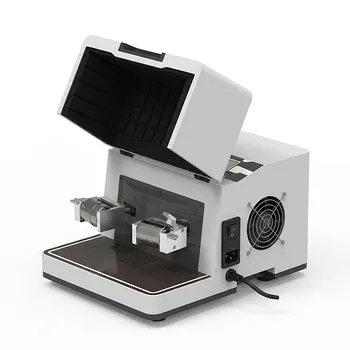
High Energy Hybrid Vibratory Ball Mill for Grinding Mixing and Cell Disruption
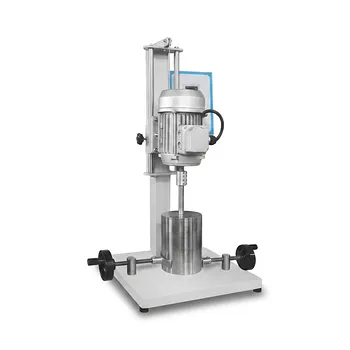
Laboratory Basket Sand Mill for Wet Grinding and Dispersion of Viscous Slurries
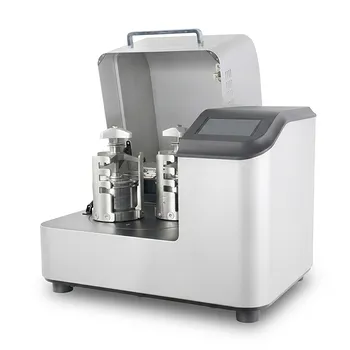
High Energy Planetary Ball Mill for Nano Scale Grinding and Mechanical Alloying
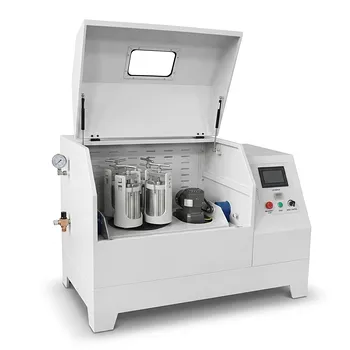
Vertical Production Planetary Ball Mill for High Throughput Powder Processing