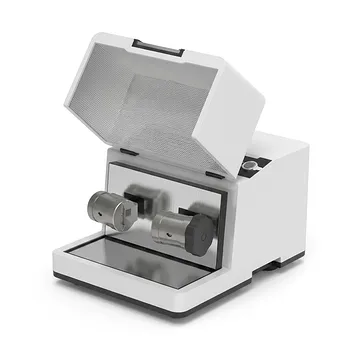
What is the primary function of a planetary ball mill in Ce-TZP/Al2O3 mixing? Ensure High-Energy Powder Homogeneity
Updated 4 months ago
The primary function of a planetary ball mill in the mixing stage of Ce-TZP/Al2O3 composite powders is to break down powder agglomerates through high-energy wet mixing. This process utilizes high-speed impact and shear forces to ensure the spatial homogeneity of trace stabilizers, specifically yttria, within the composite matrix. This precise distribution is essential for stabilizing crystal phases during the subsequent high-temperature sintering process.
Core Takeaway: A planetary ball mill serves as a high-energy processor that transforms raw, clustered powders into a refined, homogeneous mixture. By ensuring trace elements like yttria are uniformly dispersed at a molecular level, it prevents phase instability and facilitates a dense, fine-grained final ceramic structure.
The Mechanics of De-agglomeration and Dispersion
High-Energy Impact and Shear Forces
The planetary ball mill operates through a complex "sun and planet" rotation that subjects the powder mixture to intense mechanical energy. These forces include high-speed impacts from the milling media and shear forces generated by the rotation within the isopropanol medium.
Breaking Down Powder Agglomerates
Raw ceramic powders often exist as clusters or "agglomerates" that can lead to structural weaknesses in the final product. The mechanical energy provided by the mill effectively shears these clusters apart, ensuring that the alumina, zirconia, and yttria powders are reduced to their primary particle sizes for better interaction.
Achieving Spatial Homogeneity
For Ce-TZP/Al2O3 composites, the spatial homogeneity of trace yttria is the most critical outcome. Uniform distribution ensures that every part of the zirconia matrix is correctly stabilized, which prevents spontaneous phase transformation and ensures the mechanical integrity of the composite.
Influence on Subsequent Processing Stages
Facilitating Sintering Stability
The uniformity achieved during the mixing stage directly impacts how the ceramic behaves in the furnace. Homogeneous powders allow for a more uniform densification process, reducing the risk of internal stresses or localized phase failures during sintering.
Suppressing Abnormal Grain Growth
By ensuring a micro-level dispersion of components, the planetary ball mill helps suppress abnormal grain growth. A well-dispersed mixture ensures that second-phase particles (like Al2O3) are positioned correctly to pin the grain boundaries of the zirconia matrix, leading to a finer, stronger microstructure.
Enhancing Load Transfer
In reinforced composites, the milling process can even modify the surface of the powders to facilitate better bonding. High-energy collisions can embed particles into one another or reshape them to create a more effective three-dimensional interconnected network for efficient load transfer between phases.
Understanding the Trade-offs
Morphological Alterations
While high-energy impacts are necessary for mixing, they can unintentionally alter the original morphology of the powders. For example, spherical particles may be flattened into flakes or develop surface micro-cracks and pits, which can influence the flowability and packing density of the powder.
Heat Generation and Contamination
The friction and impact within the mill generate significant heat, which can lead to powder oxidation or unwanted agglomeration if not managed. Additionally, the wear and tear on the milling media and jars can introduce trace impurities into the high-purity ceramic mixture.
Medium Selection and Drying
The use of a wet medium like isopropanol or ethanol is necessary for fine mixing but requires a subsequent drying stage. If the drying process is not controlled, the carefully dispersed particles can re-agglomerate, undoing the benefits of the high-energy milling.
How to Optimize Mixing for Your Project
When utilizing a planetary ball mill, the specific parameters should align with your final material requirements:
- If your primary focus is phase stability: Prioritize longer milling times at moderate speeds to ensure the absolute homogeneity of trace stabilizers like yttria.
- If your primary focus is a fine-grained microstructure: Use high-speed settings to maximize the reduction of particle size and the breakdown of initial agglomerates.
- If your primary focus is maintaining powder shape: Utilize alternating forward/reverse rotation modes and static cooling stages to minimize thermal stress and excessive physical deformation.
Ultimately, the planetary ball mill is the foundational tool for ensuring that the chemical composition intended on paper is physically realized in the powder mixture.
Summary Table:
| Key Process | Mechanical Action | Primary Benefit for Composites |
|---|---|---|
| De-agglomeration | High-speed impact & shear forces | Breaks down powder clusters to primary particle size |
| Spatial Homogeneity | High-energy wet mixing (isopropanol) | Ensures uniform distribution of trace stabilizers (yttria) |
| Grain Size Control | Micro-level component dispersion | Suppresses abnormal grain growth during sintering |
| Phase Stabilization | Molecular-level mixing | Prevents spontaneous phase transformation in zirconia |
| Load Transfer | Surface modification/embedding | Creates an effective 3D interconnected phase network |
Optimize Your Material Research with Precision Powder Processing
Achieving the perfect homogeneity in Ce-TZP/Al2O3 composites requires high-energy efficiency and reliable performance. At [Brand Name], we provide complete laboratory sample preparation solutions for material science, specializing in advanced powder processing and compaction equipment.
Our extensive range includes:
- Advanced Milling Solutions: Planetary ball mills, jet mills, cryo-grinders, and rotor mills for perfect de-agglomeration.
- Sieving & Mixing: Vibratory sieve shakers, powder mixers, and vacuum defoaming mixers.
- Compaction Excellence: A full spectrum of hydraulic presses, including Cold/Warm Isostatic Presses (CIP/WIP), XRF pellet presses, and vacuum hot presses.
Whether you are a researcher aiming for a fine-grained microstructure or a manufacturer looking for reliable batch consistency, our equipment is designed to meet your most rigorous standards. Contact us today to find the ideal solution for your lab!
References
- Camila Catalano Gall, Eduardo de Sousa Lima. Effect of Y2O3-addition on the crystallographic and mechanical properties of the Ce-TZP/Al2O3 composite. DOI: 10.1590/0366-69132024703923517
Mentioned Products
- Vertical Square Planetary Ball Mill for Laboratory Sample Preparation and Nanoscale Grinding
- 360° Rotating Omnidirectional Laboratory Planetary Ball Mill for Homogeneous Ultra-Fine Grinding and Mixing
- Vertical Production Planetary Ball Mill for High Throughput Powder Processing
- Heavy Duty Horizontal Planetary Ball Mill for Efficient Industrial Grinding and Sample Preparation
- High Energy Laboratory Planetary Ball Mill for Nano Grinding and Colloidal Mixing of Hard and Brittle Materials
People Also Ask
- What is the function of a planetary ball mill in wollastonite ceramic prep? Achieve Molecular Homogenization & Reactivity
- How does a planetary ball mill contribute to the homogenization of trace elements? Achieve Sub-Micron Uniformity
- Why grind lime-pozzolan specimens for TG/DTA for 3 mins? Master sample prep for high-precision thermal analysis.
- What role does a planetary ball mill play in the synthesis of Li6PS5Cl (LPSCl)? Unlock High Ionic Conductivity
- What role does a planetary ball mill play in KNTO ceramic refinement? Optimize Homogeneity & Reactivity

Tech Team · PowderPreparation
Last updated on Jun 03, 2026
Related Products

Vertical Square Planetary Ball Mill for Laboratory Sample Preparation and Nanoscale Grinding

360° Rotating Omnidirectional Laboratory Planetary Ball Mill for Homogeneous Ultra-Fine Grinding and Mixing

Vertical Production Planetary Ball Mill for High Throughput Powder Processing
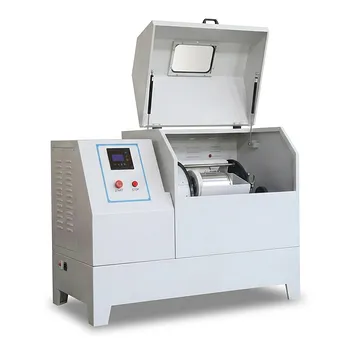
Heavy Duty Horizontal Planetary Ball Mill for Efficient Industrial Grinding and Sample Preparation
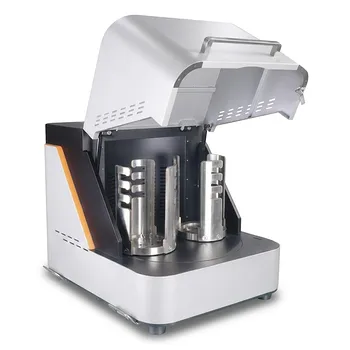
High Energy Laboratory Planetary Ball Mill for Nano Grinding and Colloidal Mixing of Hard and Brittle Materials
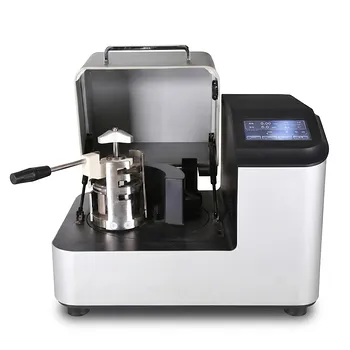
High Energy Laboratory Planetary Ball Mill for Nano Grinding and Material Science Sample Preparation
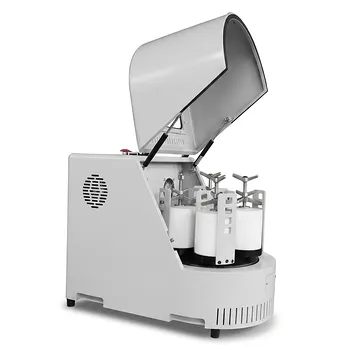
Vertical Semi Circular Planetary Ball Mill for Laboratory Precision Grinding
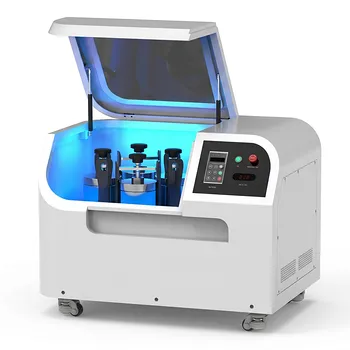
Planetary Ball Mill 12L
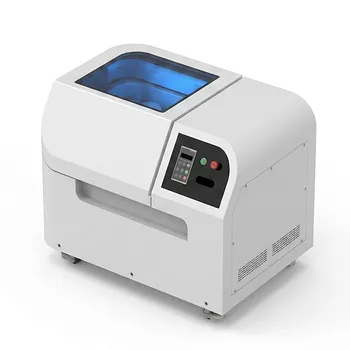
8L Planetary Ball Mill for Laboratory Grinding and Sample Preparation

Miniature Planetary Ball Mill with Vacuum Grinding and High Efficiency for Laboratory Sample Preparation
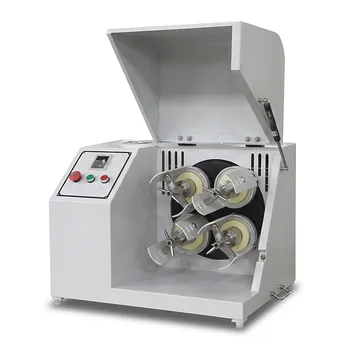
Horizontal Light Duty Planetary Ball Mill for Laboratory Sample Preparation
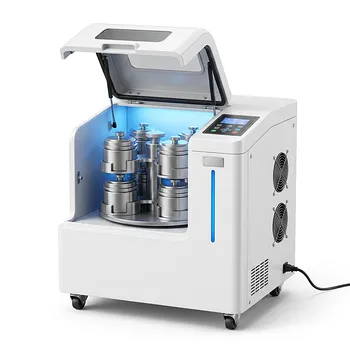
High Energy Omnidirectional Planetary Ball Mill 20L

High Energy Omnidirectional Planetary Ball Mill 16L
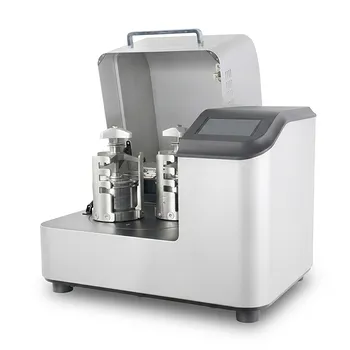
High Energy Planetary Ball Mill for Nano Scale Grinding and Mechanical Alloying
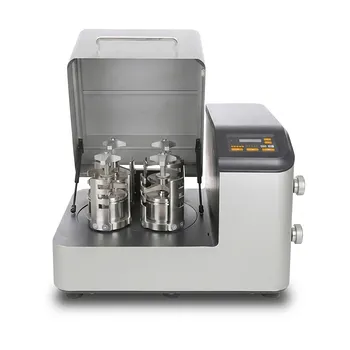
High Energy Planetary Ball Mill for Nano Scale Grinding and Colloidal Mixing in Material Science Research
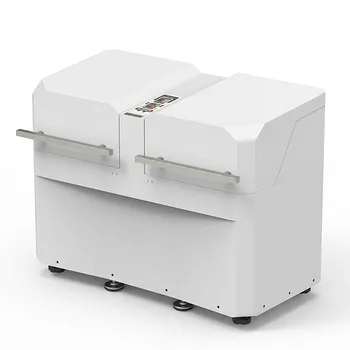
Dual Station Planetary Ball Mill 24L
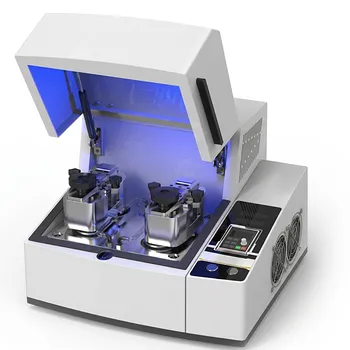
Laboratory Nano High Energy Ball Mill Ultrafine Grinding Mechanical Alloying
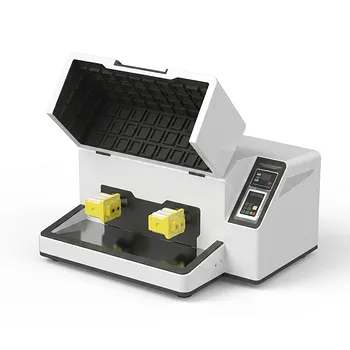
Multi-Platform Nanoscale High-Energy Vibratory Ball Mill
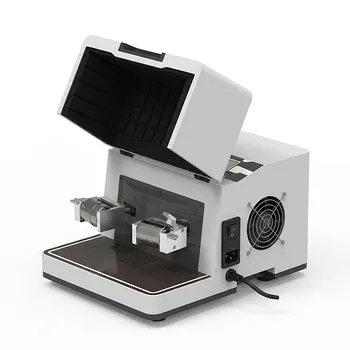
High Energy Hybrid Vibratory Ball Mill for Grinding Mixing and Cell Disruption