What role does a planetary ball mill play in the synthesis of Li6PS5Cl (LPSCl)? Unlock High Ionic Conductivity
Updated 4 months ago
A planetary ball mill serves as the primary high-energy reaction vessel for the mechanochemical synthesis of $Li_6PS_5Cl$ (LPSCl). It utilizes intense rotational forces to drive solid-state reactions between raw materials—typically $Li_2S$, $P_2S_5$, and $LiCl$—to create a homogenous, amorphous precursor that is essential for forming the final argyrodite crystal structure.
Core Takeaway: The planetary ball mill is the critical engine for "bottom-up" synthesis, using mechanical energy to break chemical bonds and facilitate atomic-level diffusion, which results in the high ionic conductivity required for solid-state batteries.
The Mechanics of Mechanochemical Synthesis
High-Energy Impact and Shear Forces
The planetary ball mill operates by rotating the milling jars in a direction opposite to the supporting sun wheel. This dual-rotation generates strong impact and shear forces as the milling media (balls) collide with the raw material powders.
These forces provide the necessary kinetic energy to overcome the activation barriers of solid-phase chemical reactions at room temperature.
Lattice Destruction and Amorphization
As the milling process progresses—often at speeds of 500 to 600 rpm—the high-energy collisions physically break down the crystal lattices of $Li_2S$, $P_2S_5$, and $LiCl$.
This process leads to the amorphization of the materials, transforming the crystalline raw powders into a disordered, high-energy state that acts as a precursor for the argyrodite structure.
Atomic-Level Mixing and Diffusion
Traditional solid-state mixing often suffers from composition segregation, where ingredients are not evenly distributed.
The planetary ball mill achieves molecular-level uniform dispersion, ensuring that the sulfur, phosphorus, and chlorine atoms are in intimate contact. This atomic-scale proximity is what allows the final electrolyte to achieve high purity and performance.
Enhancing Electrolyte Performance
Optimization of Ionic Conductivity
By refining the grain size to the nanometer scale, the ball mill significantly increases the surface area and atomic-level contact between components.
This refinement is a primary driver for increasing the room-temperature ionic conductivity of the sulfide electrolyte, as it minimizes the resistance to lithium-ion movement across grain boundaries.
Preparation for Thermal Transformation
While the ball mill creates the precursor, the synthesis of high-performance $Li_6PS_5Cl$ often requires a subsequent annealing step.
The milling process establishes the necessary foundation for this thermal treatment, ensuring that the crystalline phases formed during heating are consistent, dense, and free of localized impurities.
Understanding the Trade-offs and Pitfalls
Contamination from Milling Media
The primary risk in high-energy milling is material contamination from the jars or the balls themselves. As the media collide, small amounts of zirconium or steel can wear off and integrate into the electrolyte, potentially degrading electrochemical stability.
The Challenge of Scalability
While highly effective at the laboratory scale, planetary ball milling is energy-intensive and time-consuming, with some processes requiring up to 24 hours of continuous operation.
Scaling this "batch" process to industrial volumes while maintaining consistent mechanical energy distribution remains a significant hurdle for large-scale solid-state battery production.
How to Apply This to Your Project
Making the Right Choice for Your Goal
- If your primary focus is maximizing ionic conductivity: Prioritize higher rotational speeds (500+ rpm) and extended milling durations to ensure complete amorphization and atomic diffusion.
- If your primary focus is material purity: Utilize jars and milling balls made of stabilized zirconia and implement strict cooling intervals to prevent thermal degradation or media wear.
- If your primary focus is pilot-plant scalability: Transition from traditional planetary mills to high-capacity horizontal mills that can achieve similar shear forces with larger powder volumes.
By mastering the mechanical energy input of the planetary ball mill, researchers can precisely control the phase purity and conductivity of LPSCl electrolytes.
Summary Table:
| Synthesis Stage | Mill Action | Impact on LPSCl Electrolyte |
|---|---|---|
| Pre-reaction | High-energy impact/shear | Breaks crystal lattices of $Li_2S$, $P_2S_5$, & $LiCl$ |
| Precursor Prep | Atomic-level diffusion | Creates a uniform, amorphous argyrodite precursor |
| Performance Optimization | Grain size refinement | Increases surface area & maximizes ionic conductivity |
| Quality Control | Controlled milling environment | Ensures high phase purity and chemical homogeneity |
Optimize Your Solid-State Electrolyte Synthesis
Achieving the perfect argyrodite structure for Li6PS5Cl requires precision at every step. We provide complete laboratory sample preparation solutions tailored for material science researchers and battery developers.
From high-energy planetary ball mills, jet mills, and cryogenic grinders for superior amorphization to our full spectrum of hydraulic presses—including Cold/Warm Isostatic Presses (CIP/WIP), vacuum hot presses, and XRF pellet presses—we ensure your powders are processed and compacted to the highest standards.
Ready to enhance your lab's efficiency and material performance? Contact our technical team today to find the ideal equipment for your powder processing and material synthesis needs.
References
- Seungwoo Lee, Ungyu Paik. Stabilized Conductive Agent/Sulfide Solid Electrolyte Interface via a Halide Solid Electrolyte Coating for All‐Solid‐State Batteries. DOI: 10.1002/cey2.70051
Mentioned Products
- Vertical Semi Circular Planetary Ball Mill for Laboratory Precision Grinding
- High Energy Planetary Ball Mill for Nano Scale Grinding and Mechanical Alloying
- Heavy Duty Horizontal Planetary Ball Mill for Efficient Industrial Grinding and Sample Preparation
- Vertical Production Planetary Ball Mill for High Throughput Powder Processing
- 360° Rotating Omnidirectional Laboratory Planetary Ball Mill for Homogeneous Ultra-Fine Grinding and Mixing
People Also Ask
- Why is a planetary ball mill essential for SiBCN-rGO wet-spinning? Achieve Superior Dispersion and Spinnability
- Why is an intermittent grinding process required for perovskites in a planetary ball mill? Ensure Stability & Purity
- Why is a planetary ball mill required for PET micronization? Ensure Accurate Chemical Analysis of Reprocessed PET
- How does mechanized planetary ball milling compare to manual agate grinding? Optimize sulfide standard material precision.
- What role does a planetary ball mill play in the preparation of forsterite (Mg2SiO4) ceramic raw materials? Key Insights

Tech Team · PowderPreparation
Last updated on Jun 03, 2026
Related Products
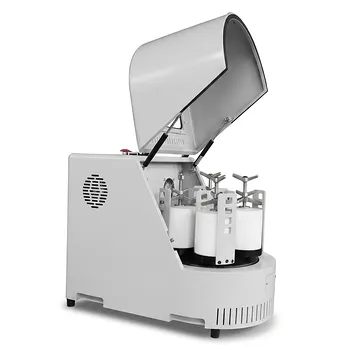
Vertical Semi Circular Planetary Ball Mill for Laboratory Precision Grinding
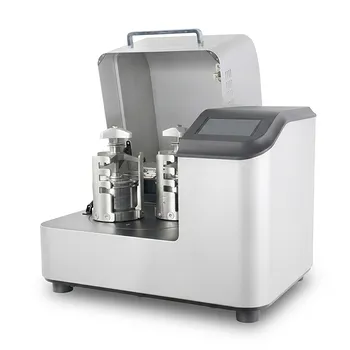
High Energy Planetary Ball Mill for Nano Scale Grinding and Mechanical Alloying
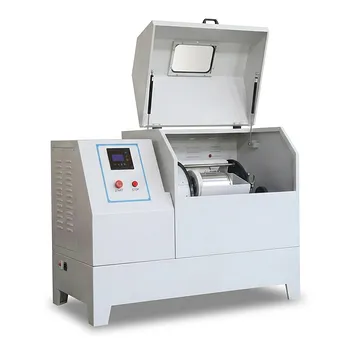
Heavy Duty Horizontal Planetary Ball Mill for Efficient Industrial Grinding and Sample Preparation
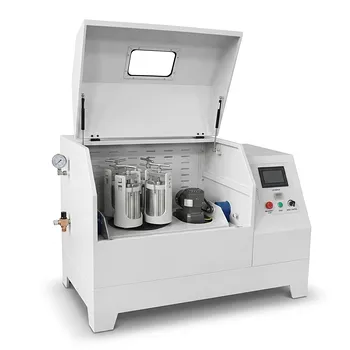
Vertical Production Planetary Ball Mill for High Throughput Powder Processing
360° Rotating Omnidirectional Laboratory Planetary Ball Mill for Homogeneous Ultra-Fine Grinding and Mixing
Vertical Square Planetary Ball Mill for Laboratory Sample Preparation and Nanoscale Grinding
Miniature Planetary Ball Mill with Vacuum Grinding and High Efficiency for Laboratory Sample Preparation
High Energy Omnidirectional Planetary Ball Mill 16L

High Energy Laboratory Planetary Ball Mill for Nano Grinding and Material Science Sample Preparation
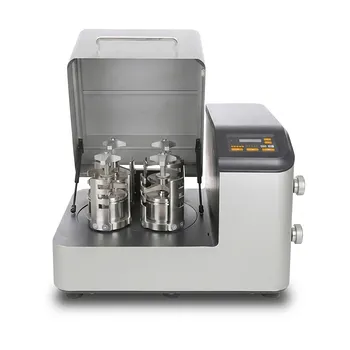
High Energy Planetary Ball Mill for Nano Scale Grinding and Colloidal Mixing in Material Science Research
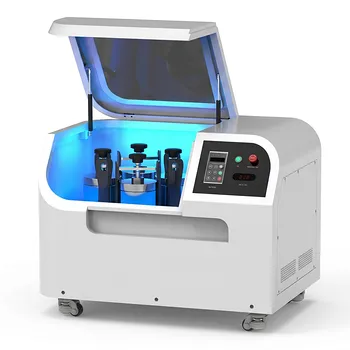
Planetary Ball Mill 12L
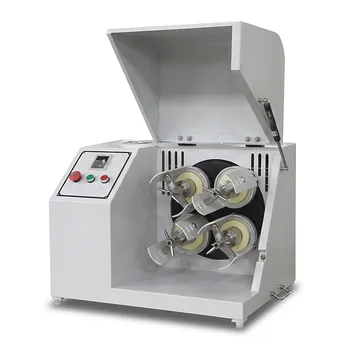
Horizontal Light Duty Planetary Ball Mill for Laboratory Sample Preparation
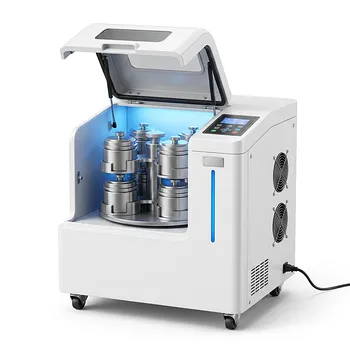
High Energy Omnidirectional Planetary Ball Mill 20L
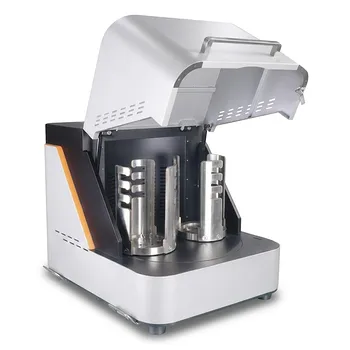
High Energy Laboratory Planetary Ball Mill for Nano Grinding and Colloidal Mixing of Hard and Brittle Materials

8L Planetary Ball Mill for Laboratory Grinding and Sample Preparation
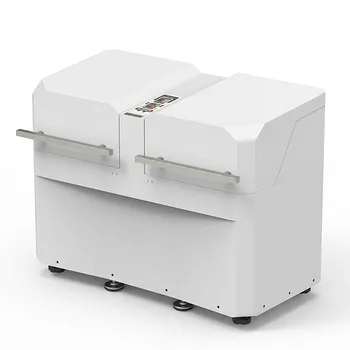
Dual Station Planetary Ball Mill 24L

Multi-Platform Nanoscale High-Energy Vibratory Ball Mill

Nano High Energy Vibratory Ball Mill for Laboratory Sample Preparation
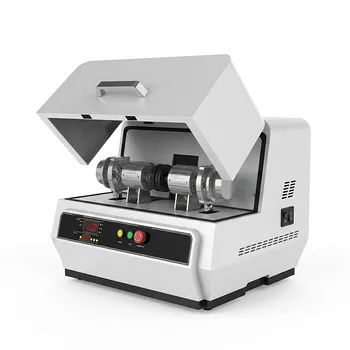
Dual Jar High Energy Vibratory Ball Mill