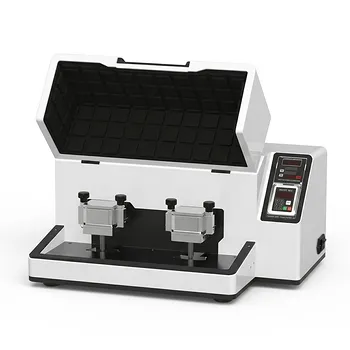
What is the critical function of a high-energy planetary ball mill in Si-B-C-N ceramics? Master Solid-State Amorphization
Updated 4 months ago
The high-energy planetary ball mill is the primary engine of solid-state amorphization in ceramic synthesis. Its critical function is to utilize mechanical energy from high-speed rotation to disrupt the crystalline structures of raw materials like silicon, graphite, and hexagonal boron nitride. This disruption allows atoms to diffuse and rearrange in a solid state, enabling the direct synthesis of homogeneous amorphous Si-B-C-N powders at room temperature without the need for melting.
The planetary ball mill acts as a mechanical catalyst that bypasses traditional high-temperature synthesis by forcing atomic-level blending through intense impact and shear. This creates a highly reactive, amorphous precursor that is essential for the subsequent formation of advanced ceramic microstructures.
Mechanical Energy as a Catalyst for Amorphization
Disruption of Crystalline Lattices
The high-speed rotation of the planetary mill generates intense collisions and shear forces between the grinding media and the raw material powders. This mechanical energy is sufficiently high to break the chemical bonds within the crystalline structures of silicon and boron nitride. As these lattices collapse, the materials transition from a structured crystalline state into a disordered amorphous state.
Solid-State Atomic Diffusion
Once the crystal structures are disrupted, the mill facilitates solid-state diffusion, where atoms from different precursors begin to migrate and intermix. This process occurs at room temperature, which is significantly lower than the temperatures required for traditional chemical synthesis. The result is a chemically homogeneous powder where the constituent elements are distributed uniformly at the atomic level.
Enhancing Sintering Reactivity and Homogeneity
Particle Size Refinement and Surface Area
Beyond amorphization, the high-energy mill significantly refines particle size, often reducing conventional ceramic particles to the nanometer scale (less than 100 nm). This drastic reduction in size increases the specific surface area and the overall reactivity of the powder. This heightened reactivity is a physical prerequisite for promoting densification and grain bonding during subsequent low-temperature sintering.
Molecular-Level Uniform Mixing
The planetary ball mill ensures that additives and reinforcements are distributed with molecular-level uniformity. This degree of dispersion is critical because it ensures that sintering additives are evenly placed at grain boundaries. Such precision effectively reduces grain boundary energy, which promotes densification while inhibiting the abnormal growth of grains during high-temperature heat treatment.
Understanding the Trade-offs and Limitations
Contamination and Material Purity
The intense high-energy impact required for amorphization often leads to wear and tear of the grinding balls and the mill jar. This can introduce impurities from the milling media (such as steel or zirconia) into the Si-B-C-N powder. For high-performance ceramics, these contaminants can degrade the mechanical and thermal properties of the final bulk material.
Heat Generation and Energy Efficiency
While the process occurs at "room temperature," the friction and impact within the mill generate significant internal heat. If not managed through cooling cycles, this heat can lead to premature crystallization or unwanted phase transitions in the powder. Furthermore, achieving complete amorphization is an energy-intensive process that requires long milling times, which can increase production costs.
How to Apply This to Your Ceramic Project
Making the Right Choice for Your Goal
The use of high-energy planetary ball milling should be tailored to the specific microstructural requirements of your final Si-B-C-N ceramic.
- If your primary focus is achieving maximum material density: Utilize the mill to maximize particle refinement and surface area, which lowers the energy barrier for sintering.
- If your primary focus is in-situ nanoscale reinforcement: Focus on achieving complete solid-state amorphization, as this disordered state facilitates the precipitation of reinforcing phases during subsequent thermal processing.
- If your primary focus is material purity: Select grinding media that matches the chemistry of your ceramic or use high-hardness materials like silicon carbide to minimize milling-induced contamination.
The high-energy planetary ball mill is the foundational tool for creating the reactive, amorphous precursors necessary for the next generation of high-performance Si-B-C-N ceramics.
Summary Table:
| Key Function | Mechanism of Action | Benefit for Si-B-C-N Ceramics |
|---|---|---|
| Amorphization | High-speed impact and shear | Bypasses high-temp synthesis; creates reactive precursors. |
| Atomic Diffusion | Mechanical bond disruption | Enables room-temperature synthesis of homogeneous powders. |
| Size Refinement | Nanoscale milling (<100nm) | Increases specific surface area to lower sintering barriers. |
| Mixing Uniformity | Molecular-level dispersion | Ensures even distribution of additives at grain boundaries. |
Elevate Your Ceramic Research with Precision Engineering
Achieving the perfect amorphous precursor for Si-B-C-N ceramics requires equipment that delivers consistent, high-energy impact. We provide complete laboratory sample preparation solutions tailored for material science, specializing in advanced powder processing and compaction.
Whether you need to optimize mechanical alloying with our planetary ball mills, jet mills, or disc mills, or require high-density consolidation using our Cold/Warm Isostatic Presses (CIP/WIP) and vacuum hot presses, our equipment is designed for maximum performance and durability. From initial crushing with our jaw and roll crushers to final particle analysis using vibratory sieve shakers, we support every step of your workflow.
Ready to enhance your lab's efficiency and material purity? Contact our technical team today to discuss how our powder mixers, hydraulic presses, and specialized milling solutions can drive your next breakthrough in advanced ceramics.
References
- Pengfei Zhang, Yu Zhou. Progress of a novel non-oxide Si-B-C-N ceramic and its matrix composites. DOI: 10.1007/s40145-012-0017-x
Mentioned Products
- High Energy Omnidirectional Planetary Ball Mill 16L
- High Energy Omnidirectional Planetary Ball Mill 20L
- High Energy Planetary Ball Mill for Nano Scale Grinding and Mechanical Alloying
- High Energy Laboratory Planetary Ball Mill for Nano Grinding and Colloidal Mixing of Hard and Brittle Materials
- High Energy Laboratory Planetary Ball Mill for Nano Grinding and Material Science Sample Preparation
People Also Ask
- What role does an omni-directional planetary ball mill play in brass/cobalt antimonide pretreatment? Achieve Nano-Scale Homogeneity.
- What is the role of a high-energy planetary ball mill in Li2ZrO3 and LBS prep? Achieve Superior Electrolyte Density
- What role does a high-energy planetary ball mill play in processing quenched bioactive glass? Achieve Nano-Scale Precision
- What role does a planetary ball mill play in nano-mineral filler prep? Achieve Sub-100nm Precision & Performance
- What role does a high-energy planetary ball mill play in magnesium-based hydrogen storage alloy preparation?

Tech Team · PowderPreparation
Last updated on Jun 03, 2026
Related Products
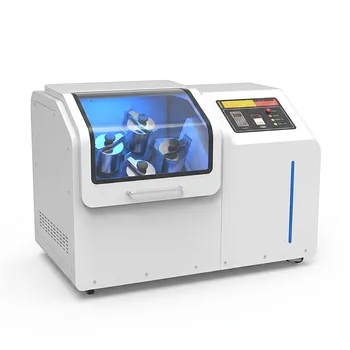
High Energy Omnidirectional Planetary Ball Mill 16L
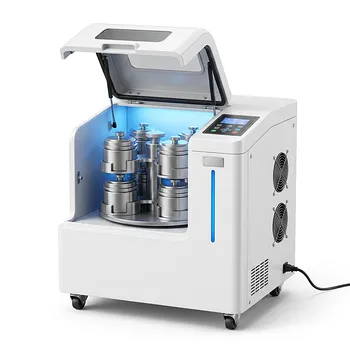
High Energy Omnidirectional Planetary Ball Mill 20L
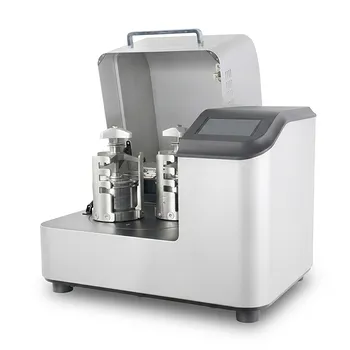
High Energy Planetary Ball Mill for Nano Scale Grinding and Mechanical Alloying
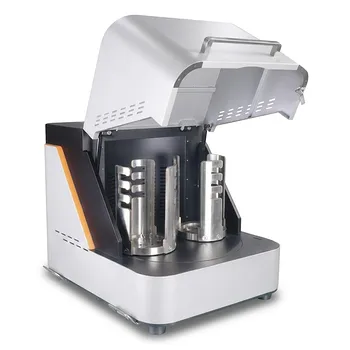
High Energy Laboratory Planetary Ball Mill for Nano Grinding and Colloidal Mixing of Hard and Brittle Materials
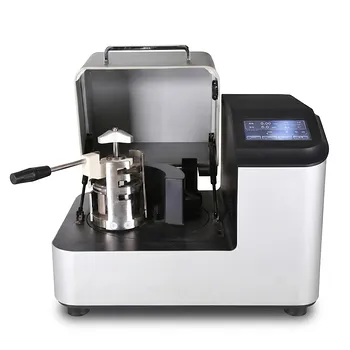
High Energy Laboratory Planetary Ball Mill for Nano Grinding and Material Science Sample Preparation
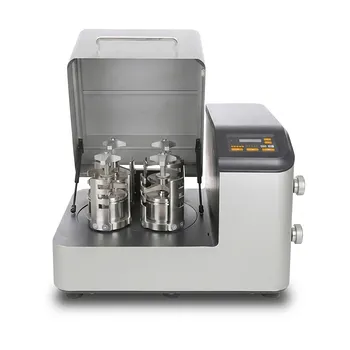
High Energy Planetary Ball Mill for Nano Scale Grinding and Colloidal Mixing in Material Science Research
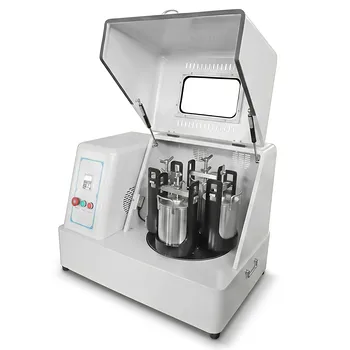
Vertical Square Planetary Ball Mill for Laboratory Sample Preparation and Nanoscale Grinding

8L Planetary Ball Mill for Laboratory Grinding and Sample Preparation
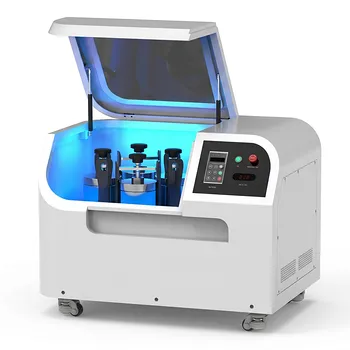
Planetary Ball Mill 12L
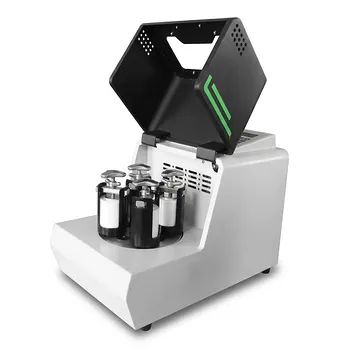
Miniature Planetary Ball Mill with Vacuum Grinding and High Efficiency for Laboratory Sample Preparation
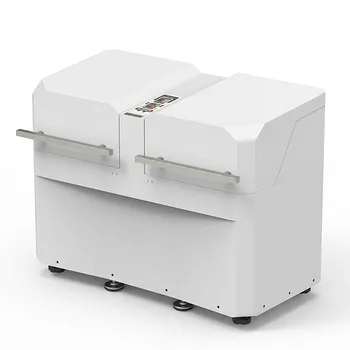
Dual Station Planetary Ball Mill 24L
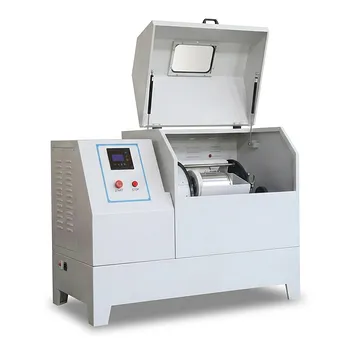
Heavy Duty Horizontal Planetary Ball Mill for Efficient Industrial Grinding and Sample Preparation
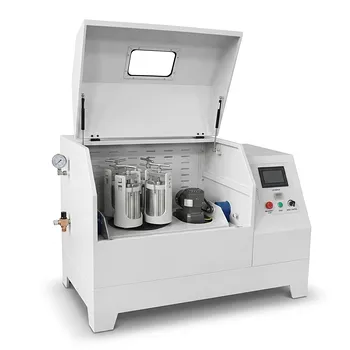
Vertical Production Planetary Ball Mill for High Throughput Powder Processing
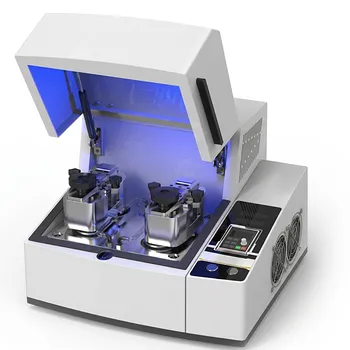
Laboratory Nano High Energy Ball Mill Ultrafine Grinding Mechanical Alloying
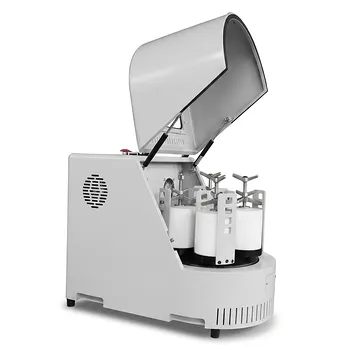
Vertical Semi Circular Planetary Ball Mill for Laboratory Precision Grinding
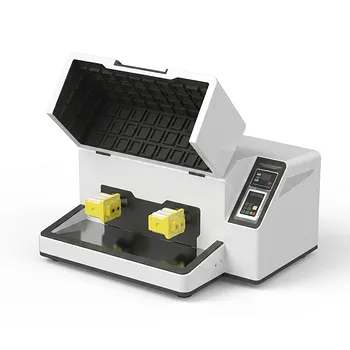
Multi-Platform Nanoscale High-Energy Vibratory Ball Mill
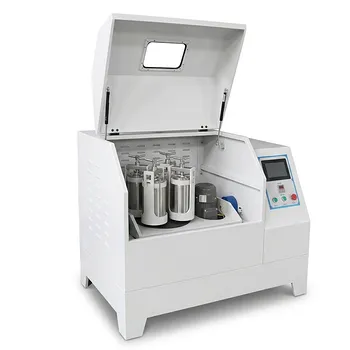
360° Rotating Omnidirectional Laboratory Planetary Ball Mill for Homogeneous Ultra-Fine Grinding and Mixing

Nano High Energy Vibratory Ball Mill for Laboratory Sample Preparation

High Energy Hybrid Vibratory Ball Mill for Grinding Mixing and Cell Disruption