What role does an omni-directional planetary ball mill play in brass/cobalt antimonide pretreatment? Achieve Nano-Scale Homogeneity.
Updated 3 months ago
The omni-directional planetary ball mill serves as the primary mechanism for mechanical alloying and homogenization during the pretreatment of brass and cobalt antimonide composite powders. By employing multi-dimensional rotation and high-energy collisions, this equipment refines grain sizes to the micro-nano scale and ensures the uniform dispersion of brass dopants within the cobalt-antimony-tellurium matrix.
The omni-directional planetary ball mill is the technological foundation for creating high-performance thermoelectric materials, as it eliminates powder agglomeration and achieves a level of microscopic homogeneity that traditional mixing cannot reach.
Achieving Mechanical Alloying and Microstructural Refinement
Multi-Dimensional Rotation and High-Energy Collisions
Unlike traditional mills, the omni-directional planetary ball mill utilizes complex motion paths to generate intense centrifugal, impact, and shear forces. These multi-dimensional forces ensure that the grinding media strike the brass, cobalt, antimony, and tellurium powders from various angles.
This process prevents the "dead zones" common in standard milling, where powder can settle and remain unmixed. The result is a high-energy environment that facilitates the cold-welding and fracturing necessary for true mechanical alloying.
Breaking Agglomerations and Grain Refinement
Raw powders often suffer from natural agglomeration, which can lead to structural defects in the final material. The intense mechanical energy provided by the ball mill effectively breaks these agglomerates, ensuring each particle is individually processed.
Furthermore, the process reduces the average particle size to the micro-nano scale. This extreme refinement is critical because it increases the specific surface area of the powders, which directly influences the material's final density and thermoelectric efficiency.
Ensuring Homogeneity and Chemical Reactivity
Uniform Dispersion of Brass Dopants
For cobalt antimonide composites to function as effective thermoelectric materials, the brass dopants must be distributed perfectly throughout the matrix. The ball mill forces these dopants into the cobalt-antimony lattice at a microscopic level.
This forced uniform dispersion is essential for creating a consistent microstructure. Without this level of homogeneity, the material would suffer from component segregation, leading to unpredictable electrical and thermal properties.
Enhancing Powder Reactivity for Sintering
The mechanical impact of the ball milling process does more than just resize particles; it increases their chemical reactivity. By creating high-energy surfaces and increasing the contact area between different elements, the mill prepares the powder for subsequent stages.
This enhanced reactivity is vital for the sintering and densification processes. It allows for better atomic diffusion at lower temperatures, resulting in a more robust and uniform final composite.
Understanding the Trade-offs
Processing Time vs. Contamination Risk
While extending milling time (for example, up to 10 hours) can lead to finer particle sizes and better homogenization, it introduces a risk of media wear. Small amounts of material from the grinding jars or balls can contaminate the high-purity thermoelectric powders.
Heat Generation and Material Phase Changes
The high-energy nature of omni-directional milling generates significant internal heat. If not managed carefully, this heat can cause unwanted phase transformations or oxidation in sensitive materials like tellurium or antimony.
How to Apply This to Your Project
Making the Right Choice for Your Goal
- If your primary focus is maximizing thermoelectric efficiency: Prioritize longer milling cycles at moderate speeds to ensure the absolute homogenization of brass dopants within the matrix.
- If your primary focus is rapid prototyping and high throughput: Utilize higher rotational speeds (e.g., 180 r/min or higher) to achieve necessary grain refinement in a shorter timeframe.
- If your primary focus is material purity: Use high-hardness grinding media (like tungsten carbide or zirconia) and consider milling in an inert gas environment to prevent oxidation and contamination.
Mastering the use of the omni-directional planetary ball mill is the essential first step in transforming raw elemental powders into advanced, high-performance composite materials.
Summary Table:
| Key Function | Mechanism | Impact on Composite Powder |
|---|---|---|
| Mechanical Alloying | Multi-dimensional high-energy collisions | Achieves micro-nano scale grain refinement and alloying. |
| Homogenization | Elimination of "dead zones" | Ensures uniform dispersion of brass dopants in the Co-Sb-Te matrix. |
| De-agglomeration | Intense shear and impact forces | Breaks natural powder clusters for structural integrity. |
| Sintering Prep | Surface energy enhancement | Increases chemical reactivity for higher final material density. |
Elevate Your Material Research with Professional Sample Preparation
Achieving microscopic homogeneity in thermoelectric composites requires precision engineering. At [Company Name], we provide complete laboratory sample preparation solutions for material science, specializing in high-performance powder processing and compaction equipment.
Whether you are refining brass and cobalt antimonide powders or developing new alloys, our extensive product line supports every stage of your workflow:
- Advanced Milling: Omni-directional planetary ball mills, jet mills, and cryogenic grinders for nano-scale refinement.
- Powder Processing: Sieve shakers, powder mixers, and defoaming mixers to ensure purity and consistency.
- Compaction Excellence: A full spectrum of hydraulic presses, including Cold/Warm Isostatic Presses (CIP/WIP), vacuum hot presses, and XRF pellet presses for superior densification.
Ready to optimize your material performance? Contact our technical experts today to find the perfect equipment configuration for your laboratory needs.
References
- Dan Zhao, Run Huang. Unveiling Brass-Doped CoSb3-Based Thermoelectric Materials Using Solid-State Reaction. DOI: 10.3390/ma18173928
Mentioned Products
- High Energy Omnidirectional Planetary Ball Mill 16L
- 360° Rotating Omnidirectional Laboratory Planetary Ball Mill for Homogeneous Ultra-Fine Grinding and Mixing
- High Energy Omnidirectional Planetary Ball Mill 20L
- Heavy Duty Horizontal Planetary Ball Mill for Efficient Industrial Grinding and Sample Preparation
- Vertical Production Planetary Ball Mill for High Throughput Powder Processing
People Also Ask
- What is the role of a high-energy planetary ball mill in Li2ZrO3 and LBS prep? Achieve Superior Electrolyte Density
- What role does a high-energy planetary ball mill play in processing quenched bioactive glass? Achieve Nano-Scale Precision
- What role does a planetary ball mill play in nano-mineral filler prep? Achieve Sub-100nm Precision & Performance
- What role does a high-energy planetary ball mill play in magnesium-based hydrogen storage alloy preparation?
- What role do high-energy planetary ball mills play in MgH2 modification? Enhance hydrogen storage via nanostructuring.

Tech Team · PowderPreparation
Last updated on Jun 03, 2026
Related Products
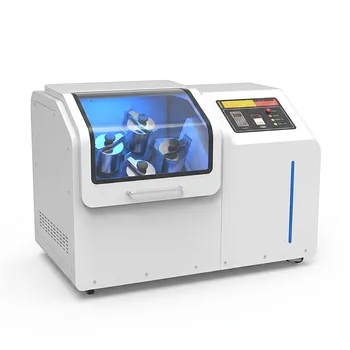
High Energy Omnidirectional Planetary Ball Mill 16L
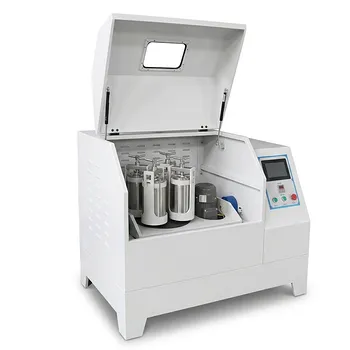
360° Rotating Omnidirectional Laboratory Planetary Ball Mill for Homogeneous Ultra-Fine Grinding and Mixing
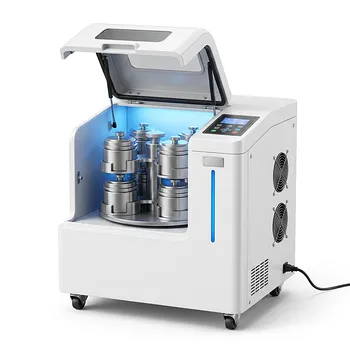
High Energy Omnidirectional Planetary Ball Mill 20L
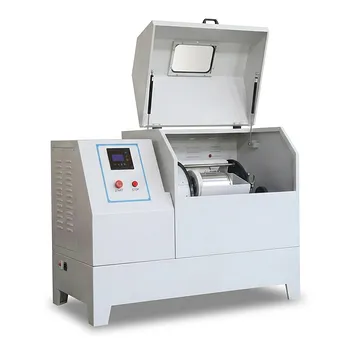
Heavy Duty Horizontal Planetary Ball Mill for Efficient Industrial Grinding and Sample Preparation
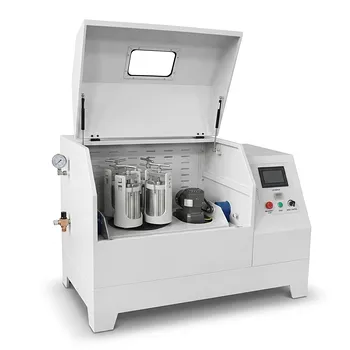
Vertical Production Planetary Ball Mill for High Throughput Powder Processing
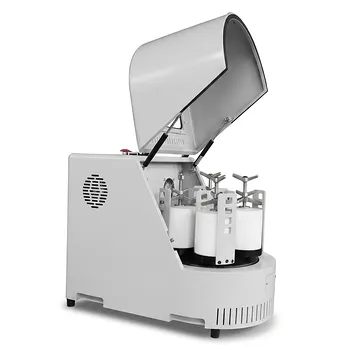
Vertical Semi Circular Planetary Ball Mill for Laboratory Precision Grinding
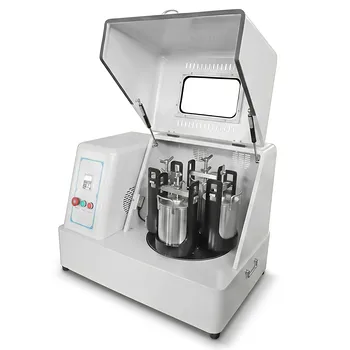
Vertical Square Planetary Ball Mill for Laboratory Sample Preparation and Nanoscale Grinding
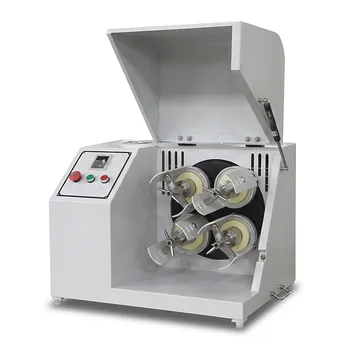
Horizontal Light Duty Planetary Ball Mill for Laboratory Sample Preparation

High Energy Planetary Ball Mill for Nano Scale Grinding and Mechanical Alloying
Planetary Ball Mill 12L
Dual Station Planetary Ball Mill 24L
High Energy Laboratory Planetary Ball Mill for Nano Grinding and Colloidal Mixing of Hard and Brittle Materials
Miniature Planetary Ball Mill with Vacuum Grinding and High Efficiency for Laboratory Sample Preparation

Multi-Platform Nanoscale High-Energy Vibratory Ball Mill

High Energy Laboratory Planetary Ball Mill for Nano Grinding and Material Science Sample Preparation
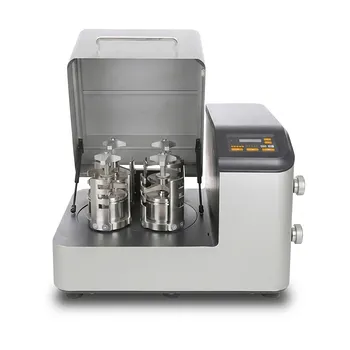
High Energy Planetary Ball Mill for Nano Scale Grinding and Colloidal Mixing in Material Science Research

8L Planetary Ball Mill for Laboratory Grinding and Sample Preparation

High Energy Hybrid Vibratory Ball Mill for Grinding Mixing and Cell Disruption
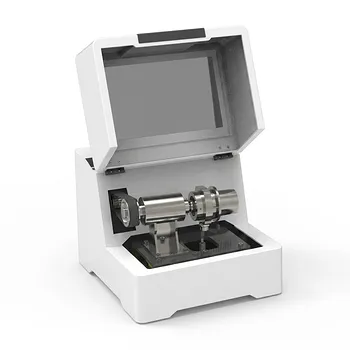
Single Tank High Energy Vibratory Ball Mill for Laboratory Grinding and Mixing