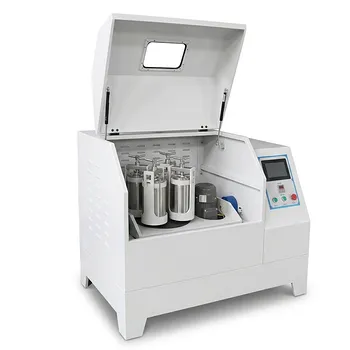
What are the technical advantages of wet ball milling compared to dry ball milling when preparing ceramic nanocomposites?
Updated 3 months ago
Wet ball milling is technically superior to dry milling for ceramic nanocomposites because it utilizes a liquid medium to lower surface energy and eliminate particle agglomeration. This process results in significantly smaller average particle sizes, narrower size distributions, and enhanced chemical homogeneity. By providing active cooling and improved material fluidity, wet milling ensures the uniform dispersion of nano-reinforcements, which is critical for achieving high-density final products.
The primary advantage of wet ball milling lies in its ability to manipulate the physical environment of the powder through a liquid medium. This medium acts simultaneously as a lubricant, a coolant, and a chemical dispersant to overcome the van der Waals forces that cause ultra-fine particles to clump during dry processing.
Superior Control Over Particle Morphology and Size
Achieving Sub-Micron Fineness
Wet ball milling utilizes a liquid medium, such as deionized water or ethanol, to effectively reduce the surface energy of the powder. While dry milling often reaches a limit where particles begin to re-weld, wet milling can reduce particle sizes from 40 microns down to below 7 microns.
Narrowing the Particle Size Distribution
The presence of a liquid medium ensures a more narrow particle size distribution. This uniformity is critical for applications like high-resolution 3D printing and photocurable composites, where flowability and packing density are paramount.
Increasing Specific Surface Area
By producing finer particles, the wet process significantly increases the specific surface area of the material. This enhanced surface area is vital for subsequent chemical reactions, such as geopolymerization, leading to more reactive and stable ceramic precursors.
Management of Interfacial Forces and Agglomeration
Inhibiting Particle Agglomeration
The addition of solvents or surfactants reduces the interfacial tension between powder particles. This effectively prevents ultra-fine powders from clumping together during the grinding process, a common failure point in dry milling.
Improving Rheological Properties
The liquid medium alters the rheology of the material within the mill, improving the fluidity of fine particles. This allows the powder to disperse more effectively between the grinding balls, maximizing the frequency of effective impacts.
Reducing Media Adhesion
In a slurry environment, particles are less likely to adhere to the grinding balls or mill surfaces. This keeps the grinding media clean and ensures that the mechanical energy is focused on particle size reduction rather than compressing a "cake" of material against the walls.
Thermal Stability and Chemical Homogeneity
Active Heat Dissipation
The liquid medium provides a vital cooling effect that mitigates thermal effects during the milling process. This prevents localized high temperatures that could otherwise cause unwanted phase changes or chemical degradation of sensitive nano-reinforcements.
Achieving Chemical Homogeneity
Wet milling ensures a high degree of uniform dispersion of the nano-reinforcement phase within the ceramic matrix. This level of mixing is nearly impossible to achieve in a dry state and is the foundation for producing ceramics with greater densification.
Enhancing Production Efficiency
For hard or high-density minerals, a slurry environment enhances grinding efficiency. This results in a shorter processing time to reach alloying equilibrium and reduces the total energy consumption required to achieve a specific level of fineness.
Understanding the Trade-offs and Limitations
The Requirement for Secondary Processing
The most significant drawback of wet milling is the necessity of a drying step to remove the solvent. This adds a stage to the production cycle and must be managed carefully to prevent the formation of hard aggregates during evaporation.
Potential for Contamination
Introducing a liquid medium or surfactants adds a potential source of chemical contamination. The choice of solvent must be chemically compatible with the ceramic powders to avoid oxidation or unwanted side reactions.
Increased Operational Complexity
Wet milling systems often require more intensive cleaning and maintenance. Handling slurries also necessitates specialized equipment, such as centrifugal mills with cooling systems, to manage the fluid dynamics and temperature of the suspension.
How to Apply This to Your Project
Recommendations for Material Selection
- If your primary focus is maximum densification: Utilize wet ball milling with surfactants to ensure the nano-reinforcement phase is perfectly dispersed before sintering.
- If your primary focus is preventing phase transitions: Choose a wet centrifugal mill with an integrated cooling system to keep processing temperatures well below the degradation threshold.
- If your primary focus is high-resolution manufacturing: Prioritize wet milling in ethanol or water to achieve the sub-7-micron particle sizes required for optimal resin flow.
- If your primary focus is cost-sensitive bulk processing: Consider dry milling only if the target particle size is above 40 microns and chemical homogeneity is not a critical performance factor.
By leveraging the fluid dynamics and chemical advantages of a liquid medium, wet ball milling transforms raw ceramic powders into the highly uniform, ultra-fine precursors necessary for advanced nanocomposite engineering.
Summary Table:
| Feature | Wet Ball Milling | Dry Ball Milling |
|---|---|---|
| Particle Size | Sub-micron (down to <7μm) | Typically limited to >40μm |
| Agglomeration | Inhibited by liquid medium | High (particles often re-weld) |
| Temperature Control | Active cooling via liquid | Risk of localized overheating |
| Dispersion | High chemical homogeneity | Prone to non-uniform mixing |
| Efficiency | Higher for hard minerals | Lower for ultra-fine targets |
Precision Solutions for Your Ceramic & Material Research
Achieving sub-micron fineness and perfect dispersion in ceramic nanocomposites requires more than just the right technique—it requires industry-leading equipment. At [Your Brand Name], we provide complete laboratory sample preparation solutions tailored for material science and powder metallurgy.
Our specialized range includes:
- Advanced Milling & Grinding: High-energy planetary ball mills, jet mills, disc mills, and liquid nitrogen cryogenic grinders for heat-sensitive materials.
- Powder Processing: Jaw/roll crushers, vibratory sieve shakers, and high-efficiency defoaming mixers.
- Superior Compaction: A full spectrum of hydraulic presses, including Cold/Warm Isostatic Presses (CIP/WIP), vacuum hot presses, and XRF pellet presses.
Whether you are focusing on high-density ceramics or advanced geopolymerization, our expertise in powder processing and compaction ensures your samples meet the most rigorous standards.
Contact our technical experts today to find the ideal equipment for your laboratory workflow!
References
- Josny Joy, Sesha S. Srinivasan. Recent Developments on the Synthesis of Nanocomposite Materials via Ball Milling Approach for Energy Storage Applications. DOI: 10.3390/app12189312
Mentioned Products
- Single Tank High Energy Vibratory Ball Mill for Laboratory Grinding and Mixing
- Vertical Square Planetary Ball Mill for Laboratory Sample Preparation and Nanoscale Grinding
- Laboratory Basket Sand Mill for Wet Grinding and Dispersion of Viscous Slurries
- Miniature Planetary Ball Mill with Vacuum Grinding and High Efficiency for Laboratory Sample Preparation
- Heating Temperature Controlled High Energy Vibratory Ball Mill
People Also Ask
- What is the primary purpose of using a vibratory ball mill in the preparation of respirable carbon fiber fragments?
- What is the purpose of using a vibratory ball mill for Al-Ni-Fe alloy ribbons? Achieve High Catalytic Activity
- Why is a vibratory ball mill preferred over a planetary ball mill for rapid powder particle refinement? High-Speed Impact
- How does a high-energy vibratory ball mill improve the performance of MgH2? Optimize Hydrogen Storage Kinetics
- What role do high-energy ball mills play in the preparation of reinforcements for hybrid metal matrix composites?

Tech Team · PowderPreparation
Last updated on Jun 03, 2026
Related Products
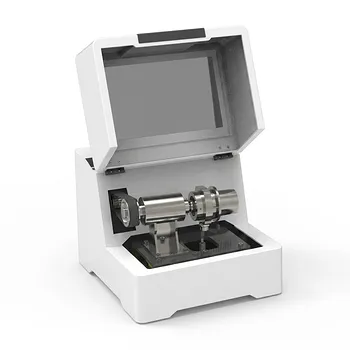
Single Tank High Energy Vibratory Ball Mill for Laboratory Grinding and Mixing
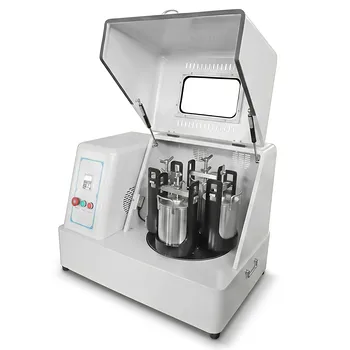
Vertical Square Planetary Ball Mill for Laboratory Sample Preparation and Nanoscale Grinding
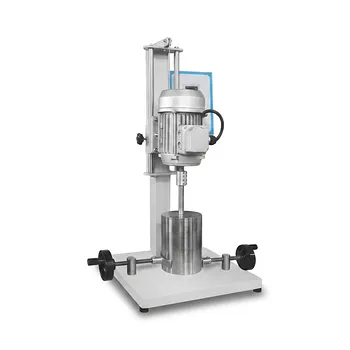
Laboratory Basket Sand Mill for Wet Grinding and Dispersion of Viscous Slurries
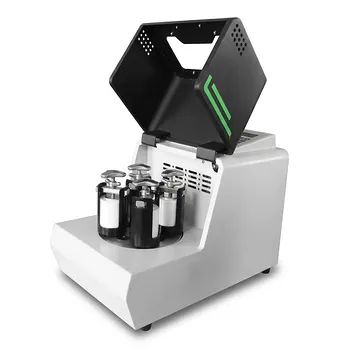
Miniature Planetary Ball Mill with Vacuum Grinding and High Efficiency for Laboratory Sample Preparation
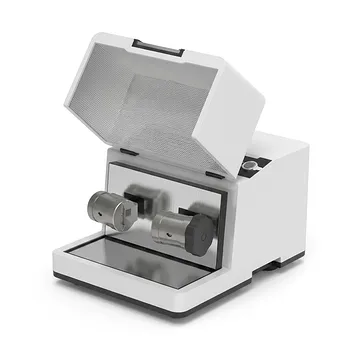
Heating Temperature Controlled High Energy Vibratory Ball Mill

High Throughput Micro Ball Mill for Cryogenic Grinding and Laboratory Cell Disruption
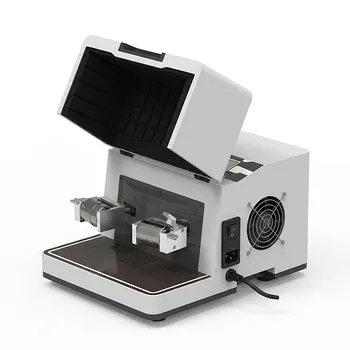
High Energy Hybrid Vibratory Ball Mill for Grinding Mixing and Cell Disruption
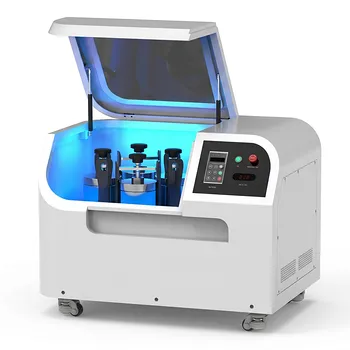
Planetary Ball Mill 12L
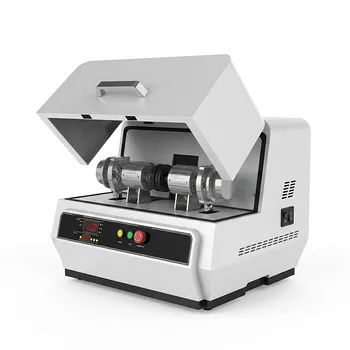
Dual Jar High Energy Vibratory Ball Mill
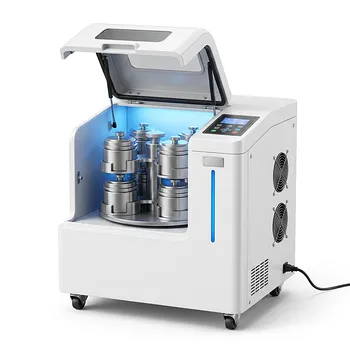
High Energy Omnidirectional Planetary Ball Mill 20L
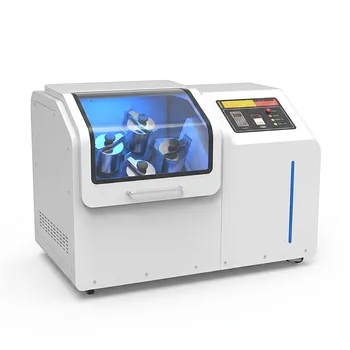
High Energy Omnidirectional Planetary Ball Mill 16L
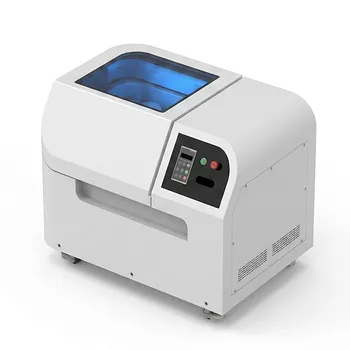
8L Planetary Ball Mill for Laboratory Grinding and Sample Preparation
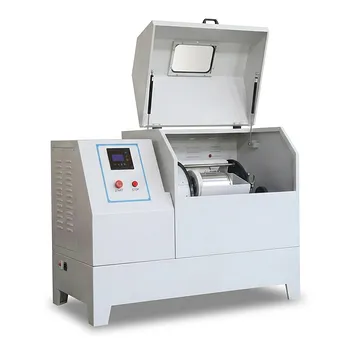
Heavy Duty Horizontal Planetary Ball Mill for Efficient Industrial Grinding and Sample Preparation
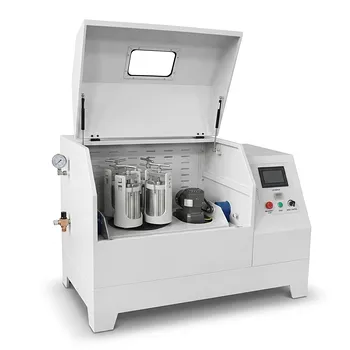
Vertical Production Planetary Ball Mill for High Throughput Powder Processing
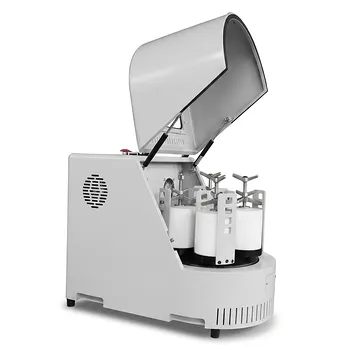
Vertical Semi Circular Planetary Ball Mill for Laboratory Precision Grinding
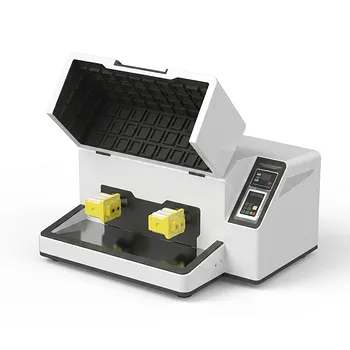
Multi-Platform Nanoscale High-Energy Vibratory Ball Mill
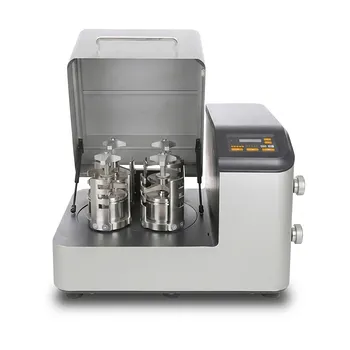
High Energy Planetary Ball Mill for Nano Scale Grinding and Colloidal Mixing in Material Science Research
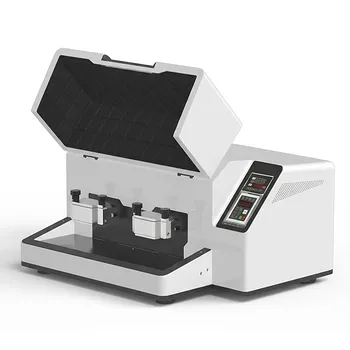
Nanoscale High-Energy Vibratory Ball Mill for Laboratory Sample Preparation, Mechanochemistry, and Mechanical Alloying
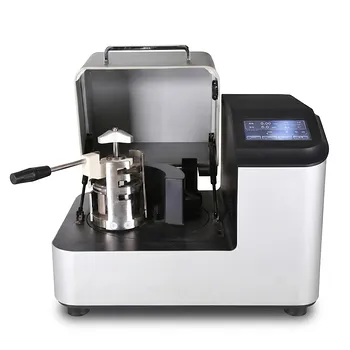
High Energy Laboratory Planetary Ball Mill for Nano Grinding and Material Science Sample Preparation