What are the primary technical functions of liners within a ball mill? Maximize Your Grinding Efficiency and Purity
Updated 4 months ago
Ball mill liners serve as the critical interface between the rotating machine and the grinding charge. Their primary technical functions are to protect the mill shell from extreme abrasive wear and to transfer mechanical energy to the grinding media by lifting it to a specific height. This controlled elevation dictates the trajectory of the grinding balls, directly determining the collision energy available to break down materials.
Mill liners are active mechanical components that dictate the efficiency of the grinding process by converting the mill's rotation into specific media trajectories. Beyond simple protection, they are essential for managing energy consumption, preventing material accumulation, and ensuring the chemical purity of the final product.
Protecting Structural Integrity and Equipment Longevity
Shielding the Cylinder from Direct Impact
The most immediate function of a liner is to act as a sacrificial wear layer for the mill's metal shell. It absorbs the high-frequency impacts and constant abrasion caused by the grinding media and raw ore, preventing catastrophic structural damage.
Extending Service Life
By using materials like polyethylene or specialized alloys, operators can significantly extend the operational life of the mill. These liners are designed to be replaced periodically, which is far more cost-effective than repairing or replacing the entire rotating cylinder.
Mitigating High-Frequency Wear
In wet grinding environments, such as calcite processing, liners must withstand both mechanical impact and corrosive forces. Proper liner selection ensures the mill remains functional under the stress of constant high-frequency contact between the media and the internal walls.
Managing Media Trajectory and Energy Transfer
The Function of Lifter Bars
The geometric structure of a liner, specifically the lifter bars, is designed to grip and elevate the grinding balls. This lifting action ensures that the media reaches a predetermined height before cascading or catapulting back down into the material bed.
Converting Friction to Impact Energy
Liners facilitate the transition from sliding friction to energetic impact collisions. By lifting the steel balls and ore particles together, the mill converts the rotational energy of the motor into potential energy, which is then released as kinetic impact to achieve particle refinement.
Optimizing Material Distribution
In dry grinding applications, the design of the liner prevents material accumulation at the bottom of the cylinder. This keeps the ore in the "active zone" of the mill, increasing the probability of collisions and optimizing the specific energy consumption of the process.
Preserving Product Quality and Facilitating Reactions
Preventing Metallic Contamination
In industries requiring high-purity outputs, such as ultra-fine powder production, non-metallic liners (like polyethylene) are essential. They prevent iron or other metal impurities from wearing off into the product, ensuring the chemical whiteness and purity of materials like calcite.
Facilitating Mechanochemical Reactions
In polymer processing, liners help transfer mechanical energy directly to molecules, triggering chemical bond cleavage. This allows for solid-solid reactions and depolymerization to occur at lower macroscopic temperatures than would be required by thermal energy alone.
Controlled Simulation of Industrial Environments
In laboratory settings, liners allow researchers to simulate industrial conditions by controlling media filling rates and rotational speeds. This helps in evaluating the grindability of diverse materials like coal, dolomite, and iron ore under precise mechanical conditions.
Understanding the Trade-offs
Lifter Height vs. Energy Efficiency
While taller lifter bars provide higher impact energy, they also increase the starting torque and continuous power draw of the mill. Operators must balance the need for high-impact breakage with the cost of increased energy consumption.
Wear Resistance vs. Contamination Risk
Steel liners offer superior durability for hard ores but risk contaminating the product with metallic fines. Conversely, polymer liners offer excellent purity and corrosion resistance but may have lower impact thresholds when processing extremely hard or large-diameter feed materials.
Selecting the Right Liner for Your Goal
How to Apply This to Your Project
- If your primary focus is high-purity chemical production: Use non-metallic liners, such as polyethylene, to eliminate metallic contamination and maintain material whiteness.
- If your primary focus is maximizing throughput of hard ores: Select high-profile alloy steel lifter liners to maximize impact energy and prevent material slippage.
- If your primary focus is energy optimization in dry grinding: Implement liners with specific geometric lifters designed to prevent "dead zones" and material accumulation at the bottom of the mill.
- If your primary focus is mechanochemical activation: Ensure the liner material is compatible with the target chemical reaction and provides the high-frequency impact necessary for molecular bond cleavage.
The strategic selection of liner geometry and material is the single most effective way to tune a ball mill's performance to the specific needs of your material.
Summary Table:
| Technical Function | Description | Key Benefit |
|---|---|---|
| Structural Protection | Acts as a sacrificial layer between media and the shell. | Extends equipment lifespan and reduces repair costs. |
| Energy Transfer | Uses lifter bars to elevate grinding media. | Converts rotational torque into high-impact kinetic energy. |
| Trajectory Control | Dictates the fall pattern of grinding balls. | Optimizes particle size reduction and energy consumption. |
| Purity Maintenance | Uses non-metallic materials (e.g., Polyethylene). | Prevents metallic contamination in high-whiteness powders. |
| Process Optimization | Prevents material accumulation in "dead zones." | Increases throughput and ensures consistent grind quality. |
Elevate Your Material Research with Expert Sample Prep Solutions
Precision in material science begins with the right equipment. At Kintek, we specialize in providing complete laboratory sample preparation solutions tailored to your specific grinding and compaction needs.
Whether you are processing hard ores, sensitive polymers, or ultra-fine chemicals, our extensive product line is designed to ensure maximum efficiency and purity:
- Advanced Milling: Planetary ball mills, jet mills, and cryogenic grinders for superior particle refinement.
- Crushing & Sizing: Heavy-duty jaw/roll crushers and precision sieve shakers (vibratory/air-jet).
- Powder Compaction: A full spectrum of hydraulic presses, including Cold/Warm Isostatic Presses (CIP/WIP), vacuum hot presses, and XRF pellet presses.
- Mixing Excellence: High-performance powder and defoaming mixers for homogeneous results.
Ready to optimize your laboratory workflow? Our technical team is here to help you select the ideal liners and equipment for your application.
Contact Us Today to Request a Quote
References
- Jun Shen, Mingrong Huang. Discrete element simulation analysis of ball mill ball trajectory and liner plate structure based on EDEM. DOI: 10.55214/25768484.v9i4.6037
Mentioned Products
- Heavy Duty Horizontal Planetary Ball Mill for Efficient Industrial Grinding and Sample Preparation
- Vertical Production Planetary Ball Mill for High Throughput Powder Processing
- High Energy Omnidirectional Planetary Ball Mill 20L
- Dual Station Planetary Ball Mill 24L
- High Energy Omnidirectional Planetary Ball Mill 16L
People Also Ask
- Why grind lime-pozzolan specimens for TG/DTA for 3 mins? Master sample prep for high-precision thermal analysis.
- What is the role of a planetary ball mill in the mechanical activation of ZTA powder? Boost Sintering Performance
- What is the function of a planetary ball mill in wollastonite ceramic prep? Achieve Molecular Homogenization & Reactivity
- How does a planetary ball mill contribute to the homogenization of trace elements? Achieve Sub-Micron Uniformity
- What is the function of a high-performance planetary ball mill in AMZ laminates? Master Ceramic Homogenization.

Tech Team · PowderPreparation
Last updated on Jun 03, 2026
Related Products
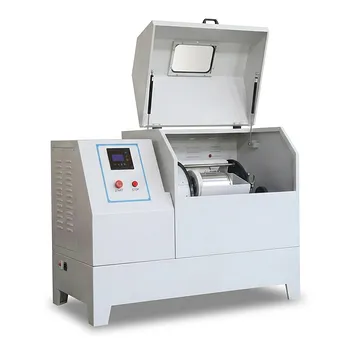
Heavy Duty Horizontal Planetary Ball Mill for Efficient Industrial Grinding and Sample Preparation
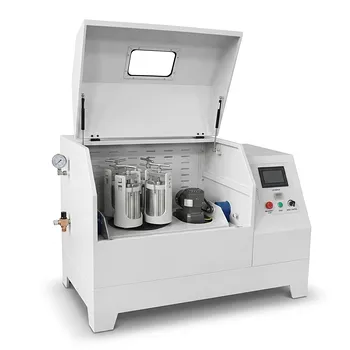
Vertical Production Planetary Ball Mill for High Throughput Powder Processing
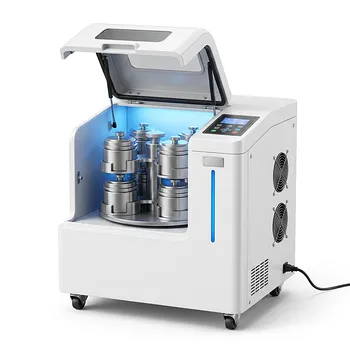
High Energy Omnidirectional Planetary Ball Mill 20L
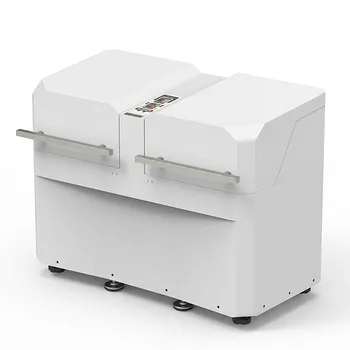
Dual Station Planetary Ball Mill 24L
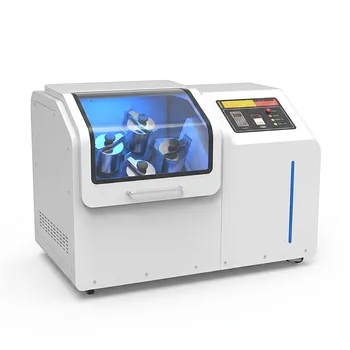
High Energy Omnidirectional Planetary Ball Mill 16L
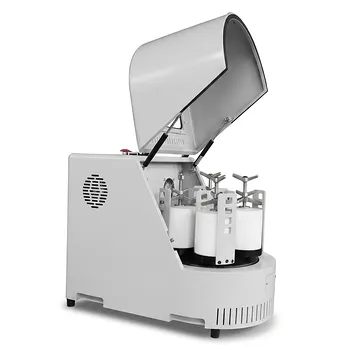
Vertical Semi Circular Planetary Ball Mill for Laboratory Precision Grinding
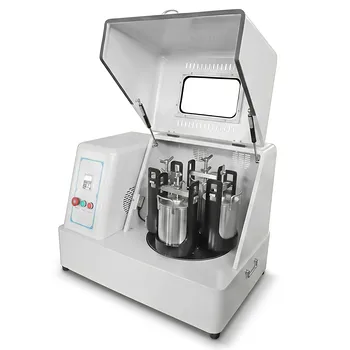
Vertical Square Planetary Ball Mill for Laboratory Sample Preparation and Nanoscale Grinding
Multi-Platform Nanoscale High-Energy Vibratory Ball Mill
Dual Jar High Energy Vibratory Ball Mill
Single Tank High Energy Vibratory Ball Mill for Laboratory Grinding and Mixing
360° Rotating Omnidirectional Laboratory Planetary Ball Mill for Homogeneous Ultra-Fine Grinding and Mixing
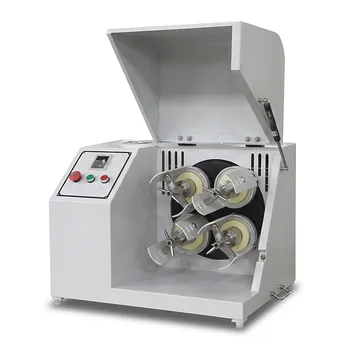
Horizontal Light Duty Planetary Ball Mill for Laboratory Sample Preparation
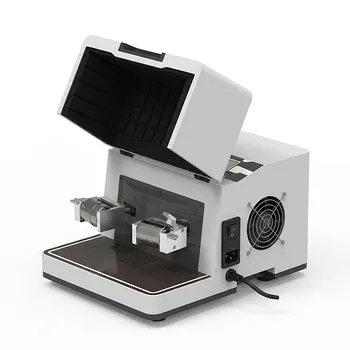
High Energy Hybrid Vibratory Ball Mill for Grinding Mixing and Cell Disruption
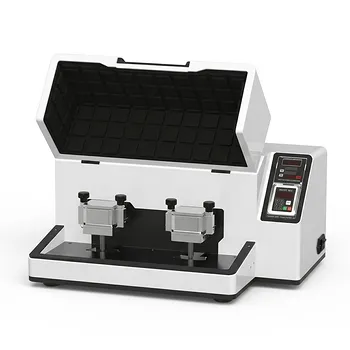
Nanoscale High Energy Vibratory Ball Mill Low Temperature
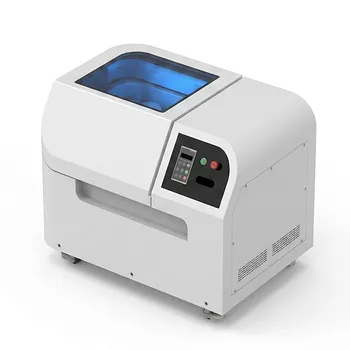
8L Planetary Ball Mill for Laboratory Grinding and Sample Preparation
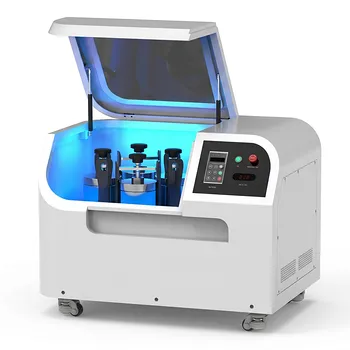
Planetary Ball Mill 12L
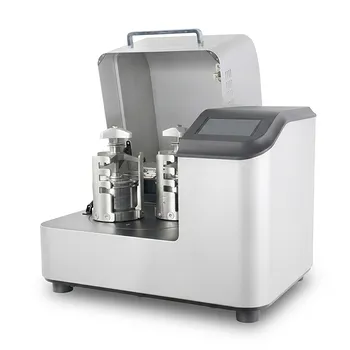
High Energy Planetary Ball Mill for Nano Scale Grinding and Mechanical Alloying
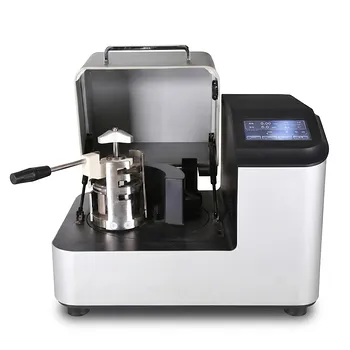
High Energy Laboratory Planetary Ball Mill for Nano Grinding and Material Science Sample Preparation
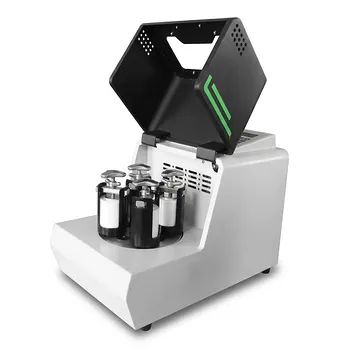
Miniature Planetary Ball Mill with Vacuum Grinding and High Efficiency for Laboratory Sample Preparation