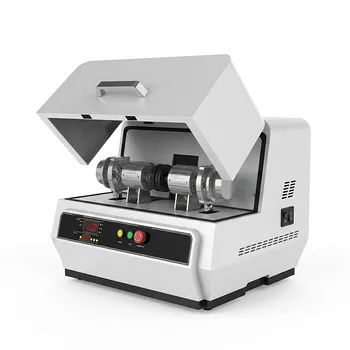
Why is a planetary ball mill essential for SiBCN-rGO wet-spinning? Achieve Superior Dispersion and Spinnability
Updated 5 months ago
The planetary ball mill is indispensable for SiBCN-rGO wet-spinning because it provides the high-energy mixing required to achieve absolute homogenization between ceramic powders and polymer binders. By utilizing simultaneous rotation and revolution, it creates intense shear forces that ensure a perfectly uniform dispersion of the solid phase within the liquid sodium alginate matrix. This process is critical for transforming a heterogeneous mixture into a stable, spinnable dope with the precise flow characteristics needed for fiber formation.
Core Takeaway: The planetary ball mill serves as the bridge between raw ceramic powders and high-quality fibers by ensuring sub-micron dispersion and optimizing the rheological properties necessary for consistent wet-spinning.
Achieving Superior Dispersion Through Complex Motion
The Synergy of Rotation and Revolution
A planetary ball mill operates by rotating the grinding jars while they simultaneously revolve around a central axis. This dual-motion generates centrifugal, impact, and shear forces that are significantly more energetic than conventional mixing methods. This energy is essential to integrate SiBCN-rGO ceramic powder into aqueous solutions.
Overcoming Phase Separation
For materials like SiBCN-rGO and sodium alginate, achieving a stable suspension is a significant technical hurdle. The high-energy environment of the mill facilitates uniform dispersion between the solid and liquid phases over extended periods, such as 12 hours. This prevents the ceramic particles from settling or clumping, which would otherwise lead to structural failures in the final fiber.
Facilitating Solid-State Interaction
The mechanical energy generated is often sufficient to disrupt crystalline structures and promote atomic diffusion. This allows for the synthesis of homogeneous amorphous powders even at room temperature. This level of intimacy between components provides a stable material foundation for high-quality ceramic precursors.
Engineering Spinnability via Rheological Control
The Role of High-Frequency Shear Forces
Wet-spinning requires a "spinning dope" with very specific flow behaviors to pass through a spinneret without clogging. The planetary ball mill uses high-frequency impact and shear to adjust the rheological characteristics of the solution. This process ensures the mixture is fluid enough to be pumped but cohesive enough to maintain its shape during coagulation.
Optimizing Fiber-Forming Capabilities
Precise control over the viscosity and elasticity of the slurry directly translates to optimal spinnability. By breaking down polymer chains and ceramic clusters to a specific degree, the milling process creates a slurry that can form continuous, defect-free fibers. Without this mechanical conditioning, the solution would lack the internal consistency required for industrial-grade spinning.
Particle Engineering for Structural Integrity
Elimination of Agglomerates
Ceramic powders, particularly at the nano or micro-scale, naturally tend to clump together into agglomerates. The planetary ball mill effectively breaks up these clusters, refining the particles to micrometer or sub-micrometer levels. This ensures that the final ceramic fiber has a dense, uniform internal structure free from large voids or inclusions.
Increased Reactive Surface Area
By grinding bulk ceramics into ultra-fine powders, the mill significantly increases the specific surface area of the materials. This enhancement improves the reaction activity of the powder during the subsequent sintering or pyrolysis stages of ceramic production. A higher surface area also promotes better adhesion between the ceramic particles and the polymer binder.
Understanding the Trade-offs
Thermal Management Challenges
The extreme mechanical energy involved in planetary milling generates significant heat within the grinding jars. If not carefully managed through cooling cycles or intervals, this heat can prematurely degrade the sodium alginate binder or alter the chemical stability of the SiBCN-rGO. Maintaining a balance between energy input and temperature is critical for material integrity.
Risk of Media Contamination
Because the process relies on high-speed collisions between grinding balls and the jar walls, there is a risk of milling media wear. Small amounts of material from the balls (such as zirconia or alumina) can enter the slurry. These impurities can act as defect sites in the final ceramic fiber, potentially reducing its mechanical or thermal performance.
How to Apply This to Your Project
Refining Your Milling Strategy
To achieve the best results for your SiBCN-rGO ceramic precursors, tailor your milling parameters to your specific performance goals.
- If your primary focus is Maximum Fiber Strength: Prioritize longer milling durations (e.g., 12+ hours) at moderate speeds to ensure the absolute elimination of agglomerates that cause structural weak points.
- If your primary focus is High Throughput/Speed: Utilize higher rotational speeds with shorter intervals to rapidly refine particle size, though you must monitor for excessive heat buildup.
- If your primary focus is Purity: Use grinding jars and media made of the same material as your ceramic (where possible) or high-hardness materials like agate to minimize contamination.
The planetary ball mill is the definitive tool for converting raw ceramic components into a sophisticated, spinnable medium through the precise application of mechanical energy.
Summary Table:
| Key Feature | Role in SiBCN-rGO Processing | Material Outcome |
|---|---|---|
| Dual-Motion Mixing | Simultaneous rotation and revolution | Intense shear forces for absolute homogenization |
| Phase Stability | Integrates ceramic powder into liquid matrix | Prevents phase separation and particle settling |
| Rheological Control | Adjusts viscosity via high-frequency impact | Ensures spinnable dope for consistent fiber formation |
| De-agglomeration | Breaks down clusters to sub-micron levels | Dense internal structure without voids or defects |
| Surface Engineering | Increases specific surface area | Enhances reaction activity during sintering/pyrolysis |
Elevate Your Material Science Research with Precision Solutions
Achieving the perfect spinning dope requires more than just mixing—it requires the right mechanical energy and sample consistency. At [Your Brand Name], we specialize in providing complete laboratory sample preparation solutions tailored for advanced material science and ceramic engineering.
Whether you are processing SiBCN-rGO powders or developing next-generation composites, our extensive product line supports your entire workflow:
- Advanced Milling: Planetary ball mills, jet mills, and cryogenic grinders for sub-micron particle refinement.
- Powder Processing: High-performance powder mixers, defoaming mixers, and precision sieve shakers.
- Advanced Compaction: A full spectrum of hydraulic presses, including Cold/Warm Isostatic Presses (CIP/WIP), XRF pellet presses, and vacuum hot presses for high-density sintering.
Ready to optimize your fiber production and powder processing? Contact our technical experts today to find the ideal equipment for your specific application requirements!
References
- Chen Gao, Yu Zhou. SiBCN-rGO Ceramic Fibers Based on Wet Spinning Technology: Microstructure, Mechanical and Microwave-absorbing Properties. DOI: 10.15541/jim20240391
Mentioned Products
- Vertical Semi Circular Planetary Ball Mill for Laboratory Precision Grinding
- High Energy Planetary Ball Mill for Nano Scale Grinding and Mechanical Alloying
- Heavy Duty Horizontal Planetary Ball Mill for Efficient Industrial Grinding and Sample Preparation
- Vertical Production Planetary Ball Mill for High Throughput Powder Processing
- 360° Rotating Omnidirectional Laboratory Planetary Ball Mill for Homogeneous Ultra-Fine Grinding and Mixing
People Also Ask
- What role does a planetary ball mill play in the synthesis of Li6PS5Cl (LPSCl)? Unlock High Ionic Conductivity
- Why is an intermittent grinding process required for perovskites in a planetary ball mill? Ensure Stability & Purity
- Why is a planetary ball mill required for PET micronization? Ensure Accurate Chemical Analysis of Reprocessed PET
- How does mechanized planetary ball milling compare to manual agate grinding? Optimize sulfide standard material precision.
- What role does a planetary ball mill play in the preparation of forsterite (Mg2SiO4) ceramic raw materials? Key Insights

Tech Team · PowderPreparation
Last updated on May 14, 2026
Related Products
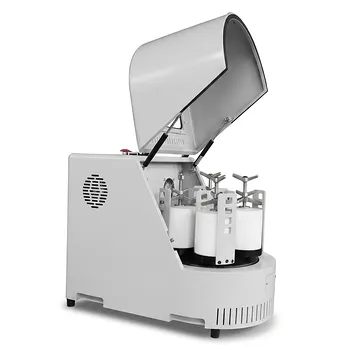
Vertical Semi Circular Planetary Ball Mill for Laboratory Precision Grinding
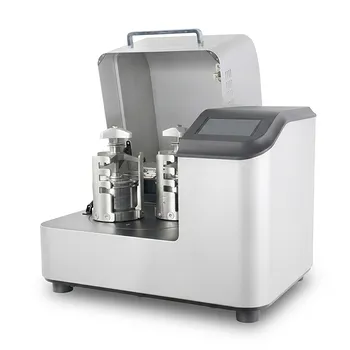
High Energy Planetary Ball Mill for Nano Scale Grinding and Mechanical Alloying
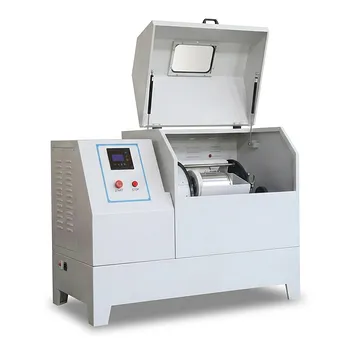
Heavy Duty Horizontal Planetary Ball Mill for Efficient Industrial Grinding and Sample Preparation

Vertical Production Planetary Ball Mill for High Throughput Powder Processing

360° Rotating Omnidirectional Laboratory Planetary Ball Mill for Homogeneous Ultra-Fine Grinding and Mixing

Miniature Planetary Ball Mill with Vacuum Grinding and High Efficiency for Laboratory Sample Preparation

Vertical Square Planetary Ball Mill for Laboratory Sample Preparation and Nanoscale Grinding

High Energy Omnidirectional Planetary Ball Mill 16L
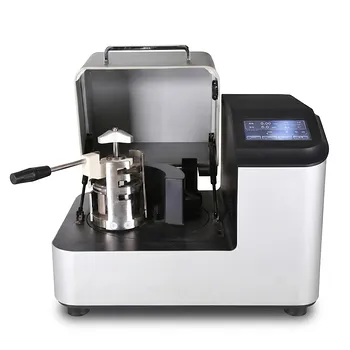
High Energy Laboratory Planetary Ball Mill for Nano Grinding and Material Science Sample Preparation
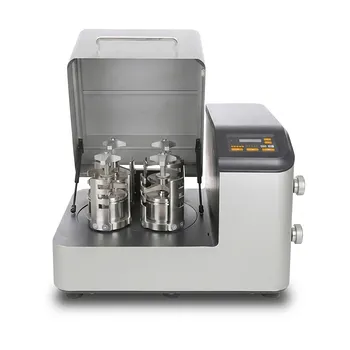
High Energy Planetary Ball Mill for Nano Scale Grinding and Colloidal Mixing in Material Science Research
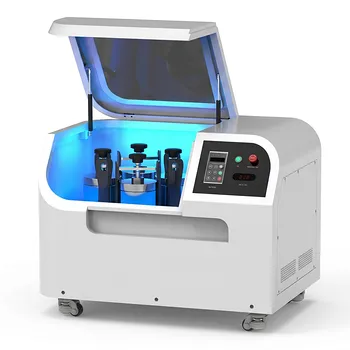
Planetary Ball Mill 12L
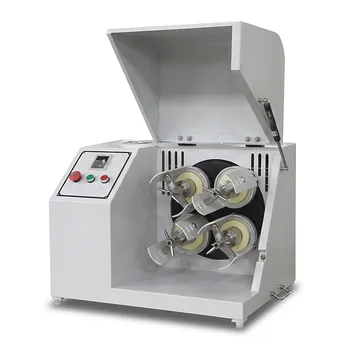
Horizontal Light Duty Planetary Ball Mill for Laboratory Sample Preparation
High Energy Omnidirectional Planetary Ball Mill 20L
High Energy Laboratory Planetary Ball Mill for Nano Grinding and Colloidal Mixing of Hard and Brittle Materials
8L Planetary Ball Mill for Laboratory Grinding and Sample Preparation
Dual Station Planetary Ball Mill 24L
Multi-Platform Nanoscale High-Energy Vibratory Ball Mill

Nano High Energy Vibratory Ball Mill for Laboratory Sample Preparation
High Energy Hybrid Vibratory Ball Mill for Grinding Mixing and Cell Disruption