What is the function of a planetary ball mill in the synthesis of Y(BH4)3? Drive High-Purity Solid-State Synthesis
Updated 4 months ago
A planetary ball mill acts as a high-energy reactor that drives the solid-state synthesis of Yttrium Borohydride by converting mechanical energy into chemical reactivity. This device enables the direct, solvent-free conversion of raw materials into high-purity $\text{Y(BH}_4)_3$ through intense impact and shear forces. By bypassing traditional wet-chemical methods, it prevents the local decomposition of hydrides that typically occurs during the solvent removal process.
The planetary ball mill functions as the primary driver for mechanochemical metathesis, providing the energy necessary to overcome diffusion barriers and achieve atomic-level mixing without liquid mediums. This ensures the production of high-purity $\text{Y(BH}_4)_3$ while avoiding the degradation risks inherent in traditional solution-based synthesis.
Driving Chemical Transformation Through Mechanical Energy
Mechanical Energy as a Catalyst
The planetary ball mill utilizes high-speed rotation to generate the mechanical energy required to drive chemical reactions between solid reactants. This energy is delivered through high-frequency impacts and shear forces between the grinding balls and the material.
In the case of Yttrium Borohydride, this mechanical input facilitates a solid-state metathesis reaction. This allows the raw materials to convert into the target hydride in-situ without the need for external heat or chemical catalysts.
Elimination of Solvent-Induced Decomposition
Traditional synthesis methods often rely on solvents, which must be removed via evaporation or desorption. This step frequently causes the local decomposition of sensitive hydrides due to the heat required or chemical interactions with the solvent.
By operating under solvent-free conditions, the planetary ball mill ensures the stability of the $\text{Y(BH}_4)_3$ crystal structure. This results in a higher-purity target mixture and a more streamlined manufacturing process.
Structural and Morphological Alterations
Overcoming Diffusion Barriers
In solid-state reactions, the movement of atoms between different particles is naturally slow. The planetary ball mill overcomes these diffusion barriers by continuously fracturing particles and creating fresh, reactive surfaces.
The complex centrifugal forces within the mill ensure that reactants are forced into intimate contact. This facilitates thorough mixing and allows the reaction to proceed efficiently at much lower temperatures than conventional thermal processing.
Particle Size Refinement and Homogenization
The mill is designed for rapid size reduction, often reaching the sub-micron or even nanoscale level. This massive increase in the specific surface area provides more active sites for the chemical exchange to occur.
Beyond mere grinding, the mill achieves a high degree of homogenization. This ensures that the Yttrium and Borohydride precursors are distributed uniformly at the atomic level, which is critical for forming a stable complex hydride.
Induction of Lattice Defects
The high-energy impacts induce mechanical activation by creating high-density lattice defects and deformations within the powder. These structural distortions lower the reaction activation energy.
By destabilizing the crystalline structure of the precursors, the mill makes it energetically "easier" for the atoms to rearrange into the $\text{Y(BH}_4)_3$ structure. This allows for rapid synthesis that would otherwise require lengthy aging or hydrothermal processes.
Understanding the Trade-offs
Risk of Material Contamination
The primary downside of high-energy milling is the potential for abrasion from the grinding media. Small amounts of material from the balls or the jar walls can wear off and contaminate the $\text{Y(BH}_4)_3$ sample.
To mitigate this, users must carefully select vial and ball materials (such as hardened steel or tungsten carbide) that are chemically compatible with the reactants. Selecting the correct ball-to-powder ratio is also essential to balance reaction speed with purity.
Thermal Management Challenges
While the process is "cold" compared to furnace heating, the friction and impacts generate localized heat within the grinding jar. If the temperature is not monitored, it can lead to the unintended thermal decomposition of the hydride product.
Practitioners often use intermittent milling cycles to allow the jars to cool down. This ensures that the mechanical energy drives the chemical reaction without crossing the thermal stability threshold of the Yttrium Borohydride.
Making the Right Choice for Your Goal
How to Apply This to Your Project
When utilizing a planetary ball mill for hydride synthesis, your parameters should align with your specific purity and yield requirements:
- If your primary focus is maximum chemical purity: Prioritize solvent-free solid-state metathesis and use high-grade, wear-resistant grinding media to prevent contamination.
- If your primary focus is rapid synthesis and yield: Increase the rotational speed and ball-to-powder ratio to maximize the mechanical energy input and surface area refinement.
- If your primary focus is structural stability: Implement strict cooling intervals during the milling process to prevent the localized heat from decomposing the $\text{Y(BH}_4)_3$.
By mastering the mechanical parameters of the planetary ball mill, you can synthesize high-performance energy storage materials with a level of precision and purity unattainable through traditional wet chemistry.
Summary Table:
| Key Function | Mechanism | Benefit to Y(BH4)3 Synthesis |
|---|---|---|
| Energy Conversion | Converts rotation to impact/shear | Drives reaction without external heat catalysts. |
| Solvent-Free Processing | Solid-state metathesis | Prevents local decomposition during solvent removal. |
| Surface Engineering | Particle size refinement | Overcomes diffusion barriers for faster reaction rates. |
| Mechanical Activation | Induction of lattice defects | Lowers the required reaction activation energy. |
| Homogenization | Atomic-level mixing | Ensures uniform distribution of Y and Borohydride. |
Optimize Your Mechanochemical Synthesis with Expert Lab Solutions
Achieving high-purity Yttrium Borohydride requires precision equipment that balances energy input with thermal stability. At our core, we provide complete laboratory sample preparation solutions designed specifically for advanced material science and powder processing.
Our extensive range includes:
- High-Energy Mills: Planetary ball mills, jet mills, and liquid nitrogen cryogenic grinders for perfect particle refinement.
- Advanced Mixing: Powder and defoaming mixers to ensure atomic-level homogenization.
- Compaction Equipment: A full spectrum of hydraulic presses, including Cold/Warm Isostatic Presses (CIP/WIP), vacuum hot presses, and XRF pellet presses for superior sample density.
Whether you are scaling up solid-state synthesis or refining sensitive hydrides, our equipment delivers the reliability and performance your research demands.
Ready to elevate your material processing?
Contact our technical team today to find the ideal solution for your laboratory’s unique requirements.
References
- Konrad Burkmann, Florian Mertens. Calorimetric determination of the heat capacity function and absolute entropy of yttrium borohydride (Y(BH<sub>4</sub>)<sub>3</sub>) mechanochemically prepared. DOI: 10.1039/d4mr00124a
Mentioned Products
- Vertical Semi Circular Planetary Ball Mill for Laboratory Precision Grinding
- High Energy Planetary Ball Mill for Nano Scale Grinding and Mechanical Alloying
- Heavy Duty Horizontal Planetary Ball Mill for Efficient Industrial Grinding and Sample Preparation
- Vertical Production Planetary Ball Mill for High Throughput Powder Processing
- 360° Rotating Omnidirectional Laboratory Planetary Ball Mill for Homogeneous Ultra-Fine Grinding and Mixing
People Also Ask
- What role does a planetary ball mill play in the synthesis of Li6PS5Cl (LPSCl)? Unlock High Ionic Conductivity
- Why is a planetary ball mill essential for SiBCN-rGO wet-spinning? Achieve Superior Dispersion and Spinnability
- Why is an intermittent grinding process required for perovskites in a planetary ball mill? Ensure Stability & Purity
- Why is a planetary ball mill required for PET micronization? Ensure Accurate Chemical Analysis of Reprocessed PET
- How does mechanized planetary ball milling compare to manual agate grinding? Optimize sulfide standard material precision.

Tech Team · PowderPreparation
Last updated on Jun 03, 2026
Related Products
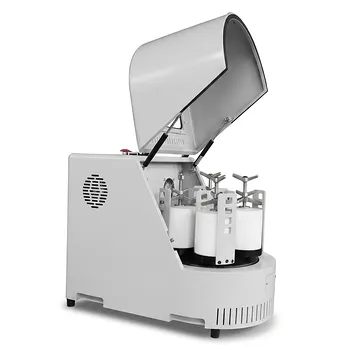
Vertical Semi Circular Planetary Ball Mill for Laboratory Precision Grinding
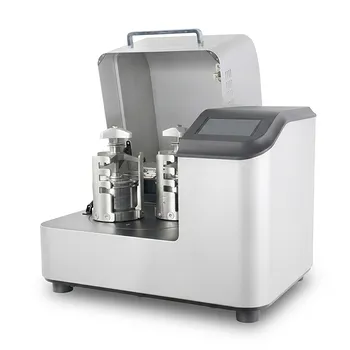
High Energy Planetary Ball Mill for Nano Scale Grinding and Mechanical Alloying
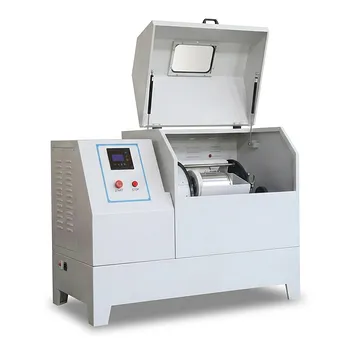
Heavy Duty Horizontal Planetary Ball Mill for Efficient Industrial Grinding and Sample Preparation
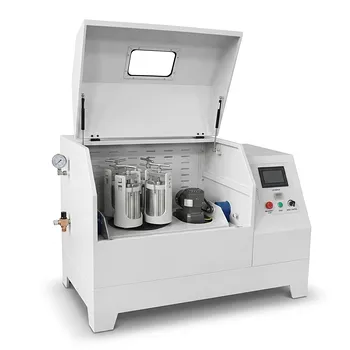
Vertical Production Planetary Ball Mill for High Throughput Powder Processing
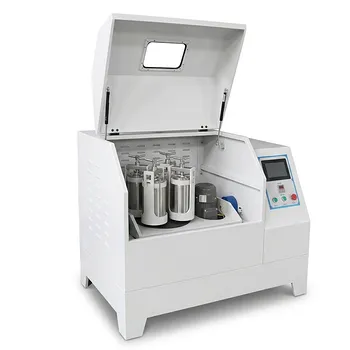
360° Rotating Omnidirectional Laboratory Planetary Ball Mill for Homogeneous Ultra-Fine Grinding and Mixing
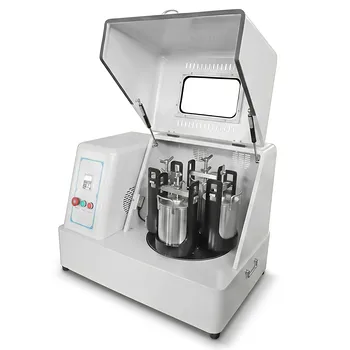
Vertical Square Planetary Ball Mill for Laboratory Sample Preparation and Nanoscale Grinding

Miniature Planetary Ball Mill with Vacuum Grinding and High Efficiency for Laboratory Sample Preparation
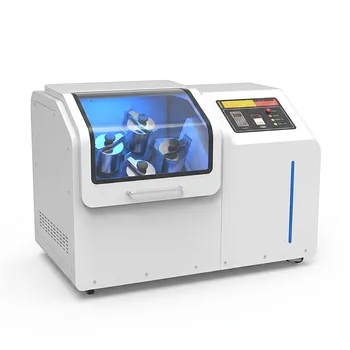
High Energy Omnidirectional Planetary Ball Mill 16L

High Energy Laboratory Planetary Ball Mill for Nano Grinding and Material Science Sample Preparation
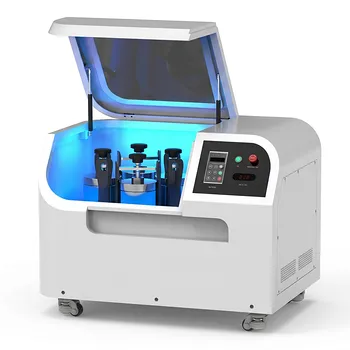
Planetary Ball Mill 12L
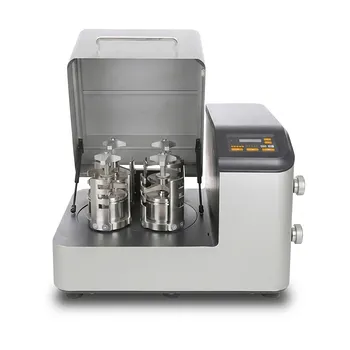
High Energy Planetary Ball Mill for Nano Scale Grinding and Colloidal Mixing in Material Science Research
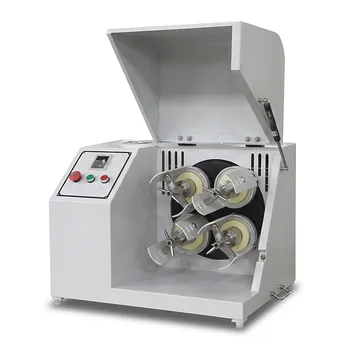
Horizontal Light Duty Planetary Ball Mill for Laboratory Sample Preparation
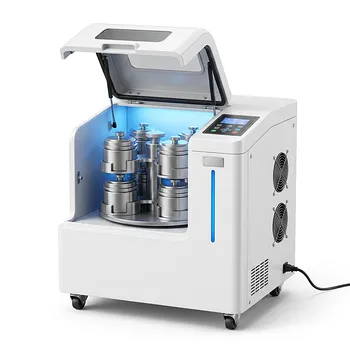
High Energy Omnidirectional Planetary Ball Mill 20L
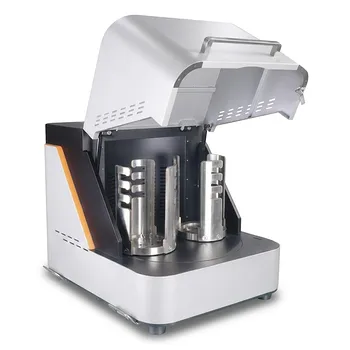
High Energy Laboratory Planetary Ball Mill for Nano Grinding and Colloidal Mixing of Hard and Brittle Materials

8L Planetary Ball Mill for Laboratory Grinding and Sample Preparation
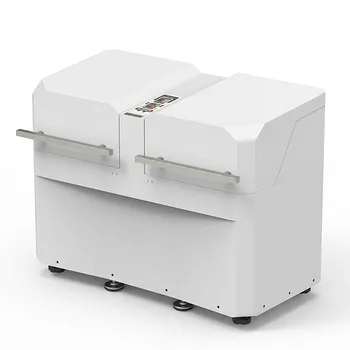
Dual Station Planetary Ball Mill 24L

Multi-Platform Nanoscale High-Energy Vibratory Ball Mill

Nano High Energy Vibratory Ball Mill for Laboratory Sample Preparation
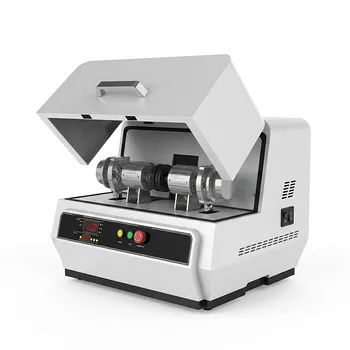
Dual Jar High Energy Vibratory Ball Mill