How does the dry pressing de-agglomeration process compare to high-shear mixing? Maximize Throughput & Efficiency
Updated 4 months ago
The dry pressing de-agglomeration process is fundamentally more efficient than high-shear mixing due to its use of instantaneous static pressure. While high-shear mixing relies on prolonged stirring and a random processing mechanism, dry pressing completes the de-agglomeration task in approximately 10 seconds. This transition from minutes or hours to seconds drastically shortens the production cycle and minimizes energy expenditure.
The core advantage of dry pressing lies in its shift from random mechanical agitation to targeted static pressure, allowing for a 10-second processing window that significantly boosts throughput while lowering operational costs.
The Mechanics of Operational Speed
Accelerated Process Cycles
The most immediate impact on efficiency is the reduction in holding time. High-shear mixing equipment often requires extensive stirring periods to ensure all particles interact with the mixing blades.
In contrast, dry pressing uses a hydraulic press to apply force across the entire material volume simultaneously. This allows the de-agglomeration to be completed in a fraction of the time required by traditional methods.
Direct Pressure vs. Random Interaction
High-shear mixing operates on a random processing mechanism, where de-agglomeration depends on the probability of particles hitting the high-energy zone of the mixer. This unpredictability necessitates longer run times to ensure consistency.
Dry pressing eliminates this randomness by applying instantaneous static pressure directly to the powder. Every part of the batch is subjected to the same force at the same time, ensuring a more predictable and rapid result.
The Economic Impact of Process Efficiency
Reduced Energy Consumption
Operational efficiency is inextricably linked to energy costs. Because high-shear mixers must run for extended periods, they consume a significant amount of electricity per batch.
By reducing the active processing time to roughly 10 seconds, the dry pressing method inherently lowers the energy overhead. This makes it a more sustainable and cost-effective choice for high-volume production environments.
Maximizing Production Throughput
The ability to complete a cycle in seconds rather than minutes allows for a much higher batch frequency. This increase in throughput means facilities can produce more material using the same amount of floor space and labor.
Understanding the Trade-offs
Equipment Specialization
While dry pressing is faster, it requires a hydraulic press capable of delivering precise static pressure. This is a specialized piece of equipment that may have a different footprint and maintenance profile than a standard high-shear mixer.
Material Compatibility
Not every powder responds identically to static pressure. While dry pressing is highly effective for de-agglomeration, the physical characteristics of the powder must be evaluated to ensure that the pressure does not cause unwanted compaction or "caking" beyond the desired de-agglomeration point.
Optimizing Your De-agglomeration Strategy
How to Apply This to Your Project
To determine the best approach for your specific operational goals, consider the following recommendations:
- If your primary focus is maximum throughput: Transitioning to dry pressing de-agglomeration is the most effective way to eliminate bottlenecks caused by long mixing cycles.
- If your primary focus is reducing operational overhead: Prioritize dry pressing to take advantage of the significant reduction in energy consumption associated with 10-second processing times.
- If your primary focus is process consistency: Use the direct static pressure of dry pressing to move away from the unpredictable, random mechanisms of high-shear stirring.
Choosing the right de-agglomeration method is a critical step in transforming your production speed from a limitation into a competitive advantage.
Summary Table:
| Feature | Dry Pressing (Static Pressure) | High-Shear Mixing (Agitation) |
|---|---|---|
| Processing Time | ~10 Seconds | Minutes to Hours |
| Mechanism | Instantaneous Static Pressure | Random Mechanical Agitation |
| Energy Efficiency | High (Short active cycle) | Low (Extended run times) |
| Consistency | High (Uniform force application) | Variable (Probabilistic interaction) |
| Main Equipment | Hydraulic Press | High-Shear Mixer / Stirrer |
Optimize Your Material Preparation with Precision Equipment
Is your production bottlenecked by long mixing cycles? At our facility, we provide complete laboratory sample preparation solutions designed to transform your operational efficiency. We specialize in high-performance powder processing and compaction equipment, ensuring you achieve perfect de-agglomeration and material consistency every time.
Our extensive product line includes:
- Hydraulic Presses: Cold/Warm Isostatic Presses (CIP/WIP), standard lab presses, XRF pellet presses, and vacuum hot presses.
- Milling & Grinding: Planetary ball mills, jet mills, and liquid nitrogen cryogenic grinders.
- Processing Tools: Crushers, sieve shakers, and advanced powder/defoaming mixers.
Whether you are refining a research process or scaling up high-volume production, our experts are ready to help you select the ideal equipment to lower energy costs and maximize throughput.
Contact us today to find your solution!
References
- M. El-Kady, Timo Sörgel. Impact of Dry Chemical-Free Mechanical Pressing on Deagglomeration of Submicron-Sized Boron Carbide Particles. DOI: 10.3390/nano15080611
Mentioned Products
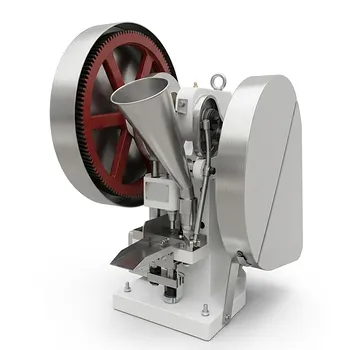
- 6-Ton Small Single-Punch Tablet Press — Laboratory Powder & Granule Tableting Equipment / Tablet Forming Machine
- Heavy Duty Dry Three Dimensional Vibratory Sieve Shaker for Particle Separation
- Dry Three Dimensional Vibratory Sieve Shaker
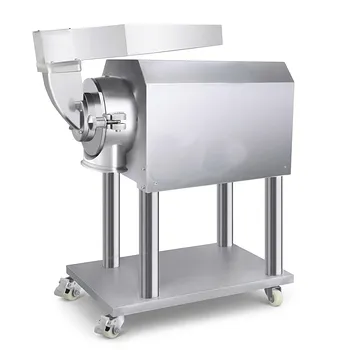
- High Speed Small Laboratory Crusher for Dry Material Sample Preparation
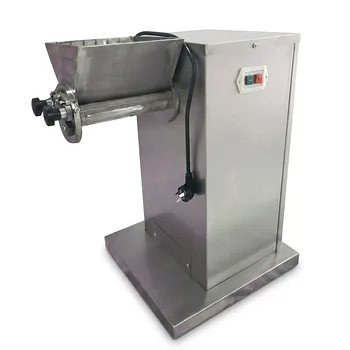
- Small Laboratory Oscillating Granulator for Wet and Dry Granulation Processing
People Also Ask
- What is the function of a laboratory press in Cr-Ti alloy evaluation? Quantify Fracture Stress & Strength
- What is the function of a laboratory press in assessing the hydrophobic performance of modified vermiculite fillers?
- What is the core function of a laboratory press in the forming of ceramic filter element green bodies? Maximize Density.
- What is the function of a laboratory press in the preparation of ceramic feed rods? Master Density and Precision
- Why is vacuum sealing and flexible packaging necessary for Aluminum Titanate powders during CIP? Ensure Peak Density

Tech Team · PowderPreparation
Last updated on Jun 03, 2026
Related Products
6-Ton Small Single-Punch Tablet Press — Laboratory Powder & Granule Tableting Equipment / Tablet Forming Machine

Heavy Duty Dry Three Dimensional Vibratory Sieve Shaker for Particle Separation

Dry Three Dimensional Vibratory Sieve Shaker
High Speed Small Laboratory Crusher for Dry Material Sample Preparation
Small Laboratory Oscillating Granulator for Wet and Dry Granulation Processing
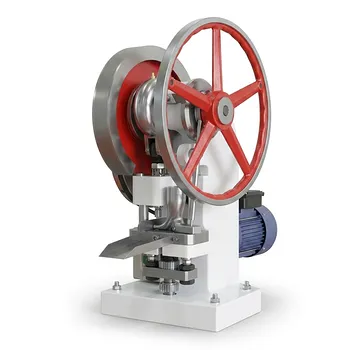
5 Ton Single Punch Tablet Press Laboratory Small Batch Production
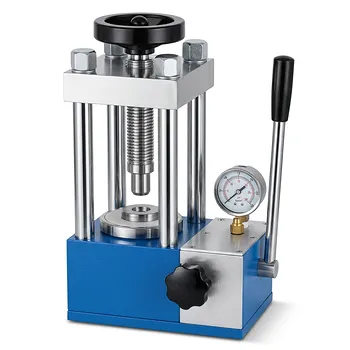
Manual Tablet Press with Dual Scale Pressure Gauge for Pharmaceutical Food Chemical Laboratory Sample Preparation
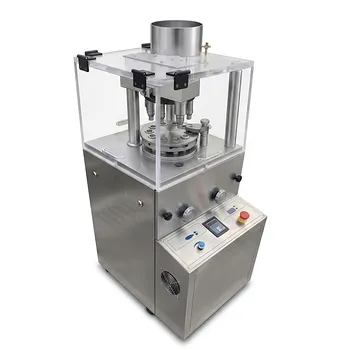
Enhanced 9 Punch Rotary Tablet Press for Powder Compaction
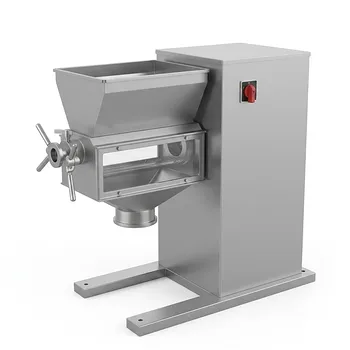
Industrial Swing Granulator for Powder Processing in Pharma Food and Chemical Industries
Water Cooled Airflow Ultra Fine Grinder for Low Temperature Material Processing