Why is a laboratory hydraulic press required for Si3N4/BN pre-pressing? Ensure High Density & Structural Integrity
Updated 4 months ago
The use of a laboratory hydraulic press is critical for the pre-pressing of Silicon Nitride/Boron Nitride (Si3N4/BN) ceramic green bodies because it provides the precise directional pressure necessary to expel entrapped air and establish initial fiber bonding. This mechanical compaction ensures the green body achieves a uniform density and sufficient "green strength," which are the primary safeguards against warping, delamination, or cracking during the subsequent high-temperature sintering process.
Core Takeaway: A laboratory hydraulic press transforms loose, fiber-reinforced powders into a cohesive structural unit by applying controlled uniaxial pressure. This step is the fundamental prerequisite for achieving the high density and structural integrity required for high-performance ceramic matrices.
Eliminating Internal Defects and Voids
The Expulsion of Interstitial Air
During the mold-packing stage, air is naturally trapped between the Boron Nitride-coated Silicon Nitride fibers. A hydraulic press applies consistent pressure (typically around 20 MPa) to force this air out, preventing the formation of large internal pores.
Facilitating Particle Rearrangement
The directional force provided by the press overcomes the friction between particles and fibers. This allows them to shift and nest into a tightly packed arrangement that cannot be achieved through manual packing alone.
Preventing Sintering Delamination
If air remains trapped or if the packing is loose, the green body will likely experience delamination defects during sintering. The pre-pressing stage ensures the layers are sufficiently bonded to survive the thermal expansion and contraction of the furnace.
Achieving Structural Integrity and Density
Establishing Green Strength
"Green strength" refers to the mechanical integrity of a ceramic body before it is fired. By applying precise pressure, the hydraulic press promotes mechanical interlocking and initial bonding between fibers, allowing the green body to be handled and processed without crumbling.
Ensuring Uniform Density Distribution
A major challenge in ceramic engineering is the "density gradient," where some parts of a sample are denser than others. A high-quality hydraulic press provides the precise pressure control needed to ensure the density is consistent across the entire disc-shaped green body.
Promoting High Thermal Conductivity
For Si3N4 ceramics, the final thermal conductivity is directly influenced by the initial densification. Eliminating micro-pores through hydraulic pressing creates a path for efficient heat transfer once the ceramic is fully densified.
Understanding the Trade-offs and Pitfalls
The Risk of Excessive Pressure
While high pressure is necessary, exceeding the material's limits can cause "spring-back" effects or internal laminations. If the pressure is too high, the stored elastic energy can cause the green body to crack or expand unevenly once the pressure is released.
Limitations of Uniaxial Pressing
Laboratory hydraulic presses typically provide uniaxial pressure (force from one or two directions). While highly effective for flakes and discs, it may create subtle density variations in very thick samples compared to cold isostatic pressing (CIP).
Importance of Stabilization Time
Simply reaching a target pressure is often insufficient. Maintaining a specific holding time (dwell time) is necessary to allow the particles to fully settle and the internal stresses to equilibrate, ensuring the green body remains stable after removal from the mold.
How to Apply This to Your Project
Recommendations for Success
- If your primary focus is maximizing green strength: Prioritize a hydraulic press with a programmable holding time to ensure maximum mechanical interlocking of fibers.
- If your primary focus is preventing warping in large samples: Use a press with high-precision digital gauges to ensure the 20 MPa (or your specific target) is applied with absolute consistency to avoid density gradients.
- If your primary focus is investigating material stability: Use the press to create standardized, flake-like green bodies that avoid the need for high-temperature sintering, thereby preventing pre-oxidation of the sample.
Properly calibrated hydraulic pre-pressing is the single most important factor in transitioning from a loose fiber mixture to a high-performance, defect-free ceramic matrix.
Summary Table:
| Key Pressing Factor | Impact on Green Body | Benefit for Final Ceramic |
|---|---|---|
| Uniaxial Pressure | Expels trapped air & rearranges particles | Eliminates internal pores & voids |
| Precise Pressure (20 MPa) | Establishes initial mechanical fiber bonding | Increases "Green Strength" for handling |
| Density Consistency | Minimizes internal density gradients | Prevents warping and delamination |
| Programmable Dwell Time | Allows for internal stress equilibration | Ensures stability after mold removal |
Elevate Your Material Research with Precision Compaction Solutions
Achieve superior structural integrity and high thermal conductivity for your Si3N4/BN ceramics with our advanced laboratory equipment. As experts in material science sample preparation, we provide the high-performance tools necessary to transition from loose powders to defect-free ceramic matrices.
Our comprehensive product line includes:
- Hydraulic Presses: A full spectrum including Standard Lab Presses, Cold/Warm Isostatic Presses (CIP/WIP), XRF Pellet Presses, and Vacuum Hot Presses.
- Powder Processing: High-efficiency mills (Planetary, Jet, Rotor), cryogenic grinders, and jaw/roll crushers.
- Mixing & Sieving: Powder mixers, defoaming mixers, and vibratory/air-jet sieve shakers.
Whether you are a researcher focused on minimizing density gradients or a distributor seeking reliable OEM/ODM support and certified equipment, we offer complete solutions tailored to your specific requirements.
Contact us today to optimize your laboratory workflow!
References
- Qingqing Chen, Guobing Ying. Thermal Shock Behavior of Si3N4/BN Fibrous Monolithic Ceramics. DOI: 10.3390/ma16196377
Mentioned Products
- 6-Ton Small Single-Punch Tablet Press — Laboratory Powder & Granule Tableting Equipment / Tablet Forming Machine
- 5 Ton Single Punch Tablet Press Laboratory Small Batch Production
- Manual Tablet Press with Dual Scale Pressure Gauge for Pharmaceutical Food Chemical Laboratory Sample Preparation
- 6 Ton Variable Frequency Single Punch Tablet Press
- Small Liquid Nitrogen Cryogenic Grinder with Vibratory Feeder for Laboratory Sample Preparation
People Also Ask
- What is the function of a laboratory press in Cr-Ti alloy evaluation? Quantify Fracture Stress & Strength
- What is the function of a laboratory press in assessing the hydrophobic performance of modified vermiculite fillers?
- What is the core function of a laboratory press in the forming of ceramic filter element green bodies? Maximize Density.
- What is the function of a laboratory press in the preparation of ceramic feed rods? Master Density and Precision
- Why is vacuum sealing and flexible packaging necessary for Aluminum Titanate powders during CIP? Ensure Peak Density

Tech Team · PowderPreparation
Last updated on Jun 03, 2026
Related Products
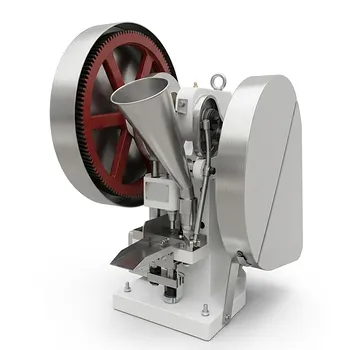
6-Ton Small Single-Punch Tablet Press — Laboratory Powder & Granule Tableting Equipment / Tablet Forming Machine
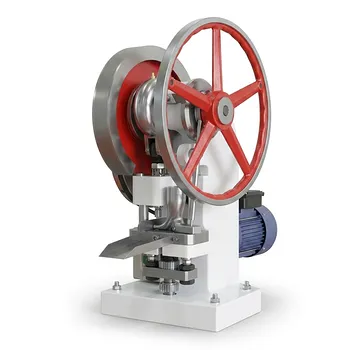
5 Ton Single Punch Tablet Press Laboratory Small Batch Production
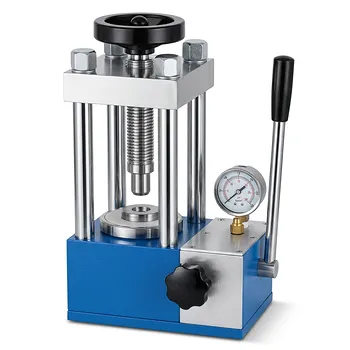
Manual Tablet Press with Dual Scale Pressure Gauge for Pharmaceutical Food Chemical Laboratory Sample Preparation
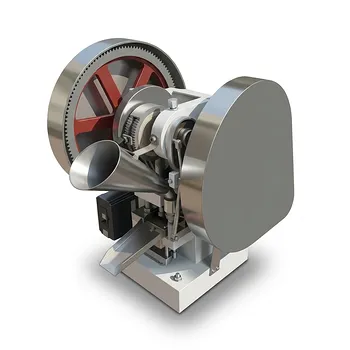
6 Ton Variable Frequency Single Punch Tablet Press
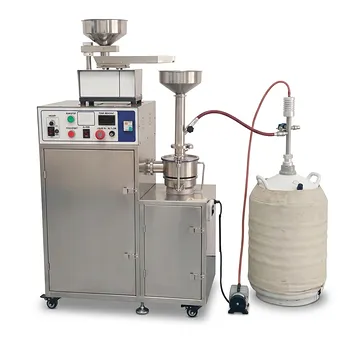
Small Liquid Nitrogen Cryogenic Grinder with Vibratory Feeder for Laboratory Sample Preparation
Small Ceramic Structure Laboratory Sand Mill Nanoscale Grinding Dispersion Equipment Seal-less Screen-less Design
Laboratory Liquid Nitrogen Cryogenic Grinder for Polymer and Elastomer Materials
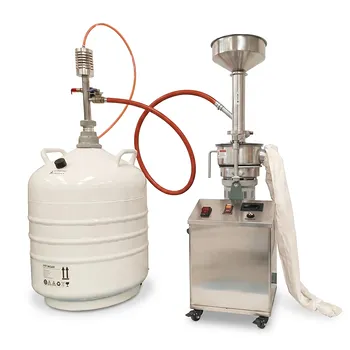
Laboratory Liquid Nitrogen Cryogenic Grinder Polymer Sample Preparation Pulverizer
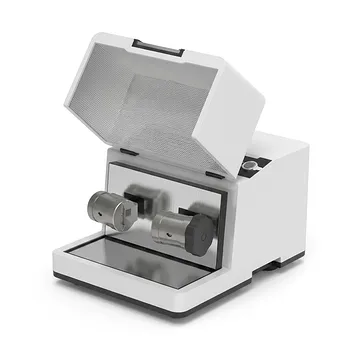
Heating Temperature Controlled High Energy Vibratory Ball Mill
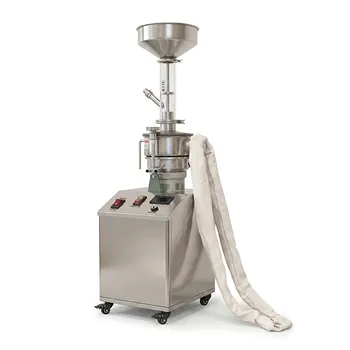
Small Liquid Nitrogen Cryogenic Grinder for Plastic and Heat-Sensitive Material Sample Preparation
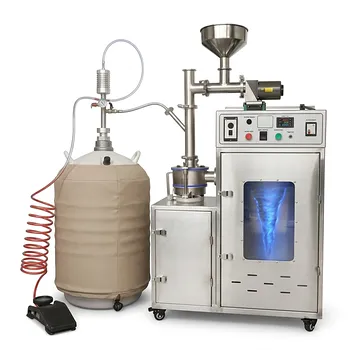
Small Liquid Nitrogen Cryogenic Grinder for Ultrafine Grinding of Heat-Sensitive Materials in Laboratories
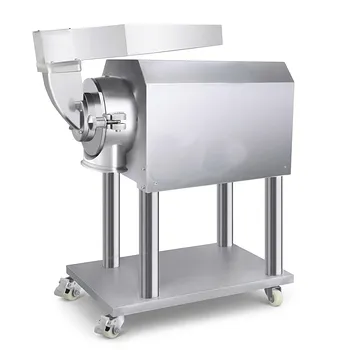
High Speed Small Laboratory Crusher for Dry Material Sample Preparation
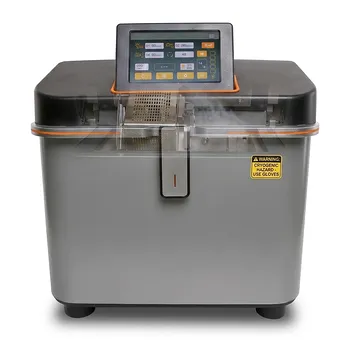
Cryogenic Liquid Nitrogen Grinder for DNA Analysis and Polymer Pulverization with Automatic Cooling and Electromagnetic Impact Technology
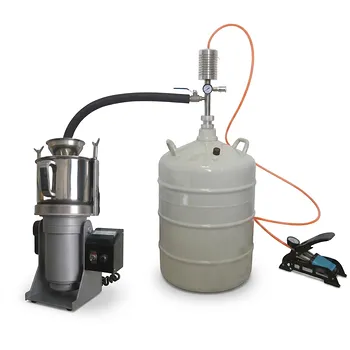
Liquid Nitrogen Cryogenic Grinder for Plastic and Heat-Sensitive Materials
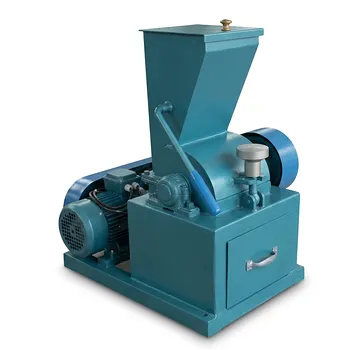
Small Hammer Crusher for Brittle Material Crushing in Mining Metallurgy and Lab Sample Preparation
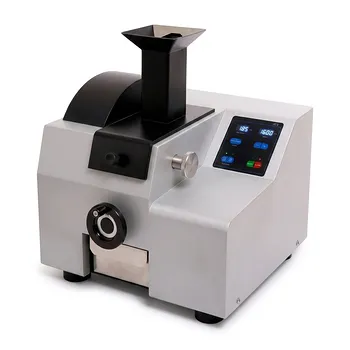
Laboratory Benchtop Jaw Crusher for Hard Brittle Materials Primary Size Reduction and Sample Preparation
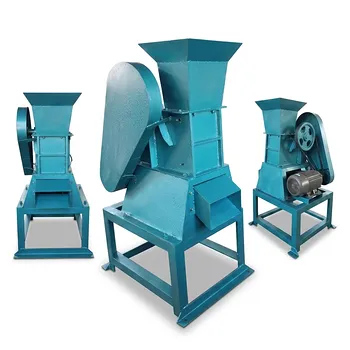
Custom Raised Height Laboratory Jaw Crusher for Precision Sample Preparation in Material Science
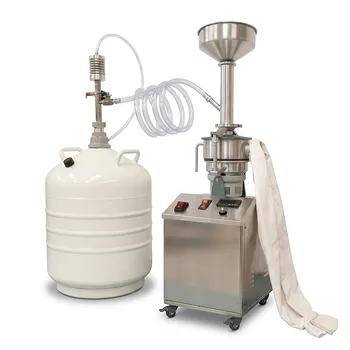
Laboratory Cryogenic Grinder Liquid Nitrogen Low Temperature Ultrafine Grinding
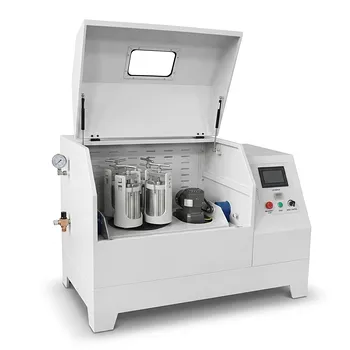
Vertical Production Planetary Ball Mill for High Throughput Powder Processing