How does a vibrating sieving tower ensure the purity of dietary fiber during wet sieving? Achieve High-Purity Results
Updated 5 months ago
A vibrating sieving tower ensures dietary fiber purity through a dual-action process of multi-layer mechanical separation and continuous chemical rinsing. By utilizing high-precision screens (typically ranging from 500 to 20 micrometers) and a vibrating motor, the system creates a 3D throwing motion that keeps particles in constant movement. Simultaneously, deionized water flows through the tower to wash away water-soluble salts and microscopic contaminants until a specific filtrate conductivity is reached, leaving behind only the pure, stable fiber.
The core of this process lies in the synergy between mechanical vibration and fluid dynamics; while the screens classify the fiber by size, the continuous rinsing ensures that impurities too small to be caught by mesh—or those chemically bonded to the surface—are thoroughly removed.
The Mechanics of Multi-Layer Separation
Precision Screening at the Micrometric Level
A sieving tower utilizes a vertical stack of analytical screens to grade ground fibers into distinct particle size ranges. This hierarchy, often featuring mesh sizes as fine as 20 micrometers, allows for the simultaneous classification of fibers while ensuring that larger contaminants are isolated at the top layers.
The Role of 3D Throwing Motion
The vibrating motor generates a 3D throwing motion that forces the material to distribute evenly across the entire screen surface. This motion is critical because it prevents "dead zones" on the mesh, ensuring every particle is subjected to both the mechanical separation and the liquid rinse.
Preventing Mesh Blinding and Clogging
In wet sieving, fine meshes (specifically those smaller than 45 µm) are prone to clogging or "blinding." The tower addresses this by using integrated spray nozzles or rinsing rings that provide a gentle, constant water pressure to keep the mesh apertures clear.
Achieving Chemical Purity through Wet Processing
Continuous Rinsing with Deionized Water
Standard dry sieving can only remove physical debris, but wet sieving uses deionized water to address the chemical profile of the fiber. This process dissolves and flushes away water-soluble salts and fine impurities that would otherwise degrade the stability of the final product.
Conductivity as a Proxy for Purity
Technical precision is maintained by monitoring the filtrate conductivity. The rinsing process continues until the liquid passing through the screens reaches a minimal conductivity level, signaling that virtually all ionic impurities and soluble salts have been extracted.
Impact on Functional Stability
By removing these soluble contaminants, the vibrating tower ensures the resulting dietary fiber is chemically stable. This prevents unwanted reactions when the fiber is later integrated into complex food matrices or pharmaceutical formulations.
Understanding the Trade-offs and Constraints
Water Consumption and Environmental Impact
While wet sieving produces superior purity, it requires a significant volume of deionized water. Facilities must account for the cost of water treatment and the infrastructure needed to manage the resulting wastewater.
Potential for Mechanical Degradation
The constant mechanical force of the vibrating motor, while necessary for separation, can lead to screen wear over time. If the mesh integrity is compromised, the precision of the particle size distribution is lost, leading to batch inconsistency.
Processing Time vs. Thoroughness
Achieving a "minimal conductivity level" is a time-sensitive process. There is a constant trade-off between throughput speed and the absolute purity of the fiber, requiring precise calibration of the vibration intensity and water flow rate.
Optimizing the Sieving Process for Your Goal
How to Apply This to Your Project
To achieve the best results from a vibrating sieving tower, you must align the equipment settings with your specific functional requirements for the fiber.
- If your primary focus is mouthfeel and texture: Prioritize the selection of specific screen apertures (such as 200 or 400 µm) to ensure a consistent particle size, as this directly dictates the bulk density and "grittiness" of the food matrix.
- If your primary focus is shelf-life and chemical stability: Focus on the rinsing duration and deionized water volume to ensure the lowest possible filtrate conductivity, which prevents mineral-induced oxidation.
- If your primary focus is production efficiency: Implement automated rinsing rings and high-amplitude 3D vibration to maximize throughput while preventing mesh blinding in high-volume runs.
By mastering the balance between mechanical agitation and fluid-based purification, you can produce a dietary fiber that meets the most stringent standards for both physical consistency and chemical purity.
Summary Table:
| Key Feature | Mechanism | Benefit to Purity |
|---|---|---|
| 3D Throwing Motion | High-amplitude vertical & circular vibration | Ensures even distribution and prevents mesh blinding. |
| Multi-Layer Screens | Precision mesh down to 20 micrometers | Provides accurate particle size classification and separation. |
| Deionized Water Rinse | Continuous fluid flow via spray nozzles | Flushes away water-soluble salts and ionic contaminants. |
| Conductivity Control | Real-time monitoring of filtrate liquid | Signals the complete removal of chemical impurities. |
Optimize Your Material Purity with Expert Solutions
Elevate your laboratory's precision with our complete sample preparation solutions. At [Company Name], we specialize in providing high-performance equipment for material science, ensuring your research meets the most stringent standards.
From vibratory and air-jet sieve shakers for high-purity wet sieving to an extensive line of planetary ball mills, jet mills, and crushers, we have the tools to handle your most challenging powder processing tasks. We also offer a full spectrum of hydraulic presses, including Cold/Warm Isostatic Presses (CIP/WIP), hot presses, and vacuum hot presses, to support your material compaction needs.
Ready to enhance your lab's efficiency and product stability? Contact our technical experts today to find the perfect solution for your workflow!
References
- Isis Von Ulardt, Rafael Valbuena. Structural characteristics and functional properties of fiber-rich by-products of white cabbage modified by high-energy wet media milling. DOI: 10.30721/fsab2020.v3.i1.89
Mentioned Products
- Vibratory Sieve Shaker Electromagnetic 3D Motion Powder Particle Size Analyzer for Dry and Wet Sieving
- High Frequency Wet Three-Dimensional Vibrating Sieve Shaker for Dry and Wet Particle Size Analysis
- Laboratory Dry and Wet Three Dimensional Vibratory Sieve Shaker for Particle Analysis
- Three Dimensional Rotary Vibrating Sieve
- Stainless Steel Rotary Vibrating Sieve High Precision Circular Vibratory Separator Industrial Powder Grading Machine Multi Layer Sifting Equipment
People Also Ask
- How does a vibratory sieve shaker contribute to optimizing the performance of activated carbon? Enhance Adsorption Precision
- Why is a laboratory vibratory sieve shaker necessary for processing magnesium-based borate precursor powders? Boost Activity
- Why use a vibratory sieve shaker to verify coarse aggregate grading in rubberized concrete? Ensure Structural Integrity
- What function do vibratory sieve shakers and standard test sieves serve in the preparation of adsorbents? Key Guide
- What role does a vibratory sieve shaker play in the particle size analysis of ground corn products? Enhance QC Precision

Tech Team · PowderPreparation
Last updated on May 14, 2026
Related Products
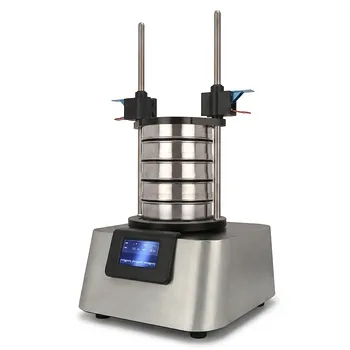
Vibratory Sieve Shaker Electromagnetic 3D Motion Powder Particle Size Analyzer for Dry and Wet Sieving
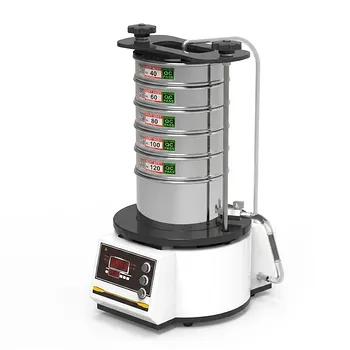
High Frequency Wet Three-Dimensional Vibrating Sieve Shaker for Dry and Wet Particle Size Analysis
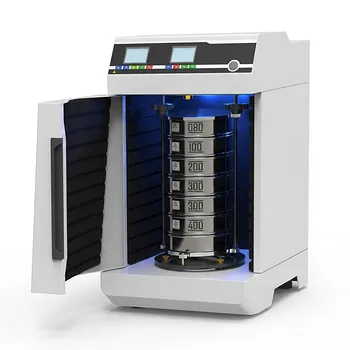
Laboratory Dry and Wet Three Dimensional Vibratory Sieve Shaker for Particle Analysis
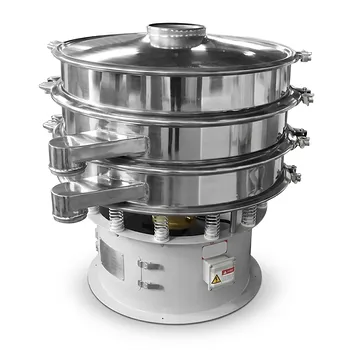
Three Dimensional Rotary Vibrating Sieve
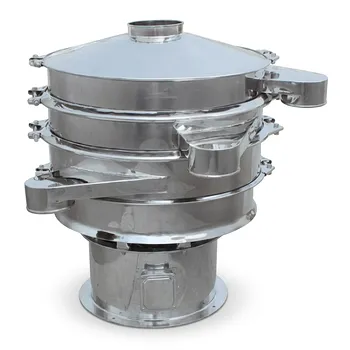
Stainless Steel Rotary Vibrating Sieve High Precision Circular Vibratory Separator Industrial Powder Grading Machine Multi Layer Sifting Equipment
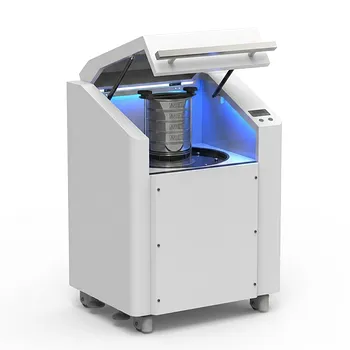
High Frequency Cabinet Type Three-Dimensional Rotary Vibrating Sieve Shaker for Dry Sieving and Particle Classification
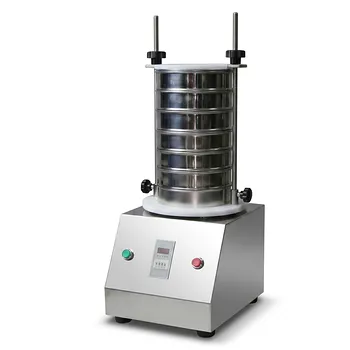
Small Laboratory Vibratory Sieve Shaker for Powder Gradation and Particle Size Analysis
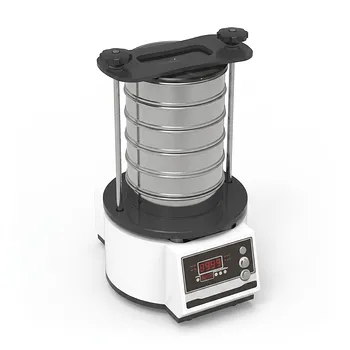
Tapping Oscillating Sieve Shaker for Dry and Wet Particle Size Analysis
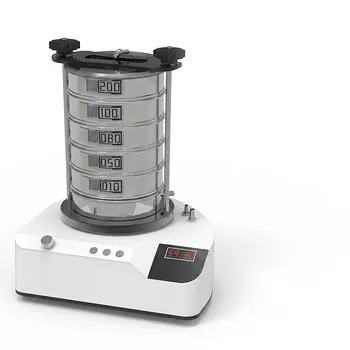
Heavy Duty Dry Three Dimensional Vibratory Sieve Shaker for Particle Separation
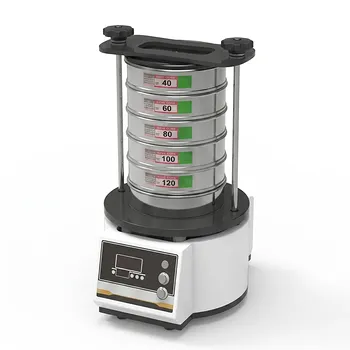
Dry Three Dimensional Vibratory Sieve Shaker
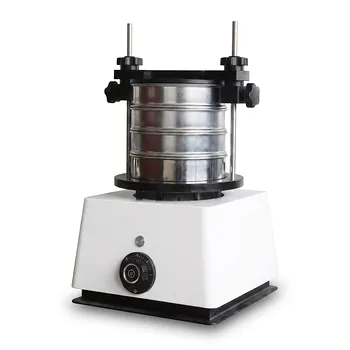
Small Laboratory Vibrating Sieve Shaker for Precise Particle Size Analysis
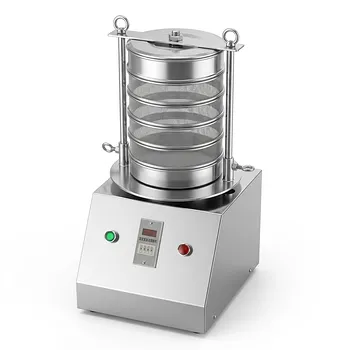
Stainless Steel Laboratory Vibratory Test Sieve Shaker
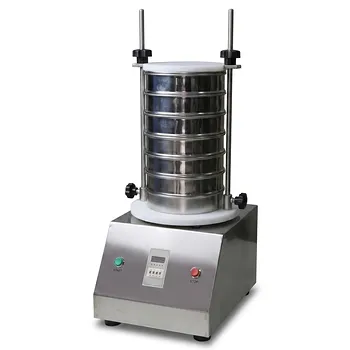
Laboratory Vibratory Test Sieve Shaker for Precision Particle Size Analysis and Powder Grading
Vibratory Disc Mill for Rapid Fine Grinding and High Throughput Sample Preparation of Hard and Brittle Materials
Industrial Swing Granulator for Powder Processing in Pharma Food and Chemical Industries
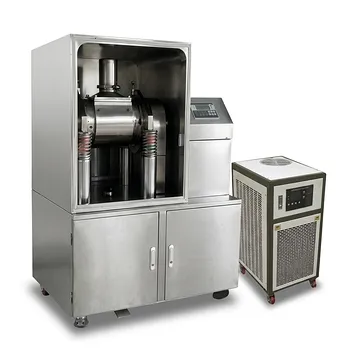
Small Vibrating Ultrafine Grinder for Traditional Chinese Medicine
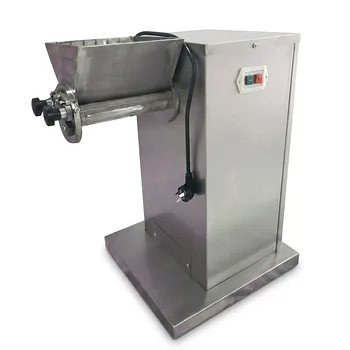
Small Laboratory Oscillating Granulator for Wet and Dry Granulation Processing
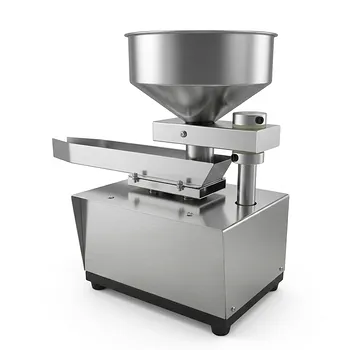
Automatic Vibrating Powder Feeder for Laboratory Material Processing Precision Vibratory Hopper Feeder for Granular and Powder Material Handling Industrial Grade Vibrating Tray Feeder for Consistent Material Sample Preparation
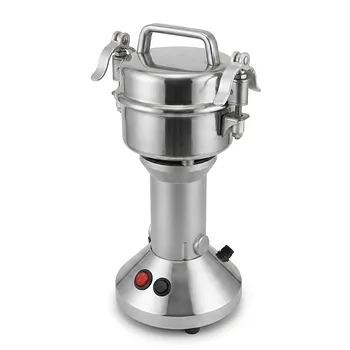
Continuous Feeding Grinding Mill for Dry Fibrous Tough and Hard Materials in Laboratory and Small Production