What function do vibratory sieve shakers and standard test sieves serve in the preparation of adsorbents? Key Guide
Updated 4 months ago
Vibratory sieve shakers and standard test sieves are the primary tools for precise particle size classification in adsorbent preparation. These instruments enable researchers and engineers to isolate specific grain sizes, ensuring that the adsorbent material possesses a uniform specific surface area and predictable kinetic behavior. By standardizing particle diameter, sieving eliminates physical variables that would otherwise skew experimental data and compromise the reliability of adsorption models.
Effective adsorbent preparation relies on precise mechanical sieving to ensure that adsorption performance is a result of the material's chemical properties rather than inconsistent physical dimensions. This process is fundamental for achieving reproducible results in both laboratory research and industrial applications.
Precision Classification and Surface Area Optimization
Controlling Specific Surface Area
Adsorption is a surface-dependent process where the efficiency is often proportional to the available surface area. Using a vibratory sieve shaker with specific mesh sizes (e.g., 100, 150, or 200 mesh) allows for the isolation of fine particles that maximize reaction activity.
Standardizing Diffusion Pathways
Consistent particle sizing ensures that the diffusion rates are uniform across the entire sample. When particles are uniform, the time required for a solute to penetrate the adsorbent internal structure becomes predictable, which is essential for stable adsorption rates.
Grading Raw Materials
In the initial stages of preparation, such as with feldspar or geological ores, sieving grades the crushed material into distinct fractions. This allows for the selection of optimal sizes—such as fine powders less than 0.1 mm—that enhance subsequent chemical modification processes.
Validating Kinetic and Isotherm Models
Eliminating Experimental Error
Variations in particle diameter can lead to significant fluctuations in adsorption data during kinetic studies. Mechanical sieving helps eliminate these errors by ensuring that all particles in a test batch respond similarly to the fluid environment.
Improving Mathematical Fit
Accurate particle classification is vital for fitting experimental data to mathematical models, such as pseudo-second-order kinetics or isotherm analysis. A narrow particle size distribution removes the "noise" caused by inconsistent diameters, leading to more reliable and reproducible findings.
Evaluating Size Impact
Researchers use vibratory shakers to quantitatively evaluate how different size ranges—from silt-sized to coarse sand—affect adsorption efficiency. This data is critical for determining the most cost-effective particle size for large-scale deployment.
Operational Reliability in Fixed-Bed Reactors
Preventing Channeling and Pressure Drop
In fixed-bed reactor testing, uniform particle size distribution ensures bed uniformity. By removing fines and oversized particles, sieving prevents "channeling," where fluid bypasses parts of the adsorbent bed, and minimizes excessive pressure drops that can damage equipment.
Enhancing Breakthrough Curves
Precise sieving is decisive for studying breakthrough curves, which track when an adsorbent bed becomes saturated. Consistent particles lead to a sharper breakthrough point, allowing for more accurate predictions of the adsorbent's service life.
Ensuring Batch Consistency
High-precision test sieves ensure that adsorption performance remains comparable across different batches. This physical separation process guarantees that every production run meets the specific requirements for pore size and particle range (e.g., 425 to 850 micrometers).
Understanding the Trade-offs
Material Attrition
The mechanical energy of a vibratory shaker can sometimes cause fragile adsorbents to degrade or "dust." If the material is brittle, excessive shaking time can actually create new fine particles, defeating the purpose of the initial sieving.
Sieve Blinding and Clogging
Certain materials, especially those with high moisture or electrostatic charges, can clog the mesh apertures—a phenomenon known as blinding. This requires specialized cleaning methods or the use of sieve aids to ensure the classification remains accurate.
Sieve Wear and Calibration
Over time, the wire mesh of standard test sieves can stretch or corrode, leading to inaccurate grading. Regular calibration and inspection are necessary to ensure that a "200 mesh" sieve is actually delivering the precise aperture size required for the study.
How to Apply Sieving to Your Adsorbent Project
To achieve the best results in adsorbent preparation, your approach to sieving should be dictated by your final application goals:
- If your primary focus is Maximizing Adsorption Capacity: Utilize a vibratory shaker to isolate the smallest possible particle fractions (e.g., <0.1 mm) to ensure the highest specific surface area and maximum reaction activity.
- If your primary focus is Kinetic Modeling and Research: Use high-precision sieves to isolate a very narrow range (e.g., 125–150 μm) to eliminate variables in diffusion rates and ensure your mathematical models are statistically sound.
- If your primary focus is Fixed-Bed Reactor Performance: Focus on removing all "fines" and oversized particles to ensure a uniform bed that prevents channeling and maintains stable pressure throughout the cycle.
By mastering the mechanical classification of your adsorbent particles, you ensure that your experimental data is a true reflection of your material's potential.
Summary Table:
| Function | Key Benefit | Impact on Adsorbent Performance |
|---|---|---|
| Particle Grading | Controls Specific Surface Area | Maximizes adsorption capacity and reaction activity. |
| Diffusion Control | Standardizes Diffusion Pathways | Ensures predictable kinetic behavior and stable rates. |
| Reactor Uniformity | Prevents Bed Channeling | Minimizes pressure drops and ensures sharp breakthrough curves. |
| Model Validation | Eliminates Physical Variables | Improves mathematical fit for kinetic and isotherm studies. |
| Quality Assurance | Batch Consistency | Guarantees reproducible results across different production runs. |
Elevate Your Material Science Research with Precision Preparation
Achieving reliable adsorption data starts with perfect particle classification and material consistency. As specialists in providing complete laboratory sample preparation solutions, we empower researchers to eliminate variables and maximize material performance.
Our extensive product line supports every stage of your workflow:
- Size Reduction: Jaw/roll crushers and liquid nitrogen cryogenic grinders.
- Precision Milling: High-energy planetary ball, jet, and rotor mills.
- Exact Classification: Vibratory and air-jet sieve shakers with a full range of test sieves.
- Mixing & Compaction: Advanced powder mixers and a full spectrum of hydraulic presses, including Cold/Warm Isostatic Presses (CIP/WIP), hot presses, and vacuum hot presses.
Ready to optimize your adsorbent preparation?
Contact our experts today to discover how our powder processing and compaction equipment can enhance your lab's efficiency and experimental accuracy.
References
- K A Karim, Nur Fadhilah. Adsorption of Inorganic and Organic Waste of Chemistry Laboratory by Using Eggshell-based CaO. DOI: 10.30598/ijcr.2025.13-kur
Mentioned Products
- Vibratory Sieve Shaker Electromagnetic 3D Motion Powder Particle Size Analyzer for Dry and Wet Sieving
- Laboratory Dry and Wet Three Dimensional Vibratory Sieve Shaker for Particle Analysis
- Stainless Steel Laboratory Vibratory Test Sieve Shaker
- Heavy Duty Dry Three Dimensional Vibratory Sieve Shaker for Particle Separation
- Dry Three Dimensional Vibratory Sieve Shaker
People Also Ask
- How does a vibratory sieve shaker contribute to optimizing the performance of activated carbon? Enhance Adsorption Precision
- Why is a laboratory vibratory sieve shaker necessary for processing magnesium-based borate precursor powders? Boost Activity
- Why use a vibratory sieve shaker to verify coarse aggregate grading in rubberized concrete? Ensure Structural Integrity
- What role does a vibratory sieve shaker play in the particle size analysis of ground corn products? Enhance QC Precision
- What are the key functions of a vibratory sieve shaker in lightweight mortar production? Ensure Stability & Gradation

Tech Team · PowderPreparation
Last updated on May 14, 2026
Related Products
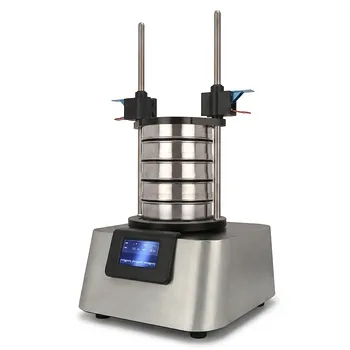
Vibratory Sieve Shaker Electromagnetic 3D Motion Powder Particle Size Analyzer for Dry and Wet Sieving
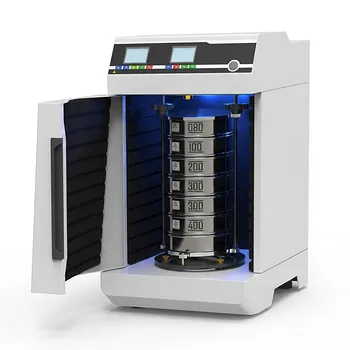
Laboratory Dry and Wet Three Dimensional Vibratory Sieve Shaker for Particle Analysis
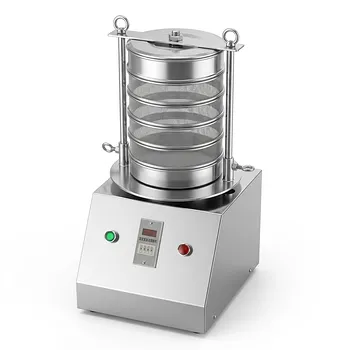
Stainless Steel Laboratory Vibratory Test Sieve Shaker
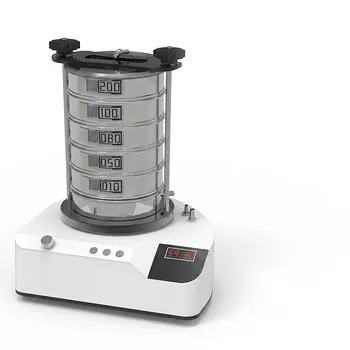
Heavy Duty Dry Three Dimensional Vibratory Sieve Shaker for Particle Separation
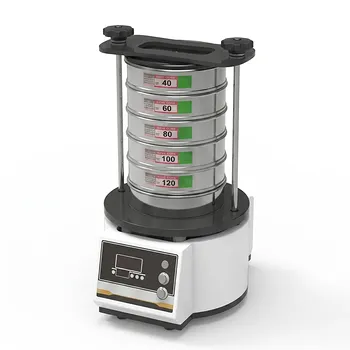
Dry Three Dimensional Vibratory Sieve Shaker
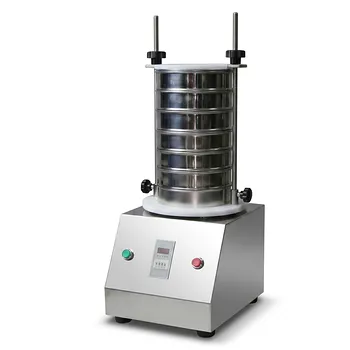
Small Laboratory Vibratory Sieve Shaker for Powder Gradation and Particle Size Analysis
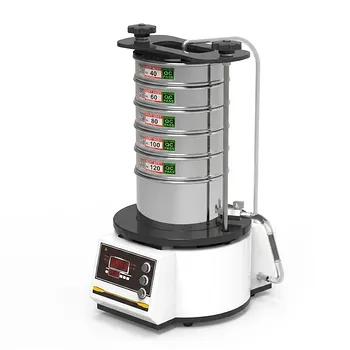
High Frequency Wet Three-Dimensional Vibrating Sieve Shaker for Dry and Wet Particle Size Analysis
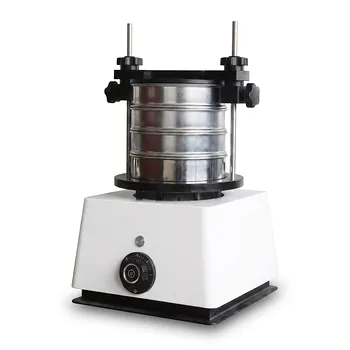
Small Laboratory Vibrating Sieve Shaker for Precise Particle Size Analysis
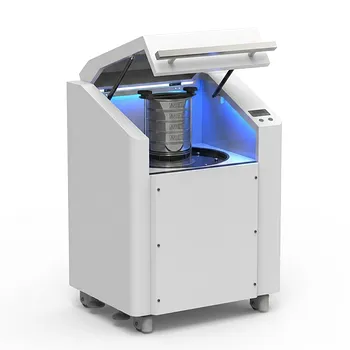
High Frequency Cabinet Type Three-Dimensional Rotary Vibrating Sieve Shaker for Dry Sieving and Particle Classification
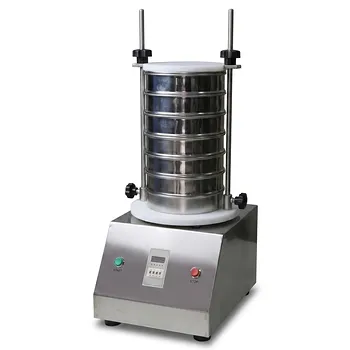
Laboratory Vibratory Test Sieve Shaker for Precision Particle Size Analysis and Powder Grading
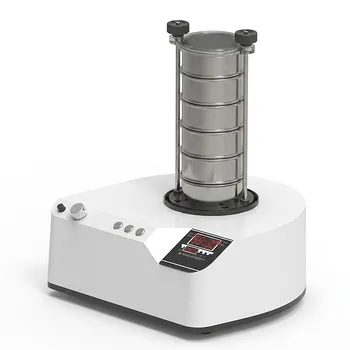
三维电磁微量振动筛分仪
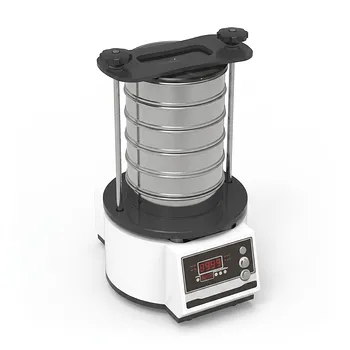
Tapping Oscillating Sieve Shaker for Dry and Wet Particle Size Analysis
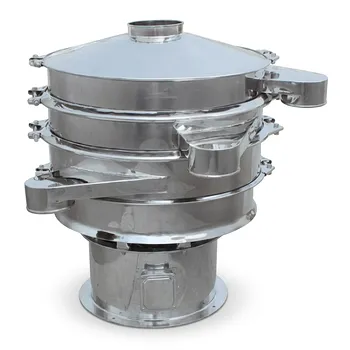
Stainless Steel Rotary Vibrating Sieve High Precision Circular Vibratory Separator Industrial Powder Grading Machine Multi Layer Sifting Equipment
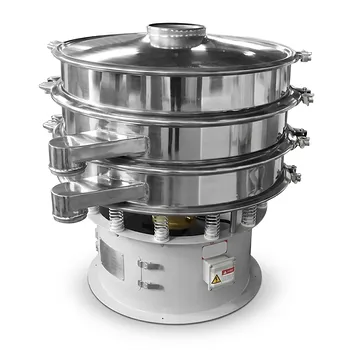
Three Dimensional Rotary Vibrating Sieve
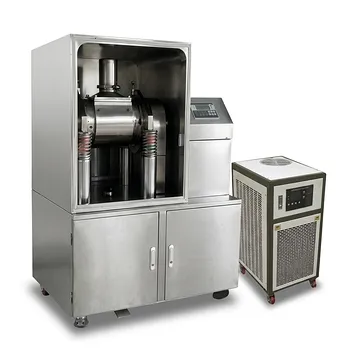
Small Vibrating Ultrafine Grinder for Traditional Chinese Medicine
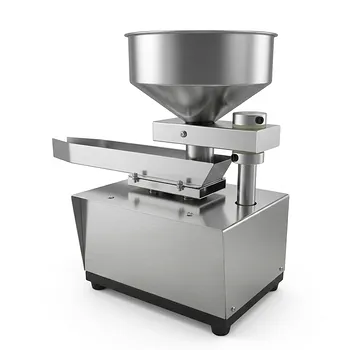
Automatic Vibrating Powder Feeder for Laboratory Material Processing Precision Vibratory Hopper Feeder for Granular and Powder Material Handling Industrial Grade Vibrating Tray Feeder for Consistent Material Sample Preparation
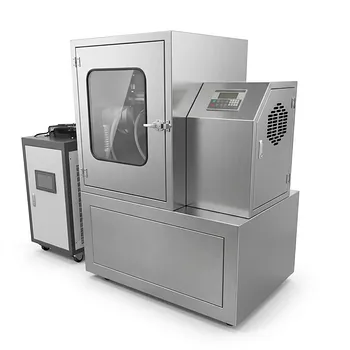
Vibratory Superfine Grinder for Ultra Fine Laboratory Powder Milling
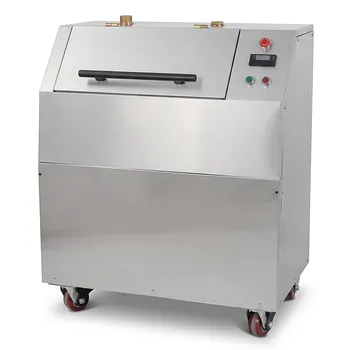
Vibratory Disc Mill for Rapid Fine Grinding and High Throughput Sample Preparation of Hard and Brittle Materials