How does a ball mill function in the modification of IMS? Optimize Particle Refinement for Al-Ni Alloy Production
Updated 5 months ago
The function of a ball mill in modifying Iron Mill Scale (IMS) is to refine its flaky structure into high-surface-area micron-level particles. This mechanical process utilizes high-energy impact and friction to reduce IMS to specific sizes, such as 106μm, which ensures uniform dispersion within the aluminum-nickel matrix. By increasing the specific surface area, the ball mill promotes critical phase transformation reactions during the subsequent melting stage.
The ball mill acts as a mechanochemical reactor that transforms raw, irregular waste (IMS) into a highly active metallurgical precursor. This refinement is essential for achieving a homogenous aluminum-nickel alloy with consistent mechanical properties.
The Mechanics of Particle Refinement
The primary role of the ball mill is to overcome the structural resilience of the Iron Mill Scale through intense mechanical force.
Impact and Friction Dynamics
The milling process relies on the kinetic energy of grinding media (typically steel balls) crashing into the IMS. This high-energy impact shatters the naturally flaky and brittle structure of the mill scale.
Friction between the grinding balls and the jar walls further shears the particles, smoothing their edges and ensuring they reach a uniform micron-level size.
Surface Area Optimization
By crushing the IMS into finer particles, the ball mill exponentially increases the specific surface area of the material. This is a critical prerequisite for metallurgical reactivity.
A higher surface area allows for more contact points between the iron oxides in the IMS and the aluminum-nickel matrix. This proximity is what enables efficient atomic diffusion and chemical interaction.
Enhancing Metallurgical Compatibility
Beyond simple size reduction, the ball mill prepares the IMS to integrate into the alloy at a molecular level.
Facilitating Phase Transformation
The energy intensive nature of ball milling induces mechanical activation within the IMS powder. This stored energy lowers the activation threshold for phase transformations during the melting process.
Without this refinement, the IMS would remain as discrete, unreacted inclusions. Proper milling ensures that the iron becomes an active participant in the Al-Ni phase formation.
Achieving Uniform Dispersion
A ball mill ensures that the refined IMS is distributed evenly throughout the powder mixture. This prevents "clumping," which can lead to structural weaknesses in the final alloy.
Uniformity at the powder stage translates directly to a homogenous microstructural organization in the final sintered or melted product. This balance is vital for the consistency of the alloy's macroscopic performance.
The Mechanical Alloying Cycle
In high-energy environments, the ball mill facilitates a continuous cycle of deformation and reformation.
Fragmentation and Cold Welding
During milling, particles undergo repeated cycles of plastic deformation and fracturing. As particles break, new, clean surfaces are exposed and forced together.
This leads to cold welding (microwelding), where different components are joined at the atomic level. This creates a layered micro-nanoscale structure that is far more reactive than a simple physical mixture.
Forced Solid Solution
The intense centrifugal forces can force solute atoms into the lattice of the host metal. This allows for the creation of supersaturated solid solutions.
These unique atomic arrangements are often impossible to achieve through traditional melting alone. The ball mill essentially "primes" the chemistry of the alloy before heat is ever applied.
Understanding the Trade-offs
While ball milling is essential for modification, it introduces specific challenges that must be managed.
Contamination and Wear
Extended milling times increase the risk of media wear, where small amounts of the grinding balls or jar material contaminate the powder. This can introduce unwanted elements into the aluminum-nickel alloy.
Energy and Time Intensity
High-energy ball milling is a power-intensive process that requires significant time to achieve nanoscale refinement. Finding the "sweet spot" between particle size and processing cost is a common engineering hurdle.
Oxidation Risks
The high surface area of refined IMS makes it highly susceptible to atmospheric oxidation. If the milling is not conducted in an inert environment or with proper modifiers, the powder may degrade before it reaches the melting stage.
How to Apply This to Your Production
Success in IMS modification depends on aligning your milling parameters with your final alloy requirements.
- If your primary focus is rapid phase transformation: Prioritize high-energy planetary milling to maximize surface area and induce mechanical activation.
- If your primary focus is cost-effective scaling: Use traditional ball milling to reach a 106μm threshold, focusing on uniformity rather than nanoscale refinement.
- If your primary focus is high-purity alloy production: Utilize specialized grinding media (such as zirconia or hardened steel) and inert gas shielding to prevent contamination.
By masterfully controlling the ball milling process, you transform industrial waste into a high-performance constituent of modern aluminum-nickel alloys.
Summary Table:
| Milling Mechanism | Function in IMS Modification | Benefit to Al-Ni Alloy |
|---|---|---|
| High-Energy Impact | Breaks flaky IMS structure into micron-level particles | Ensures uniform dispersion in the matrix |
| Surface Expansion | Increases specific surface area exponentially | Accelerates atomic diffusion and reactivity |
| Mechanical Activation | Induces energy to lower reaction thresholds | Facilitates efficient phase transformation |
| Cold Welding | Joins components at the atomic level | Creates highly reactive metallurgical precursors |
| Uniform Mixing | Eliminates particle clumping | Results in a homogenous microstructural finish |
Elevate Your Material Preparation with Precision Equipment
Achieving the perfect micron-level refinement for Iron Mill Scale (IMS) requires more than just standard tools—it requires precision engineering. Our Expert Laboratory Solutions provide a complete range of sample preparation equipment designed specifically for material science and advanced metallurgy.
From initial crushing to final alloy compaction, we support your entire workflow with:
- Advanced Milling: Planetary ball mills, jet mills, disc mills, and liquid nitrogen cryogenic grinders for ultra-fine particle size control.
- Preparation & Sizing: Jaw/roll crushers and vibratory or air-jet sieve shakers to ensure material consistency.
- Mixing Excellence: High-performance powder mixers and defoaming mixers for perfect homogeneity.
- Advanced Compaction: A full spectrum of hydraulic presses, including Cold/Warm Isostatic Presses (CIP/WIP), XRF pellet presses, and vacuum hot presses for high-density sintering.
Ready to transform your powder processing efficiency? Contact us today to discuss your project requirements and discover how our specialized solutions can bring superior mechanical properties to your Al-Ni alloys.
References
- O. I. Sekunowo, D.V. Obasa. Effects of Iron-Millscale Addition on the Electrical and Thermal Properties of Aluminum-Nickel Alloy. DOI: 10.5281/zenodo.5805154
Mentioned Products
- Vertical Square Planetary Ball Mill for Laboratory Sample Preparation and Nanoscale Grinding
- Heavy Duty Horizontal Planetary Ball Mill for Efficient Industrial Grinding and Sample Preparation
- High Energy Planetary Ball Mill for Nano Scale Grinding and Colloidal Mixing in Material Science Research
- Nanoscale High Energy Vibratory Ball Mill Low Temperature
- High Energy Planetary Ball Mill for Nano Scale Grinding and Mechanical Alloying
People Also Ask
- What is the function of a planetary ball mill in wollastonite ceramic prep? Achieve Molecular Homogenization & Reactivity
- How does a planetary ball mill contribute to the homogenization of trace elements? Achieve Sub-Micron Uniformity
- Why grind lime-pozzolan specimens for TG/DTA for 3 mins? Master sample prep for high-precision thermal analysis.
- What role does a planetary ball mill play in the synthesis of Li6PS5Cl (LPSCl)? Unlock High Ionic Conductivity
- What role does a planetary ball mill play in KNTO ceramic refinement? Optimize Homogeneity & Reactivity

Tech Team · PowderPreparation
Last updated on May 14, 2026
Related Products

Vertical Square Planetary Ball Mill for Laboratory Sample Preparation and Nanoscale Grinding

Heavy Duty Horizontal Planetary Ball Mill for Efficient Industrial Grinding and Sample Preparation
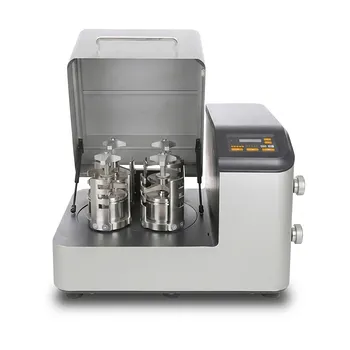
High Energy Planetary Ball Mill for Nano Scale Grinding and Colloidal Mixing in Material Science Research
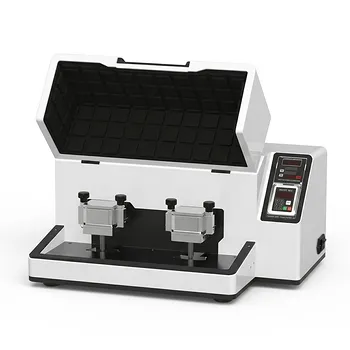
Nanoscale High Energy Vibratory Ball Mill Low Temperature

High Energy Planetary Ball Mill for Nano Scale Grinding and Mechanical Alloying

Dual Station Planetary Ball Mill 24L

Multi-Platform Nanoscale High-Energy Vibratory Ball Mill

Nanoscale High-Energy Vibratory Ball Mill for Laboratory Sample Preparation, Mechanochemistry, and Mechanical Alloying

High Energy Hybrid Vibratory Ball Mill for Grinding Mixing and Cell Disruption

8L Planetary Ball Mill for Laboratory Grinding and Sample Preparation

High Energy Omnidirectional Planetary Ball Mill 16L

Vertical Production Planetary Ball Mill for High Throughput Powder Processing
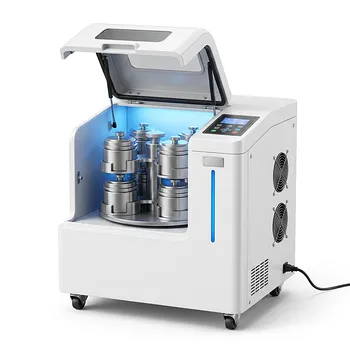
High Energy Omnidirectional Planetary Ball Mill 20L
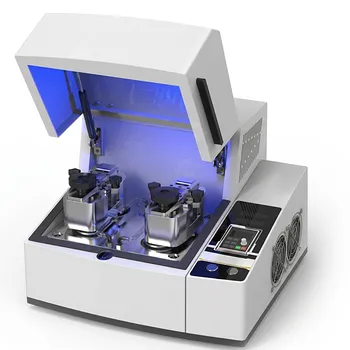
Laboratory Nano High Energy Ball Mill Ultrafine Grinding Mechanical Alloying

High Energy Laboratory Planetary Ball Mill for Nano Grinding and Colloidal Mixing of Hard and Brittle Materials
Planetary Ball Mill 12L
Single Tank High Energy Vibratory Ball Mill for Laboratory Grinding and Mixing

High Throughput Micro Ball Mill for Cryogenic Grinding and Laboratory Cell Disruption

Miniature Planetary Ball Mill with Vacuum Grinding and High Efficiency for Laboratory Sample Preparation