The Surfactant That Teaches Powder Not to Stick: Stearic Acid and the Psychology of Cryogenic Milling
Oct 13, 2026
The Moment You Open the Mill
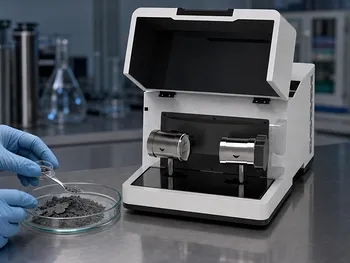
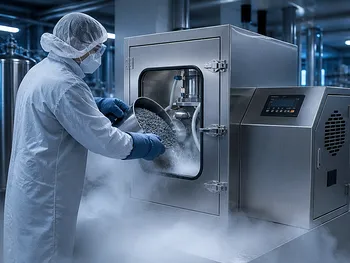
You have just finished a 12-hour cryogenic milling run. Liquid nitrogen has been cycling through the jacket. The bearings are warm, but the chamber is a deep, brittle cold. You disconnect the jar, release the clamp, and peer inside.
You expect a fine, flowing powder. Instead, you find a single solid clump. A cake adhering stubbornly to the walls. The balls are coated. Your yield is not 100%—it is maybe 60%, if you can chip it off.
What happened? The energy did not disappear. It just went into fusing particles together instead of breaking them apart.
This is not a equipment failure. It is a surface chemistry problem. And the solution is a molecule you might not associate with advanced material science at all: stearic acid.
The Physics of Sticking: Cold Welding as a System Failure
Fresh Surfaces Are Hungry Surfaces
When a grinding ball strikes a particle, it creates a fracture. That fracture exposes a brand-new surface—one that has never seen oxygen, moisture, or anything else.
This surface is atomically unsatisfied. It has dangling bonds. It wants to attach to something, immediately.
Ductile Materials Present a Special Problem
Brittle materials like glass just shatter and stop. But ductile metals—titanium, aluminum, copper—behave differently. When struck, they deform. They flatten. And then, on the next impact, those flattened surfaces press together.
The pressure forces atoms from one particle into intimate contact with atoms from another. Without any oxide layer or contaminant to separate them, they simply bond. This is “cold welding”—fusion without heat, driven purely by pressure and surface energy.
It is not a defect. It is thermodynamics, working perfectly to undo everything your mill is trying to achieve.
A Competition Hidden Inside Every Jar
Ball milling is never just about fracture. It is always a competition:
| Force | What It Does |
|---|---|
| Fracture | Breaks particles apart, increases surface area, reduces size |
| Welding | Fuses particles together, reduces surface area, increases size |
Without intervention, this competition often ends in stalemate. The mill runs for hours, the particle size stops changing, and the material just moves around—breaking a little here, welding a little there. Energy is consumed. Time passes. Nothing useful happens.
The Molecular Intervention: What Stearic Acid Actually Does
A Surfactant for Solid Matter
Stearic acid is a long-chain fatty acid: an 18-carbon backbone with a carboxylic acid group at one end. It is cheap, safe, and chemically simple.
In cryogenic milling, it performs a role usually associated with liquids: it acts as a surfactant. But instead of stabilizing emulsions, it stabilizes solid particles against each other.
The Adsorption Mechanism
The moment a fresh surface is created by fracture, stearic acid molecules in the jar adsorb onto it. The carboxylic acid group attaches to the metal surface. The long hydrocarbon tail sticks outward.
This happens in microseconds. Faster than the next impact.
What was a high-energy, reactive surface becomes, instantly, a surface coated in a thin organic layer. The dangling bonds are satisfied. The surface energy drops.
How a Single Layer Changes Everything
That monolayer—perhaps only a few nanometers thick—becomes a physical and energetic barrier. When two coated particles collide, their metal surfaces never actually meet. The hydrocarbon tails brush against each other and then separate.
No metal-to-metal contact. No cold welding.
The particle can now be struck again, flattened further, fractured again—without fusing to its neighbor. The mill’s energy finally goes into useful work.
Where the Material Goes: Yield and Equipment Protection
The Clogging That Never Happens
Without stearic acid, particles do not just fuse to each other. They also fuse to the milling media and the jar walls. Over time, a thick coating builds up. The balls become larger, less effective. The jar interior shrinks.
This material is lost to the process. It is not circulating. It is not being milled. It is just sitting there, stuck.
Stearic acid prevents this adhesion. The same coating that stops particle-on-particle cold welding also stops particle-on-wall coating. The material remains mobile, free to move through the impact zone where actual work happens.
Yield Becomes Predictable
In high-value powder metallurgy, losing 20-30% of material to jar-caking is not trivial. You are throwing away powder that cost hundreds of dollars per kilogram to produce.
With a properly optimized PCA concentration, powder recovery can exceed 95% . The numbers on the scale at the end of the run match the numbers you put in at the start.
Flowability Follows
Powder that has not agglomerated flows freely. It pours cleanly from the jar. It spreads evenly into a die for compaction. It dispenses consistently in additive manufacturing.
This sounds minor. Until you are trying to automate a process, and every gram matters.
Morphology: The Shape of Things to Come
Flake Versus Sphere
Stearic acid does not just prevent welding. It influences how particles deform under repeated impact.
In ductile systems without PCA, particles tend to weld into roughly spherical aggregates. With stearic acid present, repeated flattening without welding produces flake-like or disc-like morphologies.
This is not cosmetic. Flake morphology means higher aspect ratio, different packing behavior, different sintering kinetics. For some applications—certain thermal spray powders, for instance—flake is exactly what you want.
Narrowing the Distribution
Random agglomeration creates random particle sizes. A few particles will weld together into a giant, while others remain small. The size distribution widens unpredictably.
By suppressing agglomeration, stearic acid ensures that every particle receives roughly the same history of impacts. The result is a narrower, more consistent size distribution.
Uniform powder means uniform behavior in downstream processes. Uniform shrinkage in sintering. Uniform layer thickness in powder bed fusion. Predictability.
Brittle Materials, Too
Even ceramics—zirconia, alumina—can benefit. In these materials, the issue is less about ductile welding and more about strong agglomeration driven by van der Waals forces or electrostatic attraction. The same surface energy reduction that helps metals also helps keep ceramic fines discrete and free-flowing.
The Trade-off: Purity in the Balance
Carbon Enters the Lattice
Stearic acid is CH₃(CH₂)₁₆COOH. Carbon. Hydrogen. Oxygen.
Under the extreme conditions of high-energy milling, some of these atoms inevitably become incorporated into the powder. Carbon can dissolve interstitially into titanium, forming a solid solution or even carbides. Oxygen can form oxides.
If your application demands ultimate chemical purity, this matters. A few hundred parts per million of carbon can shift the mechanical properties of a sintered part. It can alter phase stability. It can create unexpected precipitates at grain boundaries.
The Residue Problem
After milling, a thin organic residue remains on the particle surface. If the powder goes directly to compaction and sintering without a debinding step, that residue burns off. But the burn-off can leave behind porosity, or carbon-rich regions.
Post-processing matters. A vacuum heat treatment before sintering can remove the PCA cleanly. An inert atmosphere ramp can outgas the organics. But these steps add time and complexity. They are part of the cost of using PCA at all.
The Dose Makes the Poison
There is a window. Too little stearic acid, and you are back to cold welding—low yield, poor control. Too much, and you over-lubricate the system. The friction that should cause fracture is cushioned. Milling becomes inefficient. Contamination rises unnecessarily.
The effective range is typically 0.5% to 2% by weight. The precise optimum depends on your material, your mill, your goals.
Choosing Your Strategy with Clear Intent
The Refiner’s Path
You want the finest possible powder, the narrowest distribution, the most aggressive size reduction.
Use a higher PCA concentration—approaching 2%. Accept some contamination. Plan for a post-milling debinding step in vacuum or inert gas. The added processing is the price of precision.
The Purist’s Path
You cannot tolerate contamination. Your application—perhaps a biomedical implant or a high-purity sputtering target—demands chemistry above all.
Minimize PCA to the lowest effective level, often around 0.5%. Consider running the mill at lower energy, for longer time. Accept a slightly lower yield. And absolutely ensure that a proper cleaning burn-out cycle is part of your process.
The Production Engineer’s Path
Your metric is yield. You want to put material in and get the same material out, usable, with minimal waste and minimal downtime for cleaning.
Focus on the early stages. Premix your powder with stearic acid and run a short “coating cycle” before full-energy milling begins. This coats the jar and balls, preventing that initial adhesion that cascades into massive caking later.
A summary of these strategies:
| Path | PCA Level | Key Trade-off |
|---|---|---|
| Refiner | Higher (~2%) | Accepts some contamination; requires debinding |
| Purist | Lower (~0.5%) | Prioritizes chemistry; accepts lower yield |
| Production | Medium, with coating cycle | Prioritizes yield and equipment cleanliness |
The Equipment That Makes It Work
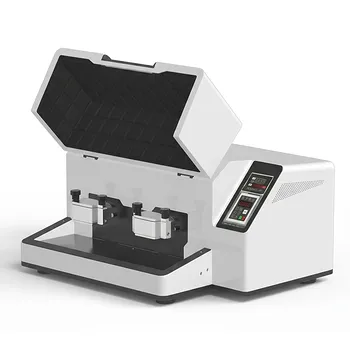
All this effort—the optimization, the careful trade-offs—requires one thing from the equipment itself: control. Temperature control, to keep the embrittlement consistent. Energy control, to deliver predictable impact forces. Atmosphere control, to manage oxidation and contamination.
The mill is not just a motor and some jars. It is the vessel where surface chemistry, fracture mechanics, and thermodynamics converge.
This is why, when we design sample preparation systems, we think about the entire workflow:
- Milling systems that operate from ambient down to deep cryogenic temperatures, with the thermal stability to keep your process window narrow.
- Mills engineered for specific tasks—planetary ball mills for high-energy mechanical alloying, jet mills for contamination-free micronization, rotor mills for rapid bulk reduction.
- Compaction equipment that takes your carefully prepared powder and transforms it into green bodies with consistent density—from standard lab presses to cold and warm isostatic presses, vacuum hot presses, and XRF pellet presses.
- Supporting tools—crushers, sieve shakers, mixers—that ensure your material enters the mill prepared, and the result is characterized and ready for the next step.
The stearic acid molecule does its job on the nanometer scale. The equipment does its job on the laboratory scale. The principle, unexpectedly, is the same: control what sticks, control what separates, and you control the outcome.
Contact Our Experts to discuss your specific powder processing challenge—whether it is cold welding, morphology control, or scaling from lab to production.
Quick Links
Suggested Products
Ultra-Low Temperature Cryogenic High-Energy Vibratory Ball Mill High Throughput Micro Ball Mill for Cryogenic Grinding and Laboratory Cell Disruption Ultra-Low Temperature Vibratory Mill for Ultrafine Grinding Heating Temperature Controlled High Energy Vibratory Ball Mill Nanoscale High Energy Vibratory Ball Mill Low TemperatureFurther Reading
The Silence Inside the Jar: What a Ball Mill Really Does for Doped Bismuth Ferrite The Heavy Truth About Light Powder: Why Tungsten Carbide Wins the Titanium Game The Brittle Truth: Why Your Catalyst's Potential Is Trapped in the Ribbon, and the One Violent Step to Set It Free The Collision That Cracks a Crystal: Processing Ti2SnC with Stainless Steel and the Pursuit of Controlled Chaos Frozen Defects, Unbreakable Metal: The Cryogenic Secret to Nanostructured Titanium Powder
PowderPreparation
Last updated on May 14, 2026
Related Products
Ultra-Low Temperature Cryogenic High-Energy Vibratory Ball Mill

High Throughput Micro Ball Mill for Cryogenic Grinding and Laboratory Cell Disruption
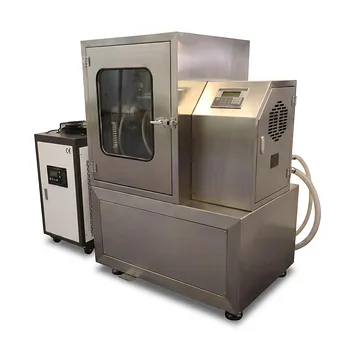
Ultra-Low Temperature Vibratory Mill for Ultrafine Grinding
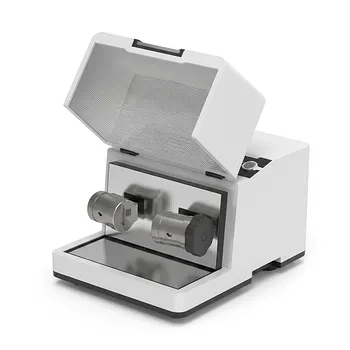
Heating Temperature Controlled High Energy Vibratory Ball Mill
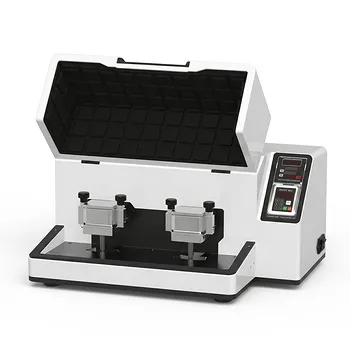
Nanoscale High Energy Vibratory Ball Mill Low Temperature
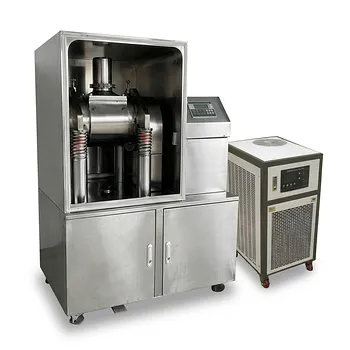
Water Cooled Cryogenic Ultra Fine Cell Wall Breaking Mill
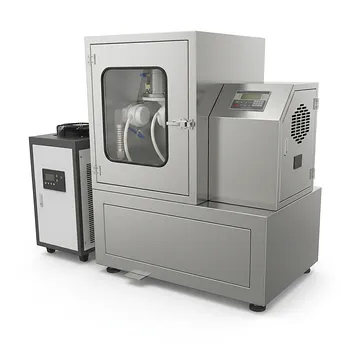
Vibratory Ultra-Low Temperature Ultrafine Grinder for Cryogenic Powder Processing
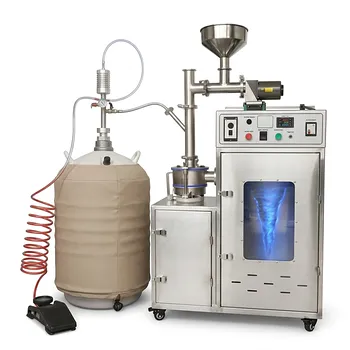
Small Liquid Nitrogen Cryogenic Grinder for Ultrafine Grinding of Heat-Sensitive Materials in Laboratories

Low Temperature Laboratory Knife Mill Cryogenic Sample Grinder Material Science Powder Processing
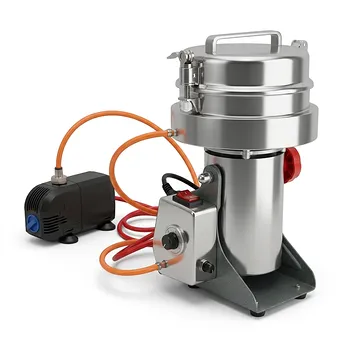
Water Cooled High Speed Grinder with Cryogenic Option for Laboratory Sample Preparation
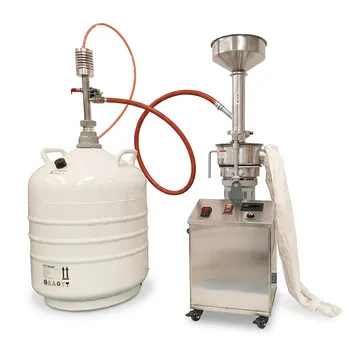
Laboratory Liquid Nitrogen Cryogenic Grinder Polymer Sample Preparation Pulverizer
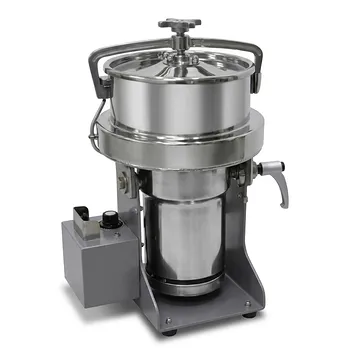
500g Capacity Water Cooled Low Temperature Grinder with Variable Speed and Safety Cover
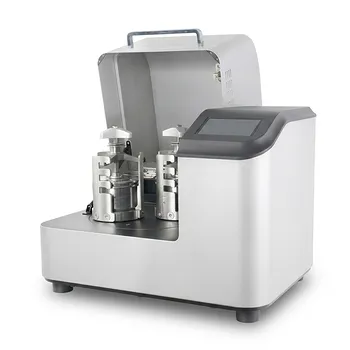
High Energy Planetary Ball Mill for Nano Scale Grinding and Mechanical Alloying
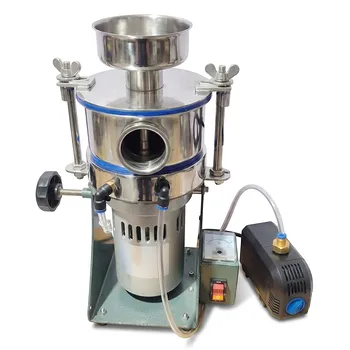
Water Cooled Airflow Ultra Fine Grinder for Low Temperature Material Processing
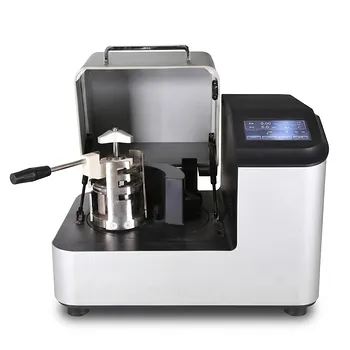
High Energy Laboratory Planetary Ball Mill for Nano Grinding and Material Science Sample Preparation
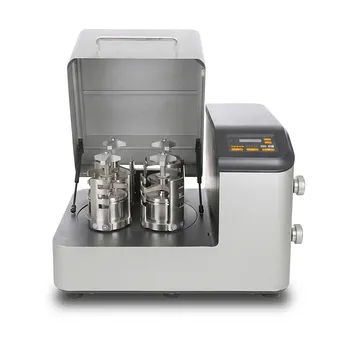
High Energy Planetary Ball Mill for Nano Scale Grinding and Colloidal Mixing in Material Science Research
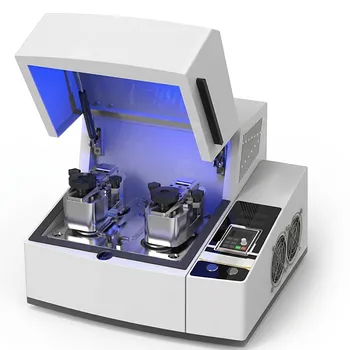
Laboratory Nano High Energy Ball Mill Ultrafine Grinding Mechanical Alloying
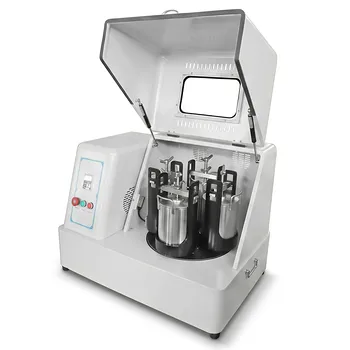
Vertical Square Planetary Ball Mill for Laboratory Sample Preparation and Nanoscale Grinding
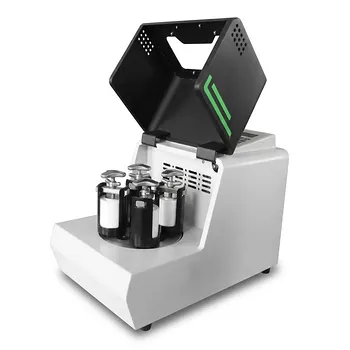
Miniature Planetary Ball Mill with Vacuum Grinding and High Efficiency for Laboratory Sample Preparation