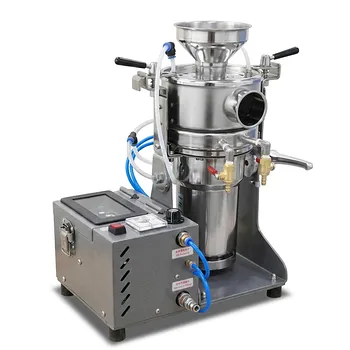
Frozen Defects, Unbreakable Metal: The Cryogenic Secret to Nanostructured Titanium Powder
May 21, 2026
The Engineer’s Betrayal
You mill pure titanium for twelve hours. The grain size drops to 200 nanometers, then 150, then — nothing. More energy. More time. Still stuck. It feels like the metal is fighting back. Because it is.
Metals are not passive victims of mechanical force. They are self-healing systems. Under the intense plastic strain of a ball mill, titanium generates heat. That heat fuels atomic mobility. And atoms that can move will repair. They erase the very defects you just spent all that energy creating.
It is a quiet kind of betrayal. You assume more work means more refinement. But biology — and material science — tells a different story. Some systems can only be transformed when their internal repair mechanisms are switched off. For titanium, you have to take away the heat.
The Psychology of Visible Effort
We are wired to trust visible effort. Longer milling hours, higher frequency, more motor power — these look and feel like progress. The human mind equates energy input with output.
But in severe plastic deformation, the invisible variable is temperature. If you cannot arrest dynamic recrystallization, your effort leaks away. The grains reorganize themselves in real time, like a construction crew rebuilding the lattice while you swing the wrecking ball.
This is not a limit of equipment strength. It is a limit of thermodynamic conditions. Understanding that changes everything.
The Core Problem: Titanium’s Self-Healing Urge
Pure titanium is ductile, and under mechanical stress, dislocations multiply. The metal work-hardens. That is the good news.
The bad news: as the dislocation density rises, the stored energy rises too. At room temperature, that energy easily triggers recovery and dynamic recrystallization. New, defect‑free grains nucleate and grow. The grain size plateaus, or even increases.
You hit a wall that no amount of time can break. The material’s own thermal softness becomes the bottleneck.
The Counterintuitive Solution
You must mill at a temperature where:
- Dislocation mobility crashes.
- Vacancy diffusion is frozen.
- Grain boundary rearrangement becomes kinetically impossible.
That temperature is far below zero. Liquid nitrogen (−196 °C) or liquid argon (−186 °C) creates a regime where defects stay exactly where you put them. The metal cannot heal. It can only accumulate damage, deeper and deeper, until its grain structure collapses into the nanoscale.
How Cryomilling Delivers True Nanostructure
The Freeze Effect
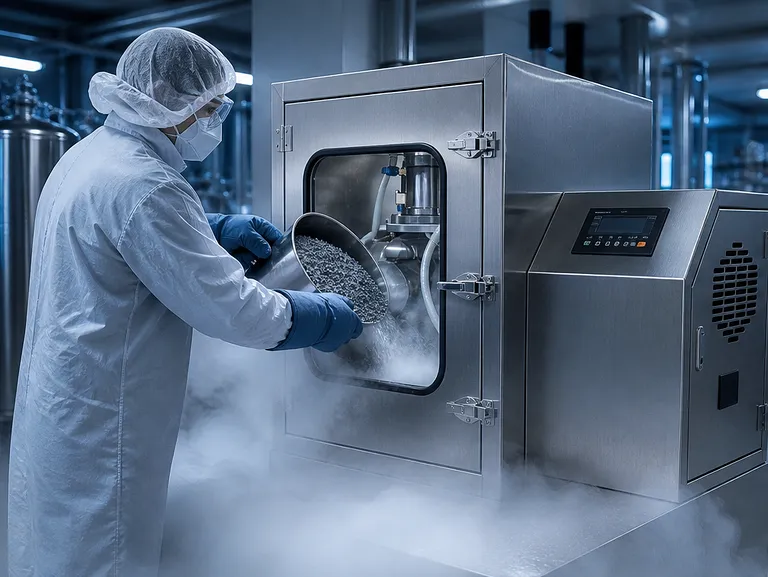
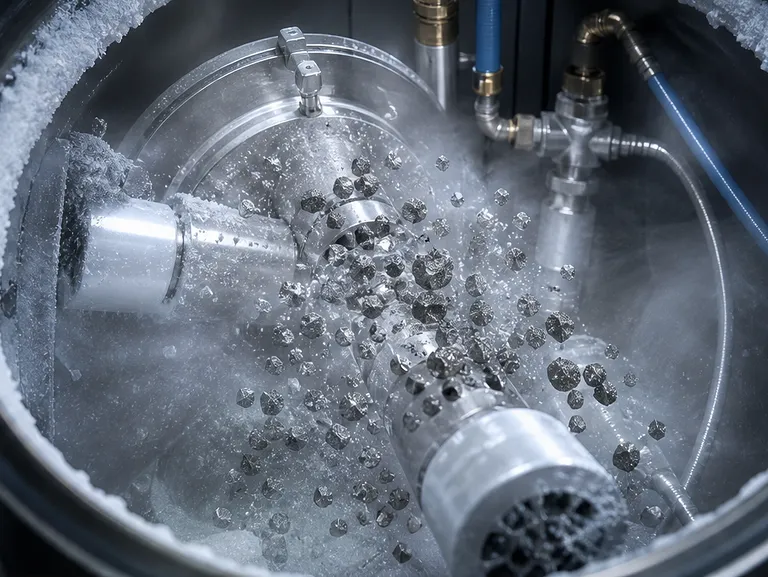
In a liquid nitrogen cryogenic grinder, the milling chamber is continuously cooled. Titanium particles are embrittled. Impact forces no longer simply flatten or agglomerate them — they fracture them.
Fracture dominates over ductile deformation. That changes the refinement mechanism from gradual to abrupt, from gentle to violent. Each high‑frequency collision creates dense shear bands. Without thermal recovery, those shear bands pile up into a dense, chaotic network of grain boundaries.
The Result: 20–30 Nanometer Grains
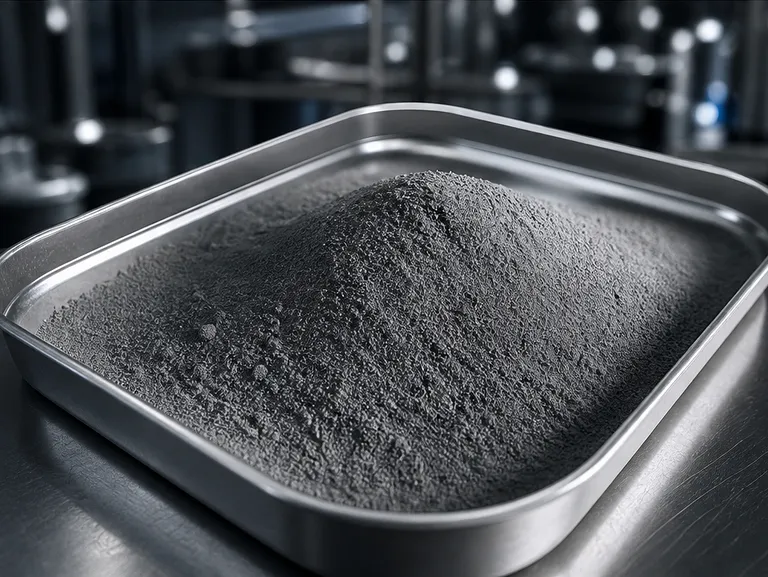
Commercial pure titanium powder can reach grain sizes as low as 20 to 30 nanometers in minutes, not hours. The structure becomes a supersaturated tangle of defects, with extreme interface energy stored at the grain boundaries.
That energy is not a flaw. It is a resource. It makes the powder highly active, primed for low‑temperature sintering or rapid consolidation into ultrafine‑grained bulk components with exceptional strength.
Purity That Cold Protects
There is a second, quieter benefit. At cryogenic temperatures, the diffusion rates of interstitial impurities — oxygen, nitrogen, carbon — plummet.
Even as the specific surface area of the powder explodes, the ultra‑cold environment suppresses uncontrolled reactions. When you use liquid argon instead of nitrogen, you avoid titanium nitride formation altogether. The powder remains chemically frozen, preserving the high purity you started with.
The Hidden Trade‑offs
No transformation comes without cost.
The Price of Extreme Cold
Cryogenic grinding consumes liquid gas continuously. Liquid nitrogen is cheaper and widely available; liquid argon is more expensive but chemically inert toward titanium. Both require vacuum‑jacketed transfer lines, special seals, and safety systems for oxygen‑deficient atmospheres.
Operating costs are higher than standard mills. But what you buy is absolute kinetic control over the grain boundary architecture. For applications where strength matters first — aerospace, medical implants, defense — that premium is not a cost but a competitive barrier.
The Danger of Too Much Activity
A 25‑nanometer‑grain titanium powder is pyrophoric. Exposed to air, it can ignite. Handling requires gloveboxes, inert gas packaging, and process discipline. The very property that makes it valuable — immense surface energy — also makes it dangerous. Safety is not an afterthought; it is part of the process definition.
Contamination Creep
Milling is always a negotiation between refinement and contamination. Over time, the grinding media — steel balls, ceramic beads — wears. Minute fragments embed into the titanium. With cryomilling, the timeframe is compressed because refinement is so fast. Nevertheless, a pragmatic protocol monitors milling duration, media composition, and post‑process purity verification. At the nanoscale, parts per million become significant.
Building the Right Cryogenic Workflow
No single machine solves the nanostructured powder challenge in isolation. The cryogrinder sits inside a chain of interdependent steps.
- Size reduction before cryomilling: jaw crushers or roll crushers break down bulk titanium to feed the mill.
- Powder classification: air‑jet sieve shakers or vibratory sieve shakers ensure uniform particle size fractions, critical for consistent sintering.
- Blending and mixing: powder mixers homogenize nanostructured titanium with alloying additives without damaging the fragile grain structure.
- Consolidation: cold isostatic presses (CIP), warm isostatic presses (WIP), or vacuum hot presses compact the powder into near‑net‑shape billets while preserving — or purposefully coarsening — the ultrafine grains.
A complete solution looks at the entire powder processing road, not just one spectacular machine. That is where engineering romance turns into manufacturing reality.
Our Approach: A Full Laboratory Ecosystem
We build that ecosystem. From the initial crush to the final pressed disc, our equipment is designed for material scientists who refuse to compromise on grain structure.
The Core: Liquid Nitrogen Cryogenic Grinders
Our cryogenic stirrer mills operate at sustained ultra‑low temperatures with high‑frequency mechanical shear. They achieve grain refinement down to the sub‑30‑nanometer range for titanium and other refractory metals. Liquid nitrogen consumption is optimized; chamber design minimizes dead volume and maximises thermal contact. Every detail matters when you are fighting a metal’s urge to heal.
Upstream and Downstream Precision
A nanostructured powder is useless if you cannot size it, mix it, and press it without destroying what you made.
- Crushers and mills: Jaw crushers, planetary ball mills, jet mills, and disc mills provide controllable pre‑grinding.
- Sieve shakers and test sieves: From vibratory to air‑jet, we offer mesh sizes down to the finest fractions. Precision classification is not optional; it is structural.
- Hydraulic presses: Our portfolio covers standard lab presses, XRF pellet presses, and — crucially — Cold and Warm Isostatic Presses (CIP/WIP) that apply uniform pressure to preserve nanoscale grain boundaries.
- Vacuum hot presses: For consolidation under controlled thermal profiles, enabling you to study grain growth dynamics or produce fully dense parts.
Designed for Research, Built for Industry
Whether you are a university lab refining a single batch or a distributor seeking reliable OEM/ODM‑certified powder processing systems, the engineering stays the same. Robust materials, modular architectures, and straightforward scalability.
Strategic Decision Logic

Not every project needs true 20‑nanometer powder. Using the right tool means matching the outcome to the application.
| Primary Focus | Recommendation |
|---|---|
| Maximum strength and dislocation density | Liquid nitrogen cryogenic grinding down to 20–30 nm grain size |
| Ultimate chemical purity (avoiding nitride contamination) | Liquid argon cryomilling with short duration and purity‑optimized media |
| Cost‑conscious sub‑micron refinement | High‑energy planetary ball milling without cryogenics, accepting a grain size floor around 100–200 nm |
If your goal is to shift the grain boundary architecture into a regime where Hall‑Petch hardening generates fundamentally new material properties, cryomilling is not an option. It is the only path.
What Is Beyond the Wall
The story of nanostructured titanium is a reminder that the hardest problems in materials are often thermodynamic, not mechanical. We celebrate force, impact, collision. But sometimes progress depends on subtraction — removing the heat that allows healing.
The cryogenic grinder is not just a machine. It is a statement: we will not let the metal rest. We will freeze its atoms in place, pile defect upon defect, until the very structure of the grain is rewritten.
That is engineering at its most romantic. Not simply building harder tools, but understanding the deep desire of matter to return to equilibrium — and then, gently, with liquid nitrogen and precision shear, refusing to let it.
To explore how cryogenic grinding and a complete powder‑to‑part workflow can transform your materials research or production line, Contact Our Experts.
Quick Links
Suggested Products
Vibratory Ultra-Low Temperature Ultrafine Grinder for Cryogenic Powder Processing Small Liquid Nitrogen Cryogenic Grinder for Ultrafine Grinding of Heat-Sensitive Materials in Laboratories Laboratory Cryogenic Grinder Liquid Nitrogen Low Temperature Ultrafine Grinding Ultra-Low Temperature Vibratory Mill for Ultrafine Grinding Small Liquid Nitrogen Cryogenic Grinder with Vibratory Feeder for Laboratory Sample PreparationFurther Reading
The Brittle Truth: Why Extreme Cold Delivers the Most Honest Zinc Sulfide Powders Engineered Brittleness: Why Cryogenic Grinding Decides Your Activated Carbon’s Future The Brittle Truth: Why Making PET Microplastics Demands Extremes, Not Effort The Sledgehammer Before the Scalpel: Why Pre-Pulverization Decides the Fate of Your Advanced Ceramic The Surfactant That Teaches Powder Not to Stick: Stearic Acid and the Psychology of Cryogenic Milling
PowderPreparation
Last updated on May 14, 2026
Related Products
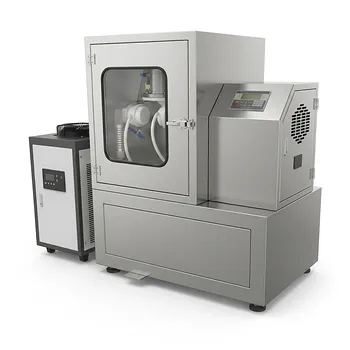
Vibratory Ultra-Low Temperature Ultrafine Grinder for Cryogenic Powder Processing
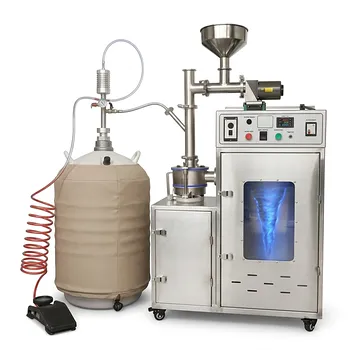
Small Liquid Nitrogen Cryogenic Grinder for Ultrafine Grinding of Heat-Sensitive Materials in Laboratories
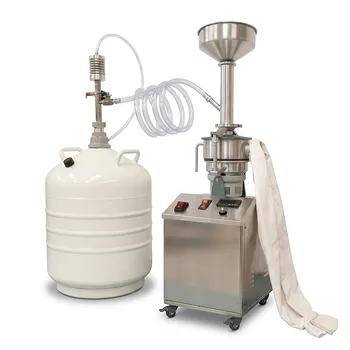
Laboratory Cryogenic Grinder Liquid Nitrogen Low Temperature Ultrafine Grinding
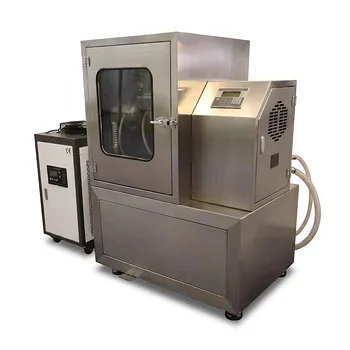
Ultra-Low Temperature Vibratory Mill for Ultrafine Grinding
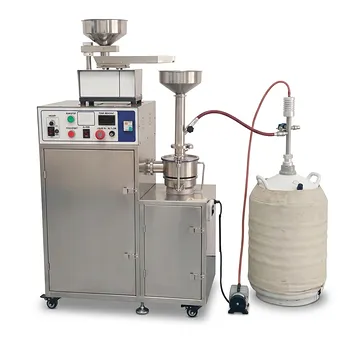
Small Liquid Nitrogen Cryogenic Grinder with Vibratory Feeder for Laboratory Sample Preparation
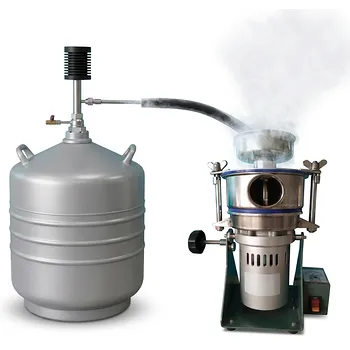
Cryogenic Liquid Nitrogen Grinder for Ultrafine Heat-Sensitive Powder Processing
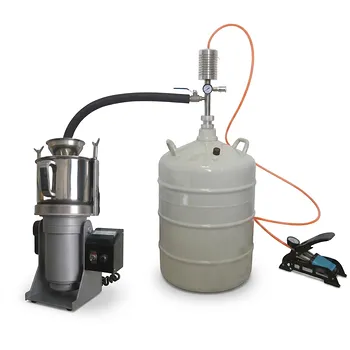
Liquid Nitrogen Cryogenic Grinder for Plastic and Heat-Sensitive Materials
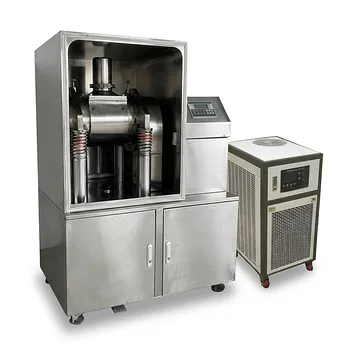
Water Cooled Cryogenic Ultra Fine Cell Wall Breaking Mill
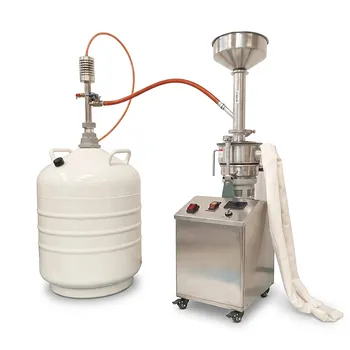
Laboratory Liquid Nitrogen Cryogenic Grinder for Polymer and Elastomer Materials
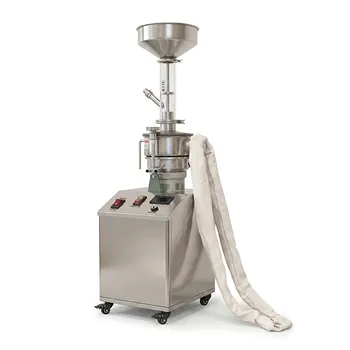
Small Liquid Nitrogen Cryogenic Grinder for Plastic and Heat-Sensitive Material Sample Preparation
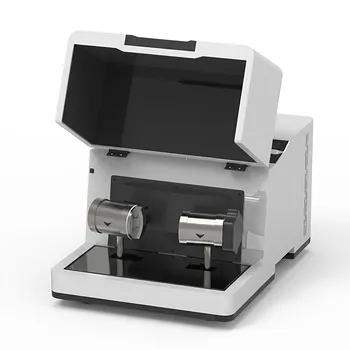
Ultra-Low Temperature Cryogenic High-Energy Vibratory Ball Mill
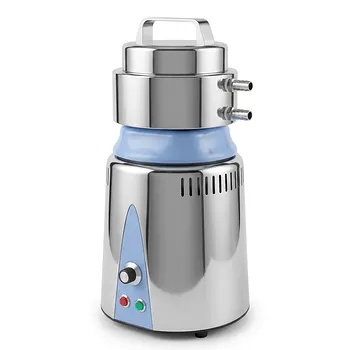
Low Temperature Laboratory Knife Mill Cryogenic Sample Grinder Material Science Powder Processing
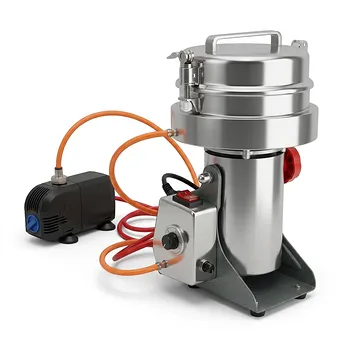
Water Cooled High Speed Grinder with Cryogenic Option for Laboratory Sample Preparation
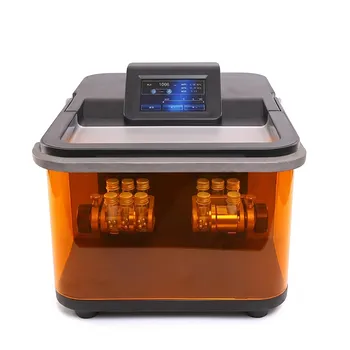
High Throughput Micro Ball Mill for Cryogenic Grinding and Laboratory Cell Disruption
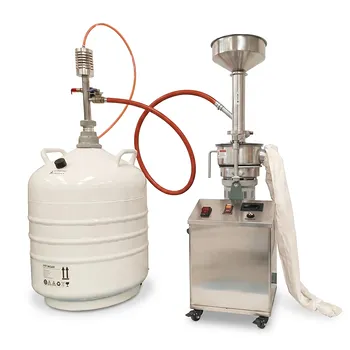
Laboratory Liquid Nitrogen Cryogenic Grinder Polymer Sample Preparation Pulverizer
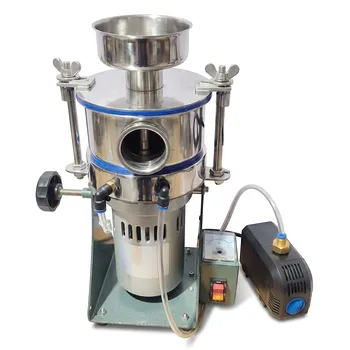
Water Cooled Airflow Ultra Fine Grinder for Low Temperature Material Processing
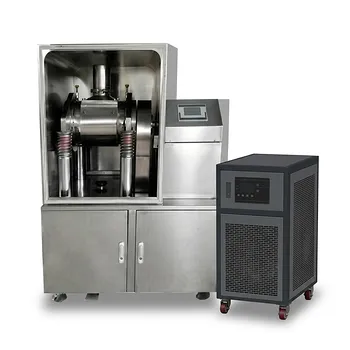
Ultra-low Temperature Vibratory Mill Ultrafine Grinder
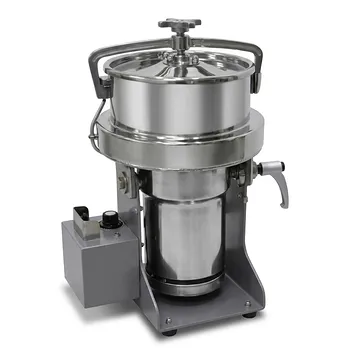
500g Capacity Water Cooled Low Temperature Grinder with Variable Speed and Safety Cover
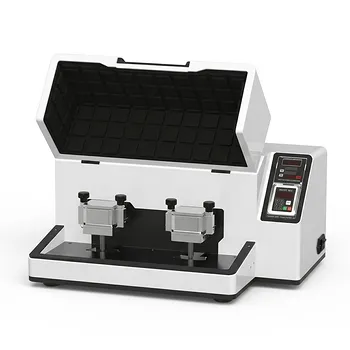
Nanoscale High Energy Vibratory Ball Mill Low Temperature