The Collision That Cracks a Crystal: Processing Ti2SnC with Stainless Steel and the Pursuit of Controlled Chaos
Jun 09, 2026
A Grain of Powder, a World of Intent
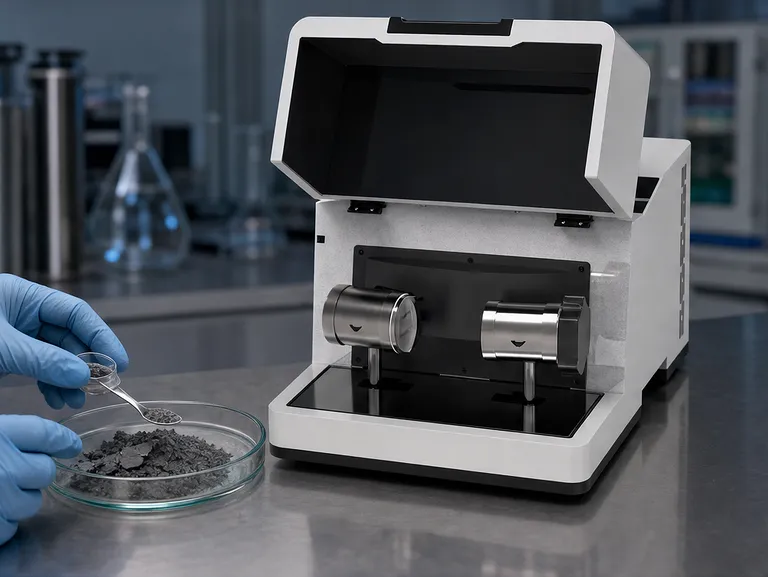
In a laboratory somewhere, a researcher loads a stainless steel jar with Ti2SnC powder and grinding balls.
It is a deliberate act. She is not just mixing ingredients. She is orchestrating collisions. Each impact carries a message: break this bond, not that one. Her goal is singular—to coax tin atoms out of a MAX phase lattice without irreversibly contaminating the whole system.
It sounds like an engineer’s paradox. Controlled chaos.
But that is exactly what high-energy ball milling demands when you process Ti2SnC. The process is not brute force. It is a conversation with physics, a negotiation with wear, and a bet on reproducibility.
Why Stainless Steel Speaks Loudest
MAX phases like Ti2SnC resist casual disruption. Their layered structure requires a threshold energy—a minimum impact force—to initiate phase decomposition.
Stainless steel enters the story not because it is exotic, but because it is dense and hard. Mass matters here. A jar and balls made of lightweight polymer would whisper. You need a shout.
The Logic of Impact
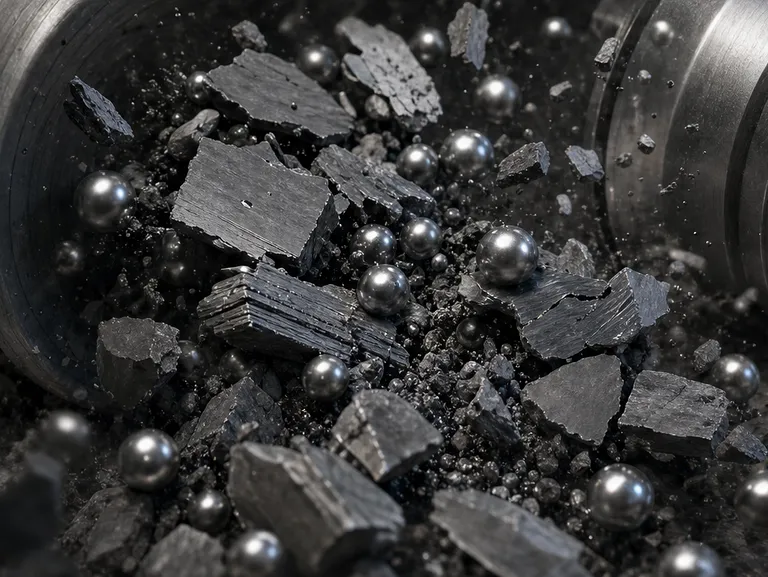
When a 20mm stainless steel ball smashes into powder at 500 rpm:
- Kinetic energy converts into crystal defects.
- Localized stress fields tear at the atomic ordering.
- Dislocations accumulate until the structure can no longer hold its form.
This is not grinding. This is mechanochemistry.
The tin (Sn) precipitation you chase happens only when impact density crosses a material-specific line. Below that line, the powder stays stubbornly inert.
The Psychology of a 10:1 Ratio
Why does almost every protocol for Ti2SnC insist on a 10:1 ball-to-powder mass ratio?
Because dead zones terrify a process engineer.
A low ratio creates statistical voids—regions of powder that never feel a direct hit. Those regions become bystanders. Unprocessed. Unchanged.
Certainty Through Excess
The 10:1 ratio is a psychological hedge. It says: Even if probability betrays me, I have enough balls to strike every grain at least once.
- High collision frequency ensures no powder rests for long.
- Uniform energy distribution transforms the entire volume.
- Reproducibility emerges from statistical saturation.
It is generous. It is waste in the name of certainty. And for Ti2SnC, it is necessary.
The Mixed-Ball Bet
A single ball size creates a single energy signature. But your powder particles are not uniform. They are a distribution of sizes, each with a different fracture toughness.
The solution: mixed grinding ball diameters.
The Division of Labor
- 20mm balls deliver the heavy impulse. They break the initial agglomerates and initiate major crack propagation.
- 15mm balls fill the interstitial spaces. They increase collision frequency and refine the debris.
- Often, even 10mm balls join the team, turning the jar into a gradient of forces.
This tiered approach feels improvised, but it is deeply intentional. It acknowledges that fracturing and refining are different jobs. One cannot replace the other.
The Stainless Steel Trade-Off You Can’t Ignore
Now comes the uncomfortable truth.
Stainless steel wears.
Iron Contamination as a Feature?
In intensive Ti2SnC milling, iron levels can reach ~1.49 at.%.
That number sounds small. In many metallurgical contexts, it is negligible. But in your final sintered microstructure, it might nucleate an unwanted phase. It might shift conductivity. It might compromise corrosion resistance.
The psychologist in you must weigh:
- High energy transfer from steel
- Versus chemical inertness from zirconia or tungsten carbide
Steel is bold. Ceramic is pure.
You cannot have both. You choose based on what scares you less.
Thermal Ghosts in the Jar
The collisions that decompose Ti2SnC also generate heat.
A jar running at 800 rpm for 10 hours is not a cold system. It is a thermal reactor.
The Unspoken Variable
Without cooling intervals, that heat introduces uncontrolled kinetics. It can:
- Accelerate unwanted oxidation.
- Soften the powder, changing fracture modes.
- Shift the energetic landscape in unpredictable ways.
Some researchers pause the mill every 30 minutes. Others wrap the jar in cooling jackets. Still others flow inert gas.
The point: thermal management is not auxiliary. It is part of the energy equation.
The Romanticism of a Perfect Cycle
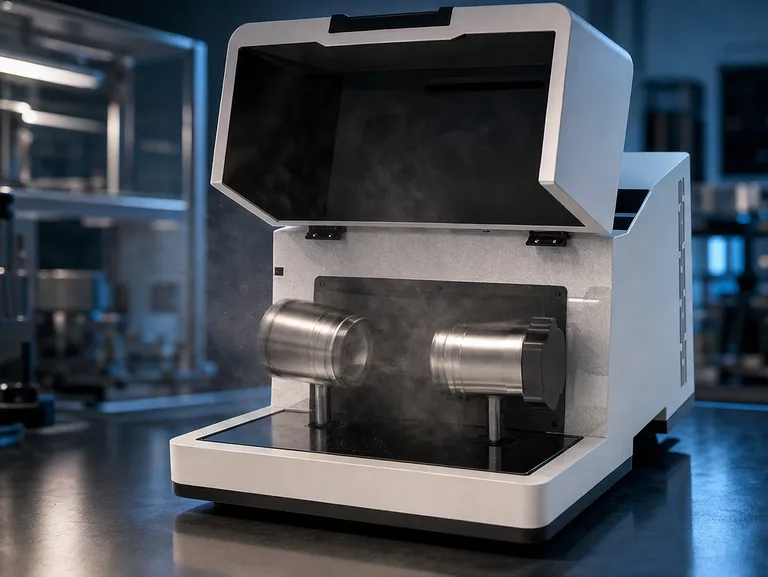
Why do we mill at 500 rpm for 30 hours and call it “processing”?
Because time is the missing dimension.
The Long Arc of Energy Accumulation
Crystal defects do not appear instantly. They accumulate.
- Early hours: particle size reduction dominates.
- Middle hours: defect density rises exponentially.
- Final hours: tin atoms diffuse, nucleate, and precipitate.
Cut the cycle short, and you have a halfway state—structurally ground, chemically dormant. The art is in waiting long enough for phase transformation to finish, but not so long that contamination metastasizes.
Where the Right Equipment Becomes Your Ally
All these decisions—ball ratio, speed, jar material, duration—collapse into one requirement: precise, replicable hardware.
A planetary ball mill must deliver consistent rpm, not a drifting estimate. The jar must seal against atmosphere but release pressure safely. The grinding balls must be round within micron tolerances, not approximations.
This is where integrated powder processing solutions earn their keep. When your mill is designed alongside your sieve shaker, your cold isostatic press, and your vacuum hot press, the workflow becomes a continuum.
- Planetary ball mills that hold the 10:1 ratio without eccentric vibration.
- Sieving systems that classify refined powder before pressing.
- Cold/Warm Isostatic Presses (CIP/WIP) that compact the milled powder into a green body with uniform density.
- Vacuum hot presses that sinter the compact into a final, coherent solid—without introducing new contaminants.
No single machine solves Ti2SnC processing. The solution is a chain of trust across equipment that understands what the material demands.
Your Process Is Not Generic
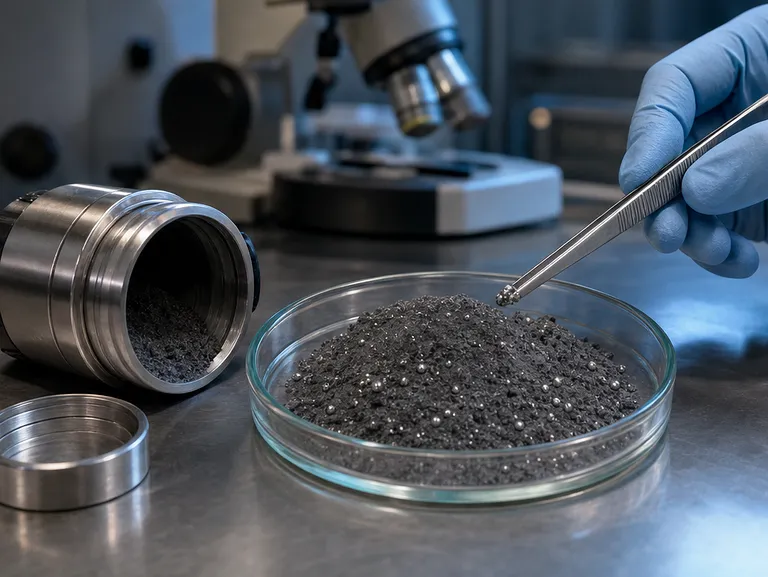
The parameters in this article work. But they are starting lines, not finish lines.
Your Ti2SnC might have a slightly different stoichiometry. Your lab might sit at altitude, where air density affects cooling. Your target application might tolerate 1.5 at.% iron, or it might reject it entirely.
This is the beauty of material science. Every powder is a psychological test of your willingness to tweak, observe, and adapt.
So load the jar. Set the speed. Start the collision clock. And when you need hardware that matches the rigor of your research, make the choice that keeps your variables under control.
Quick Links
Suggested Products
Ultra-Low Temperature Cryogenic High-Energy Vibratory Ball Mill Dual Station Planetary Ball Mill 24L Vertical Square Planetary Ball Mill for Laboratory Sample Preparation and Nanoscale Grinding Multi-Platform Nanoscale High-Energy Vibratory Ball Mill Laboratory Nano High Energy Ball Mill Ultrafine Grinding Mechanical AlloyingFurther Reading
The Silence Inside the Jar: What a Ball Mill Really Does for Doped Bismuth Ferrite The Heavy Truth About Light Powder: Why Tungsten Carbide Wins the Titanium Game The Brittle Truth: Why Your Catalyst's Potential Is Trapped in the Ribbon, and the One Violent Step to Set It Free Frozen Defects, Unbreakable Metal: The Cryogenic Secret to Nanostructured Titanium Powder
PowderPreparation
Last updated on May 15, 2026
Related Products
Ultra-Low Temperature Cryogenic High-Energy Vibratory Ball Mill
Dual Station Planetary Ball Mill 24L
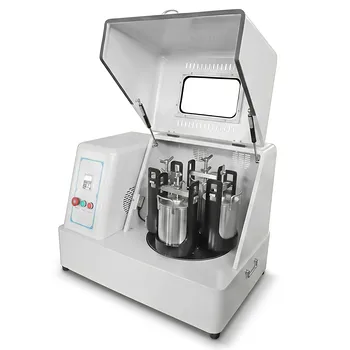
Vertical Square Planetary Ball Mill for Laboratory Sample Preparation and Nanoscale Grinding
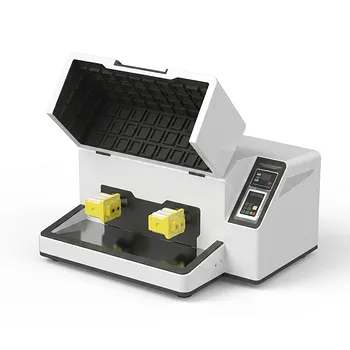
Multi-Platform Nanoscale High-Energy Vibratory Ball Mill
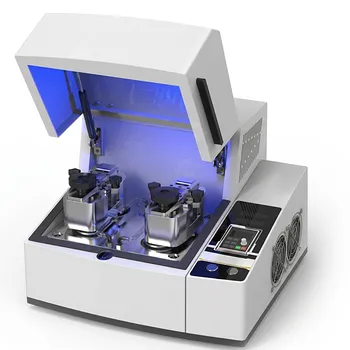
Laboratory Nano High Energy Ball Mill Ultrafine Grinding Mechanical Alloying
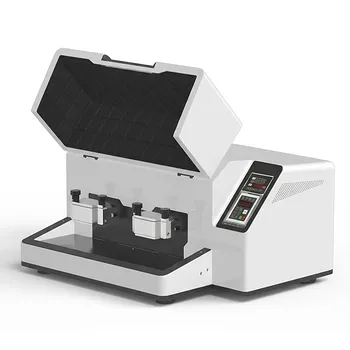
Nanoscale High-Energy Vibratory Ball Mill for Laboratory Sample Preparation, Mechanochemistry, and Mechanical Alloying
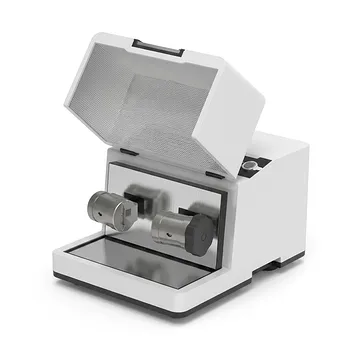
Heating Temperature Controlled High Energy Vibratory Ball Mill
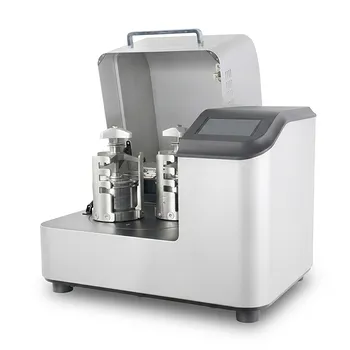
High Energy Planetary Ball Mill for Nano Scale Grinding and Mechanical Alloying
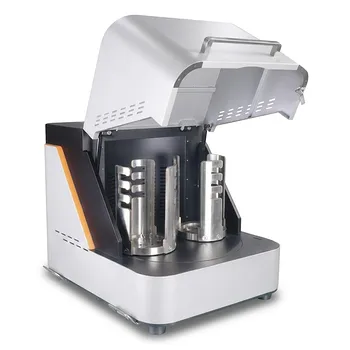
High Energy Laboratory Planetary Ball Mill for Nano Grinding and Colloidal Mixing of Hard and Brittle Materials
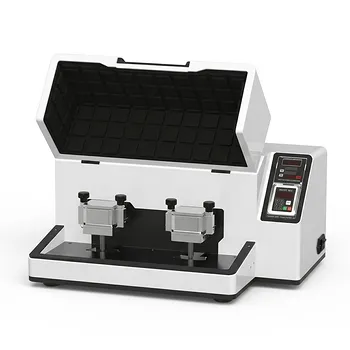
Nanoscale High Energy Vibratory Ball Mill Low Temperature
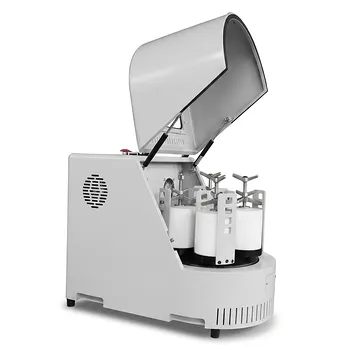
Vertical Semi Circular Planetary Ball Mill for Laboratory Precision Grinding
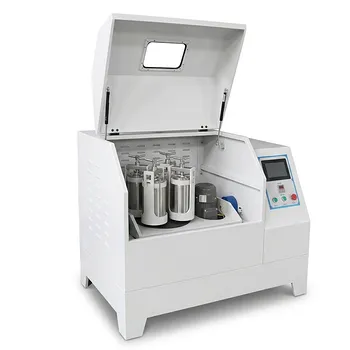
360° Rotating Omnidirectional Laboratory Planetary Ball Mill for Homogeneous Ultra-Fine Grinding and Mixing
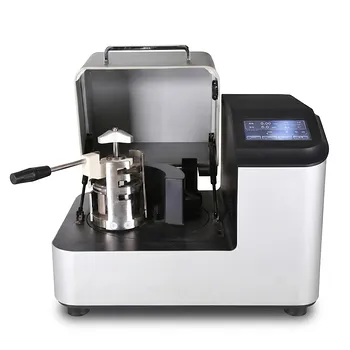
High Energy Laboratory Planetary Ball Mill for Nano Grinding and Material Science Sample Preparation
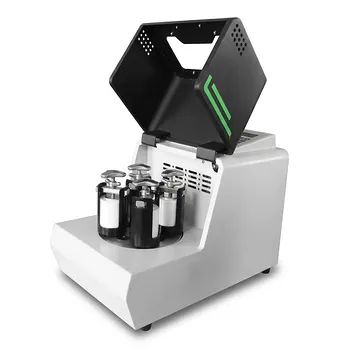
Miniature Planetary Ball Mill with Vacuum Grinding and High Efficiency for Laboratory Sample Preparation
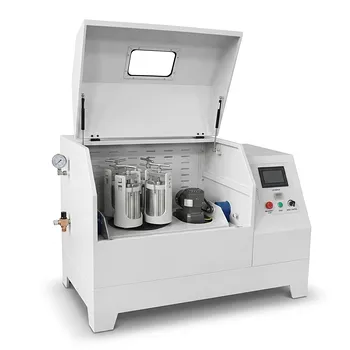
Vertical Production Planetary Ball Mill for High Throughput Powder Processing
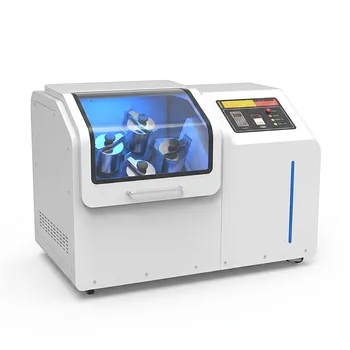
High Energy Omnidirectional Planetary Ball Mill 16L
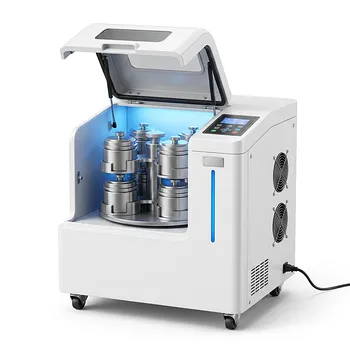
High Energy Omnidirectional Planetary Ball Mill 20L
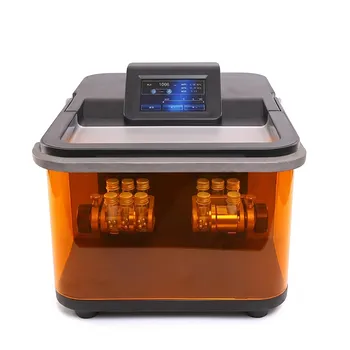
High Throughput Micro Ball Mill for Cryogenic Grinding and Laboratory Cell Disruption
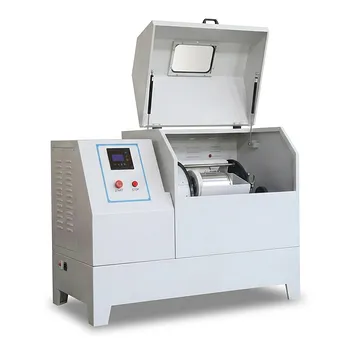
Heavy Duty Horizontal Planetary Ball Mill for Efficient Industrial Grinding and Sample Preparation