The Heavy Truth About Light Powder: Why Tungsten Carbide Wins the Titanium Game
Jul 16, 2026
The Friday Evening Bet
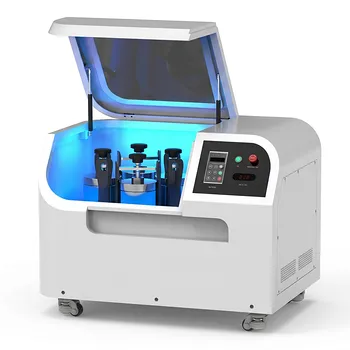
The planetary ball mill on bench three had been running for eighteen hours. The titanium powder inside was stubbornly stuck at 40 microns when the target was single-digit. The researcher staring at the laser diffraction readout wasn’t dealing with a bad protocol or a faulty machine. He was battling physics itself. He was using stainless steel. He needed something heavier. He needed to stop thinking about grinding and start thinking about kinetic honesty.
This is not a story about materials. It’s a story about the cognitive trap that convinces even experienced engineers that “harder” is always “faster.” In high-energy milling, density runs the show. And nothing in a lab tells the truth about density like a tungsten carbide ball.
Kinetic Energy Is a Mass Conversation
Why Speed Alone Can’t Save You
Most operators obsessed over RPM. They crank the speed higher, hoping to bully the powder into submission. But kinetic energy scales linearly with mass and with the square of velocity. When you double the speed, you quadruple the energy. When you double the mass, you also double that energy—without introducing the vibration, motor strain, and thermal chaos that excessive RPM brings.
Tungsten carbide sits at roughly 15 g/cm³. Stainless steel is about 7.8 g/cm³. At the same rotation, a WC ball hits the powder with nearly twice the force. That is not an incremental upgrade. That is a phase change in how the milling process interacts with the material.
The Grain Boundary Needs a Sledgehammer, Not a Hammer
Titanium particles don’t simply crack; their internal grain boundaries must be dismantled from the inside out. Stainless steel transmits energy that often gets absorbed just at the surface. Tungsten carbide’s mass delivers a deeper mechanical shock wave.
This means that grain refinement isn’t just accelerated—it changes character. The metal stops behaving like a piece that is being chipped away and starts behaving like a structure that is being systematically demobilized from within.
The Morphology That Mass Builds
Thin Discs, Not Round Stones
There’s a quiet aesthetic in powder technology that engineers rarely talk about. Particles have a shape language. When you mill titanium with stainless steel, you tend to get blocky, angular fragments—functional, but limited. Tungsten carbide, with its high-density impacts, produces thinner, more disc-like geometries.
Why does this matter? Because disc-shaped particles flow differently, pack differently, and sinter differently. In additive manufacturing, that subtle shift in aspect ratio can determine whether a powder bed spreads like silk or like wet sand.
The Activation Bonus
Mechanical activation isn’t just about making things smaller. It’s about storing frustration in the crystal lattice. Dislocations pile up. Surface energy spikes. The powder becomes more chemically eager. That eagerness is a precious resource in sintering and reactive processing. And it is delivered most efficiently by media that doesn’t bounce off the particle, but drives into it.
The Psychology of “Good Enough” Media
Why Smart Labs Default to Stainless Steel
Stainless steel is familiar. It’s cheaper. It doesn’t force you to have a difficult conversation with your procurement department. The human bias toward known variables is strong. If a process works—even slowly—many teams will resist the idea of introducing a premium, intimidating material like tungsten carbide.
But this is an odd place to be frugal. Time is the one resource a lab can’t order more of. The cost of the balls is real and upfront. The cost of stalled research, missed publication deadlines, and batches that never hit specification is abstract and devastating.
The Trace Tungsten Phantom
Then comes the purity argument. “What about contamination?” It’s a legitimate question and a convenient excuse to avoid change. Tungsten carbide does wear, infinitesimally, over hundreds of hours. Yes, you might find traces of tungsten. But stainless steel also wears, and it introduces iron, chromium, and nickel—often in far greater quantities because the media itself is softer.
In many cases, the switch to WC actually reduces total foreign metal content because the media wears less. The contamination fear is real but often asymmetrical: we obsess over exotic elements while ignoring the baseline pollution we’ve already accepted.
When Your Mill Starts Pushing Back
Equipment Stress Is a Feature, Not Just a Bug
There’s an engineering romance in a motor that strains honestly. When you load a planetary ball mill with tungsten carbide, you hear a deeper hum. The machine is communicating. The drive system, bearings, and jar holders suddenly have a job to do.
If the mill isn’t rated for high-density media, that hum becomes a death rattle. Operators must check maximum load specifications. The reward for this diligence is a process that does in two hours what used to take two days. But the machine must be up to the conversation.
Matching Media to Mission
No single truth works for all powders. If you are doing bulk blending of a forgiving material, stainless steel is a rational choice. If you need to refine titanium to the nano-range, activate an advanced alloy, or prepare a precursor for hot pressing, then tungsten carbide isn’t a luxury. It is the only way to reach the required energy threshold without burning out your motor or your patience.
The Full System: Crush, Mill, Sieve, Press
Refinement doesn’t stop at the mill. A titanium particle born in a high-energy impact still needs to be classified, mixed, and consolidated. This is where a complete laboratory sample preparation ecosystem earns its keep.
Before the Mill: Jaw Crushers and Cryogenic Prep
Large titanium feedstock often starts as chunks or turnings. A high-performance jaw crusher reduces those to a manageable granulate. For materials that are ductile or thermally sensitive, a liquid nitrogen cryogenic grinder embrittles the metal, making it shatter rather than smear.
The Heart: Planetary Ball Mills Rated for Reality
The planetary ball mills in a professional material science lab must accept the weight and density of tungsten carbide without compromise. They need robust motor control, stable jar clamping, and the ability to run continuously without drifting out of parameter. This is not a place for underpowered machines.
For applications requiring the narrowest particle size distributions, jet mills offer a fluidized-bed approach that avoids media altogether, or sand/bead mills provide intense attrition in a liquid suspension.
After the Mill: Classification and Mixing
Refined titanium powder rarely sits still. It passes into vibratory sieve shakers or air-jet sieving systems equipped with precision test sieves to confirm particle size. Powder mixers and defoaming mixers then create homogeneous blends that prevent segregation when the powder is later compacted.
The Endgame: Compaction and Densification
The ultimate expression of a well-refined powder is its behavior under pressure. Cold Isostatic Presses (CIP) and Warm Isostatic Presses (WIP) apply uniform force from all directions, creating green compacts with unequaled density uniformity. For advanced ceramics or specialty alloys, vacuum hot presses combine heat and force in one cycle, removing volatiles and achieving near-theoretical densities.
Standard lab presses and XRF pellet presses bring the same philosophy to smaller samples, ensuring that the analytical results you generate are representative of the material, not an artifact of poor preparation.
A Choice Framed in Four Dimensions
When the milling cycle ends and the powder excites the particle size analyzer, you’ll know if you made the right call. Here’s how to think about the decision before you start:
- If speed of refinement is non-negotiable: Use tungsten carbide. Accept the media cost as an investment in accelerator physics.
- If your material requires mechanical activation: Density is mandatory. No substitute exists.
- If ultimate purity from a specific element is critical: Audit both tungsten and iron contamination from parallel trials, not assumptions.
- If your mill is not rated for heavy media: Upgrade the equipment or redesign the protocol. Don’t force a machine to lie about its capabilities.
The powder doesn’t care about budget narratives or lab politics. It responds to one thing: the energy that actually arrives at the point of impact.
We manufacture the full chain—from crushers and cryogenic grinders to high-energy mills, sieve shakers, mixers, and a comprehensive line of hydraulic presses including Cold/Warm Isostatic Presses and vacuum hot presses—so that your titanium, and every powder after it, gets the honest energy it demands.
Quick Links
Suggested Products
Heating Temperature Controlled High Energy Vibratory Ball Mill Vertical Production Planetary Ball Mill for High Throughput Powder Processing High Energy Omnidirectional Planetary Ball Mill 16L Multi-Platform Nanoscale High-Energy Vibratory Ball Mill High Energy Planetary Ball Mill for Nano Scale Grinding and Mechanical AlloyingFurther Reading
The Silence Inside the Jar: What a Ball Mill Really Does for Doped Bismuth Ferrite The Surfactant That Teaches Powder Not to Stick: Stearic Acid and the Psychology of Cryogenic Milling The Sledgehammer Before the Scalpel: Why Pre-Pulverization Decides the Fate of Your Advanced Ceramic The Tyranny of Tiny Impurities: How 10 mm Zirconia Balls Save Rare-Earth Doped Bismuth Ferrite The Brittle Truth: Why Your Catalyst's Potential Is Trapped in the Ribbon, and the One Violent Step to Set It Free
PowderPreparation
Last updated on May 14, 2026
Related Products
Heating Temperature Controlled High Energy Vibratory Ball Mill
Vertical Production Planetary Ball Mill for High Throughput Powder Processing
High Energy Omnidirectional Planetary Ball Mill 16L
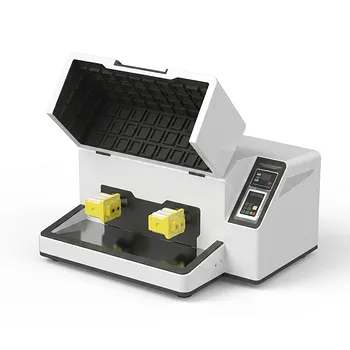
Multi-Platform Nanoscale High-Energy Vibratory Ball Mill
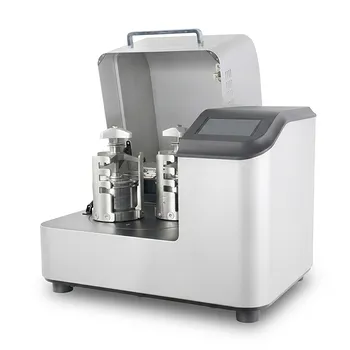
High Energy Planetary Ball Mill for Nano Scale Grinding and Mechanical Alloying
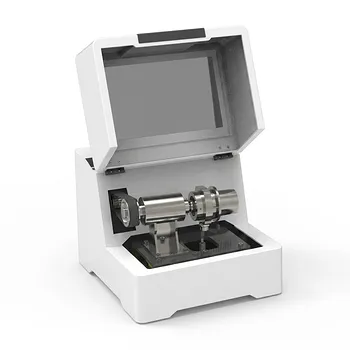
Single Tank High Energy Vibratory Ball Mill for Laboratory Grinding and Mixing
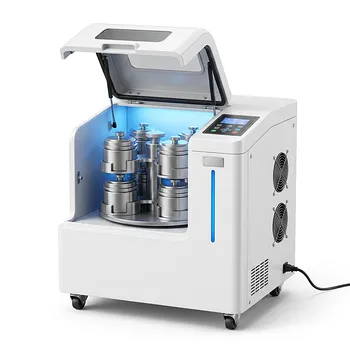
High Energy Omnidirectional Planetary Ball Mill 20L
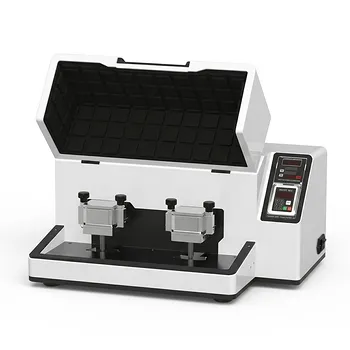
Nanoscale High Energy Vibratory Ball Mill Low Temperature
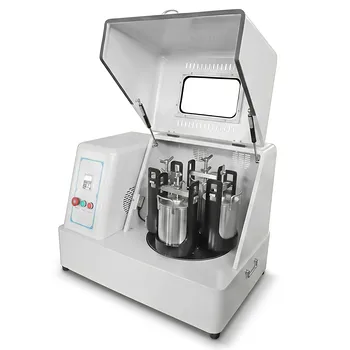
Vertical Square Planetary Ball Mill for Laboratory Sample Preparation and Nanoscale Grinding

Nano High Energy Vibratory Ball Mill for Laboratory Sample Preparation
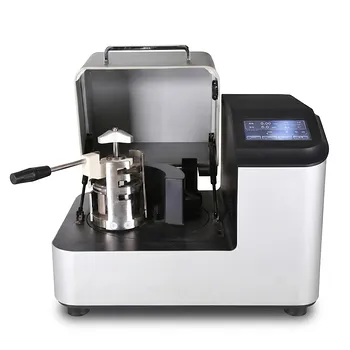
High Energy Laboratory Planetary Ball Mill for Nano Grinding and Material Science Sample Preparation
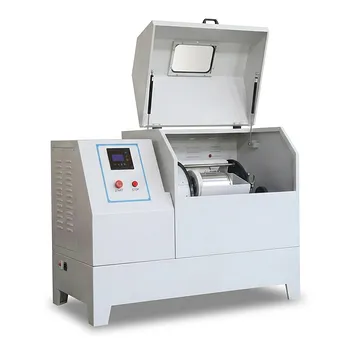
Heavy Duty Horizontal Planetary Ball Mill for Efficient Industrial Grinding and Sample Preparation
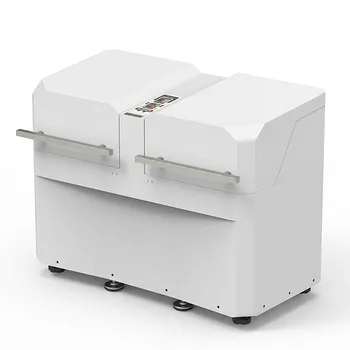
Dual Station Planetary Ball Mill 24L
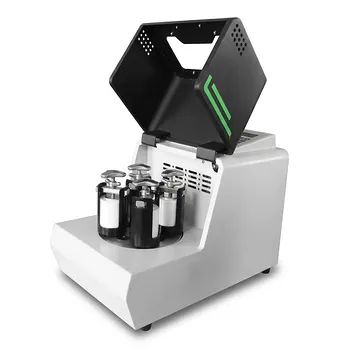
Miniature Planetary Ball Mill with Vacuum Grinding and High Efficiency for Laboratory Sample Preparation
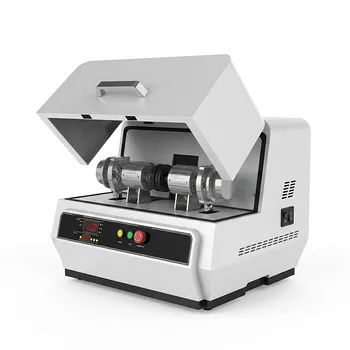
Dual Jar High Energy Vibratory Ball Mill
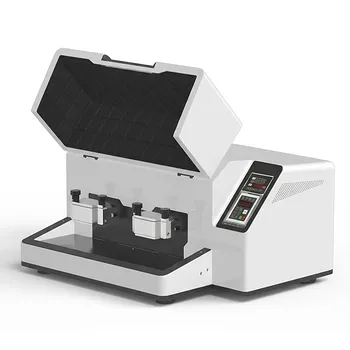
Nanoscale High-Energy Vibratory Ball Mill for Laboratory Sample Preparation, Mechanochemistry, and Mechanical Alloying
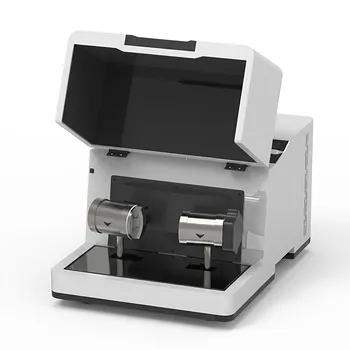
Ultra-Low Temperature Cryogenic High-Energy Vibratory Ball Mill

Nano High Energy Vibratory Ball Mill with Heating and Temperature Control
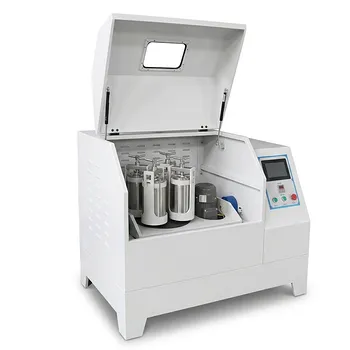
360° Rotating Omnidirectional Laboratory Planetary Ball Mill for Homogeneous Ultra-Fine Grinding and Mixing