The Particle-Size Lever: Why the Most Overlooked Step in Catalyst Design Determines Everything Else
Jul 25, 2026
The Forgotten First Ingredient
Every catalyst begins with a powder. But not just any powder—a powder with a memory. The way you pour it, pack it, grind it, and especially how you classify it shapes the final material far more than most researchers admit.
Walk through any catalysis lab and you will see sophisticated reactors, high-resolution microscopes, and perhaps a row of gleaming ball mills. What you rarely notice—tucked on a side bench—is the vibratory sieve shaker. It hums quietly, sometimes ignored, but it often makes the difference between a catalytic run that sings and one that stumbles.
Natural zeolite, a porous aluminosilicate mineral, is a workhorse carrier for industrial catalysts. It comes from the earth ragged and unruly—wide particle size distributions, mineral impurities, and unpredictable pore accessibility. Turning that geological inheritance into a reliable, high-performance carrier is not just chemistry. It is a problem of physical architecture, and particle size classification is the foundation.
When you feed raw zeolite directly into an impregnation bath or a planetary ball mill without sieving, you are not just being careless. You are embedding noise into your data. And noise, in catalysis, hides the signal that leads to breakthroughs.
The Uniformity Imperative: Why a 50-Micron Difference Matters
Imagine trying to paint a wall with a brush that randomly changes width every stroke. That is what it feels like when you load a metal precursor onto an unclassified carrier powder. Some particles soak up too much; others almost nothing. The resulting catalyst bed is a mosaic of activity, not a symphony.
Even Metal Loading, Even Meaning
The vibratory sieve shaker, with its multi-deck stack of standard test sieves, creates a narrow particle size fraction—often targeting below 850 microns for raw zeolite. Every grain now has a similar surface-to-volume ratio. When the nickel, platinum, or copper solution wets this classified powder, capillary forces distribute the active metal uniformly.
Researchers are not just controlling chemistry here. They are controlling luck. Unclassified particles make metal dispersion a statistical gamble; classified particles make it a predictable outcome. This predictability is the kind of thing that separates projects that publish from projects that stall.
Removing “Ghost” Particles
Natural zeolite isn’t pure. It carries fines that coat larger particles like atmospheric dust on a mirror. It carries oversized aggregates that act as inert boulders. Both interfere with downstream processing. Fines clog mill jars, create false surface area readings, and wash away unbound. Oversized particles shield active sites and create local dead zones in reactors.
A vibratory sieve shaker simply removes them. Not chemically. Not thermally. Just mechanically—by letting the right sizes pass through a 100-mesh sieve or a precise 36-mesh screen, while holding back the disruptive ones. This is not magic. It is a material’s right of passage to become a standardized carrier.
Why Grinding Needs a Gatekeeper
Cryogenic grinding, jet milling, planetary ball milling—these are the heavy lifters of particle size reduction. But they are not omniscient. They take what you give them and make it smaller. If the feed varies from batch to batch, the energy input per particle varies too, and the product emerges with a moving target of a size distribution.
The 100-Mesh Sanity Check
Scientists who work with high-energy mills learn a quiet truth: mills do not love being fed irregular aggregates. When you pre-screen a zeolite powder through a 100-mesh sieve (approximately 150 microns), you remove the “troublemakers” that demand extra grinding time and generate excess heat. The result: reduced wear on mill components, shorter processing cycles, and narrower output distributions.
This is not just about saving time. It is about experimental hygiene. If every milling batch starts from the same sieve fraction, the grinding trajectory becomes reproducible. You can map specific energy to particle size without apologizing for outliers. The mill becomes a scientific instrument, not just a brute-force tool.
Pores You Can Plan, Not Just Hope For
Catalyst design often requires burnable pore-forming agents—wood powder, starch, carbonates—that decompose during calcination to leave behind secondary porosity. The size of those leaving particles dictates the size of the pores. Miss that, and you lose control of the very transport channels that define catalytic activity.
Sieving the Pore Template
A vibratory sieve shaker precisely grades these organic additives into defined ranges, say 150 to 500 microns. When you mix a 300-micron wood powder into a classified zeolite matrix and then calcine it, you know exactly what pore neck you are engineering. The BET surface area becomes tunable. Mercury intrusion porosimetry curves become predictable.
Without sieving, pore-forming agents behave like random seeds. With sieving, they act like an architect’s plan. The shaker, in this role, is not just a preparative tool—it becomes a design instrument for internal porosity.
The Psychology of Sieving: Why We Resist the Humble Step
There is a simple, uncomfortable reason vibratory sieve shakers get overlooked: they feel too easy. Researchers gravitate toward complex solutions—sophisticated calcination ramps, exotic metal precursors, in-situ spectroscopy. Sieving seems almost archaic. That psychological bias is costly.
The truth is, complex problems often have simple gatekeepers. Sieving is one of them. It imposes order at the beginning of a process, where it cascades into every subsequent step. The researcher who controls particle size at the source rarely needs to compensate later with excessive grinding, repeated impregnation cycles, or statistical excuses.
A Unified Workflow: From Raw Zeolite to Engineered Carrier
When you treat sample preparation not as a series of isolated tools but as an integrated system, the vibratory sieve shaker finds its natural place. It bridges crushing and milling. It feeds isostatic pressing. It delivers the right powder to the right machine at the right time.
Consider a full workflow for a robust catalyst carrier:
- Initial crushing: Jaw crusher or roll crusher reduces large zeolite rocks to coarse granules.
- Primary classification: Vibratory sieve shaker with multi-layer test sieves removes undersized fines and retains the target fraction.
- Cryogenic or planetary milling: Uniform feed ensures efficient size reduction to submicron scales.
- Mixing with pore formers: Sieved additives blended in a powder mixer for homogeneous distribution.
- Compaction: Cold Isostatic Pressing (CIP) or vacuum hot pressing shapes the powder into dense, crack-free green bodies with uniform density—only possible because the powder was graded and mixed to consistent specifications.
- Final sieving (if needed): Air-jet sieve shakers check the final particle size without damaging fragile structures.
Every piece of this chain relies on classification. Without it, even the finest isostatic press cannot fix inhomogeneities locked into the powder bed. With it, the entire line becomes a repeatable, engineerable process.
Acknowledging the Operator’s Trade-Offs
No tool is without nuance. Vibratory sieve shakers demand respect for their limitations.
Particle Attrition: The Silent Bias
Zeolite structures, though robust, are brittle. Prolonged high-amplitude vibration can fracture particles during sieving, generating new fines that fall through the mesh and contaminate the next fraction down. This is sieving-induced attrition, and it skews particle size data if ignored.
The fix is a balance between amplitude and duration. Use the shortest time that achieves mass equilibrium on the sieve. Monitor the process. The shaker is not a set-and-forget machine; it is a partner that responds to the material’s mechanical personality.
Sieve Blinding: When Pores Disappear
Fine particles can lodge in mesh openings, effectively blinding the sieve and preventing further passage. This leads to incomplete separation and a false sense of yield. Regular inspection, ultrasonic cleaning baths, or anti-blinding devices on modern shakers mitigate this. Blindness, literal or metaphorical, is always the enemy of precision.
Practical Routes for the Zeolite Researcher
Let’s translate principles into protocols. Use these decision pathways based on your end goal:
- For maximum metal dispersion consistency: Use a stacked sieve set to isolate a narrow band, e.g., 300–425 microns. This sacrifices some raw yield but guarantees uniform impregnation geometry.
- For pre-milling efficiency: Screen through a 100-mesh sieve. Reject anything oversized, and send the undersize directly to the planetary ball mill. You will measure the difference in kilowatt-hours per kilogram of fine product.
- For kinetic studies: Isolate multiple micro-fractions (e.g., 100–150 μm, 150–212 μm, 212–300 μm) using precision test sieves like 140, 100, and 70 mesh. Test each fraction’s adsorption rate to build a quantitative model linking particle size to mass transfer.
- For pore architecture control: Grade your sacrificial pore-forming agent into a tight window (e.g., 250–355 μm). Mix it with your classified zeolite at known ratios. The resulting pore size distribution will mirror that window with minimal deviation.
These choices are not lab trivia. They are the difference between a catalyst that works in the lab and one that survives scale-up.
The Portfolio That Builds Predictable Materials
We understand this because we build the machines that make it possible. Our laboratory ecosystems are not random collections; they are designed sequences.
Sieving & Classification
High-precision vibratory sieve shakers and air-jet sieve shakers, paired with certified standard test sieves and mesh, form the quality gate for every powder stream. They ensure that only particles of the intended size ever reach your mill or press.
Milling & Grinding
Planetary ball mills, jet mills for ultra-fine dry grinding, sand/bead mills for wet milling, disc and rotor mills—each optimized for specific materials, from fragile zeolites to tough ceramics. Our liquid nitrogen cryogenic grinders preserve temperature-sensitive structures during size reduction.
Compaction & Synthesis
From standard lab presses and XRF pellet presses to advanced Cold/Warm Isostatic Presses (CIP/WIP), hot presses, and vacuum hot presses—we give you the ability to transform classified powders into dense, homogeneous solids with reproducible porosity and mechanical integrity.
Mixing & Defoaming
Powder mixers and defoaming mixers prepare uniform blends of zeolite carriers with binders or pore formers, eliminating agglomerates before they become pressing defects.
The thread that links all of these steps is classification. The vibratory sieve shaker sits at the start, but its influence travels the entire length of the workflow, touching every powder particle that goes into your catalyst, your ceramic, your composite.
Engineered Certainty in an Uncertain World
Catalysis is, at its heart, a study of surfaces and interfaces. But the surfaces you study are only as good as the particles you start with. The most elegant impregnation formula, the most sophisticated reactor, cannot rescue a poorly prepared carrier. They can only amplify its flaws.
The vibratory sieve shaker is a piece of equipment that rewards the careful mind. It produces no dramatic transformations. It simply gives you what you ask for: a pile of powder where every particle belongs. That belonging—that disciplined uniformity—is the quiet foundation of all high-performance materials.
When your zeolite carriers are classified, your research stands on rock, not on dust. And when your full sample preparation line—from crusher to press—works as an integrated system, you stop troubleshooting and start designing.
Quick Links
Suggested Products
Vibratory Sieve Shaker Electromagnetic 3D Motion Powder Particle Size Analyzer for Dry and Wet Sieving Laboratory Dry and Wet Three Dimensional Vibratory Sieve Shaker for Particle Analysis Stainless Steel Laboratory Vibratory Test Sieve Shaker Heavy Duty Dry Three Dimensional Vibratory Sieve Shaker for Particle Separation Dry Three Dimensional Vibratory Sieve ShakerFurther Reading
The Invisible Architecture of Powder: How a Vibratory Sieve Shaker Decides What Your Amaranth Bread Becomes The Hidden Economics of Particle Size: Why the Most Overlooked Variable in Material Science Controls Everything The Hidden Geometry of Your Morning Coffee: What Particle Size Reveals About Control and Chaos The Arithmetic of Interlock: Why Sieve Shakers Are the Storytellers of Pavement Strength The Quarter-Millimeter Margin: Why Vibratory Sieve Precision Determines Artificial Stone Profitability
PowderPreparation
Last updated on May 14, 2026
Related Products
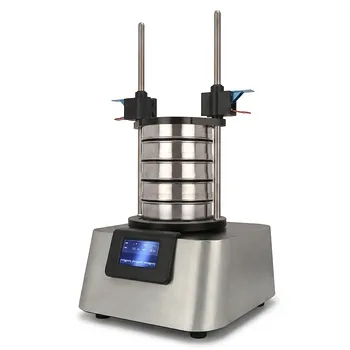
Vibratory Sieve Shaker Electromagnetic 3D Motion Powder Particle Size Analyzer for Dry and Wet Sieving
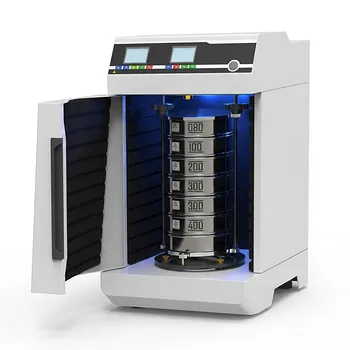
Laboratory Dry and Wet Three Dimensional Vibratory Sieve Shaker for Particle Analysis
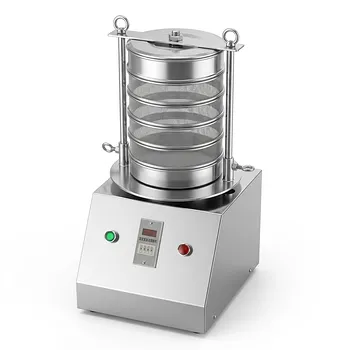
Stainless Steel Laboratory Vibratory Test Sieve Shaker
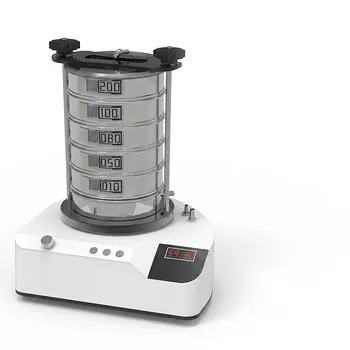
Heavy Duty Dry Three Dimensional Vibratory Sieve Shaker for Particle Separation
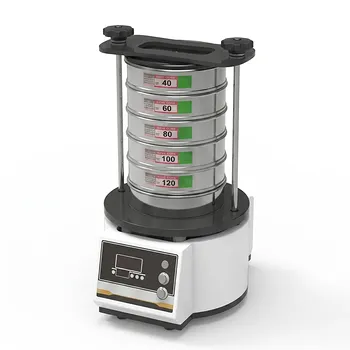
Dry Three Dimensional Vibratory Sieve Shaker
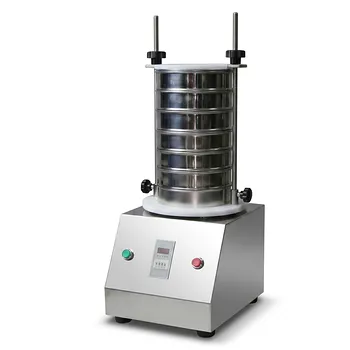
Small Laboratory Vibratory Sieve Shaker for Powder Gradation and Particle Size Analysis
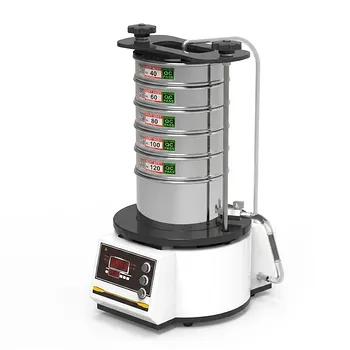
High Frequency Wet Three-Dimensional Vibrating Sieve Shaker for Dry and Wet Particle Size Analysis
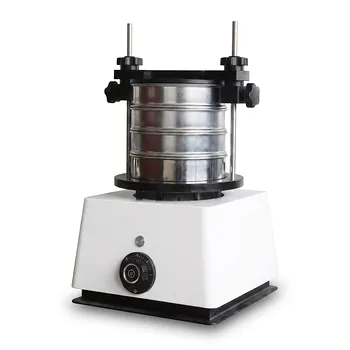
Small Laboratory Vibrating Sieve Shaker for Precise Particle Size Analysis
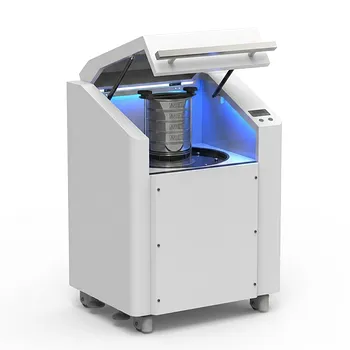
High Frequency Cabinet Type Three-Dimensional Rotary Vibrating Sieve Shaker for Dry Sieving and Particle Classification
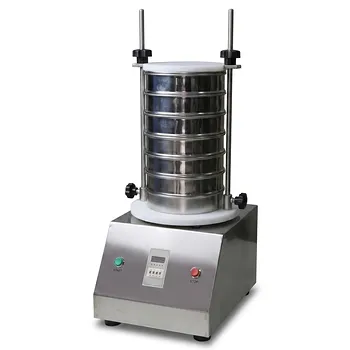
Laboratory Vibratory Test Sieve Shaker for Precision Particle Size Analysis and Powder Grading
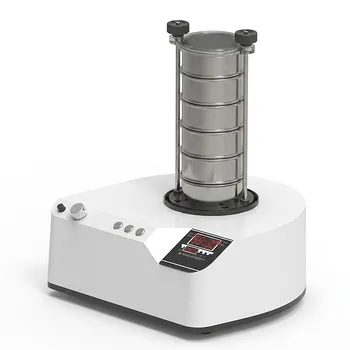
三维电磁微量振动筛分仪
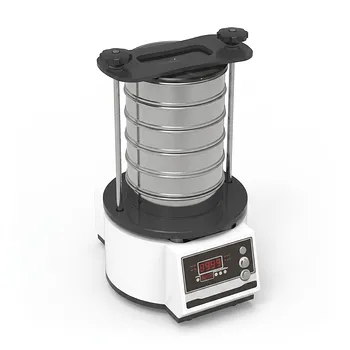
Tapping Oscillating Sieve Shaker for Dry and Wet Particle Size Analysis
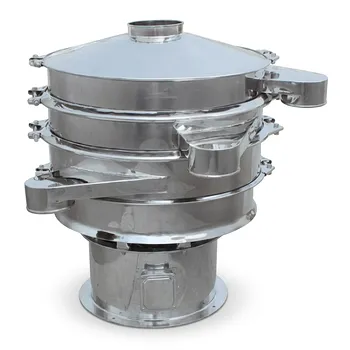
Stainless Steel Rotary Vibrating Sieve High Precision Circular Vibratory Separator Industrial Powder Grading Machine Multi Layer Sifting Equipment
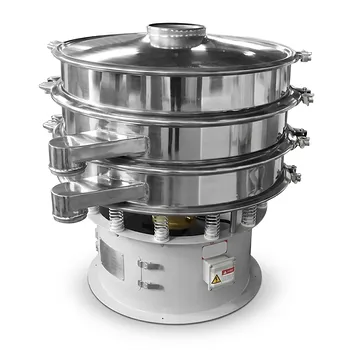
Three Dimensional Rotary Vibrating Sieve
Small Vibrating Ultrafine Grinder for Traditional Chinese Medicine
Automatic Vibrating Powder Feeder for Laboratory Material Processing Precision Vibratory Hopper Feeder for Granular and Powder Material Handling Industrial Grade Vibrating Tray Feeder for Consistent Material Sample Preparation
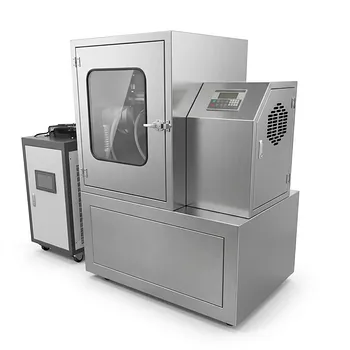
Vibratory Superfine Grinder for Ultra Fine Laboratory Powder Milling
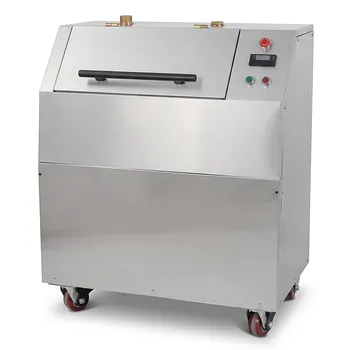
Vibratory Disc Mill for Rapid Fine Grinding and High Throughput Sample Preparation of Hard and Brittle Materials