The Invisible Architecture of Powder: How a Vibratory Sieve Shaker Decides What Your Amaranth Bread Becomes
Jun 11, 2026
The Problem No One Sees Until the Bread Fails
You grind amaranth seeds. You get powder. It looks uniform to the naked eye.
Then the dough behaves strangely. Too stiff. Too slack. The crumb collapses in the oven. The extraction yield disappoints. Someone blames the recipe. Someone blames the oven. Almost no one blames the invisible architecture of the powder itself.
Yet that architecture — the distribution of particle sizes across a spectrum from coarse granules to ultrafine dust — is doing more work than any other variable in the room. It decides how water moves through the dough matrix. It sets the surface area available for protein hydration. It determines whether your formulation fills a die cavity with precision or with dangerous inconsistency.
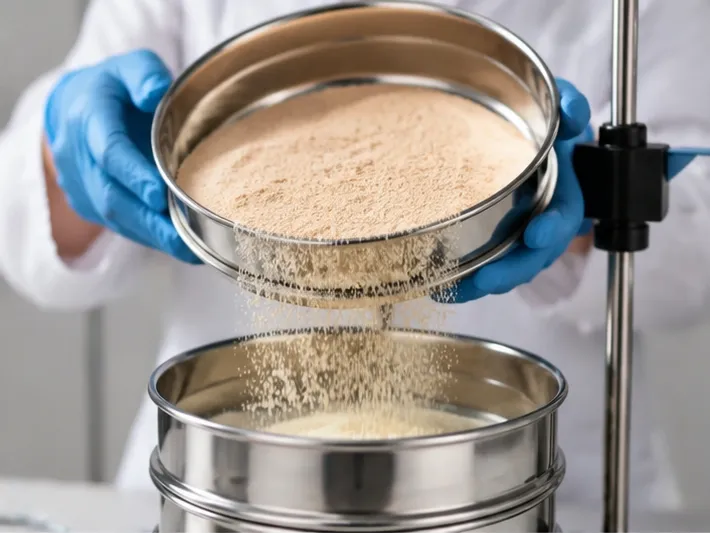
The vibratory sieve shaker is the instrument that reveals this architecture. It does not simply "sift" powder. It fractionates it — separating a chaotic bulk material into distinct, measurable populations that you can study, optimize, and reproduce.
This is the story of how a seemingly simple mechanical device becomes the foundation of ingredient engineering, and why mastering it transforms unpredictable raw materials into reliable functional ingredients.
The Amaranth Paradox: Why This Seed Demands Fractionation
Amaranth is a nutritional marvel — high protein, rich in lysine, naturally gluten-free. It is also a processing nightmare.
The seed's protein bodies are embedded in a starchy perisperm with a lipid-rich germ. When you grind it, you do not produce a single type of particle. You produce a heterogeneous population: protein-rich fragments that behave one way, starch granules that behave another, and fibrous hull residues that behave yet another.
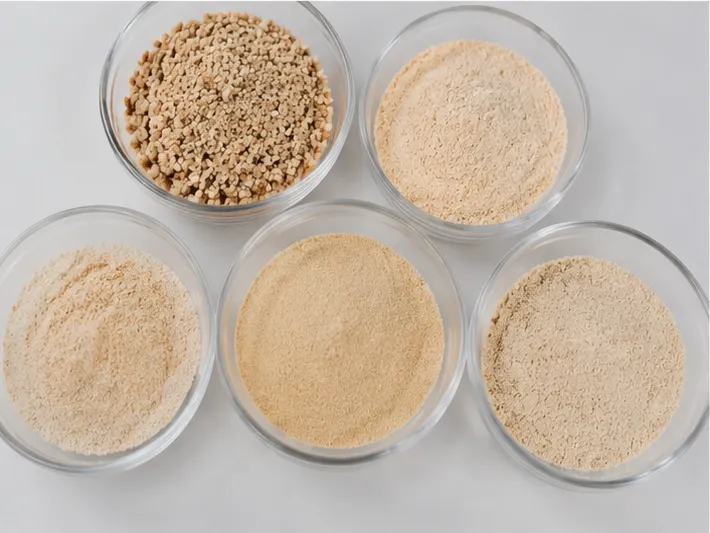
Different particle sizes carry different compositions. The fine fraction (under 180 µm) is often enriched in starch and protein fragments that hydrate rapidly. The coarse fraction (above 300 µm) contains more fibrous material and hydrates slowly, creating hydration gradients within the dough.
If you mix all of these together and call it "amaranth powder," you are baking with an unknown material. Every batch behaves differently because every batch has a different, unmeasured particle size distribution.
The vibratory sieve shaker solves this by creating analytical clarity. It separates the powder into defined fractions. Each fraction can be studied individually. Each fraction can be deployed strategically.
The Mechanics of Separation: What Happens Inside the Stack
A Controlled Earthquake on Your Benchtop
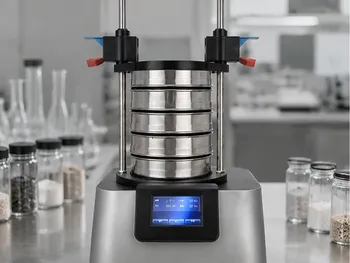
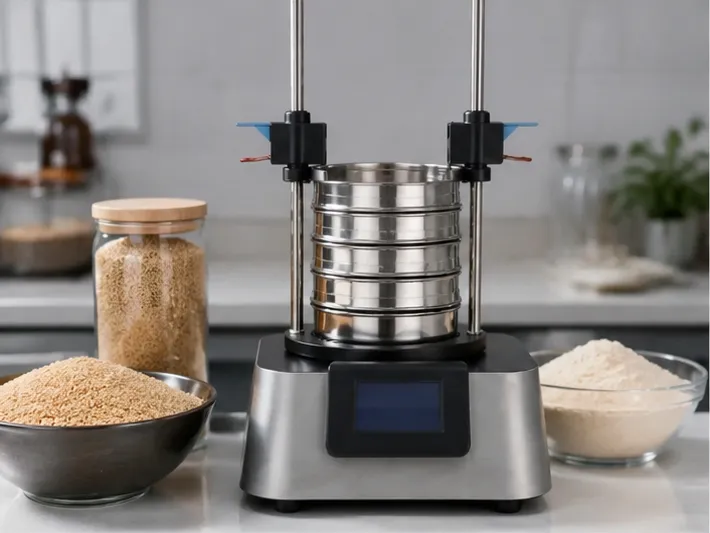
The vibratory sieve shaker generates high-frequency mechanical oscillations — typically 50 to 60 Hz — transmitted through a vertical column of nested test sieves. Each sieve carries a mesh with precisely defined apertures. The stack progresses from coarse to fine, top to bottom.
When vibration begins, particles become temporarily suspended in air. They rotate. They bounce. They migrate across the mesh surface. A particle passes through an aperture only when its minimum cross-sectional width is smaller than the opening — and only when it encounters that opening at the correct orientation.
This is not random chaos. It is a statistically governed process that, given sufficient time, produces remarkably reproducible results.
The Moment of Equilibrium
The process is not complete when the machine stops shaking. It is complete when the mass on each sieve reaches a constant state — a point where additional vibration time no longer changes the distribution.
Achieving this equilibrium typically requires 5 to 10 minutes of continuous operation for amaranth powder. Stopping too early produces data that reflects the sieving process more than the powder itself. Continuing beyond equilibrium risks particle attrition, where fragile fragments break down under sustained mechanical stress.
Experienced operators learn to recognize the subtle signs: the sound of the shaker changes as sieving nears completion, the powder bed on each sieve settles into a stable appearance, and repeated mass measurements converge.
Multi-Stage Classification in One Operation
A typical amaranth fractionation stack might include:
| Sieve Aperture (µm) | Fraction Designation | Typical Application |
|---|---|---|
| 300 | Coarse (>300 µm) | Structural analysis, bran recovery |
| 180 | Medium (180–300 µm) | General-purpose baking |
| 125 | Fine (125–180 µm) | Dough rheology optimization |
| <125 | Ultrafine (<125 µm) | Maximum hydration, extraction |
In a single 10-minute run, you transform one bulk powder into four distinct ingredients. Each tells its own story. Each serves its own purpose.
The Hidden Architecture of Dough: Why Particle Size Governs Rheology
The Hydration Clock
When water meets amaranth powder, a race begins. Fine particles, with their enormous surface-area-to-volume ratio, hydrate almost instantly. Coarse particles hydrate slowly, sometimes remaining as dry cores even after extended mixing.
A dough made entirely from coarse fractions will feel dry and crumbly during mixing, then slowly slacken as delayed hydration releases water into the matrix. A dough made entirely from fine fractions hydrates rapidly and uniformly — but may become sticky or overly cohesive, trapping air bubbles that expand unpredictably during baking.
The ideal dough is often a controlled blend of fractions, where fine particles provide immediate structure and coarse particles create a delayed hydration profile that extends the dough's working window.
Elasticity, Viscosity, and the Bread That Holds Its Shape
Researchers studying amaranth dough rheology have demonstrated consistent findings: the fine fraction (<180 µm) produces doughs with higher elasticity and better gas retention. The coarse fraction contributes to dough extensibility but may compromise the crumb's ability to hold bubbles.
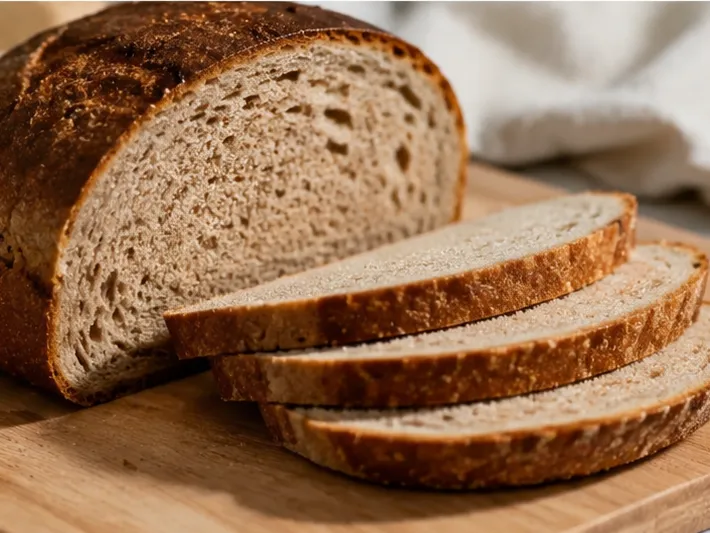
This is not a minor detail. In gluten-free baking, where no protein network exists to trap fermentation gases, particle architecture is the structure. The vibratory sieve shaker, by isolating these fractions, allows the baker to engineer crumb texture from first principles rather than guessing at flour specifications.
The Surface Area Principle: Extraction as a Geometric Problem
Why 250 µm to 1 mm Often Wins
In solvent-based extraction — whether for amaranth oil, bioactive peptides, or natural colorants — the mathematics are straightforward. Extraction rate is proportional to the surface area available for solvent contact. Smaller particles provide more surface area per unit mass.
So why not simply grind everything to submicron powder and maximize extraction?
Because filtration fails. Ultrafine particles pack into filter pores, blinding the system and bringing flow rates to zero. The practical optimum for agitated extraction vessels is often a controlled range between 250 µm and 1 mm — fine enough for efficient mass transfer, coarse enough for manageable filtration.
The vibratory sieve shaker provides the tool to verify and maintain this window. It confirms that your grinding process is producing the target distribution, not drifting toward either extreme.
The Standardization Imperative
Consider two batches of amaranth powder, both labeled "250–1000 µm." One has a narrow distribution peaking at 500 µm. The other has a broad, bimodal distribution with substantial fines below 100 µm and coarse particles above 1200 µm.
These two powders will perform dramatically differently in extraction — different kinetics, different yields, different filtration behavior. Yet without sieve analysis, they appear identical on a specification sheet.
The vibratory sieve shaker transforms vague specifications into quantitative certainty.
Three Trade-offs Every Researcher Faces
1. The Shape Deception
Vibratory sieving classifies particles by width, not length. If amaranth seeds are ground into needle-like or plate-like fragments — common with certain mill types — long, thin particles may pass through fine meshes despite having significant length.
The sieve data says "fine fraction." The rheology says "unexpected behavior." The discrepancy arises because elongated particles align with the mesh apertures during vibration, passing through as if they were smaller than they functionally are.
Mitigation: Pair sieve analysis with microscopy. Know the morphology of your powder before trusting the numbers alone.
2. Sieve Blinding: When Mesh Becomes Wall
Amaranth's lipid content — typically 6–8% — creates a persistent challenge. Fine particles, especially those rich in surface lipids, adhere to sieve mesh wires. The effective open area shrinks. Particles that should pass through are retained. The recorded distribution skews coarser than reality.
This is blinding, and it is the most common source of systematic error in amaranth fractionation. It accelerates as the sieve loads with powder, creating a feedback loop where blinding reduces throughput, which increases residence time, which increases adhesion.
Mitigation: Regular cleaning of mesh surfaces, use of de-blinding aids such as rubber balls or ultrasonic attachments, and limiting sample mass to manufacturer recommendations.
3. Attrition: When Measurement Changes the Material
Fragile particles — common in cryogenically ground amaranth — can fracture under sustained vibration. A particle that began the test at 350 µm may exit at 200 µm, having been broken by the sieving process itself.
The result is a distribution finer than the true material properties would suggest. Extended sieving times amplify this effect, creating a tension between achieving mass equilibrium (which requires time) and avoiding attrition (which punishes time).
Mitigation: Validate sieving time by comparing results at multiple durations. Stop when the distribution stabilizes, not when the timer expires.
The Workflow: From Unknown Powder to Engineered Ingredient
Step One: Define Your Target Profile
Start with the end in mind.
For bread quality optimization: Target the fraction below 180 µm. This range maximizes hydration uniformity and dough elasticity. Blend controlled amounts of medium fraction (180–300 µm) to tune extensibility.
For extraction process efficiency: Define your filtration constraints. Target a distribution between 250 µm and 1 mm, with a uniformity index (Iθ) above 0.8. Reject batches with fines content exceeding 10% by mass below 125 µm.
For general process control: Calculate the uniformity index from your sieve data. This single number — derived from the slope of the cumulative distribution — tells you whether your milling equipment is operating efficiently or producing excessive fines that represent wasted energy and lost yield.
Step Two: Configure the Sieve Stack
Select sieves that bracket your target range with at least one sieve above and one below. For amaranth targeting the 180–300 µm range:
- 500 µm (oversize protection)
- 300 µm (upper cut)
- 180 µm (lower cut)
- 125 µm (fines monitor)
- Pan (catch-all)
Step Three: Run to Equilibrium
Load 100–200 grams of powder onto the top sieve. Start the shaker. Monitor the mass on each sieve at 3-minute intervals. When two consecutive measurements differ by less than 0.1% of total sample mass, sieving is complete.
Document everything: sample mass, sieving time, amplitude setting, environmental humidity. Amaranth's hygroscopicity means that moisture content affects sieving behavior. Control what you can. Record what you cannot.
Step Four: Interpret, Do Not Just Measure
Sieve data answers specific questions. "What is the particle size distribution?" is too vague. Better questions:
- "What percentage of this powder will hydrate within 2 minutes of mixing?"
- "Is my mill producing more fines than last month, indicating worn grinding elements?"
- "Does this batch match the distribution that produced our best bread formulation?"
The vibratory sieve shaker provides the numbers. Your expertise provides the meaning.
The Complete Solution: Equipment That Enables Precision
Beyond the Shaker: A Unified Sample Preparation Workflow
The vibratory sieve shaker does not operate in isolation. It is the analytical checkpoint in a broader workflow that includes grinding, mixing, and compaction.
Upstream, the powder must be produced. Planetary ball mills provide controlled grinding with minimal thermal degradation — critical for heat-sensitive amaranth proteins. Liquid nitrogen cryogenic grinders embrittle the seeds before comminution, preserving volatile compounds and producing more equiaxed particles less prone to the shape deception problem. Jaw crushers and roll crushers handle preliminary size reduction for larger batches.
At the sieving stage, high-precision test sieves with certified aperture tolerances ensure that the fractions you collect are the fractions you intended. Air-jet sieve shakers offer an alternative for very fine powders, using fluidized air rather than mechanical vibration to prevent particle agglomeration.
Downstream, once the optimal fraction has been identified and produced, hydraulic presses — including Cold Isostatic Presses (CIP) and vacuum hot presses — enable compaction of the engineered powder into specimen geometries for mechanical testing or production.
Why Integration Matters
A sieve shaker from one manufacturer, a mill from another, and sieves from a third creates a chain of tolerances where errors accumulate. When all components come from a single, quality-controlled source, the workflow becomes a calibrated system rather than a collection of independent instruments.
This is the difference between measuring particle size and engineering particle size. The first tells you what you have. The second allows you to produce what you need, batch after batch, with documented confidence.
The Engineer's Romance: What the Shaker Teaches About Control
There is a quiet satisfaction in watching a vibratory sieve shaker complete its cycle. The hum of the motor. The subtle shift in sound as mass equilibrium approaches. The moment when you lift each sieve from the stack and see, for the first time, the hidden structure of a powder you thought you understood.
What was uniform is now revealed as a population. What was chaotic is now sorted into order. The numbers go into a notebook. The fractions go into labeled containers. Tomorrow, when the bread rises or the extraction column runs at full efficiency, the connection is direct and traceable.
This is the essence of materials engineering: not accepting bulk materials as they arrive, but asking what they could become if separated, measured, and reassembled with intention.
The vibratory sieve shaker is the instrument that makes this inquiry possible. It is not the most expensive equipment in the laboratory. It is not the most technologically complex. But it is often the piece that transforms empirical trial-and-error into systematic science — and that transformation, measured in better bread, higher yields, and reproducible results, is worth more than any single machine could deliver.
Achieving this level of precision requires equipment designed for the task. We provide complete laboratory sample preparation solutions — from high-performance vibratory and air-jet sieve shakers to precision test sieves, planetary ball mills, cryogenic grinders, and hydraulic presses including Cold Isostatic Presses and vacuum hot presses — all engineered to work together as a calibrated system for your material science and food engineering applications. Contact Our Experts
Quick Links
Suggested Products
Vibratory Sieve Shaker Electromagnetic 3D Motion Powder Particle Size Analyzer for Dry and Wet Sieving Laboratory Dry and Wet Three Dimensional Vibratory Sieve Shaker for Particle Analysis Stainless Steel Laboratory Vibratory Test Sieve Shaker Heavy Duty Dry Three Dimensional Vibratory Sieve Shaker for Particle Separation Dry Three Dimensional Vibratory Sieve ShakerFurther Reading
The Hidden Economics of Particle Size: Why the Most Overlooked Variable in Material Science Controls Everything The Particle-Size Lever: Why the Most Overlooked Step in Catalyst Design Determines Everything Else The Hidden Geometry of Your Morning Coffee: What Particle Size Reveals About Control and Chaos The Arithmetic of Interlock: Why Sieve Shakers Are the Storytellers of Pavement Strength The Quarter-Millimeter Margin: Why Vibratory Sieve Precision Determines Artificial Stone Profitability
PowderPreparation
Last updated on May 15, 2026
Related Products
Vibratory Sieve Shaker Electromagnetic 3D Motion Powder Particle Size Analyzer for Dry and Wet Sieving
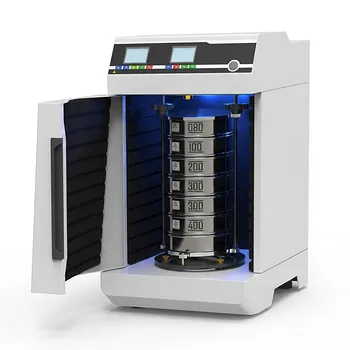
Laboratory Dry and Wet Three Dimensional Vibratory Sieve Shaker for Particle Analysis
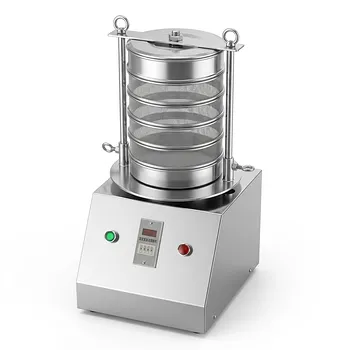
Stainless Steel Laboratory Vibratory Test Sieve Shaker
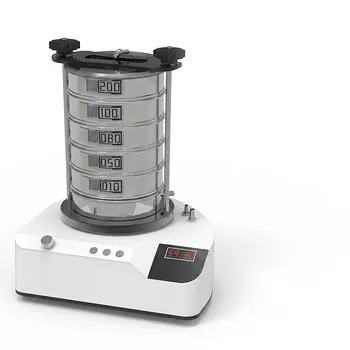
Heavy Duty Dry Three Dimensional Vibratory Sieve Shaker for Particle Separation
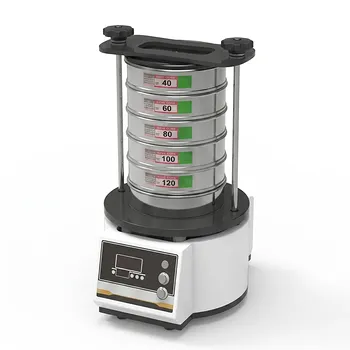
Dry Three Dimensional Vibratory Sieve Shaker
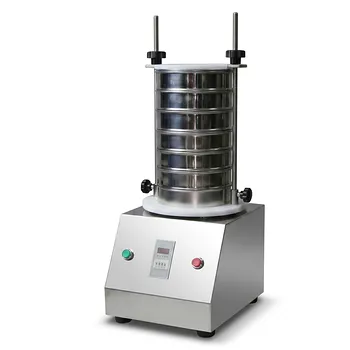
Small Laboratory Vibratory Sieve Shaker for Powder Gradation and Particle Size Analysis
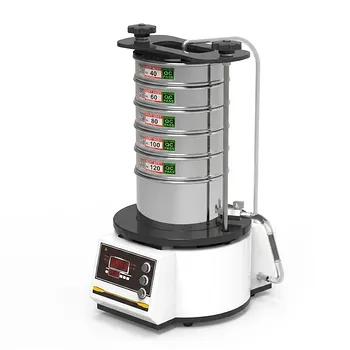
High Frequency Wet Three-Dimensional Vibrating Sieve Shaker for Dry and Wet Particle Size Analysis
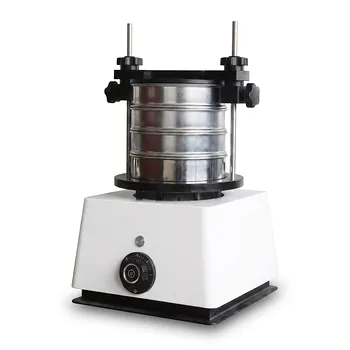
Small Laboratory Vibrating Sieve Shaker for Precise Particle Size Analysis
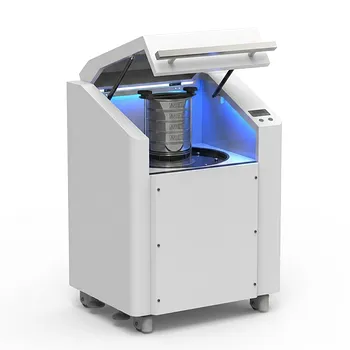
High Frequency Cabinet Type Three-Dimensional Rotary Vibrating Sieve Shaker for Dry Sieving and Particle Classification
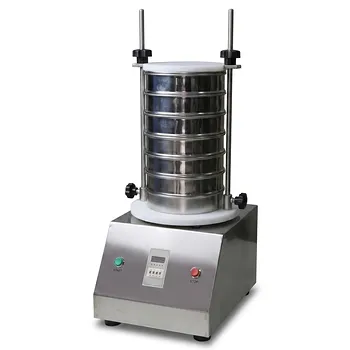
Laboratory Vibratory Test Sieve Shaker for Precision Particle Size Analysis and Powder Grading
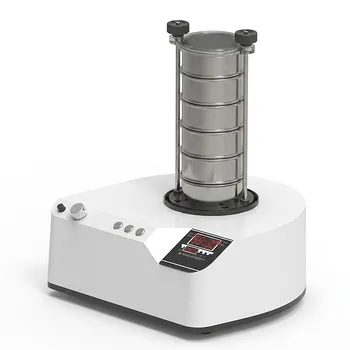
三维电磁微量振动筛分仪
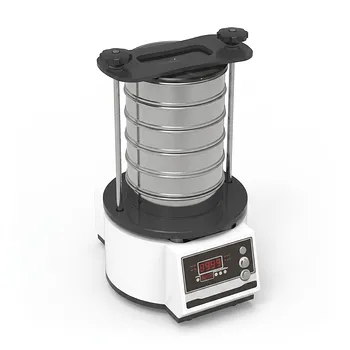
Tapping Oscillating Sieve Shaker for Dry and Wet Particle Size Analysis
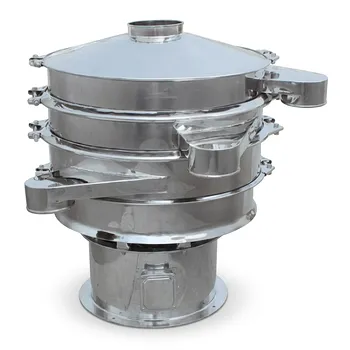
Stainless Steel Rotary Vibrating Sieve High Precision Circular Vibratory Separator Industrial Powder Grading Machine Multi Layer Sifting Equipment
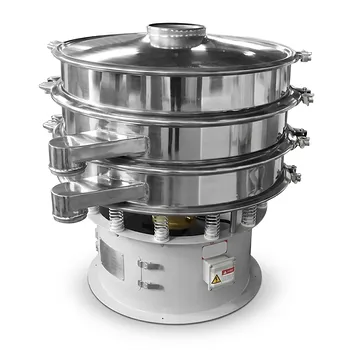
Three Dimensional Rotary Vibrating Sieve
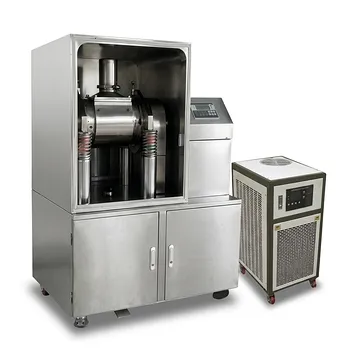
Small Vibrating Ultrafine Grinder for Traditional Chinese Medicine
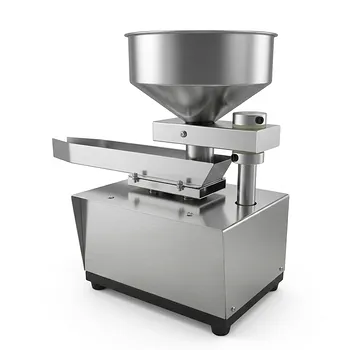
Automatic Vibrating Powder Feeder for Laboratory Material Processing Precision Vibratory Hopper Feeder for Granular and Powder Material Handling Industrial Grade Vibrating Tray Feeder for Consistent Material Sample Preparation
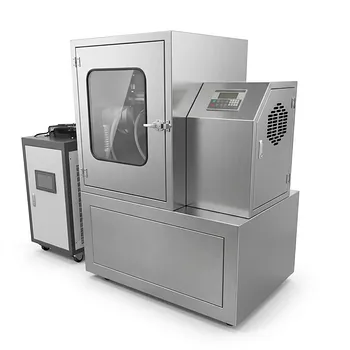
Vibratory Superfine Grinder for Ultra Fine Laboratory Powder Milling
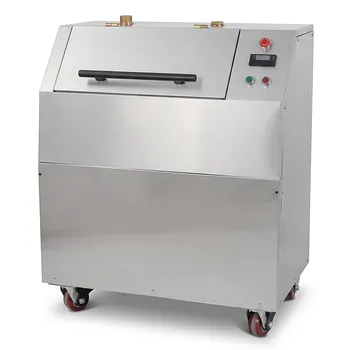
Vibratory Disc Mill for Rapid Fine Grinding and High Throughput Sample Preparation of Hard and Brittle Materials