When Glass Melts Fail, It Was Never the Furnace: The Hidden Economics of Sand Gradation
Oct 01, 2026
The Bottleneck is Never the Bottleneck
In the high-stakes world of material science, we tend to worship the flame. We obsess over the temperature of the glass melt, the pressure of the press, or the chemistry of the cement. We assume the magic happens at the point of transformation.
It rarely does. The truth is usually hidden upstream, disguised as a pile of white sand.
A glass furnace doesn't really make glass. It makes defects. The clarity of a windshield is essentially determined long before the raw material hits the kiln. It is determined by a boundary line—a specific grain size interval—that separates a profitable product from a shattered write-off.
The tool that polices this boundary is not glamorous. It is a vibratory sieve shaker. And skipping its rigorous application is one of the most expensive mistakes a production engineer can make.
The Dirty Secret of Manual Sieving
There is a quiet comfort in old methods. For decades, quality control relied on a technician, a stack of sieves, and a shake of the wrist. It looks like science, but it functions like performance art.
The problem is biological. A human arm delivers energy that is chaotic, low-frequency, and two-dimensional. It tires. As operator fatigue sets in, the motion degrades. Particles stop bouncing and start sleeping on the mesh.
This is not simply a measurement error. It is a systematic bias toward underestimating fines.
The Bridging Illusion
Under manual motion, near-size particles wedge themselves into the mesh openings. They don't pass through; they form a static bridge. The technician records a false "overs" reading. That oversized impurity doesn't disappear, though. It ships to your customer and creates a defect in the glass melt.
Manual sieving trades physical truth for a rough estimate. In an era of tight tolerances, acting on an estimate is speculative investing. It is driven by psychology, not physics.
Engineering Motion: How a Shaker Thinks
A vibratory sieve shaker replaces human variability with a brutal, standardized physical logic. It does exactly what a human cannot: it delivers continuous, high-frequency, three-dimensional energy.
Think of the particle on the mesh. It isn't just shaking up and down. It is experiencing a rapid series of micro-rebounds, rotating in three dimensions. This motion is designed to present every particle to an aperture in multiple orientations over the test duration.
The result is a granulometric verdict, not a guess.
The Probability of Passage
Sieving is fundamentally a probability problem. A particle slightly smaller than the aperture will only pass if it hits the mesh at the correct angle. A three-dimensional vibratory motion maximizes the number of trials per second. It statistically forces the particle to admit its true size.
This standardization is what creates a reliable data foundation. Without it, you don't have a gradation curve; you just have a random number.
The Economic Physics of Particle Size
Why does this precision matter to the bottom line? Because in industrial processing, particle size is not just a parameter; it is rheology, chemistry, and cost.
Case 1: The Glass Interval
For high-transparency glass, the functional zone isn't "sand." It is a specific bandwidth, typically between -0.5mm and +0.125mm. Everything outside this is a threat.
- Oversized grains: Survive the melt. They form "stones" in the glass, inducing stress fractures.
- Excessive fines: Dissolve too quickly. They alter the local chemistry of the melt, creating striae (optical distortion).
A vibratory shaker doesn't just measure; it isolates. It gives you a percentage for each fraction. If the mass of the +0.5mm fraction shifts by 1%, it predicts a defect rate before the batch even sees the furnace. You aren't just screening sand; you are buying an insurance policy on your batch yield.
Case 2: The Mortar Puzzle
In engineered mortars, we chase packing density. The goal is to minimize the voids between sand grains so we can minimize the expensive cement paste needed to fill them.
- To maximize density, you need a specific ratio of coarse to medium to fine sand.
- If a vibratory shaker reveals a deficiency in the medium fraction, your mortar will flinch. It will shrink as it cures, or flow poorly during application.
The shaker calculates the fineness modulus—a single number representing the coarseness of the blend. Adjusting this number based on accurate sieving reduces cement consumption, the single biggest cost driver in the product. You are squeezing out the cheapest, heaviest filler by spending money on precise classification.
The Feedback Loop That Eliminates Waste
The real power of the vibratory sieve shaker emerges in process engineering. It closes the loop between the machine that makes the sand and the machine that uses it.
Consider a recycling loop. Foundry sand is used to make molds, then broken down and reused. With every cycle, the sand grains suffer thermal shock. They agglomerate or fracture.
As the sand degrades, the particle size distribution shifts. Fines increase. Permeability collapses. You can’t see this shift with the naked eye. You only see the resulting casting defect later.
By applying a standardized sieving protocol, you monitor the fine powder rate over time. You track the evolution of sand performance. This allows you to purge the exact percentage of degraded sand and refresh it with new sand, stabilizing the process. The alternative is a blind drift toward catastrophic mold failure.
The Known Weaknesses: A Risk Management View
No tool is perfect. A vibratory sieve shaker has a distinct personality, and ignoring its weaknesses turns precision into noise.
The Trap of Sieve Blinding
This is the "false positive" of the oversized world. When near-size particles lodge tightly in the mesh, they effectively close that aperture. Subsequent smaller particles cannot pass despite being small enough.
The data suddenly suggests a coarse sample, but really, the sieve is just clogged. Solutions include periodic ultrasonic de-blinding or rubber sliders, but the primary defense is recognizing the statistical absurdity of a sudden spike in oversize material without a process change.
The Stratification Error
Physics punishes haste. If you overload the top sieve, the vibratory energy cannot fluidize the deep bed of sand. Particles sit in a lazy mass. Small particles remain stratified far from the mesh.
You shake for 10 minutes, but the fine powder content reports low. Not because it isn't there, but because it never got a chance to present itself to the holes.
To apply this correctly to your project, you must align your method with your specific industrial goal:
- For glass production: Focus ruthlessly on isolating the critical -0.5/+0.125 mm yield.
- For construction chemistry: Calibrate the shaker to calculate the fineness modulus for maximum packing density.
- For process engineering: Use the yield data of acceptable granules to fine-tune upstream crushing or agglomeration speeds.
From Subjective Feel to Objective Physics
We often treat raw materials as commodities. White sand is cheap. But predictable white sand is a premium product. The journey from commodity to premium is paved with standardized mechanical energy.
The vibratory sieve shaker is not just a sizing instrument. It is a translator. It turns the subjective feel of a raw mineral into the objective language of industrial physics. It tells you the truth about your material before the furnace, the press, or the mixer exposes your mistakes in a far more expensive fashion.
For laboratories seeking to eliminate the gap between an estimated size and a physical fact, the integration of a high-performance vibratory sieve shaker is the foundational step. When paired with precise test sieves, crushers, and milling systems—from jaw crushers for primary reduction to jet mills for ultrafine processing—you assemble a workflow where data flows uninterrupted from the quarry to the final product. This is the infrastructure of certainty.
Ready to move beyond manual guesswork and stabilize your particle size distribution? Contact Our Experts
Quick Links
Suggested Products
Vibratory Sieve Shaker Electromagnetic 3D Motion Powder Particle Size Analyzer for Dry and Wet Sieving Laboratory Dry and Wet Three Dimensional Vibratory Sieve Shaker for Particle Analysis Stainless Steel Laboratory Vibratory Test Sieve Shaker Heavy Duty Dry Three Dimensional Vibratory Sieve Shaker for Particle Separation Dry Three Dimensional Vibratory Sieve ShakerFurther Reading
The Hidden Economics of Particle Size: Why the Most Overlooked Variable in Material Science Controls Everything The Invisible Architecture of Powder: How a Vibratory Sieve Shaker Decides What Your Amaranth Bread Becomes The Particle-Size Lever: Why the Most Overlooked Step in Catalyst Design Determines Everything Else The Quarter-Millimeter Margin: Why Vibratory Sieve Precision Determines Artificial Stone Profitability The Hidden Geometry of Your Morning Coffee: What Particle Size Reveals About Control and Chaos
PowderPreparation
Last updated on May 14, 2026
Related Products
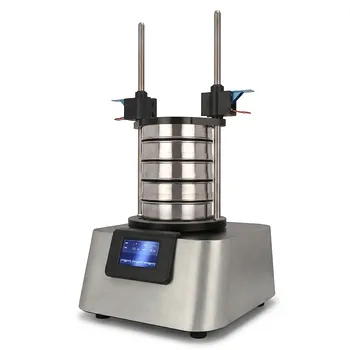
Vibratory Sieve Shaker Electromagnetic 3D Motion Powder Particle Size Analyzer for Dry and Wet Sieving
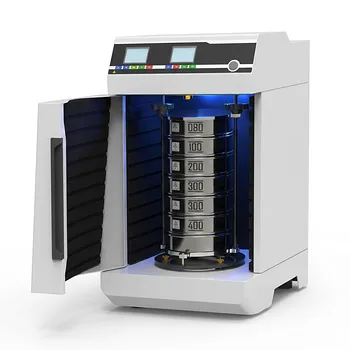
Laboratory Dry and Wet Three Dimensional Vibratory Sieve Shaker for Particle Analysis
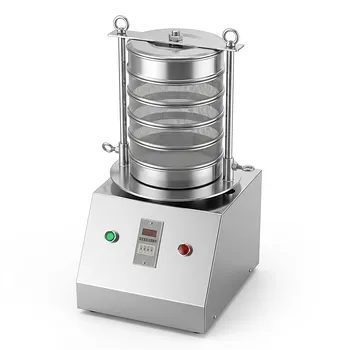
Stainless Steel Laboratory Vibratory Test Sieve Shaker
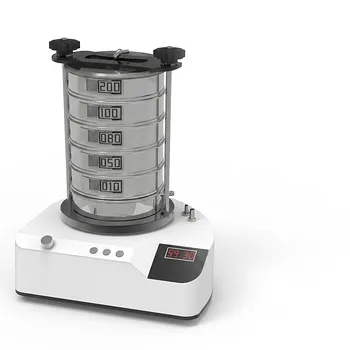
Heavy Duty Dry Three Dimensional Vibratory Sieve Shaker for Particle Separation
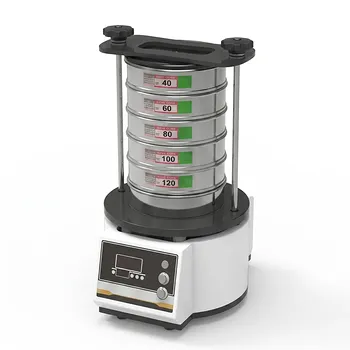
Dry Three Dimensional Vibratory Sieve Shaker
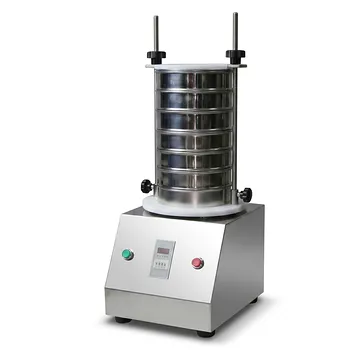
Small Laboratory Vibratory Sieve Shaker for Powder Gradation and Particle Size Analysis
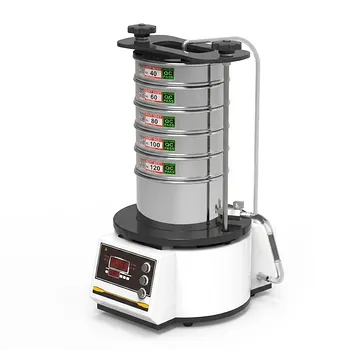
High Frequency Wet Three-Dimensional Vibrating Sieve Shaker for Dry and Wet Particle Size Analysis
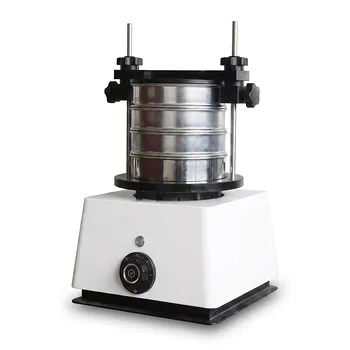
Small Laboratory Vibrating Sieve Shaker for Precise Particle Size Analysis
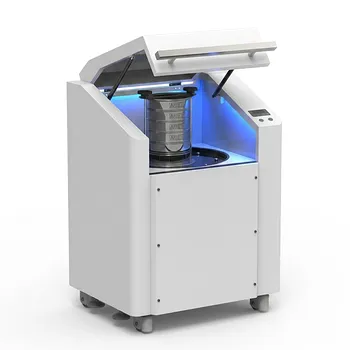
High Frequency Cabinet Type Three-Dimensional Rotary Vibrating Sieve Shaker for Dry Sieving and Particle Classification
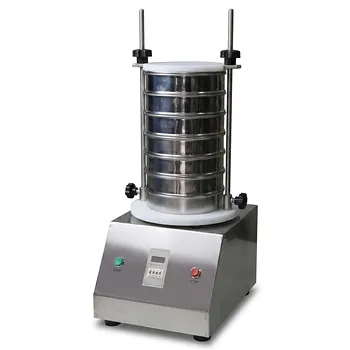
Laboratory Vibratory Test Sieve Shaker for Precision Particle Size Analysis and Powder Grading
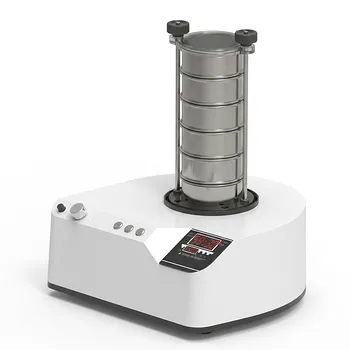
三维电磁微量振动筛分仪
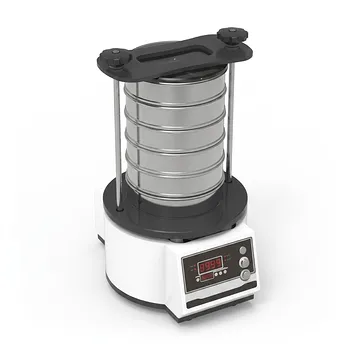
Tapping Oscillating Sieve Shaker for Dry and Wet Particle Size Analysis
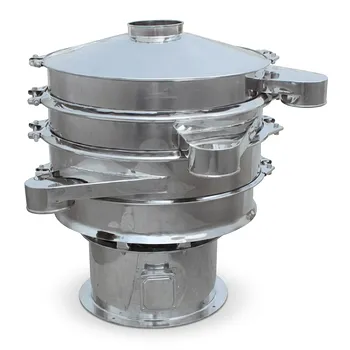
Stainless Steel Rotary Vibrating Sieve High Precision Circular Vibratory Separator Industrial Powder Grading Machine Multi Layer Sifting Equipment
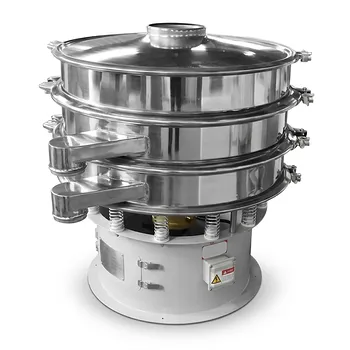
Three Dimensional Rotary Vibrating Sieve
Small Vibrating Ultrafine Grinder for Traditional Chinese Medicine
Automatic Vibrating Powder Feeder for Laboratory Material Processing Precision Vibratory Hopper Feeder for Granular and Powder Material Handling Industrial Grade Vibrating Tray Feeder for Consistent Material Sample Preparation
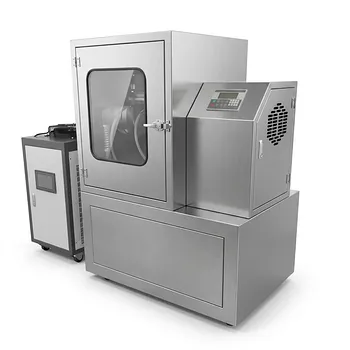
Vibratory Superfine Grinder for Ultra Fine Laboratory Powder Milling
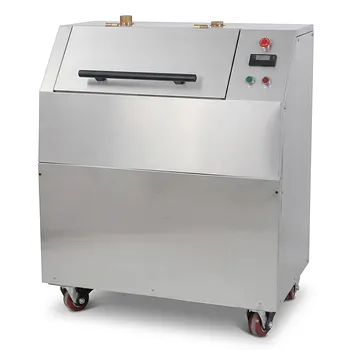
Vibratory Disc Mill for Rapid Fine Grinding and High Throughput Sample Preparation of Hard and Brittle Materials