The 0.5mm Gateway: Why Bulk Density Is a Measure of Flow, Not Just Weight
Aug 11, 2026
The Invisible Threshold
Two labs measure the same powder. One reports a bulk density of 0.78 g/cm³. The other, 0.85. The material is identical. The methods are “standard.” But the numbers disagree, and nobody knows why.
The culprit is almost never the scale. It is what happens before the powder reaches the scale.
A powder is not a liquid. It does not pour with passive uniformity. It arches, bridges, clumps, and segregates. It carries a memory of the last person who handled it: how fast they scooped, how high they poured, how they tilted the container. Without a gatekeeper, bulk density measures as much of the operator as it does the material.
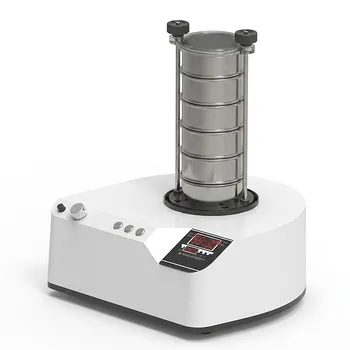
Precision metal sieve plates solve this by becoming the gatekeeper. They sit at the threshold between raw powder and analytical data, forcing every particle through a controlled, repeatable entry state. If you want a measurement that means something, you control what happens at the 0.5mm gateway.
Why Your Powder Doesn’t Forget
The Memory of Agglomerates
Powders develop clumps. Moisture, static, and simple storage time glue particles together. A bulk density test performed on agglomerated powder measures a fiction—large voids trapped inside loosely bound clusters.
Those clumps deceive the analyst. Until something breaks them apart in a controlled way, they add noise that no amount of statistical manipulation can remove.
The Flow You Cannot See
Even a powder that looks free-flowing carries a hidden variability. Its particles might rush into a container like sand through an hourglass one day, then stutter and choke the next. The reason is seldom the powder itself. It is how energy enters the system during pouring.
A sieve plate, driven by a piezoelectric transducer, injects that energy deliberately. High-frequency vibration does not just sift; it processes. It breaks up agglomerates through a micro-shearing effect, turning a chaotic mass into a controlled stream.
The Mechanics of Controlled Dispersion
Not Just a Mesh—An Energy Carrier
A passive screen would be worse than useless. Powder would cake, blind the openings, and create back-pressure that ruins any pretence of steady flow.
The precision metal sieve plate acts as an energy carrier. A piezoelectric transducer beneath it oscillates thousands of times per second. This active motion ensures the powder is constantly in dynamic contact with the mesh, never resting, never able to reconstruct its weak bridges.
That motion is the difference between pouring and processing.
The 0.5mm Micro-Shear
The square holes—typically 0.5 mm across—are sized for a specific purpose. They do not merely filter large objects. They apply a micro-shearing effect to the falling material.
As powder grains pass through, they experience shear forces that tear apart agglomerates without destroying individual particles. Partial dispersion happens right at the point of entry into the measuring vessel. The powder that lands in the cup is no longer a memory of its storage history. It is a standardized starting condition.
This single feature reduces standard deviation across replicate measurements by an order of magnitude in many powders.
Standardization Is More Than a Sieve
The 30cm Drop and the 250ml/min Rule
A sieve plate works within a system. Drop height matters. Fill rate matters. In a well-designed bulk density apparatus, the powder falls from a fixed height—often 30 cm—at a controlled rate, such as 250 ml/min.
The sieve guarantees that the powder breaks free of its clumps at precisely the same point for every test. The drop height then ensures the same gravitational energy contributes to the initial packing. You are no longer comparing how different technicians pour. You are comparing material properties, isolated from human hands.
Erasing the Operator
Manual pouring is a human act, full of tiny, unrepeatable gestures. Speed varies. Angle varies. Height varies. Labs that rely on manual transfer will always fight operator-dependent biases that no data analysis can fully correct.
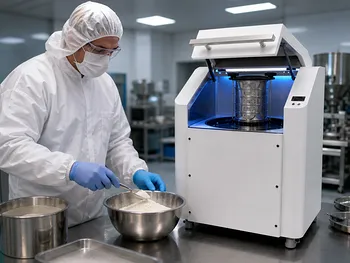
With a mechanical sieving device, the process becomes indifferent to the person running it. The data that emerges is comparable not just within one lab, but across continents, time zones, and equipment generations. That kind of reproducibility is the bedrock of quality control.
The Trade-offs You Must Accept
When Sieves Clog
No gateway stays clean forever. Powders with high moisture content or irregular particle shapes will eventually clog the 0.5mm square holes. Materials with extreme abrasion potential will slowly wear the precision dimensions away.
If the hole size changes, the shearing effect changes with it. Your baseline shifts without your knowledge. Regular inspection and calibration are not optional. They are the price of continued accuracy.
Over-Excitation and Segregation
High-frequency vibration is not a universal good. Some materials become over-excited, causing fine particles to sift downward faster than coarse ones. You end up with a packed bed that reflects the vibration more than the powder’s true tendency to settle.
The piezoelectric frequency must match the material. Too intense, and you segregate. Too weak, and you under-disperse. The art is in the tuning, and the best systems let you control it.
From Fragile Data to Robust Process
Bulk density is, at heart, a measure of flow history—the journey from container to cup. Precision sieve plates turn that journey from a chaotic anecdote into a repeatable process step.
When your lab adopts a system where drop height, fill rate, vibration frequency, and hole geometry are all standardized, you stop asking, “What did the operator do differently?” You start asking, “What is this powder really like?”
That shift is what separates subjective testing from an objective material science discipline.
Building a Complete Characterization Loop
A sieve plate does not work in isolation. It is one component in a chain that begins long before the measurement and ends only when you press the powder into a pellet for XRF, or compress it into an engineered part.
When we design sample preparation solutions, we think across that whole chain. The powder that reaches your sieve plate must first be crushed, milled, or ground to the right size range. After bulk density measurement, it might be compacted under vacuum, hot-pressed, or formed via isostatic pressure.
Our equipment covers that entire continuum:
- Sieving & Separation: Vibratory and air-jet sieve shakers with high-precision test sieves and meshes, ensuring your gateway remains as sharp as your analysis demands.
- Milling & Grinding: Planetary ball mills, jet mills, and liquid nitrogen cryogenic grinders that prepare the particle size distribution your process requires.
- Advanced Compaction: Cold/Warm Isostatic Presses (CIP/WIP), XRF pellet presses, and vacuum hot presses that turn standardized powder into consistent solid samples.
- Crushing & Mixing: Heavy-duty jaw/roll crushers and high-efficiency powder or defoaming mixers that handle the precursor steps with equal precision.
Every piece supports the others. A reliable bulk density measurement depends on what happens in the mill and what will happen in the press. Close the loop, and you close the door on variability.
The 0.5mm gateway matters. But it matters most when it sits in a system built to respect what powders teach us: every step changes what comes next.
Quick Links
Suggested Products
Laboratory Air Jet Sieving Machine for Fine Powder Particle Size Analysis and Deagglomeration Three Dimensional Rotary Vibrating Sieve Stainless Steel Rotary Vibrating Sieve High Precision Circular Vibratory Separator Industrial Powder Grading Machine Multi Layer Sifting Equipment Nano Laboratory Bead Mill Desktop Sub Micron Sand Mill Screenless Seal Less Powder Grinder Laboratory Vibratory Test Sieve Shaker for Precision Particle Size Analysis and Powder GradingFurther Reading
The Grain Size That Held Up Cathedrals: A Sieve Analysis Story The Invisible Architect of Powder: How a Single Additive Saves Ductile Metals from Themselves The 0.033-Inch Gatekeeper: What a Precision Sieve Teaches Us About Life-Saving Powders The Sieve Deception: How Blind Trust in Mesh Numbers Ruins Black Silicon Carbide Performance The 400-Micron Calibration: What Precision Sieving Reveals About Your Sprouted Grain Powder
PowderPreparation
Last updated on May 14, 2026
Related Products
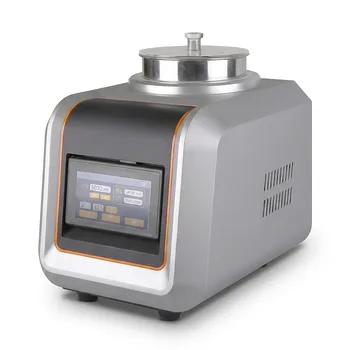
Laboratory Air Jet Sieving Machine for Fine Powder Particle Size Analysis and Deagglomeration
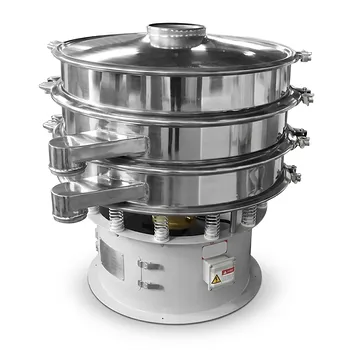
Three Dimensional Rotary Vibrating Sieve
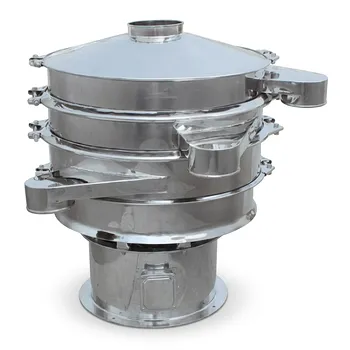
Stainless Steel Rotary Vibrating Sieve High Precision Circular Vibratory Separator Industrial Powder Grading Machine Multi Layer Sifting Equipment
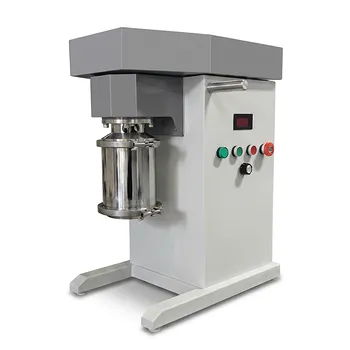
Nano Laboratory Bead Mill Desktop Sub Micron Sand Mill Screenless Seal Less Powder Grinder
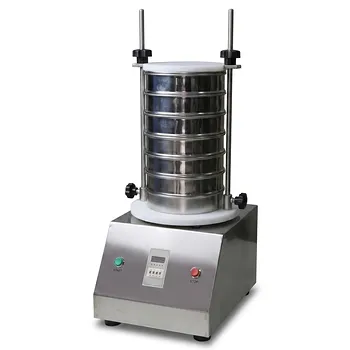
Laboratory Vibratory Test Sieve Shaker for Precision Particle Size Analysis and Powder Grading
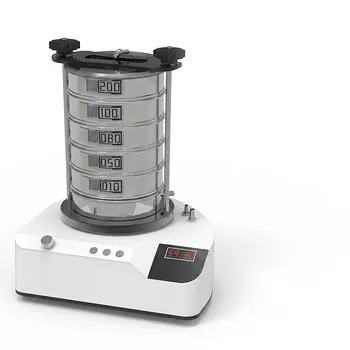
Heavy Duty Dry Three Dimensional Vibratory Sieve Shaker for Particle Separation
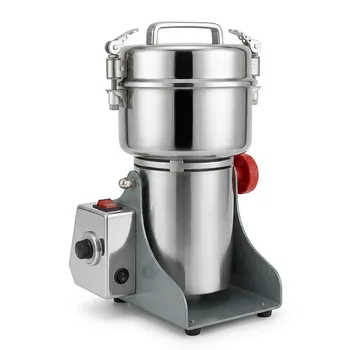
Versatile Industrial Crusher for Laboratory Crushing and Material Processing
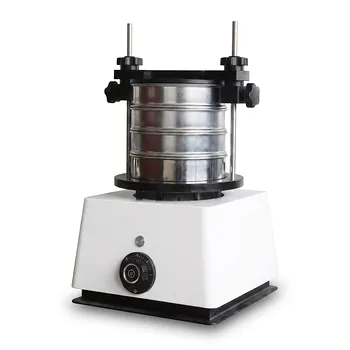
Small Laboratory Vibrating Sieve Shaker for Precise Particle Size Analysis
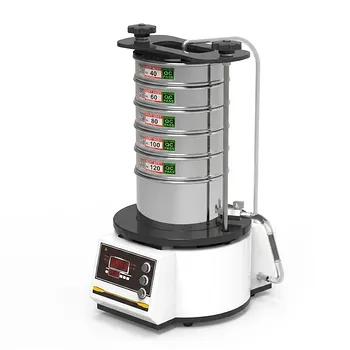
High Frequency Wet Three-Dimensional Vibrating Sieve Shaker for Dry and Wet Particle Size Analysis
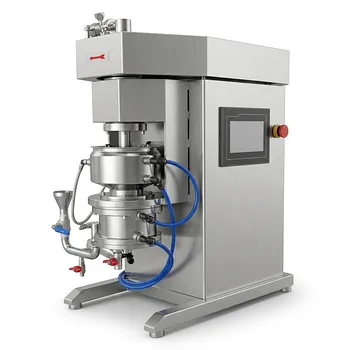
Small Ceramic Structure Laboratory Sand Mill Nanoscale Grinding Dispersion Equipment Seal-less Screen-less Design
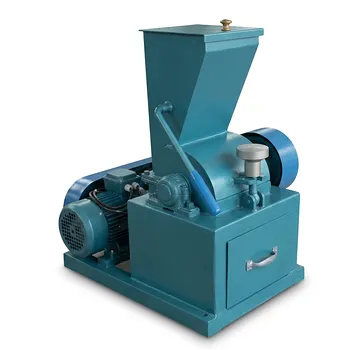
Small Hammer Crusher for Brittle Material Crushing in Mining Metallurgy and Lab Sample Preparation
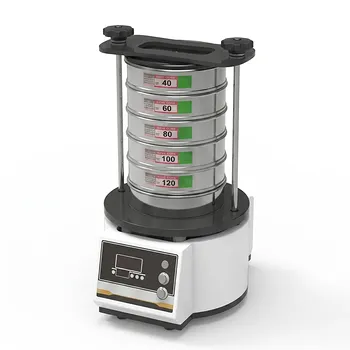
Dry Three Dimensional Vibratory Sieve Shaker
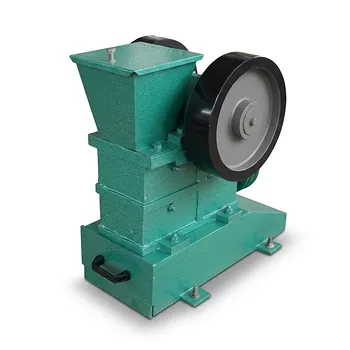
Laboratory Small Jaw Crusher 100x60mm
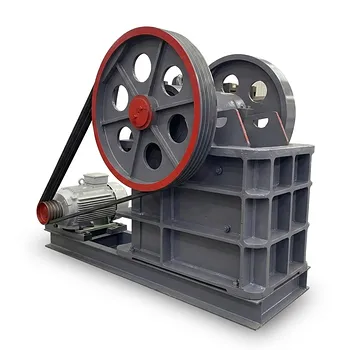
250x400mm Jaw Crusher Medium Crushing Equipment for Mining Mineral Sample Preparation
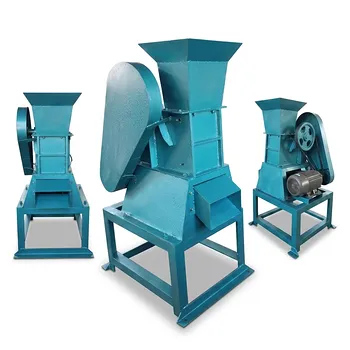
Custom Raised Height Laboratory Jaw Crusher for Precision Sample Preparation in Material Science
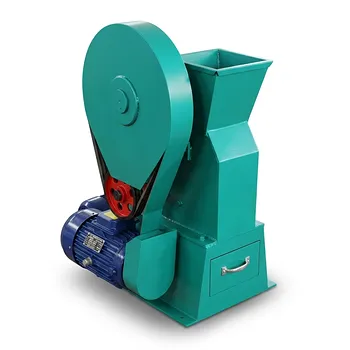
Small Laboratory Jaw Crusher 125x100mm Feed Opening for Sample Preparation
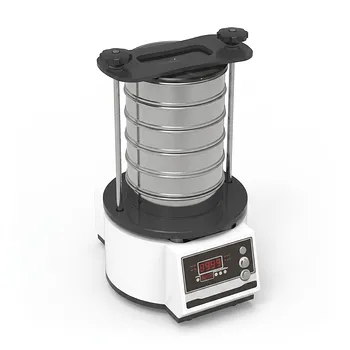
Tapping Oscillating Sieve Shaker for Dry and Wet Particle Size Analysis
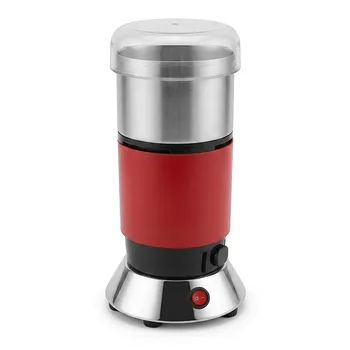
Micro Solid Sample Grinder High Speed Pulverizer for Laboratory Small Batch Grinding
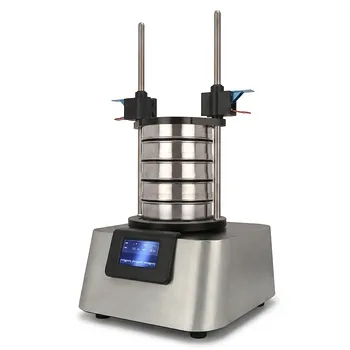
Vibratory Sieve Shaker Electromagnetic 3D Motion Powder Particle Size Analyzer for Dry and Wet Sieving