The Tyranny of Tiny Impurities: How 10 mm Zirconia Balls Save Rare-Earth Doped Bismuth Ferrite
Jul 27, 2026
The Ghost in the Machine
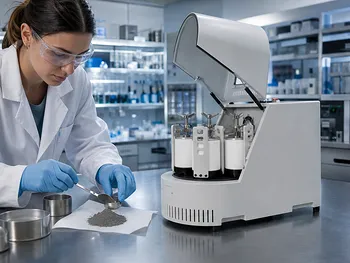
A researcher loads a planetary ball mill with bismuth ferrite precursor. She has doped it with lanthanum to tune the multiferroic response. The recipe is precise. The stoichiometry is flawless. Twenty-four hours later, the powder is fine. But the first sintered pellet shows a magnetic anomaly she cannot explain.
The culprit is invisible. It came from the grinding media itself.
A few parts per million of chromium or iron leached into the powder during milling. That trace contamination was enough to seed a secondary phase and unravel months of work. In advanced electronic ceramics, you are not battling grams. You are battling ghosts.
This is not a story about one failed experiment. It is a story about a hidden system—the intersection of mechanics, chemistry, and a tiny ceramic sphere—and why getting it right requires both engineering humility and the right equipment.
Why Size Is Not Just a Number
Most people imagine grinding as a simple act of breaking things. It is not. It is a energy-transfer problem dressed in powder form.
Bismuth ferrite, especially when doped with rare-earth ions, forms tenacious agglomerates. These clusters resist casual breakage. You need a media that can hit hard enough to fracture them, repeatedly, for hours.
The Kinetic Energy Argument
The energy a grinding ball delivers scales with its mass. Mass scales with the cube of the diameter. A 10 mm zirconia ball has roughly eight times the mass of a 5 mm ball of the same material. When the mill jar accelerates it, the impact becomes a decisive blow rather than a polite tap.
- High density (6.0 g/cm³ for YSZ) translates directly into crushing force.
- Hardness (over 1200 HV) ensures the ball transmits energy instead of absorbing it plastically.
- Momentum transfer overcomes the inter-particle forces that glue agglomerates together.
Contact Points and Collision Frequency
But why not use even larger balls—say 20 mm? There is a trade-off.
The number of balls you can load into a jar decreases as diameter rises. Fewer balls mean fewer collision events per rotation. The 10 mm diameter occupies a sweet spot: enough mass to break tough particles, yet numerous enough to maintain a high collision frequency. This keeps the particle size distribution tight and prevents “dead zones” inside the jar where untreated powder hides.
The Purity Panic
Mechanical performance is only half the picture. The other half is chemical paranoia—the productive kind that saves your data.
A Single Metal Atom Changes Everything
Rare-earth doped bismuth ferrite is an electronic ceramic. Its magnetic and ferroelectric properties depend on precise lattice distortions created by the dopant ions. Introduce a stray iron or tungsten atom from a hardened steel jar, and you are no longer measuring your design. You are measuring noise.
Zirconia is chemically obtuse. It refuses to react. Yttria-stabilized zirconia (YSZ) grinding balls act as bystanders in the milling process—witnessing the carnage of particle fracture without participating in the chemistry.
What you avoid:
- Metallic contamination (Fe, Cr, Ni, Co) from steel media
- Silicate leaching from low-grade glass beads
- Alumina pickup that could react with dopants at sintering temperatures
The 24-Hour Test
Preparing high-quality ceramic targets for physical vapor deposition often demands continuous milling for hours—sometimes an entire day. Lesser media degrade. Their surfaces spall. The powder turns gray with wear debris.
Zirconia wins the endurance game. Its wear rate is low enough that even after 24 hours, the mass loss is negligible. This consistency ensures the final powder has the same chemistry as the precursor you weighed out at the start.
The Hidden Trade-offs
Romanticizing a single parameter is dangerous. The 10 mm zirconia ball comes with its own set of complications you must respect.
Impact Force vs. Specific Surface Area
Large balls excel at crushing, but they have less total surface area per unit volume than a bed of smaller beads. If your goal is to grind down to 200 nanometers, a mill full of 10 mm spheres will take longer than a mill with 2 mm beads. The small beads bring more grinding contacts, even if each impacts softly.
Psychological pitfall: A lab may chase ultrafine sizes too early, under-investing in the initial breakdown step, and then blame the media for poor results.
The Heat Problem
High-density zirconia media transfer energy efficiently. Much of that kinetic energy ends up as heat. Over hours, the jar temperature can climb. For bismuth ferrite, unintended heating might promote bismuth volatilization or trigger phase separation.
Mitigation: Use planetary ball mills with built-in ventilation or pause cycles to let the system cool. Here, the equipment matters as much as the media.
Cost Is a Focusing Mechanism
Zirconia is a premium material. A set of 10 mm YSZ balls costs significantly more than alumina. This cost acts as a focusing mechanism: it forces the researcher to justify the purity requirements. If your ceramic does not care about parts-per-million contamination, you might not need zirconia. But if you are synthesizing a multiferroic destined for a low-noise sensor or a memory element, that premium cost is the cheapest insurance you can buy.
Designing a Milling Strategy That Respects the Material
A wise process engineer treats milling not as a single step but as a cascading decision tree.
Stage the Refinement
Many successful protocols for bismuth ferrite adopt a two-stage approach:
- Primary grind with 10 mm zirconia: Breaks agglomerates and brings the powder to a manageable particle size range (single-digit microns).
- Secondary finish with smaller beads (e.g., 2 mm zirconia): Increases specific surface contact to drive the size down toward the sub-micron target.
This strategy respects the energy-size trade-off and avoids heat buildup from over-milling with dense media.
Match the Mill to the Mission
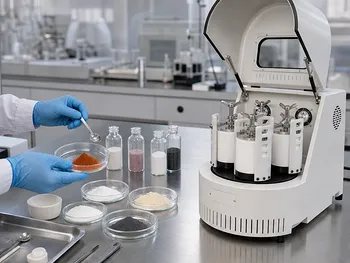
Your grinding balls are useless without a mill that can exploit them. For high-energy applications, planetary ball mills provide the necessary centrifugal forces to accelerate heavy 10 mm media to effective impact velocities. For heat-sensitive materials, liquid nitrogen cryogenic grinders keep the powder embrittled and thermally stable during processing.
The mill’s jar material matters, too. A zirconia jar paired with zirconia balls creates a contamination-free system that leaves no trace of itself behind.
From Powder to Target
Rare-earth doped bismuth ferrite powders often become sputtering targets or dense ceramic pellets. The path from loose powder to a solid body with controlled porosity requires precision pressing. Cold Isostatic Presses (CIP) apply uniform pressure from all directions, eliminating density gradients that distort sintering. For temperature-sensitive pressing, vacuum hot presses consolidate the ceramic under heat and pressure without oxidizing the delicate doping elements.
When you integrate milling and pressing into a single, coherent workflow, the variables stop conspiring against you and start aligning in your favor.
The Equipment as a Silent Partner
Material scientists often talk about their powders and their properties. They rarely talk about the machines that make those powders possible. But the machines are not passive. They are silent partners in every experiment.
A poorly chosen grinding ball can doom a project before the first characterization run. A well-chosen one, housed in a properly engineered mill backed by reliable pressing equipment, disappears into the background. It just works. And when it does, the researcher gets to focus on what matters: the science.
We have spent decades obsessed with this dynamic. Our product line is not a catalog of disjointed machines; it is a complete sample preparation ecosystem for material science.
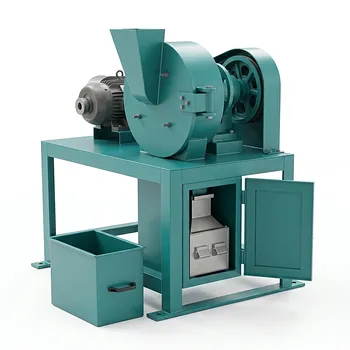
- Milling & Grinding: Planetary ball mills, jet mills, liquid nitrogen cryogenic grinders, disc mills—each designed to handle the specific energy and purity demands of electronic ceramics.
- Crushing & Sieving: Jaw crushers and vibratory sieve shakers to reduce raw precursors and classify powders with exacting precision.
- Pressing & Compaction: From standard laboratory presses to Cold/Warm Isostatic Presses (CIP/WIP), XRF pellet presses, and vacuum hot presses for the final leap from powder to functional target.
- Mixing & Defoaming: Powder mixers and defoaming mixers that ensure homogeneity before the material ever enters a die.
Every component carries the same philosophy: engineering that respects the fragility of advanced materials.
The 10-Millimeter Invariant
There is a tendency in science to treat hardware choices as afterthoughts—mundane decisions beneath the intellectual engagement of composition and doping strategies. That is a mistake.
The 10 mm zirconia grinding ball is not an arbitrary selection. It is the physical manifestation of a set of truths about kinetic energy, chemical stability, and process economics. It represents a wager that purity and power can coexist in a single sphere.
When you choose the right media and surround it with equipment built for the task, you are not just preparing a powder. You are building a foundation for reproducibility. You are making a promise that the anomalies in your future measurements will come from the physics you are trying to understand—not from the tools you trusted.
Quick Links
Suggested Products
High Energy Omnidirectional Planetary Ball Mill 20L Small High-Speed Laboratory Grinder for Rapid Sample Preparation 8L Planetary Ball Mill for Laboratory Grinding and Sample Preparation Miniature Planetary Ball Mill with Vacuum Grinding and High Efficiency for Laboratory Sample Preparation Nano Laboratory Bead Mill Desktop Sub Micron Sand Mill Screenless Seal Less Powder GrinderFurther Reading
The Energy Budget of a Single Impact: How the Ball-to-Powder Ratio Shapes Nanocrystalline Reality The High-Energy Gamble: What SiBCN-rGO Fibers Teach Us About Perfect Homogenization The 65-Micron Gate: Unlocking the True Isotopic Fingerprint of Portland Cement The Silence Inside the Jar: What a Ball Mill Really Does for Doped Bismuth Ferrite The Alchemist's Hammer: How a Planetary Ball Mill Solves the Diffusion Dilemma in Rare-Earth Doped Ceramics
PowderPreparation
Last updated on May 14, 2026
Related Products
High Energy Omnidirectional Planetary Ball Mill 20L
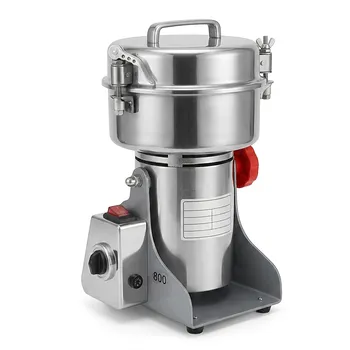
Small High-Speed Laboratory Grinder for Rapid Sample Preparation
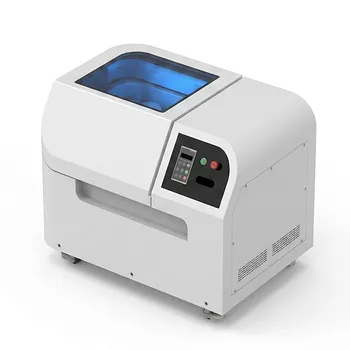
8L Planetary Ball Mill for Laboratory Grinding and Sample Preparation
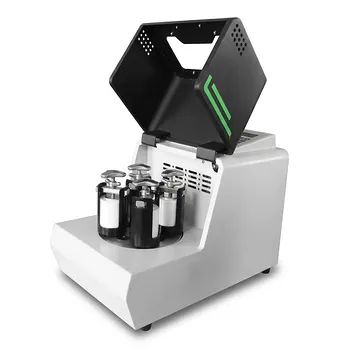
Miniature Planetary Ball Mill with Vacuum Grinding and High Efficiency for Laboratory Sample Preparation
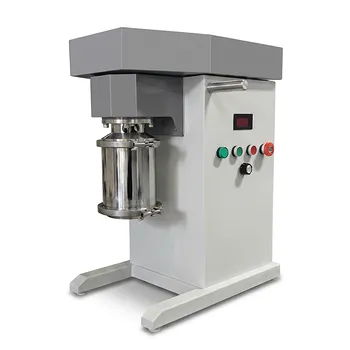
Nano Laboratory Bead Mill Desktop Sub Micron Sand Mill Screenless Seal Less Powder Grinder
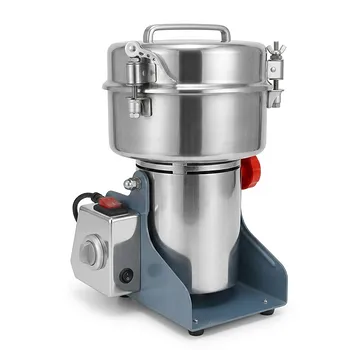
Small High-Speed Grinder for Efficient Laboratory Sample Preparation
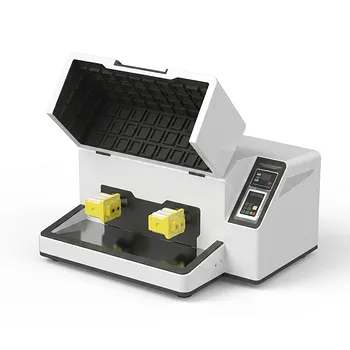
Multi-Platform Nanoscale High-Energy Vibratory Ball Mill
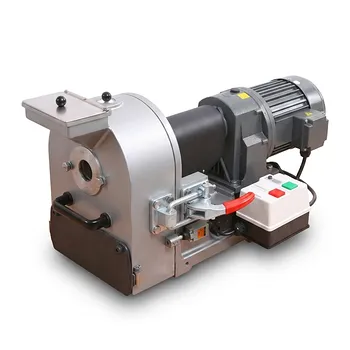
Laboratory Disc Mill for Fine Sample Preparation of Hard and Brittle Materials
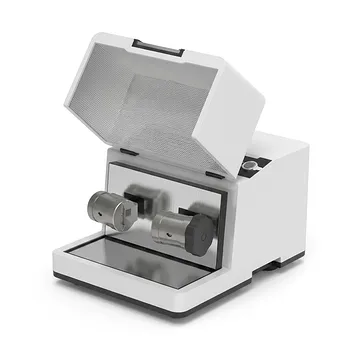
Heating Temperature Controlled High Energy Vibratory Ball Mill
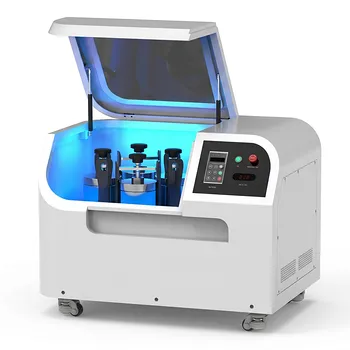
Planetary Ball Mill 12L
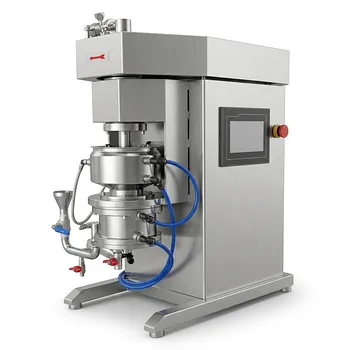
Small Ceramic Structure Laboratory Sand Mill Nanoscale Grinding Dispersion Equipment Seal-less Screen-less Design
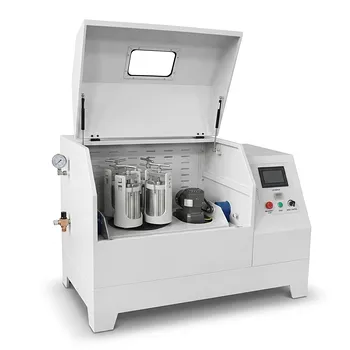
Vertical Production Planetary Ball Mill for High Throughput Powder Processing
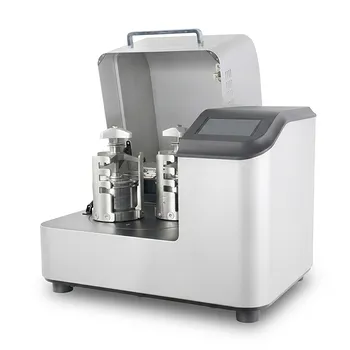
High Energy Planetary Ball Mill for Nano Scale Grinding and Mechanical Alloying
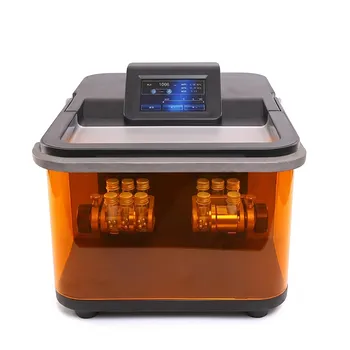
High Throughput Micro Ball Mill for Cryogenic Grinding and Laboratory Cell Disruption
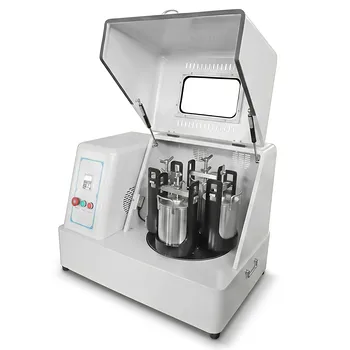
Vertical Square Planetary Ball Mill for Laboratory Sample Preparation and Nanoscale Grinding
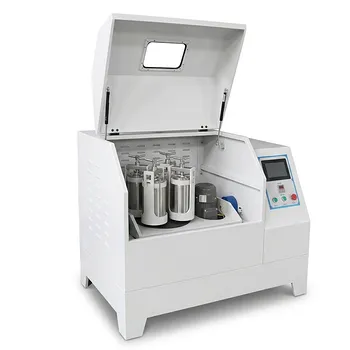
360° Rotating Omnidirectional Laboratory Planetary Ball Mill for Homogeneous Ultra-Fine Grinding and Mixing
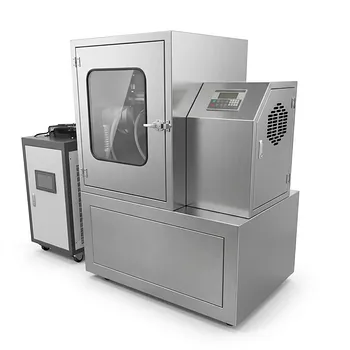
Vibratory Superfine Grinder for Ultra Fine Laboratory Powder Milling
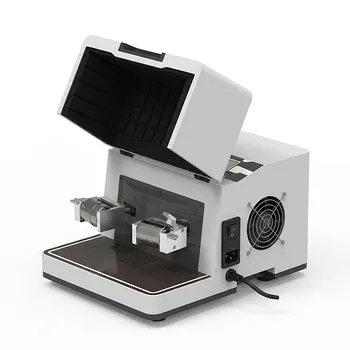
High Energy Hybrid Vibratory Ball Mill for Grinding Mixing and Cell Disruption
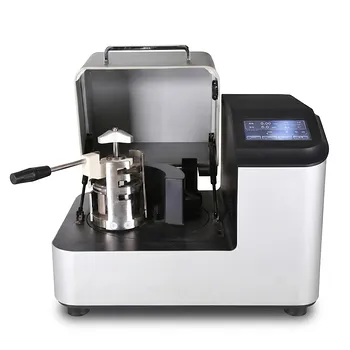
High Energy Laboratory Planetary Ball Mill for Nano Grinding and Material Science Sample Preparation