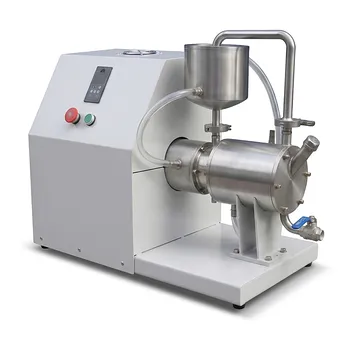
The Grain, the Grinder, and the Hidden Poison: Why Mycotoxin Testing Depends on a Perfectly Boring Pulverization
Jun 16, 2026
The 50-Gram Jury
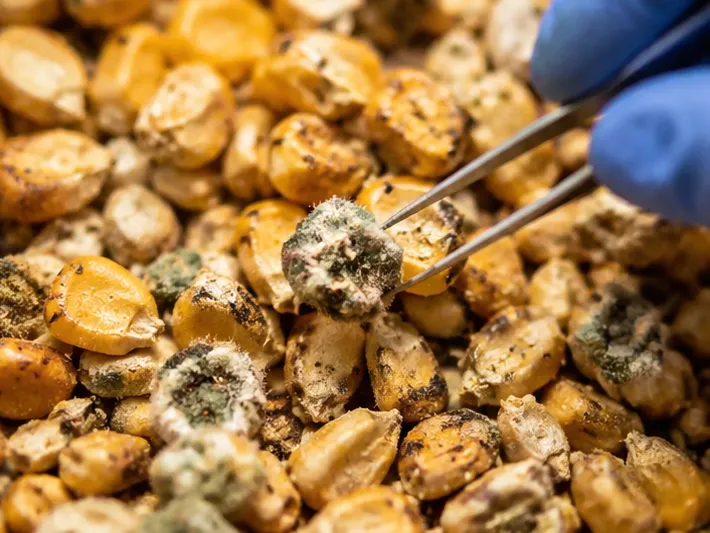
A truck backs up to the loading dock. It carries 20 tons of corn. Somewhere inside that mountain of golden kernels, invisible filaments of Aspergillus have spun a poison called aflatoxin. It is a carcinogen so potent that most countries will reject an entire shipment if a single test portion exceeds a few parts per billion.
The lab technician scoops out a test portion. Maybe 50 grams. That tiny pile will speak for all 20 million grams on the truck. The farmer’s whole season, the distributor’s contract, the buyer’s trust—they all hang on what happens inside a small metal chamber over the next few minutes.
Most people think the hard part is the chemistry. It is not. The chemistry is a solved problem. The real intellectual drama—and the real source of error—happens before a single solvent is poured. It happens inside the grinder.
The Lottery Inside the Silo
Mycotoxins are not democrats. They do not distribute themselves evenly through a bulk lot of grain. They behave like tiny biological saboteurs, congregating in dense colonies called “hotspots.” These hotspots form because fungal contamination often starts in a single damaged kernel. The infection radiates outward, creating a microscopic zip code of intense toxicity surrounded by relatively clean kernels.
If your sampling protocol ignores this reality, you are playing a dangerous lottery. Scoop from the wrong part of the truck, and your 50-gram jury might contain zero toxins—even if the cargo is lethally contaminated. Scoop from a hotspot, and an otherwise acceptable batch looks like a Superfund site.
This is not a sampling problem. It is a distribution problem. And distribution problems are solved not by better statistics, but by mechanical force.
Why Every Food Safety Lab Secretly Works for the Grinder
The job of the mill is to destroy the lottery. It transforms a heterogeneous mass of individual seeds, each with its own private history of fungal encounters, into a uniform powder where every particle tells the same story. This process of homogenization is the most unglamorous step in the analytical chain. It is also the most important.
Erasing Micro-Geography
When a cyclone mill or a disc mill applies thousands of high-speed impacts per second, it physically dismembers the kernel. The hard endosperm, the oily germ, the fibrous pericarp—all are reduced to a common dust. In that dust, the toxin molecules from a hotspot are not destroyed; they are redistributed. A particle that once carried 500 parts per billion of deoxynivalenol (DON) now sits next to a thousand particles that carried zero. The average becomes the truth.
A lab that skips or underperforms this step is not doing science. It is doing anthropology—examining a single artifact and pretending it describes an entire civilization.
The Surface Area Revolution
There is a second, quieter miracle happening inside the mill. It is a matter of geometry. A whole corn kernel has a surface area measured in square millimeters. Grind it to a fine powder, and that same mass now exposes square meters of surface to any solvent that comes calling.
Extraction chemistry is a contact sport. A methanol-water mixture cannot penetrate a solid object; it can only interact with surfaces. As particle size drops, the specific surface area skyrockets. The solvent suddenly has access to parts of the matrix that were previously locked away inside dense cellular structures. Mycotoxins that would have remained hidden—tucked behind cell walls or cradled in lipid droplets—are now exposed, vulnerable, and in solution within seconds.
This is not a linear improvement. It is a phase change in extractability.
Two Mills, Two Philosophies
Not all grinding is the same. The choice between a cyclone mill and a disc mill is not about brand preference; it is about the material’s personality.
The Cyclone Mill: Speed and Airflow
Imagine a rotor spinning at 10,000 to 20,000 rpm, flinging particles against a stationary screen with dizzying speed. This is the cyclone mill. It excels with dry, brittle grains like wheat, corn, and barley. The high-speed airflow through the chamber does more than just spin the rotor—it actively cools the sample and carries away fine particles as soon as they are small enough to pass the screen. This prevents over-milling and keeps heat-sensitive mycotoxins from degrading during the process.
For a high-throughput grain-inspection lab, the cyclone mill is a workhorse that returns a beautifully uniform powder in seconds, with minimal operator intervention.
The Disc Mill: Patience with Oily Allies
Now consider a sample of peanuts or pistachios. They are rich in oil, which turns sticky under high shear. Feed them into a cyclone mill, and within moments the screen clogs, the motor groans, and the powder becomes a paste. This is where the disc mill takes over.
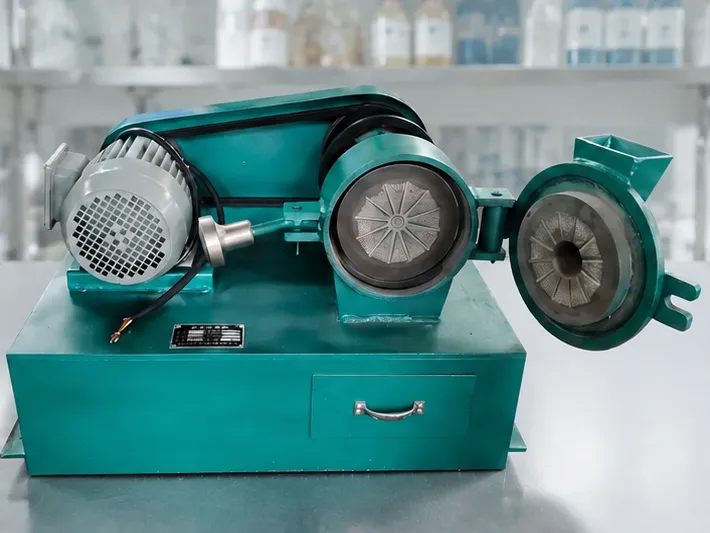
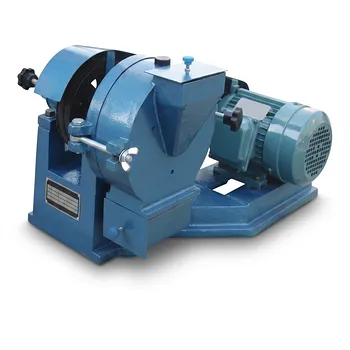
A disc mill uses two grinding discs—one stationary, one rotating—to create a controlled shearing and crushing gap. It can process high-fat, fibrous, or moisture-rich matrices without clogging. The gap is adjustable, allowing the operator to dial in the precise particle size reduction needed without generating excessive heat. It is a more deliberate, more adaptable tool, built for the outliers that break simpler machines.
Table: The Material Decides the Method
| Sample Characteristic | Preferred Mill Type | Why It Works |
|---|---|---|
| Dry, brittle grains (corn, wheat) | Cyclone Mill | High-speed impact with airflow cooling prevents heat buildup; fine, uniform powder. |
| High-fat samples (nuts, seeds) | Disc Mill | Adjustable gap and shear action handle oil without clogging. |
| Fibrous biomass (stalks, hulls) | Disc Mill or Cutting Mill | Shearing is needed to sever long fibers; cyclone may not cut effectively. |
| Temperature-sensitive toxins | Cryogenic Grinder | Liquid nitrogen freezes the sample, making it brittle and protecting analytes. |
The Devil’s Bargain: Heat, Dust, and Memory
Milling is not gentle. The kinetic energy that pulverizes a kernel is also converted into heat. Some mycotoxins—like certain trichothecenes—can begin to degrade at temperatures that a poorly cooled mill easily reaches. The mill that grinds fastest might also be the mill that lies to you by cooking the evidence.
Then there is the ghost of the sample before. Every crevice in a grinding chamber is a potential reservoir for carryover. If 20 grams of a highly contaminated sample leave a thin film of toxin-laden dust on the grinding disc, the next “clean” sample will inherit that residue. The result is a false positive that can cost thousands of dollars in rejected shipments. In the lab, cleanliness is not next to godliness; it is next to legal defensibility.
The best mills are designed with these devils in mind. They feature quick-release, modular grinding chambers that can be fully disassembled and washed in seconds. They use smooth, non-porous surfaces where dust cannot hide. They are engineered as much for decontamination as for pulverization.
The Complete Preparation Arsenal
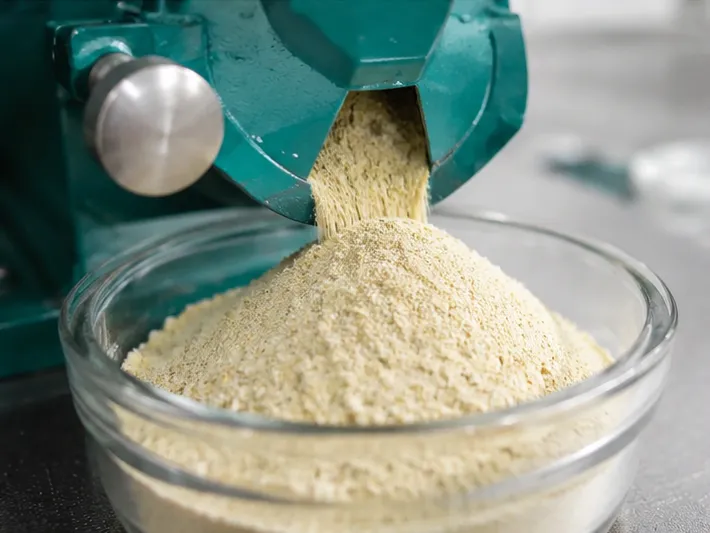
Grinding is the centerpiece, but a reliable mycotoxin analysis depends on a chain of preparation steps where every link is forged with the same obsession for uniformity.
Beyond the Mill: The Integrated Workflow
Before a single kernel enters the mill, a jaw crusher or roll crusher may be needed to reduce large, hard samples to a manageable feed size. After milling, a vibratory sieve shaker or air-jet sieve confirms that the particle size distribution meets the tight specification required by regulatory methods like those from the USDA or EU Commission. If the powder needs to be blended with a reference material or a binder—for quality control or XRF pellet preparation—a powder mixer or defoaming mixer ensures homogeneity without introducing air bubbles that compromise pellet integrity.
For labs that push beyond mycotoxins into full material characterization, planetary ball mills produce sub-micron particles for X-ray diffraction, while jet mills achieve ultrafine grinding without any mechanical heat. And when the sample absolutely cannot be exposed to ambient moisture or oxygen—such as in advanced material science or pharmaceutical profiling—vacuum hot presses and cold/warm isostatic presses compact powders under pristine conditions.
All of these tools share a common philosophy: the result you measure is only as honest as the preparation that preceded it.
Our Complete Laboratory Sample Preparation Solutions
We provide complete laboratory sample preparation solutions for material science, specializing in high-performance powder processing and compaction equipment. Our extensive lines include:
- Crushers & Mills: Jaw/roll crushers, liquid nitrogen cryogenic grinders, and high-precision mills (planetary ball, jet, sand/bead, disc, and rotor mills) for achieving perfect particle size distribution.
- Sieving & Mixing: Vibratory and air-jet sieve shakers with a full range of test sieves and meshes, plus powder mixers and defoaming mixers for consistent material quality.
- Compaction Solutions: A full spectrum of hydraulic presses, including Cold and Warm Isostatic Presses (CIP/WIP), standard lab presses, XRF pellet presses, hot presses, and vacuum hot presses.
The Mill as the Honest Witness
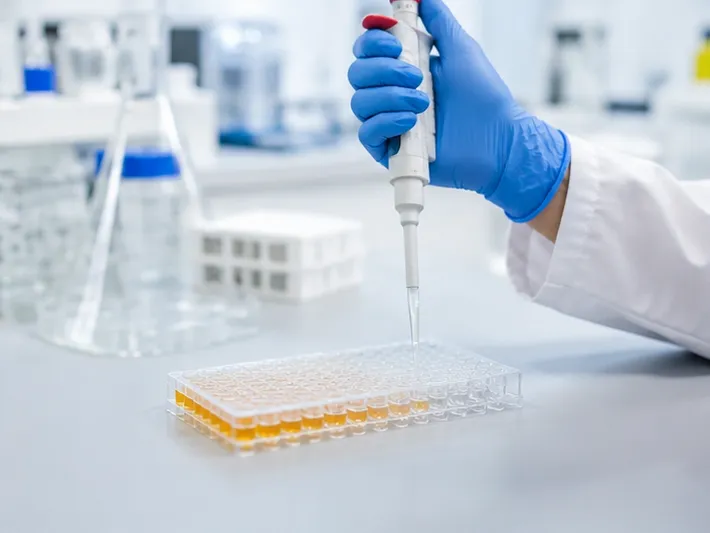
We tend to romanticize the analytical instrument—the LC-MS/MS that spits out a number to three decimal places. But that machine is just a reporter. It can only report on what it is given. The grinder is the witness that sits closest to the original sample, the one that sees the heterogeneity and the hotspots and, through controlled violence, turns a chaotic reality into a coherent truth.
A well-chosen mill is not just a piece of lab equipment. It is a promise that the 50 grams on the balance truly represent the 20 metric tons on the truck. It is the difference between a test result that is merely legally defensible and one that is actually true. And in a world where a single missed hotspot can cause a recall that bankrupts a farm, that truth is worth every revolution of the rotor.
For help selecting the right milling and sample preparation system for your mycotoxin workflow—or any material science application—Contact Our Experts.
Quick Links
Suggested Products
Laboratory Disc Mill Medium Hard Material Grinding Coal Coke Ore Pulverizer Industrial Knife Mill for Food and Biological Sample Preparation High Speed Laboratory Homogenizer Laboratory Hammer Mill for Coal Quality Analysis and Brittle Mineral Grinding Laboratory Knife Mill for Large Volume Sample Homogenization and Food Preparation Laboratory Micro Vibration Grinding Mill for Trace Sample PreparationFurther Reading
The Sleeping Giant in the Ash: How a Laboratory Ball Mill Unlocks High-Volume Sustainable Cement The Particle Size Orchestra: Engineering Precision Powders for Nutrient Enrichment Research The Clock Inside the Rock: Why Precision Timing Makes or Breaks Feldspar Processing From Dust to Data: How Precision Laboratory Presses Forge Truth in Mineral Testing The Hidden Fracture: Why Ceramic Feed Rods Fail Before the First Melt
PowderPreparation
Last updated on May 15, 2026
Related Products
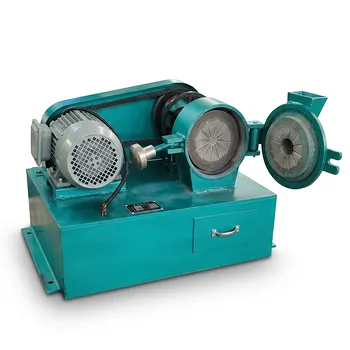
Laboratory Disc Mill Medium Hard Material Grinding Coal Coke Ore Pulverizer
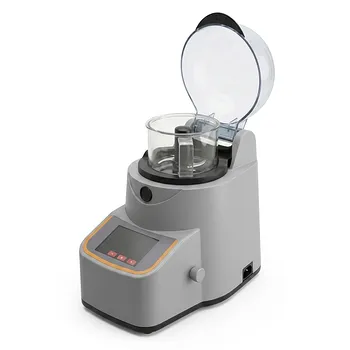
Industrial Knife Mill for Food and Biological Sample Preparation High Speed Laboratory Homogenizer
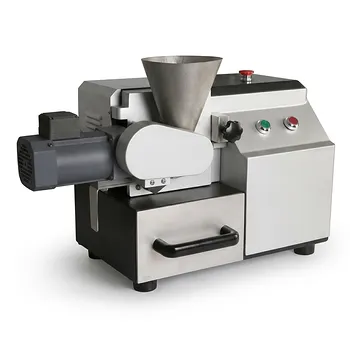
Laboratory Hammer Mill for Coal Quality Analysis and Brittle Mineral Grinding
Laboratory Knife Mill for Large Volume Sample Homogenization and Food Preparation
Laboratory Micro Vibration Grinding Mill for Trace Sample Preparation
High Speed Laboratory Knife Mill for Oily Fibrous and Wet Sample Homogenization
Laboratory Disc Mill for Ore and Mineral Sample Preparation
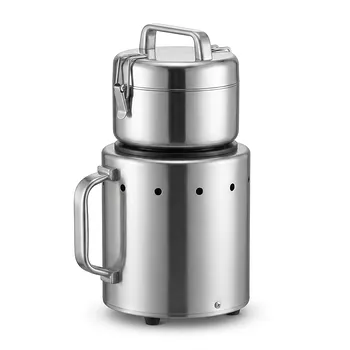
Small High Speed Grinder for Laboratory Sample Preparation
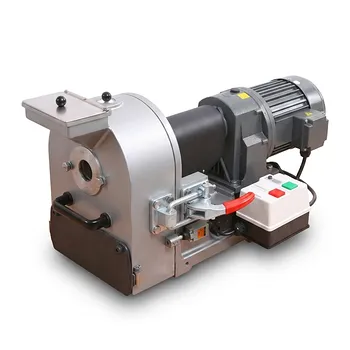
Laboratory Disc Mill for Fine Sample Preparation of Hard and Brittle Materials
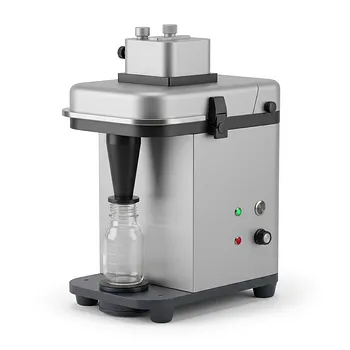
Cyclonic Laboratory Mill for NIR Spectroscopy Sample Preparation Food and Feed Grinding
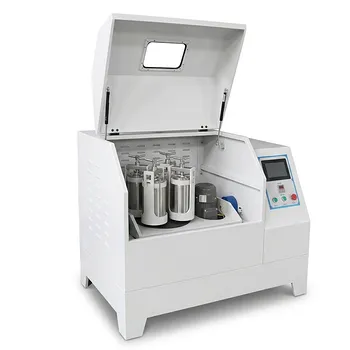
360° Rotating Omnidirectional Laboratory Planetary Ball Mill for Homogeneous Ultra-Fine Grinding and Mixing
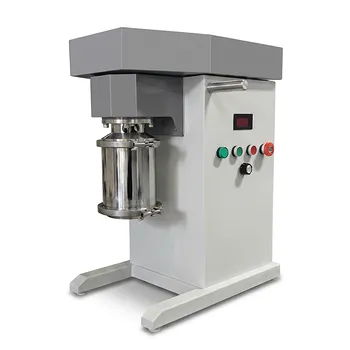
Nano Laboratory Bead Mill Desktop Sub Micron Sand Mill Screenless Seal Less Powder Grinder
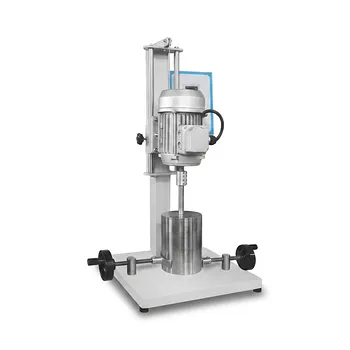
Laboratory Basket Sand Mill for Wet Grinding and Dispersion of Viscous Slurries
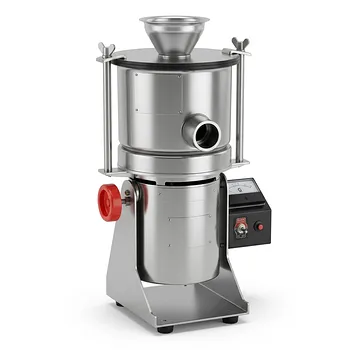
Laboratory Ultrafine Impact and Airflow Grinder for Precise Particle Size Control
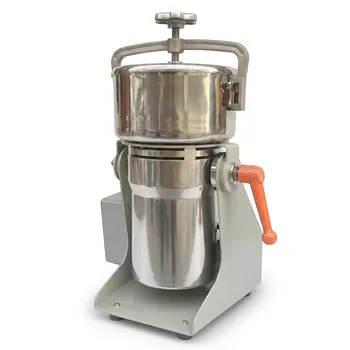
High Speed Laboratory Grinder Efficient Stainless Steel Powder Pulverizer Universal Material Science Mill for Sample Preparation
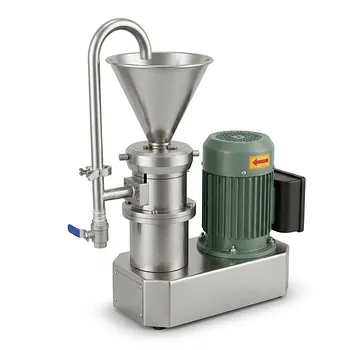
Small Laboratory Colloid Mill for Ultra-Fine Wet Grinding and Emulsification
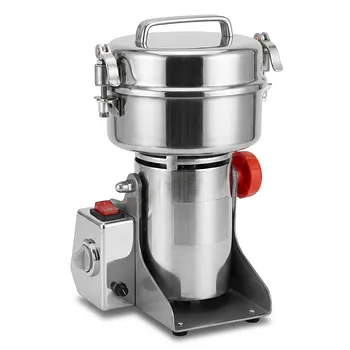
High Speed Laboratory Powder Grinder Small Batch Sample Preparation Mill
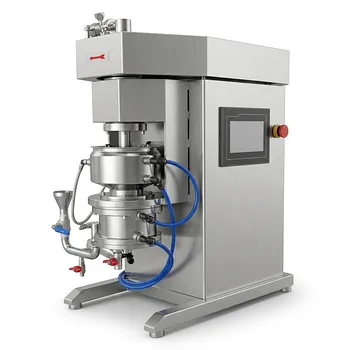
Small Ceramic Structure Laboratory Sand Mill Nanoscale Grinding Dispersion Equipment Seal-less Screen-less Design
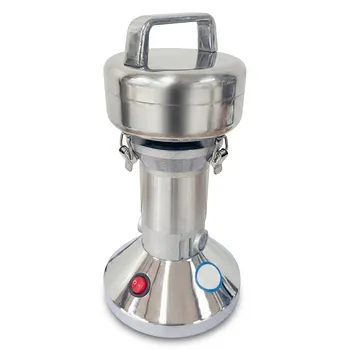
Small Trace Sample High Speed Pulverizer Grinder Laboratory Powder Mill