Why must argon and pressure be strictly controlled in Al-Cu-Fe ball milling? Ensure Phase Purity and Integrity
Updated 5 months ago
The preservation of metallic structural integrity is the primary driver. Strict argon control is required because the planetary ball milling process continuously generates "fresh" metal surfaces that are highly reactive. Without a strictly maintained inert atmosphere, these surfaces undergo rapid oxidation, which prevents the formation of the specific atomic arrangements necessary for a quasicrystalline structure.
Maintaining a high-purity argon atmosphere acts as a critical chemical barrier, isolating reactive aluminum and iron powders from oxygen and moisture. This ensures that the energy from the milling process is used for mechanical alloying and phase transformation rather than the creation of unwanted metal oxides.
The Vulnerability of High-Energy Milling
Continuous Generation of Fresh Surfaces
Planetary ball milling works by repeatedly fracturing and cold-welding powder particles. This process exposes "fresh" metallic surfaces that lack any protective oxide layer, making them extremely susceptible to intense oxidation upon contact with even trace amounts of air.
The Role of Frictional Heat
The high-energy impacts within the grinding jars generate significant thermal energy. This localized heat acts as a catalyst, drastically increasing the reaction rate between the metal powders and any available oxygen or moisture, leading to rapid material degradation.
Chemical Activity of Components
Aluminum and iron, the core components of Al-Cu-Fe alloys, possess high chemical activity. Aluminum, in particular, is prone to forming an excessively thick oxide layer that can compromise the metallic bonds required for the alloy's unique properties.
Impact on Material Properties and Structure
Preventing Phase Failure
The synthesis of quasicrystals and their approximant phases relies on precise chemical stoichiometry. If a portion of the aluminum or iron is converted into oxides (like Al₂O₃ or Fe₂O₃), the remaining metallic ratio is shifted, causing the final material to fail to reach the desired quasicrystalline state.
Ensuring Atomic Diffusion
Mechanical alloying requires atoms to migrate across particle boundaries during collisions. Oxide impurities act as physical barriers that obstruct this atomic diffusion, preventing the different elements from mixing at the atomic level to form a coherent alloy.
Maintaining Mechanical and Tribological Performance
Oxide inclusions within the powder act as defects in the final sintered body. By excluding oxygen, the argon atmosphere ensures the chemical purity of the raw materials, which is vital for achieving the high-performance mechanical and wear-resistant properties associated with Al-Cu-Fe alloys.
Understanding the Trade-offs
The Risk of Seal Failure
While high pressure is often used to ensure no air enters the jar, excessive pressure can stress the grinding jar seals. If a seal fails during the high-energy process, the sudden influx of oxygen into a heated, high-surface-area environment can cause a rapid, exothermic oxidation reaction.
Argon Purity vs. Cost
Using standard-grade argon may not be sufficient for sensitive Al-Cu-Fe alloys. High-purity argon is necessary to eliminate trace moisture, but this increases operational costs and requires more sophisticated gas handling equipment to maintain the environment throughout the milling cycle.
How to Apply This to Your Project
Recommendations for Atmosphere Management
- If your primary focus is phase purity: Use high-purity argon (99.99% or higher) and perform multiple vacuum-purge cycles before starting the milling process to ensure all residual oxygen is removed.
- If your primary focus is mechanical strength: Ensure the argon pressure remains slightly positive throughout the run to prevent the "breathing" effect, where cooling cycles might otherwise suck external air into the jars.
- If your primary focus is scalability: Implement monitoring systems to check jar pressure and temperature at regular intervals, as thermal expansion can alter the effectiveness of the argon shield over long milling durations.
Strict atmospheric control is the only way to ensure that the mechanical energy of the mill translates into a sophisticated quasicrystalline lattice rather than a collection of common metal oxides.
Summary Table:
| Key Factor | Role in Milling Process | Impact of Poor Control |
|---|---|---|
| Argon Purity | Creates chemical barrier against $O_2$ and $H_2O$ | Oxide formation (Al₂O₃, Fe₂O₃) and phase failure |
| Gas Pressure | Prevents air ingress via positive pressure | "Breathing" effect leading to contamination |
| Surface Protection | Isolates reactive "fresh" metal surfaces | Rapid oxidation and loss of metallic bonding |
| Atomic Diffusion | Facilitates clean element mixing | Oxide barriers obstruct alloying at the atomic level |
Optimize Your Material Synthesis with Precision Equipment
Achieving the perfect quasicrystalline structure requires absolute environmental control. At [Brand Name], we provide complete laboratory sample preparation solutions for material science, specializing in high-performance powder processing and compaction equipment.
Whether you need planetary ball mills, jet mills, or cryogenic grinders to maintain material purity, or advanced Cold Isostatic Presses (CIP) and vacuum hot presses for superior sintering, our equipment is designed for the most demanding research applications.
Ready to elevate your lab's performance? Contact us today to discover how our expertise in milling and pressing can ensure the integrity of your advanced alloys!
References
- Huixin Jin, Ryuji Tamura. Superior Performance and Catalytic Mechanism of an Icosahedral Quasicrystal Al‐Cu‐Fe in CO <sub>2</sub> Reduction to CO. DOI: 10.1002/cssc.202501424
Mentioned Products
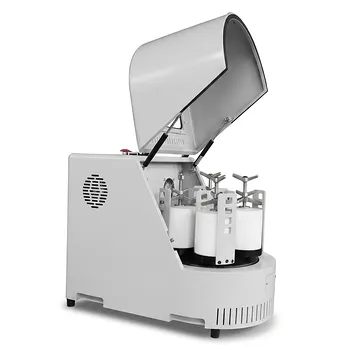
- Vertical Semi Circular Planetary Ball Mill for Laboratory Precision Grinding
- High Energy Planetary Ball Mill for Nano Scale Grinding and Mechanical Alloying
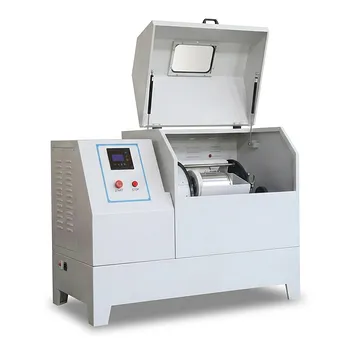
- Heavy Duty Horizontal Planetary Ball Mill for Efficient Industrial Grinding and Sample Preparation
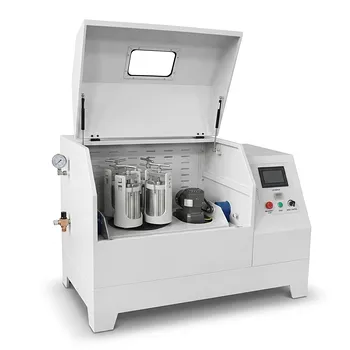
- Vertical Production Planetary Ball Mill for High Throughput Powder Processing
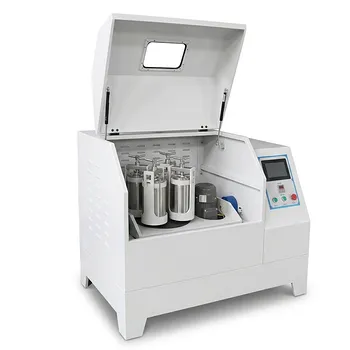
- 360° Rotating Omnidirectional Laboratory Planetary Ball Mill for Homogeneous Ultra-Fine Grinding and Mixing
People Also Ask
- What role does a planetary ball mill play in the synthesis of Li6PS5Cl (LPSCl)? Unlock High Ionic Conductivity
- Why is a planetary ball mill essential for SiBCN-rGO wet-spinning? Achieve Superior Dispersion and Spinnability
- Why is an intermittent grinding process required for perovskites in a planetary ball mill? Ensure Stability & Purity
- Why is a planetary ball mill required for PET micronization? Ensure Accurate Chemical Analysis of Reprocessed PET
- How does mechanized planetary ball milling compare to manual agate grinding? Optimize sulfide standard material precision.

Tech Team · PowderPreparation
Last updated on May 14, 2026
Related Products
Vertical Semi Circular Planetary Ball Mill for Laboratory Precision Grinding

High Energy Planetary Ball Mill for Nano Scale Grinding and Mechanical Alloying
Heavy Duty Horizontal Planetary Ball Mill for Efficient Industrial Grinding and Sample Preparation
Vertical Production Planetary Ball Mill for High Throughput Powder Processing
360° Rotating Omnidirectional Laboratory Planetary Ball Mill for Homogeneous Ultra-Fine Grinding and Mixing
Vertical Square Planetary Ball Mill for Laboratory Sample Preparation and Nanoscale Grinding

Miniature Planetary Ball Mill with Vacuum Grinding and High Efficiency for Laboratory Sample Preparation
High Energy Omnidirectional Planetary Ball Mill 16L

High Energy Laboratory Planetary Ball Mill for Nano Grinding and Material Science Sample Preparation
Planetary Ball Mill 12L
High Energy Planetary Ball Mill for Nano Scale Grinding and Colloidal Mixing in Material Science Research
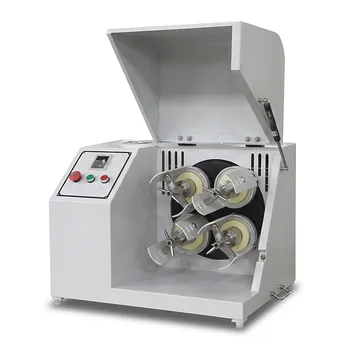
Horizontal Light Duty Planetary Ball Mill for Laboratory Sample Preparation
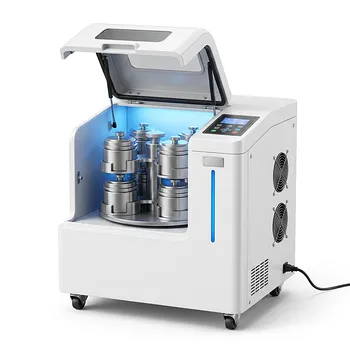
High Energy Omnidirectional Planetary Ball Mill 20L
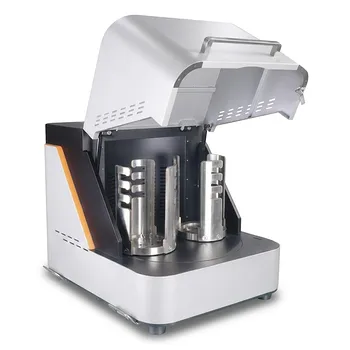
High Energy Laboratory Planetary Ball Mill for Nano Grinding and Colloidal Mixing of Hard and Brittle Materials

8L Planetary Ball Mill for Laboratory Grinding and Sample Preparation
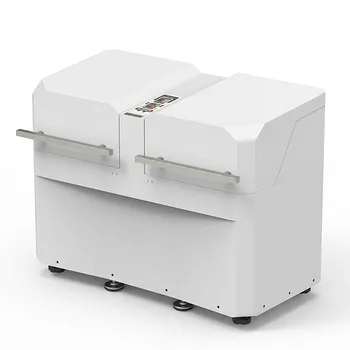
Dual Station Planetary Ball Mill 24L

Multi-Platform Nanoscale High-Energy Vibratory Ball Mill

Nano High Energy Vibratory Ball Mill for Laboratory Sample Preparation
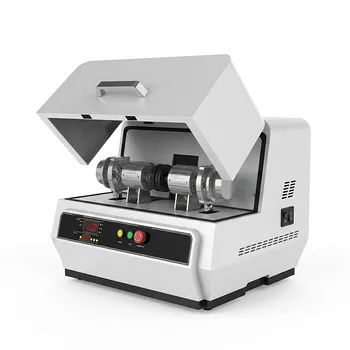
Dual Jar High Energy Vibratory Ball Mill