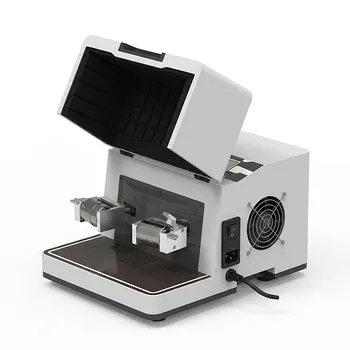
Why is a planetary ball mill required for PET micronization? Ensure Accurate Chemical Analysis of Reprocessed PET
Updated 5 months ago
Micronization via a planetary ball mill is the essential first step in PET analysis because it transforms bulk plastic into a high-surface-area powder, typically around 300μm, which is necessary for accurate chemical characterization. By utilizing high-energy impact and shear forces, the mill ensures that solvents and catalysts can fully penetrate the polymer matrix, enabling the complete extraction of degradation products and maximizing the sensitivity of subsequent analytical tests.
A planetary ball mill is required because it overcomes the chemical inertia of bulk PET through high-energy micronization. This process increases the material's specific surface area to facilitate rapid solvent penetration and ensures a homogenized, representative sample for precise chemical analysis.
Enhancing Chemical Reactivity Through Surface Area
The Impact of Specific Surface Area on Methanolysis
In its bulk or reprocessed form, polyethylene terephthalate (PET) possesses a relatively low surface-area-to-volume ratio, which acts as a barrier to chemical reagents. Micronization through a planetary ball mill drastically increases the specific surface area, allowing methanolysis agents and catalysts to contact the polymer chains more intimately.
This increased exposure ensures that the degradation process is thorough and that all internal chemical components are accessible. Without this step, chemical characterization would only reflect the surface properties of the plastic, leading to incomplete data.
Facilitating Solvent and Catalyst Penetration
High-energy milling creates a fine powder that allows for the rapid diffusion of organic solvents and acid digestion reagents. This is particularly critical when identifying degradation products or impurities that may be trapped deep within the reprocessed plastic matrix.
When the particle size is reduced to approximately 300μm, the resistance to mass transfer is minimized. This allows for the full extraction of analytes, which significantly enhances the analytical sensitivity of the characterization.
Ensuring Sample Homogeneity and Representativeness
Overcoming Heterogeneity in Reprocessed PET
Reprocessed PET often contains a mixture of different batches, additives, and potential contaminants that are not uniformly distributed. A planetary ball mill uses high-frequency rotation to achieve atomic-level uniform mixing and break down physical aggregates.
This homogenization ensures that the small sample used for chemical analysis is truly representative of the entire batch of recycled material. If the sample is not properly homogenized, the resulting data may be skewed by localized concentrations of impurities or variations in polymer chain length.
Mechanical Activation and Solid-Phase Reactions
Beyond simple size reduction, the planetary ball mill provides mechanical activation to the PET particles. This high-energy state can induce mechanochemical reactions, effectively "priming" the material for subsequent synthesis or characterization.
For advanced upcycling, such as converting PET into Metal-Organic Frameworks (MOFs), this activation allows terephthalic acid units to react directly with metal salts. This "one-pot" capability eliminates the need for intensive purification steps that would otherwise be required for coarse waste.
Understanding the Trade-offs and Limitations
Thermal Sensitivity of PET During Milling
The high-energy impact and shear forces generated within a planetary ball mill produce significant amounts of heat. Because PET is a thermoplastic, excessive heat can lead to thermal degradation or cause the powder to soften and "caking" inside the milling jar.
To prevent altering the chemical profile of the sample, researchers must often use intermittent milling cycles or cryogenic cooling. Failing to manage the temperature can lead to results that reflect the milling conditions rather than the original state of the reprocessed PET.
Potential for Sample Contamination
The grinding media (balls) and the jar material are subject to wear during high-frequency impact. This can introduce trace amounts of inorganic contaminants, such as stainless steel or zirconia, into the PET powder.
While these contaminants may not interfere with organic characterization like methanolysis, they can compromise elemental analysis or nitrogen content tests. Selecting the appropriate jar lining and ball material is a critical technical decision for maintaining sample purity.
How to Apply This to Your Project
Making the Right Choice for Your Goal
- If your primary focus is identifying trace impurities: Use a planetary ball mill with high-energy settings to achieve the smallest possible particle size, ensuring that all trapped degradation products are released for extraction.
- If your primary focus is solid-state synthesis (e.g., MOFs): Prioritize mechanical activation by using high-frequency impact, which facilitates direct coordination reactions between PET units and metal salts.
- If your primary focus is quantitative elemental analysis: Choose high-purity grinding media (like agate or high-grade ceramic) and utilize short, cooled milling cycles to prevent sample contamination and thermal alteration.
By precisely controlling the micronization process, you ensure that your chemical characterization is both highly sensitive and technically representative of the reprocessed material.
Summary Table:
| Key Requirement | Impact on PET Analysis | Technical Benefit |
|---|---|---|
| Surface Area Expansion | Increases contact with solvents & catalysts | Rapid extraction of degradation products |
| Sample Homogeneity | Breaks down aggregates & mixes additives | Ensures data is representative of the batch |
| Mechanical Activation | Induces mechanochemical reactions | Facilitates "one-pot" synthesis for MOFs |
| Size Reduction (~300μm) | Overcomes chemical inertia of bulk plastic | Enhances analytical sensitivity & reactivity |
Optimize Your Polymer Analysis with Precision Sample Prep
At [Brand Name], we provide complete laboratory sample preparation solutions tailored for material science. Achieving the perfect 300μm micronization for reprocessed PET requires equipment that balances high-energy impact with temperature control.
Our extensive product lines specialize in powder processing and compaction, including:
- Advanced Mills: Planetary ball mills, jet mills, and cryogenic grinders for heat-sensitive polymers.
- Sieving & Mixing: Vibratory sieve shakers and defoaming mixers for perfect particle distribution.
- Compaction Excellence: A full spectrum of hydraulic presses, including Cold/Warm Isostatic Presses (CIP/WIP) and vacuum hot presses.
Whether you are identifying trace impurities or developing advanced MOFs, our equipment ensures your samples are homogenized and chemically primed. Contact our technical experts today to enhance your lab's analytical accuracy and efficiency!
References
- Susana Gomes, Amanda Melo. Thermal and Chemical Characterisation of Reprocessed PET: A Study on Commercial, Recycled, Bottle-Grade and Textile Blend. DOI: 10.3390/ma18184394
Mentioned Products
- Vertical Semi Circular Planetary Ball Mill for Laboratory Precision Grinding
- High Energy Planetary Ball Mill for Nano Scale Grinding and Mechanical Alloying
- Heavy Duty Horizontal Planetary Ball Mill for Efficient Industrial Grinding and Sample Preparation
- Vertical Production Planetary Ball Mill for High Throughput Powder Processing
- 360° Rotating Omnidirectional Laboratory Planetary Ball Mill for Homogeneous Ultra-Fine Grinding and Mixing
People Also Ask
- What role does a planetary ball mill play in the synthesis of Li6PS5Cl (LPSCl)? Unlock High Ionic Conductivity
- Why is a planetary ball mill essential for SiBCN-rGO wet-spinning? Achieve Superior Dispersion and Spinnability
- Why is an intermittent grinding process required for perovskites in a planetary ball mill? Ensure Stability & Purity
- How does mechanized planetary ball milling compare to manual agate grinding? Optimize sulfide standard material precision.
- What role does a planetary ball mill play in the preparation of forsterite (Mg2SiO4) ceramic raw materials? Key Insights

Tech Team · PowderPreparation
Last updated on May 14, 2026
Related Products
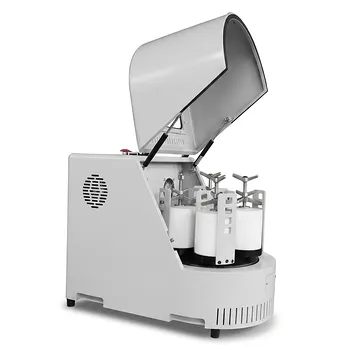
Vertical Semi Circular Planetary Ball Mill for Laboratory Precision Grinding

High Energy Planetary Ball Mill for Nano Scale Grinding and Mechanical Alloying

Heavy Duty Horizontal Planetary Ball Mill for Efficient Industrial Grinding and Sample Preparation

Vertical Production Planetary Ball Mill for High Throughput Powder Processing

360° Rotating Omnidirectional Laboratory Planetary Ball Mill for Homogeneous Ultra-Fine Grinding and Mixing

Vertical Square Planetary Ball Mill for Laboratory Sample Preparation and Nanoscale Grinding

Miniature Planetary Ball Mill with Vacuum Grinding and High Efficiency for Laboratory Sample Preparation

High Energy Omnidirectional Planetary Ball Mill 16L

High Energy Laboratory Planetary Ball Mill for Nano Grinding and Material Science Sample Preparation
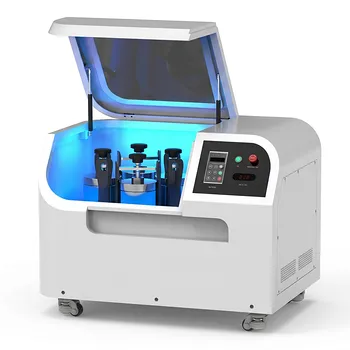
Planetary Ball Mill 12L
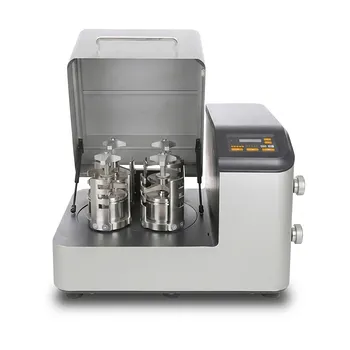
High Energy Planetary Ball Mill for Nano Scale Grinding and Colloidal Mixing in Material Science Research
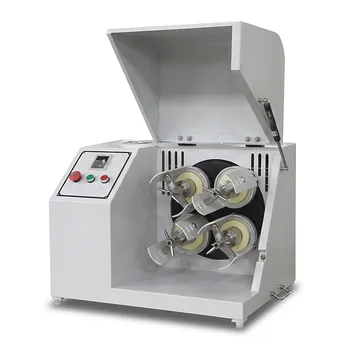
Horizontal Light Duty Planetary Ball Mill for Laboratory Sample Preparation

High Energy Omnidirectional Planetary Ball Mill 20L
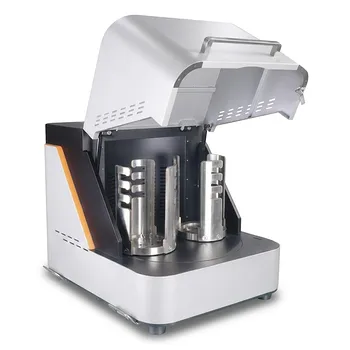
High Energy Laboratory Planetary Ball Mill for Nano Grinding and Colloidal Mixing of Hard and Brittle Materials
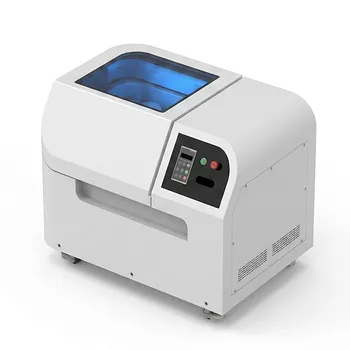
8L Planetary Ball Mill for Laboratory Grinding and Sample Preparation
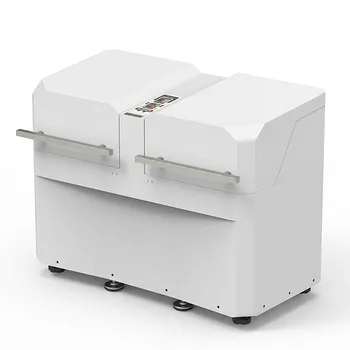
Dual Station Planetary Ball Mill 24L
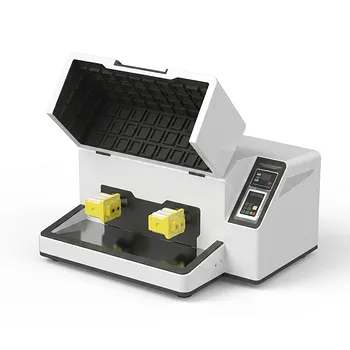
Multi-Platform Nanoscale High-Energy Vibratory Ball Mill
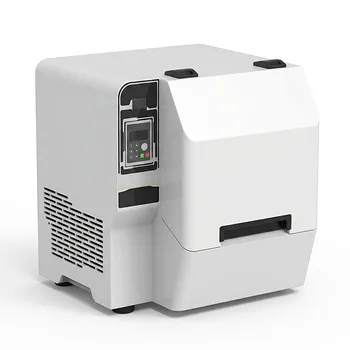
Nano High Energy Vibratory Ball Mill for Laboratory Sample Preparation
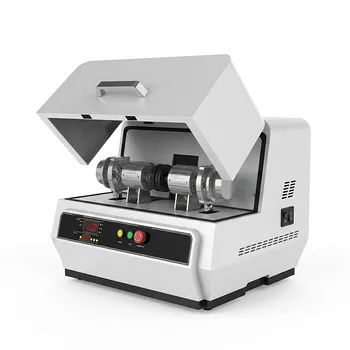
Dual Jar High Energy Vibratory Ball Mill