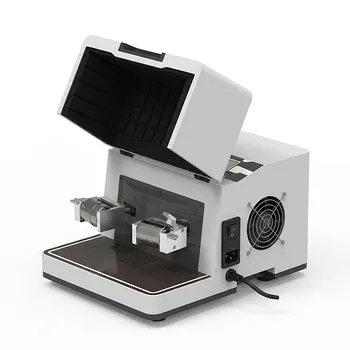
Why is an intermittent grinding process required for perovskites in a planetary ball mill? Ensure Stability & Purity
Updated 3 months ago
Intermittent grinding is a specialized thermal management strategy essential for maintaining the structural integrity of metal halide perovskites. By cycling between active grinding and cooling pauses, researchers can dissipate the intense frictional heat generated by high-energy impacts. This prevents the sensitive perovskite compounds from decomposing or shifting into non-active phases, such as the "yellow phase," ensuring the final material retains its desired electrochemical properties.
An intermittent grinding cycle preserves the chemical phase and purity of metal halide perovskites by mitigating the extreme heat generated by high-energy impact and friction. This controlled approach prevents product degradation while simultaneously extending the operational lifespan of the milling equipment.
The Thermal Dynamics of High-Energy Milling
Conversion of Mechanical Energy to Heat
A planetary ball mill operates using high-frequency rotation to generate intense impact and shear forces. While these forces are necessary to achieve atomic-level uniform mixing, the high-speed conversion of mechanical energy inevitably produces significant thermal energy.
Internal Temperature Spikes
Without intervention, the temperature inside the grinding jars can rise sharply and unexpectedly. This heat accumulation is particularly dangerous in industrial-scale synthesis, where the volume of material and the duration of the process amplify the thermal load.
Protecting Heat-Sensitive Perovskites
Metal halide perovskites are notoriously heat-sensitive and can easily lose their specific crystalline structure when exposed to excessive temperatures. Intermittent operation—such as grinding for several minutes followed by a one-minute pause—provides the necessary window for effective heat dissipation.
Ensuring Material Stability and Purity
Prevention of Phase Transformation
One of the primary risks of overheating is the transformation of the perovskite into a non-active phase, often referred to as the "yellow phase." By managing the temperature through intermittent cycles, you ensure the formation of a single pure-phase structure, which is a prerequisite for high performance.
Avoiding Powder Agglomeration
High temperatures can cause fine powders to become "sticky," leading to unintended agglomeration or adhesion to the grinding media. Intermittent cooling phases keep the powder in a dry, flowable state, ensuring that the mixing environment remains highly uniform.
Reducing Chemical Oxidation
For certain active components used in these syntheses, heat can accelerate uncontrolled thermochemical reactions or oxidation. Utilizing a "run-and-cool" mode, sometimes paired with alternating rotation directions, keeps these reactions in check and maintains material purity.
Equipment Preservation and Longevity
Protecting the Drive System
Continuous operation at high speeds generates heat that can radiate from the jars into the mill's internal components. Intermittent pauses protect the equipment motor from overheating, preventing premature failure and maintaining mechanical precision.
Reducing Mechanical Wear
High temperatures can alter the friction coefficients between the grinding balls and the jar walls, potentially increasing mechanical wear. By keeping the system within a controlled temperature range, you extend the service life of both the grinding media and the planetary mill itself.
Navigating the Trade-offs of Intermittent Grinding
Throughput vs. Material Quality
The most significant trade-off of intermittent grinding is the increased processing time. While pauses ensure material quality, they extend the total duration of the synthesis cycle, which may lower the overall throughput in a production environment.
Optimization of Cycle Ratios
Finding the right balance between rotation time and rest time is critical. For example, highly reactive or sensitive materials may require a 1:1 ratio (e.g., 15 minutes of grinding followed by 15 minutes of rest), while more stable mixtures can tolerate shorter pauses.
Optimizing Your Milling Strategy
How to Apply This to Your Project
To achieve the best results when synthesizing sensitive metal halide perovskites, tailor your milling parameters to your specific material stability and production goals.
- If your primary focus is Phase Purity: Implement frequent, short cooling pauses (e.g., a 1-minute pause every 5 minutes) to ensure the temperature never reaches the threshold for phase transformation.
- If your primary focus is Equipment Longevity: Utilize longer rest periods and incorporate forced air cooling to minimize the thermal stress on the motor and bearings.
- If your primary focus is Uniform Mixing: Alternate the rotation direction during each active grinding cycle to prevent dead zones and ensure the powder is consistently moved.
By mastering the balance of energy input and heat dissipation, you can leverage the power of planetary milling without compromising the delicate chemistry of your perovskite materials.
Summary Table:
| Key Factor | Impact of Heat Accumulation | Benefit of Intermittent Grinding |
|---|---|---|
| Phase Purity | Transformation to non-active "yellow phase" | Maintains stable, single-phase crystalline structure |
| Powder Texture | Agglomeration and "sticky" powder buildup | Keeps powders dry, flowable, and uniformly mixed |
| Chemical Integrity | Accelerated oxidation or thermochemical reactions | Prevents unintended reactions and maintains high purity |
| Equipment Health | Motor overheating and mechanical wear | Extends lifespan of the drive system and grinding media |
Optimize Your Perovskite Synthesis with Precision Laboratory Solutions
Achieving the perfect balance between high-energy impact and thermal management is critical for sensitive material science applications. At [Brand Name], we provide complete laboratory sample preparation solutions specifically designed for advanced powder processing and compaction.
Our extensive product line empowers researchers to handle heat-sensitive materials with ease:
- Advanced Milling: High-performance planetary ball mills, jet mills, and liquid nitrogen cryogenic grinders.
- Sample Preparation: Jaw/roll crushers, sieve shakers, and high-uniformity powder mixers.
- Material Compaction: A full spectrum of hydraulic presses, including Cold/Warm Isostatic Presses (CIP/WIP), vacuum hot presses, and XRF pellet presses.
Whether you are synthesizing metal halide perovskites or developing next-generation ceramics, our equipment ensures maximum phase purity and equipment longevity. Contact our technical experts today to find the ideal configuration for your research goals!
References
- Zonghan Hong, Han Sen Soo. Completely Solvent-free Protocols to Access Phase-Pure, Metastable Metal Halide Perovskites and Functional Photodetectors from the Precursor Salts. DOI: 10.1016/j.isci.2019.05.042
Mentioned Products
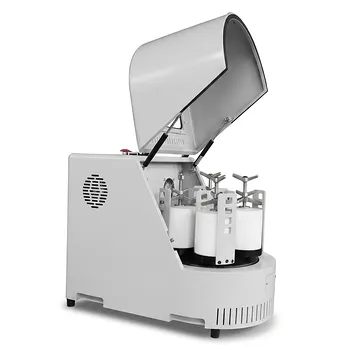
- Vertical Semi Circular Planetary Ball Mill for Laboratory Precision Grinding
- High Energy Planetary Ball Mill for Nano Scale Grinding and Mechanical Alloying
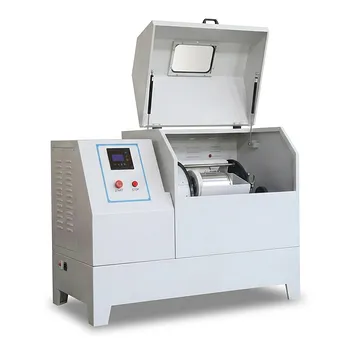
- Heavy Duty Horizontal Planetary Ball Mill for Efficient Industrial Grinding and Sample Preparation
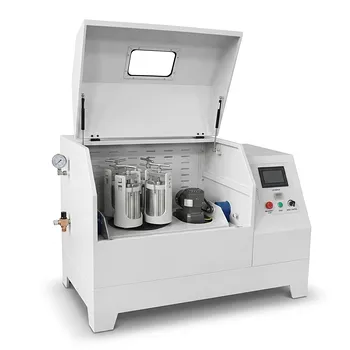
- Vertical Production Planetary Ball Mill for High Throughput Powder Processing
- 360° Rotating Omnidirectional Laboratory Planetary Ball Mill for Homogeneous Ultra-Fine Grinding and Mixing
People Also Ask
- What role does a planetary ball mill play in the synthesis of Li6PS5Cl (LPSCl)? Unlock High Ionic Conductivity
- Why is a planetary ball mill essential for SiBCN-rGO wet-spinning? Achieve Superior Dispersion and Spinnability
- Why is a planetary ball mill required for PET micronization? Ensure Accurate Chemical Analysis of Reprocessed PET
- How does mechanized planetary ball milling compare to manual agate grinding? Optimize sulfide standard material precision.
- What role does a planetary ball mill play in the preparation of forsterite (Mg2SiO4) ceramic raw materials? Key Insights

Tech Team · PowderPreparation
Last updated on Jun 03, 2026
Related Products
Vertical Semi Circular Planetary Ball Mill for Laboratory Precision Grinding

High Energy Planetary Ball Mill for Nano Scale Grinding and Mechanical Alloying
Heavy Duty Horizontal Planetary Ball Mill for Efficient Industrial Grinding and Sample Preparation
Vertical Production Planetary Ball Mill for High Throughput Powder Processing
360° Rotating Omnidirectional Laboratory Planetary Ball Mill for Homogeneous Ultra-Fine Grinding and Mixing
Vertical Square Planetary Ball Mill for Laboratory Sample Preparation and Nanoscale Grinding
Miniature Planetary Ball Mill with Vacuum Grinding and High Efficiency for Laboratory Sample Preparation
High Energy Omnidirectional Planetary Ball Mill 16L
High Energy Laboratory Planetary Ball Mill for Nano Grinding and Material Science Sample Preparation
Planetary Ball Mill 12L
High Energy Planetary Ball Mill for Nano Scale Grinding and Colloidal Mixing in Material Science Research
Horizontal Light Duty Planetary Ball Mill for Laboratory Sample Preparation
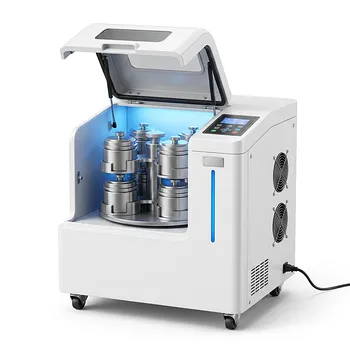
High Energy Omnidirectional Planetary Ball Mill 20L
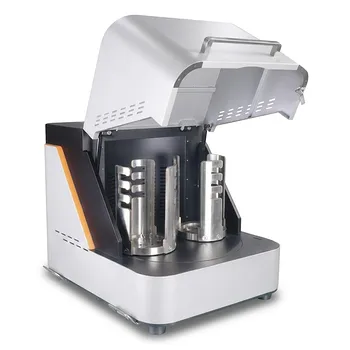
High Energy Laboratory Planetary Ball Mill for Nano Grinding and Colloidal Mixing of Hard and Brittle Materials
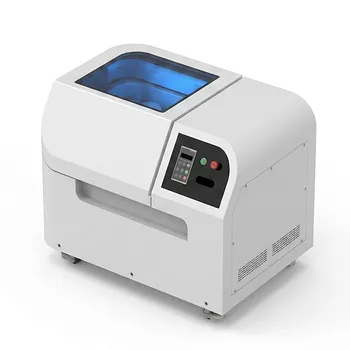
8L Planetary Ball Mill for Laboratory Grinding and Sample Preparation
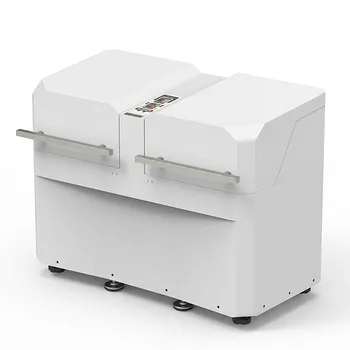
Dual Station Planetary Ball Mill 24L
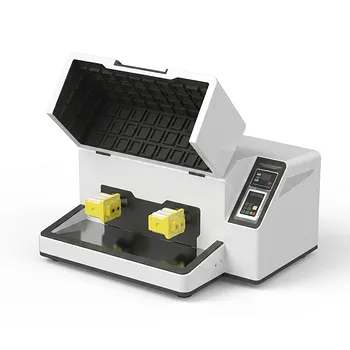
Multi-Platform Nanoscale High-Energy Vibratory Ball Mill
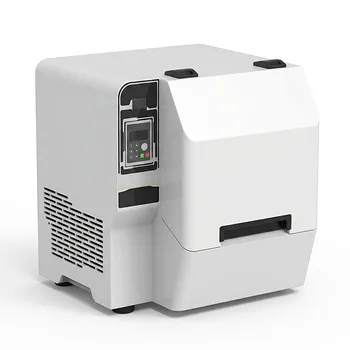
Nano High Energy Vibratory Ball Mill for Laboratory Sample Preparation
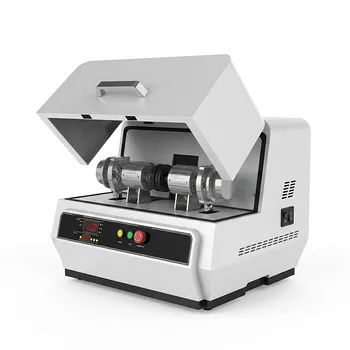
Dual Jar High Energy Vibratory Ball Mill