Why is a high-precision vibratory sieve shaker necessary for mine tailings? Optimize Micro-Filling & Strength
Updated 4 months ago
A high-precision vibratory sieve shaker is essential because it provides the granular control required to optimize the micro-filling effect and mechanical performance of mine tailing-based concrete. By ensuring tailings fall within a specific D50 range—typically between 20 and 400 micrometers—this equipment allows engineers to manage water demand and packing density with surgical precision.
High-precision sieving transforms raw industrial waste into high-performance supplementary cementitious materials (SCMs). It eliminates the uncertainties of particle variance, directly influencing the chemical reactivity and structural integrity of the final composite.
Optimizing Mechanical Performance and Density
Enhancing the Micro-Filling Effect
Mine tailings act as a filler that occupies the microscopic voids between larger cement particles. A high-precision vibratory sieve shaker ensures that these particles are sized correctly to achieve tight powder packing. When the packing density is maximized, the resulting concrete exhibits significantly higher mechanical strength and a more uniform internal morphology.
Controlling Water Demand
Particle size directly influences the surface area of the materials, which in turn dictates the water-cement ratio. Precise classification prevents an excess of "fines" that would otherwise increase water demand and weaken the mortar. By maintaining a narrow particle size distribution, producers can ensure consistent workability without sacrificing strength.
Ensuring Chemical and Thermal Stability
Maximizing Reaction Interfaces
In cementitious systems, the rate of chemical reaction is dependent on the available surface area of the reactants. Precise sieving ensures that tailings have a consistent reaction interface, preventing incomplete leaching or sluggish hydration. This is critical for maintaining a constant liquid-solid ratio during the preparation of high-performance mortars.
Stability During Thermal Activation
If tailings require thermal activation in a kiln, oversized particles can lead to uneven heat conduction. A vibratory sieve shaker filters out particles exceeding specific limits (such as 3mm) to guarantee that heat penetrates every grain uniformly. This step is vital for ensuring the chemical activity and stability of the resulting calcined material.
Process Control and Reproducibility
Evaluating Grinding Efficiency
The shaker serves as a diagnostic tool to verify the performance of ball mills and the effectiveness of grinding aids. By determining the P80 index (the size at which 80% of the material passes), operators can decide if the grinding process has reached the optimal range for flotation or hydration. This data-driven approach prevents the waste of energy caused by over-grinding or the quality failures of under-grinding.
Eliminating Experimental Variables
In a laboratory setting, particle size variance is a primary cause of non-reproducible results. Utilizing standard test sieves allows researchers to isolate specific size ranges, such as -106+38 µm, for controlled testing. This precision ensures that any observed changes in tensile strength or Young’s modulus are due to the material properties, not random sizing inconsistencies.
Understanding the Trade-offs
Mechanical Wear vs. Precision
Vibratory shakers rely on mechanical energy, which can lead to the blinding (clogging) of fine meshes over time. While high-precision sieving is accurate, it requires regular maintenance and calibration of the screens to ensure the data remains valid. Failure to replace worn sieves can result in "oversized" particles skewing the D50 results and compromising the concrete’s internal structure.
Processing Speed vs. Granularity
Achieving a high degree of precision is a time-intensive process compared to automated laser diffraction methods. However, physical sieving provides a direct, tangible measurement of particle volume that is often more reliable for industrial-scale material grading. The trade-off involves balancing the need for rapid production with the necessity of strict filler specification uniformity.
How to Apply This to Your Project
To maximize the value of your mine tailings, your approach to sieving should align with your specific performance targets.
- If your primary focus is maximizing compressive strength: Use the sieve shaker to target a D50 between 20 and 150 micrometers to optimize the micro-filling effect.
- If your primary focus is process efficiency and energy savings: Use the P80 index to calibrate your grinding circuit, ensuring you don't consume excess power by over-processing the tailings.
- If your primary focus is chemical reactivity in geopolymerization: Focus on narrow particle size distribution to maintain a constant reaction interface and predictable liquid-solid ratios.
By integrating high-precision sieving into your workflow, you convert unpredictable mine waste into a standardized, high-value engineering component.
Summary Table:
| Key Factor | Role of High-Precision Sieving | Impact on Final Material |
|---|---|---|
| Micro-filling Effect | Optimizes powder packing density | Higher mechanical strength & uniform morphology |
| Water Demand | Controls surface area of fines | Consistent workability and optimal water-cement ratio |
| Thermal Activation | Ensures uniform heat conduction | Guaranteed chemical activity and material stability |
| Process Control | Verifies grinding efficiency (P80) | Prevents energy waste and ensures reproducibility |
| Reaction Interface | Maintains constant liquid-solid ratios | Predictable hydration and chemical stability |
Elevate Your Material Science Research with Precision Equipment
Transforming industrial waste into high-performance cementitious materials requires absolute control over particle size and morphology. We provide complete laboratory sample preparation solutions specifically designed for material science and powder processing.
From initial size reduction using our jaw and roll crushers or liquid nitrogen cryogenic grinders to fine-tuning particle distribution with our planetary ball, jet, and disc mills, we ensure your raw materials are perfectly prepared. Our high-precision vibratory and air-jet sieve shakers, equipped with a wide range of test sieves, offer the surgical accuracy needed to optimize the micro-filling effect in your composites.
Beyond processing, we manufacture a full spectrum of compaction equipment, including Cold/Warm Isostatic Presses (CIP/WIP), standard lab presses, and vacuum hot presses to help you achieve maximum density and structural integrity.
Ready to optimize your tailings-to-cement workflow? Contact our technical team today to find the perfect equipment for your laboratory!
References
- Yipu Guo, Wengui Li. Advancing circular economy and construction sustainability: transforming mine tailings into high-value cementitious and alkali-activated concrete. DOI: 10.1038/s44296-025-00049-9
Mentioned Products
- High Frequency Wet Three-Dimensional Vibrating Sieve Shaker for Dry and Wet Particle Size Analysis
- High Frequency Cabinet Type Three-Dimensional Rotary Vibrating Sieve Shaker for Dry Sieving and Particle Classification
- Vibratory Sieve Shaker Electromagnetic 3D Motion Powder Particle Size Analyzer for Dry and Wet Sieving
- Laboratory Vibratory Test Sieve Shaker for Precision Particle Size Analysis and Powder Grading
- Heavy Duty Dry Three Dimensional Vibratory Sieve Shaker for Particle Separation
People Also Ask
- Why are vibrating sieve shakers used with standard test sieves? Ensure Precise Grading for Recycled Aggregates
- What is the function of high-frequency vibratory sieve shakers in AMC powders? Master Particle Grading & PSD Control
- How does a vibratory sieve shaker contribute to optimizing the performance of activated carbon? Enhance Adsorption Precision
- Why is it essential to use a vibrating sieve shaker for the final grading of dietary fiber products? Master Quality.
- What is the role of a high-frequency vibratory sieve shaker in Cold Mix asphalt design? Optimize RAP Gradation Accuracy

Tech Team · PowderPreparation
Last updated on Jun 03, 2026
Related Products
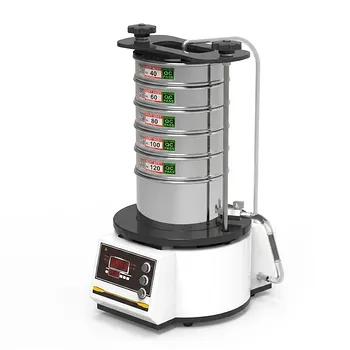
High Frequency Wet Three-Dimensional Vibrating Sieve Shaker for Dry and Wet Particle Size Analysis
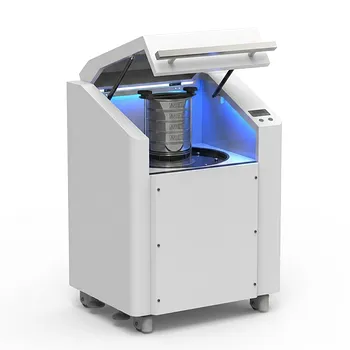
High Frequency Cabinet Type Three-Dimensional Rotary Vibrating Sieve Shaker for Dry Sieving and Particle Classification
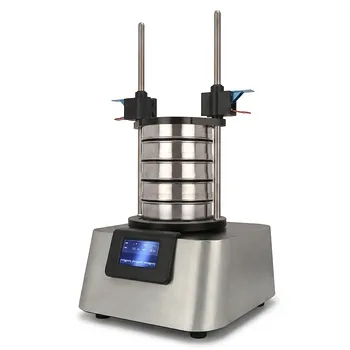
Vibratory Sieve Shaker Electromagnetic 3D Motion Powder Particle Size Analyzer for Dry and Wet Sieving
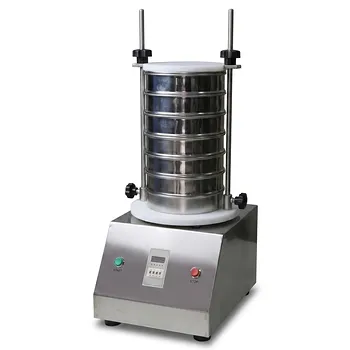
Laboratory Vibratory Test Sieve Shaker for Precision Particle Size Analysis and Powder Grading
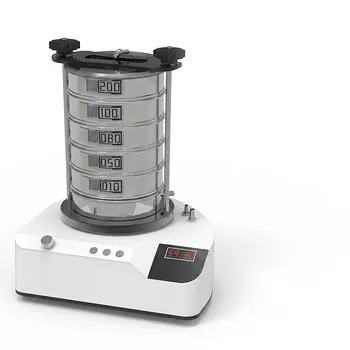
Heavy Duty Dry Three Dimensional Vibratory Sieve Shaker for Particle Separation
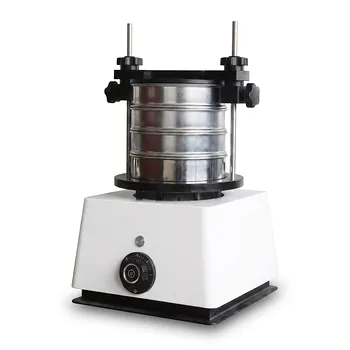
Small Laboratory Vibrating Sieve Shaker for Precise Particle Size Analysis
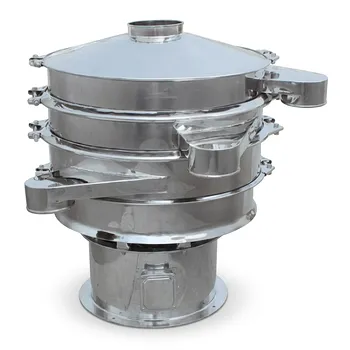
Stainless Steel Rotary Vibrating Sieve High Precision Circular Vibratory Separator Industrial Powder Grading Machine Multi Layer Sifting Equipment
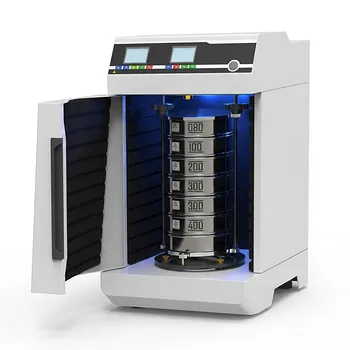
Laboratory Dry and Wet Three Dimensional Vibratory Sieve Shaker for Particle Analysis
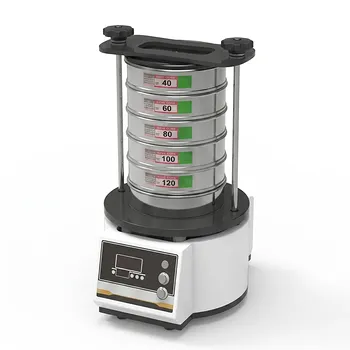
Dry Three Dimensional Vibratory Sieve Shaker
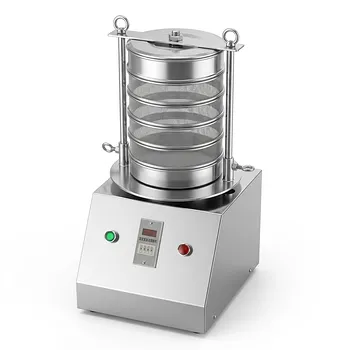
Stainless Steel Laboratory Vibratory Test Sieve Shaker
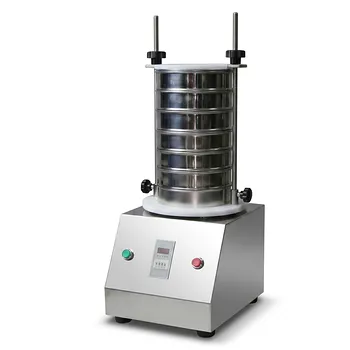
Small Laboratory Vibratory Sieve Shaker for Powder Gradation and Particle Size Analysis
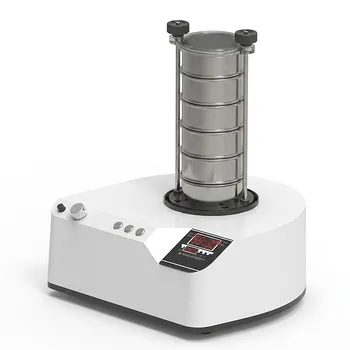
三维电磁微量振动筛分仪
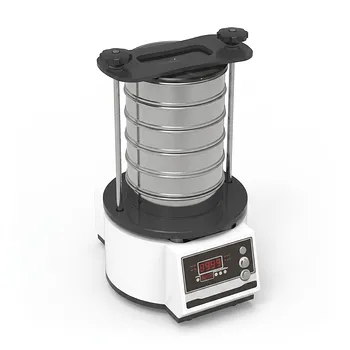
Tapping Oscillating Sieve Shaker for Dry and Wet Particle Size Analysis
Automatic Vibrating Powder Feeder for Laboratory Material Processing Precision Vibratory Hopper Feeder for Granular and Powder Material Handling Industrial Grade Vibrating Tray Feeder for Consistent Material Sample Preparation
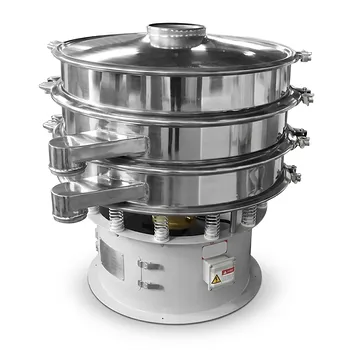
Three Dimensional Rotary Vibrating Sieve
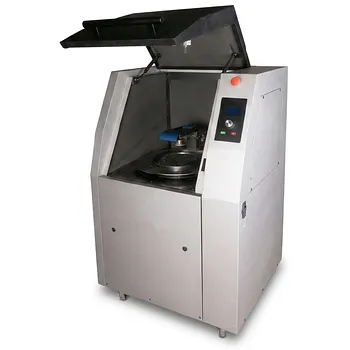
High Speed Vibratory Disc Mill for Spectral Analysis Sample Preparation and Rapid Powder Grinding
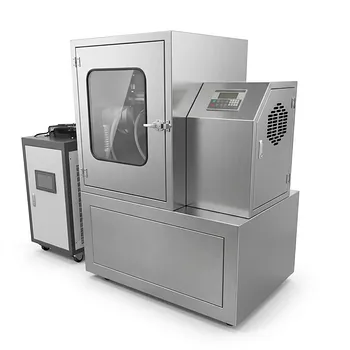
Vibratory Superfine Grinder for Ultra Fine Laboratory Powder Milling
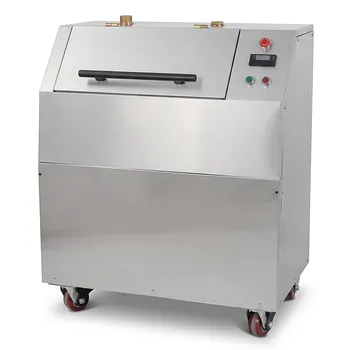
Vibratory Disc Mill for Rapid Fine Grinding and High Throughput Sample Preparation of Hard and Brittle Materials
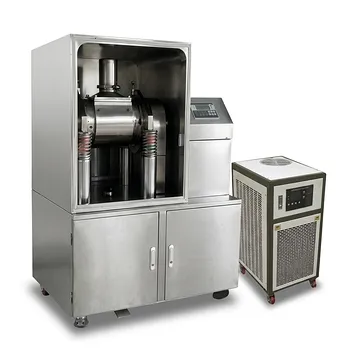
Small Vibrating Ultrafine Grinder for Traditional Chinese Medicine