Why is Warm Isostatic Pressing (WIP) used for laser-sintered parts? Maximize Density & Structural Integrity
Updated 5 months ago
Warm Isostatic Pressing (WIP) is the definitive solution for eliminating internal porosity and maximizing the structural integrity of fiber-reinforced laser-sintered parts. It applies uniform, omnidirectional pressure at specific temperatures to collapse micron-sized voids that naturally form around fibers during the printing process. This treatment significantly enhances the part's density, interfacial bonding, and fatigue resistance.
WIP provides the critical thermo-mechanical coupling needed to collapse internal pores and enhance interfacial bonding, transforming "as-printed" parts into high-performance engineering components with optimized mechanical properties.
Eliminating the Porosity Problem
Collapsing Micron-Sized Voids
Laser sintering often leaves tiny gaps, particularly in the regions where the matrix material meets the reinforcing fibers. WIP applies high, uniform pressure to physically force these pores closed, ensuring the material reaches its maximum theoretical density.
Uniformity Through Omnidirectional Pressure
Unlike standard pressing methods, WIP exerts pressure equally from all directions. This isostatic environment ensures that internal pores are closed consistently throughout the entire volume of the part, regardless of its shape or orientation.
Enhancing Material Properties
Strengthening the Fiber-Matrix Interface
The effectiveness of a reinforced part depends heavily on how well the fibers bond to the base material. WIP creates an environment where the matrix material is pressed tightly against every fiber surface, dramatically improving the interfacial bonding and overall tensile strength.
Optimizing Crystallinity and Stress
The specific temperatures used during WIP promote better molecular alignment and increase the crystallinity of the matrix material. This process also helps eliminate residual stresses accumulated during the laser sintering process, which could otherwise lead to premature part failure.
Understanding the Trade-offs
WIP vs. Unidirectional Hot Pressing
Standard lab hot presses apply force in a single direction, which can cause part deformation or uneven density in complex geometries. While WIP prevents warping through its omnidirectional approach, the equipment is often more complex to operate and maintain.
Cost and Processing Time
Integrating WIP into a production workflow adds an extra post-processing step that increases both time and cost per part. However, for high-performance applications like aerospace or medical devices, the significant boost in fatigue resistance and reliability usually justifies the investment.
How to Apply This to Your Project
WIP is a specialized tool that should be deployed based on the performance requirements of your final component. Consider the following goals:
- If your primary focus is maximizing fatigue resistance: Utilize WIP to ensure all internal stress-concentrating voids are eliminated, as these are the primary sites for crack initiation.
- If your primary focus is maintaining complex geometric tolerances: Choose WIP over uniaxial hot pressing to ensure the part reaches full density without suffering from directional deformation.
- If your primary focus is increasing load-bearing capacity: Leverage the high-pressure environment of WIP to strengthen the fiber-matrix bond, which is essential for efficient load transfer within the material.
WIP bridges the gap between raw additive manufacturing output and the rigorous requirements of high-performance engineering reality.
Summary Table:
| Key Benefit | Mechanism | Engineering Impact |
|---|---|---|
| Porosity Elimination | Collapses micron-sized voids via high pressure | Reaches maximum theoretical density |
| Omnidirectional Pressure | Isostatic force applied from all directions | Prevents warping & ensures uniform density |
| Enhanced Bonding | Presses matrix tightly against fiber surfaces | Increases tensile strength & load transfer |
| Structural Optimization | Increases crystallinity & relieves residual stress | Dramatically improves fatigue resistance |
Elevate Your Material Performance with Precision WIP Solutions
Are you struggling with internal porosity or weak interfacial bonding in your additive manufacturing workflow? [Your Brand Name] specializes in providing complete laboratory sample preparation solutions for material science, designed to transform raw outputs into high-performance engineering components.
Our extensive range of equipment includes:
- Isostatic Pressing: Advanced Warm Isostatic Presses (WIP) and Cold Isostatic Presses (CIP) for uniform consolidation.
- Hydraulic Presses: Standard lab presses, XRF pellet presses, hot presses, and vacuum hot presses.
- Powder Processing: Planetary ball mills, jet mills, crushers (jaw/roll), and specialized powder mixers.
- Sieving & Analysis: Vibratory and air-jet sieve shakers for precise particle size control.
Whether you are refining fiber-reinforced polymers or advanced ceramics, our expert team is ready to help you optimize your compaction and sintering processes.
Contact us today to discuss your project and get a custom quote!
References
- Hellen De Coninck, Brecht Van Hooreweder. Improving the Mechanical Properties of GlassFibre-Reinforced Laser-Sintered Parts Based on Degree of Crystallinity and Porosity Content Using a Warm Isostatic Pressing (WIP) Process. DOI: 10.3390/jmmp8020064
Mentioned Products
- 5 Ton Single Punch Tablet Press Laboratory Small Batch Production
- 6-Ton Small Single-Punch Tablet Press — Laboratory Powder & Granule Tableting Equipment / Tablet Forming Machine
- 6 Ton Variable Frequency Single Punch Tablet Press
- Manual Tablet Press with Dual Scale Pressure Gauge for Pharmaceutical Food Chemical Laboratory Sample Preparation
- Ordinary Type Rotary Tablet Press for Pharmaceutical Chemical Food Electronic Industries
People Also Ask
- What is the function of a laboratory press in assessing the hydrophobic performance of modified vermiculite fillers?
- What is the core function of a laboratory press in the forming of ceramic filter element green bodies? Maximize Density.
- What is the function of a laboratory press in Cr-Ti alloy evaluation? Quantify Fracture Stress & Strength
- Why is vacuum sealing and flexible packaging necessary for Aluminum Titanate powders during CIP? Ensure Peak Density
- Why is a laboratory hydraulic press required for FT-IR KBr pellets? Achieve Precise Sample Clarity for ZrC–SiC Analysis

Tech Team · PowderPreparation
Last updated on May 14, 2026
Related Products
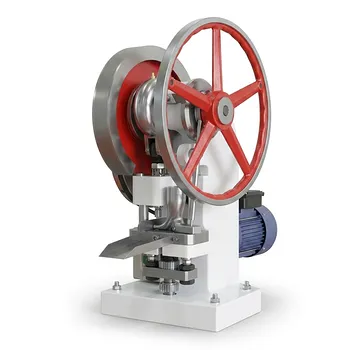
5 Ton Single Punch Tablet Press Laboratory Small Batch Production
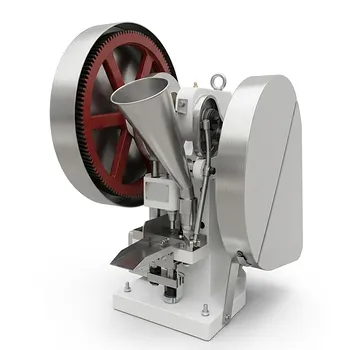
6-Ton Small Single-Punch Tablet Press — Laboratory Powder & Granule Tableting Equipment / Tablet Forming Machine
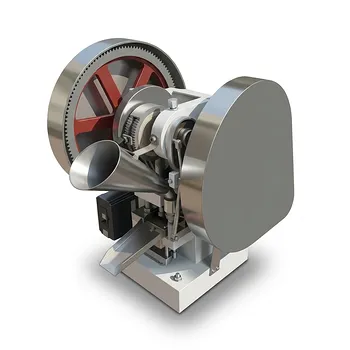
6 Ton Variable Frequency Single Punch Tablet Press
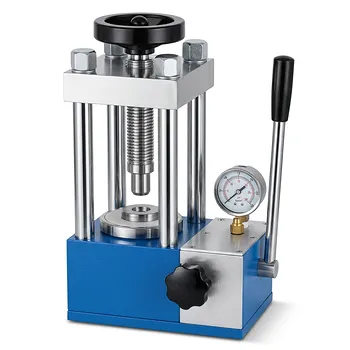
Manual Tablet Press with Dual Scale Pressure Gauge for Pharmaceutical Food Chemical Laboratory Sample Preparation
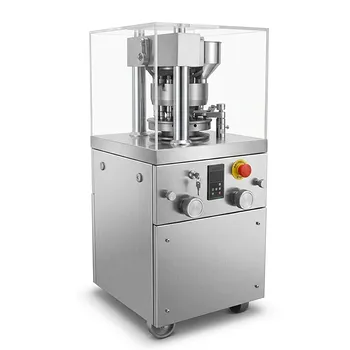
Ordinary Type Rotary Tablet Press for Pharmaceutical Chemical Food Electronic Industries
Heating Temperature Controlled High Energy Vibratory Ball Mill
Portable Cutting Mill for Laboratory Sample Preparation and RoHS WEEE Compliance Testing
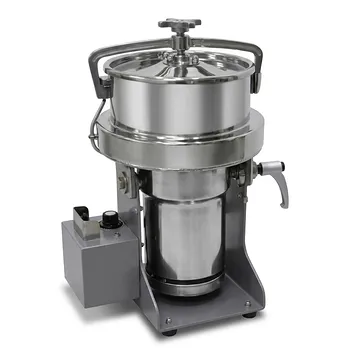
500g Capacity Water Cooled Low Temperature Grinder with Variable Speed and Safety Cover
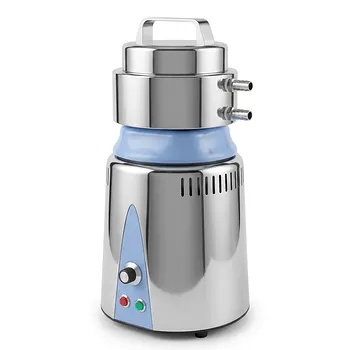
Low Temperature Laboratory Knife Mill Cryogenic Sample Grinder Material Science Powder Processing
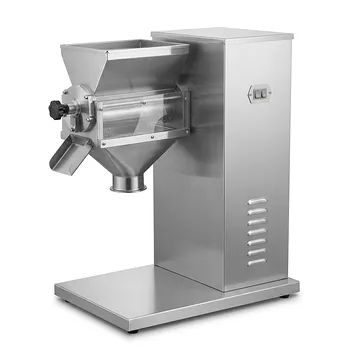
Small Swing Granulator Efficient Powder Granulation for Pharmaceutical Chemical Food Industries
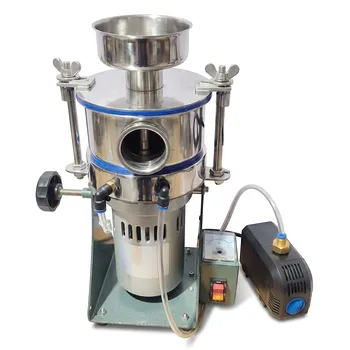
Water Cooled Airflow Ultra Fine Grinder for Low Temperature Material Processing
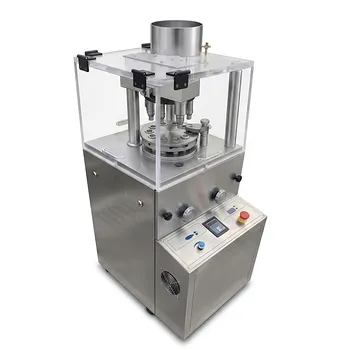
Enhanced 9 Punch Rotary Tablet Press for Powder Compaction
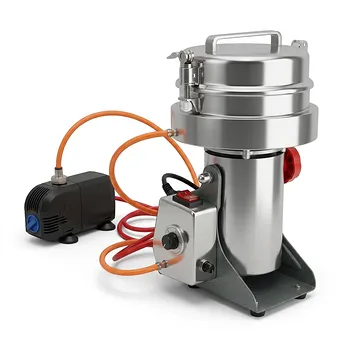
Water Cooled High Speed Grinder with Cryogenic Option for Laboratory Sample Preparation
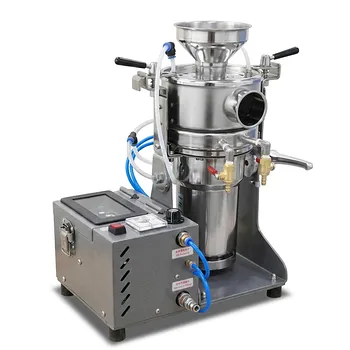
Water Cooled Pulse Jet Ultrafine Grinder
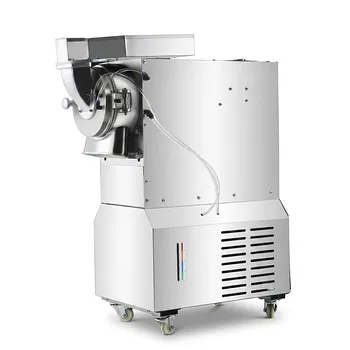
Water Cooled Continuous Feed Pulverizer Laboratory Grade Herb and Material Grinding System
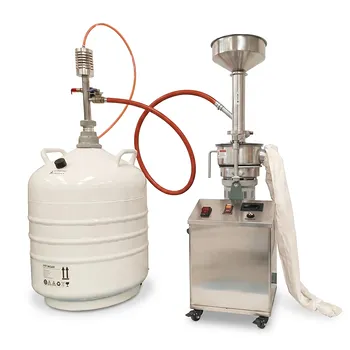
Laboratory Liquid Nitrogen Cryogenic Grinder Polymer Sample Preparation Pulverizer
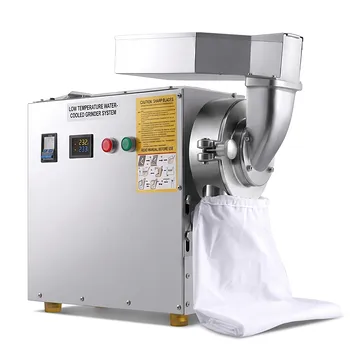
Low Temperature Water Cooled Continuous Feed Grinder Two Stage Coarse and Fine Grinding System
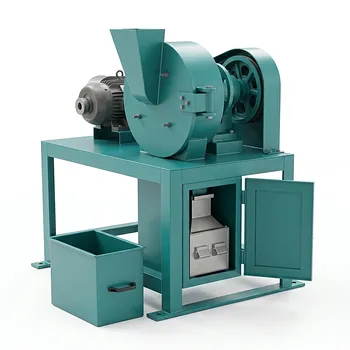
Sealed Disc Pulverizer Customized Model
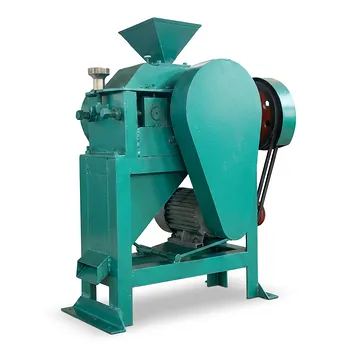
Laboratory Sealed Double Roll Crusher for Coal Ore Rock and Medium Hardness Materials Sample Preparation