Why is a laboratory vibratory sieve shaker essential for coconut cake fiber? Achieve Precise Particle Size Analysis
Updated 3 months ago
The laboratory vibratory sieve shaker is the definitive tool for the precise fractionation and analysis of coconut cake dietary fiber. By utilizing a stack of standard analysis sieves (typically ranging from 40 to 100 mesh), this equipment enables the systematic classification of fiber into distinct particle size grades. This precision is essential because the particle size of the fiber directly dictates its specific surface area, water-holding capacity, and adsorption properties, which are the primary metrics for determining its nutritional and functional value.
A vibratory sieve shaker provides the controlled mechanical energy necessary to stratify coconut cake fiber into standardized size fractions. This process is the foundation for investigating physical modification mechanisms and ensuring consistent material performance in food and industrial applications.
Achieving Precise Physical Classification
Multi-Layer Grading for Detailed Analysis
A vibratory sieve shaker allows for the simultaneous separation of coconut cake fiber into five or more distinct particle size grades. By using a stack of sieves with varying apertures—such as 40, 60, 80, and 100 mesh—researchers can isolate specific fractions for independent study.
Determining Geometric Mean Diameter
The equipment facilitates the calculation of the geometric mean diameter (GMD) and the particle size distribution (PSD) pattern. These metrics are critical for understanding how the bulk material will behave during processing and within a final product formulation.
Extraction of Ultra-Fine Components
In advanced biomass processing, vibratory shakers are used to extract ultra-fine components, such as those with a particle size smaller than 63 μm. This capability ensures that the material meets strict physical consistency requirements and international ASTM standards.
Linking Particle Size to Functional Performance
Specific Surface Area and Adsorption Capacity
Reducing particle size (for example, from 250 microns to below 167 microns) significantly increases the specific surface area of the coconut fiber. A vibratory shaker ensures these sizes are accurately separated so that the resulting increase in adsorption capacity and chemical reactivity can be quantified.
Hydration and Water-Holding Capacity
The physical classification provided by the shaker is vital for studying water-holding capacity (WHC). Smaller particles often exhibit different hydration kinetics compared to coarser ones, and precise grading is the only way to establish a predictable correlation between size and fluid retention.
Powder Flowability and Friction
Particle size directly influences inter-particle friction and the flow characteristics of the powder. Using a vibratory shaker to achieve a uniform distribution helps manufacturers optimize the flowability of coconut fiber, preventing issues like "bridging" or uneven mixing in industrial hoppers.
Understanding the Trade-offs
Mechanical Stress vs. Particle Integrity
While the high-frequency vibration is necessary for efficient separation, it can occasionally cause attrition, where particles break down further during the sieving process itself. This may lead to a slight overestimation of the "fines" fraction if the vibration duration is not strictly controlled.
Mesh Blinding and Material Moisture
Coconut cake fiber is often hygroscopic; if the moisture content is too high, the fibers can "blind" or clog the sieve meshes. This requires the operator to carefully balance the vibration amplitude and the duration of the test to ensure accurate passage without damaging the delicate mesh.
Sample Volume Constraints
Laboratory vibratory shakers are designed for precision rather than high-throughput production. They are ideal for characterization and quality control but cannot replace industrial-scale separators if the goal is mass-market fiber production.
How to Apply This to Your Project
Making the Right Choice for Your Goal
- If your primary focus is investigating physical modification mechanisms: Utilize a full stack of 40 to 100 mesh sieves to map the specific relationship between size reduction and adsorption capacity.
- If your primary focus is industrial powder flowability: Prioritize the determination of the geometric mean diameter and span value to minimize inter-particle friction in your processing equipment.
- If your primary focus is product stability (e.g., in resins or tablets): Isolate specific fractions—such as -150 to +250 mesh—to ensure the material does not cause instability or shorten the shelf life of your final formulation.
- If your primary focus is meeting regulatory standards: Ensure your shaker settings and sieve apertures align with ASTM or biomass characterization protocols to guarantee physical consistency.
The laboratory vibratory sieve shaker remains the gold standard for transforming raw coconut cake into a standardized, high-performance dietary fiber.
Summary Table:
| Key Metric | Impact of Precise Sieving | Recommended Sieve Range |
|---|---|---|
| Surface Area | Increases adsorption capacity & chemical reactivity | 80 - 100+ Mesh |
| Hydration (WHC) | Optimizes water-holding capacity and kinetics | 60 - 100 Mesh |
| Flowability | Reduces inter-particle friction & prevents bridging | 40 - 80 Mesh |
| Material Purity | Enables extraction of ultra-fine (<63 μm) components | <230 Mesh |
| Consistency | Ensures compliance with ASTM & biomass standards | Multi-layer stack |
Optimize Your Material Analysis with Precision Equipment
Achieving the perfect particle size distribution is critical for the functional performance of biomass like coconut cake fiber. At [Company Name], we provide complete laboratory sample preparation solutions for material science, specializing in advanced powder processing and compaction equipment.
Whether you need to refine dietary fibers or develop high-performance materials, our extensive product line supports your entire workflow:
- Sieving & Grading: High-precision vibratory and air-jet sieve shakers with a full range of test meshes.
- Milling & Grinding: Planetary ball mills, jet mills, and liquid nitrogen cryogenic grinders for ultra-fine results.
- Crushing & Mixing: Heavy-duty jaw/roll crushers and efficient powder/defoaming mixers.
- Compaction: A full spectrum of hydraulic presses, including Cold/Warm Isostatic Presses (CIP/WIP), XRF pellet presses, and vacuum hot presses.
Ready to enhance your lab's efficiency and accuracy? Contact our technical experts today to find the ideal solution for your specific application requirements!
References
- Yajun Zheng, Fuge Niu. Adsorption activity of coconut (<i>Cocos nucifera</i> L.) cake dietary fibers: effect of acidic treatment, cellulase hydrolysis, particle size and pH. DOI: 10.1039/c7ra13332d
Mentioned Products
- Laboratory Dry and Wet Three Dimensional Vibratory Sieve Shaker for Particle Analysis
- Stainless Steel Laboratory Vibratory Test Sieve Shaker
- Small Laboratory Vibratory Sieve Shaker for Powder Gradation and Particle Size Analysis
- Vibratory Sieve Shaker Electromagnetic 3D Motion Powder Particle Size Analyzer for Dry and Wet Sieving
- Laboratory Vibratory Test Sieve Shaker for Precision Particle Size Analysis and Powder Grading
People Also Ask
- What is the role of laboratory vibratory sieve shakers in waste PUR foam recycling? Optimize Particle Size and Density
- What is the primary function of a laboratory vibratory sieve shaker in the evaluation of sand liquefaction potential?
- What role do laboratory vibratory sieve shakers and test sieves play before the molding of Nb-Cu composite powders?
- What function does a laboratory vibratory sieve shaker serve in the production process of metakaolin? Optimize Reactivity
- Why is a precision laboratory vibratory sieve shaker necessary for particle size control? Optimize Biomass Carbonization

Tech Team · PowderPreparation
Last updated on Jun 03, 2026
Related Products
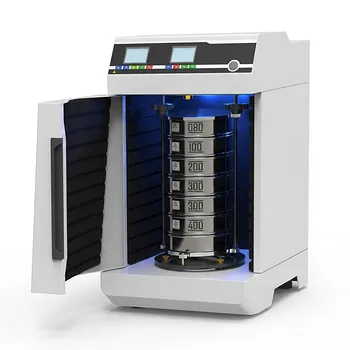
Laboratory Dry and Wet Three Dimensional Vibratory Sieve Shaker for Particle Analysis
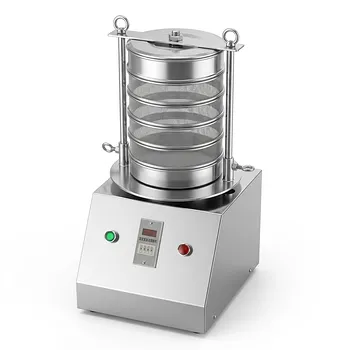
Stainless Steel Laboratory Vibratory Test Sieve Shaker
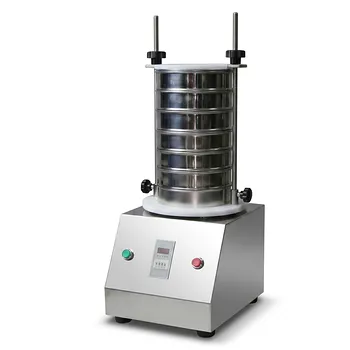
Small Laboratory Vibratory Sieve Shaker for Powder Gradation and Particle Size Analysis
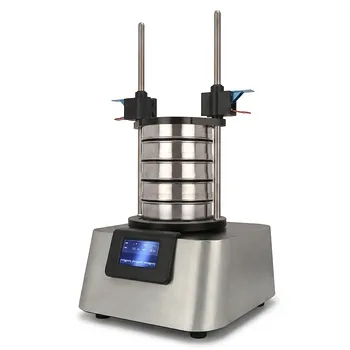
Vibratory Sieve Shaker Electromagnetic 3D Motion Powder Particle Size Analyzer for Dry and Wet Sieving
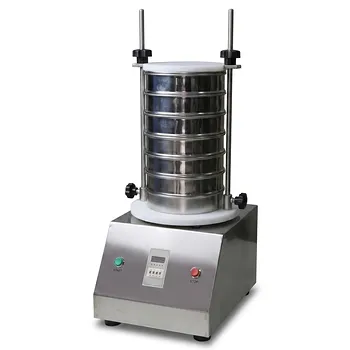
Laboratory Vibratory Test Sieve Shaker for Precision Particle Size Analysis and Powder Grading
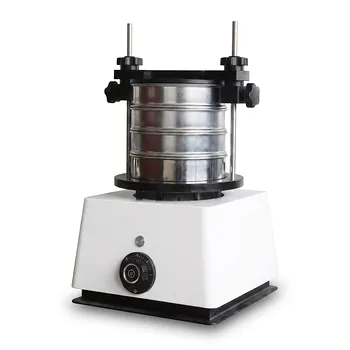
Small Laboratory Vibrating Sieve Shaker for Precise Particle Size Analysis
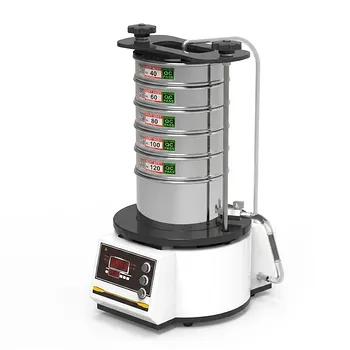
High Frequency Wet Three-Dimensional Vibrating Sieve Shaker for Dry and Wet Particle Size Analysis
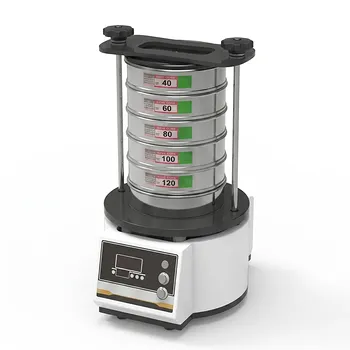
Dry Three Dimensional Vibratory Sieve Shaker
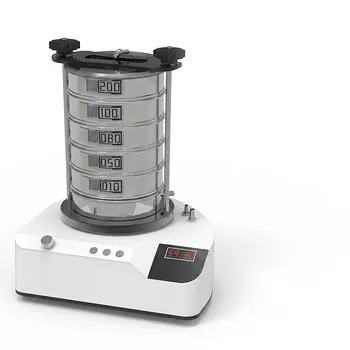
Heavy Duty Dry Three Dimensional Vibratory Sieve Shaker for Particle Separation
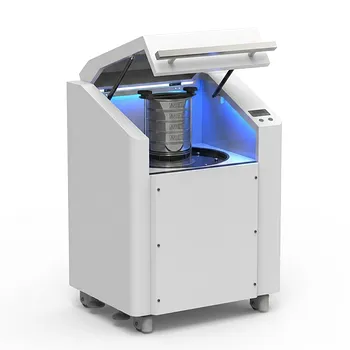
High Frequency Cabinet Type Three-Dimensional Rotary Vibrating Sieve Shaker for Dry Sieving and Particle Classification
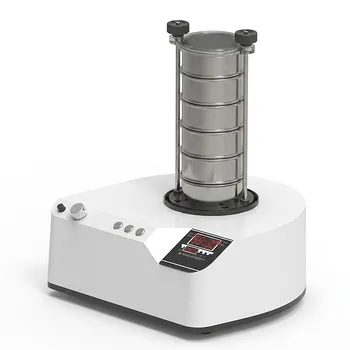
三维电磁微量振动筛分仪
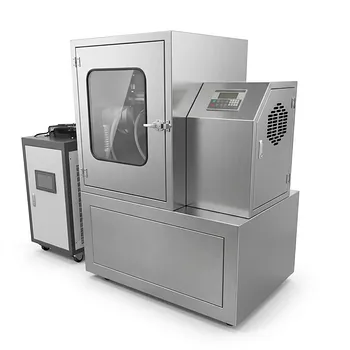
Vibratory Superfine Grinder for Ultra Fine Laboratory Powder Milling
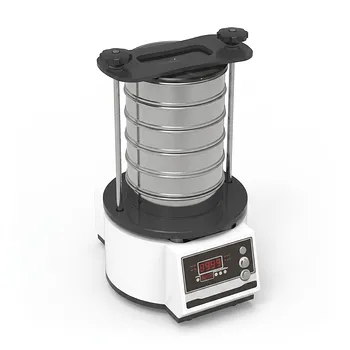
Tapping Oscillating Sieve Shaker for Dry and Wet Particle Size Analysis
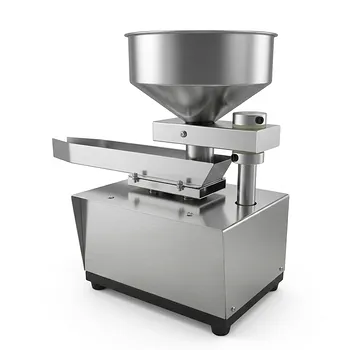
Automatic Vibrating Powder Feeder for Laboratory Material Processing Precision Vibratory Hopper Feeder for Granular and Powder Material Handling Industrial Grade Vibrating Tray Feeder for Consistent Material Sample Preparation
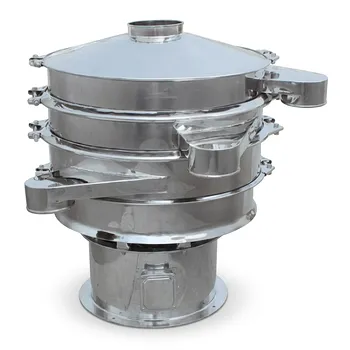
Stainless Steel Rotary Vibrating Sieve High Precision Circular Vibratory Separator Industrial Powder Grading Machine Multi Layer Sifting Equipment
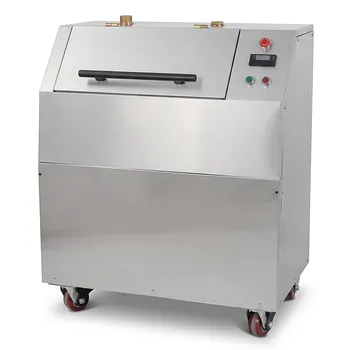
Vibratory Disc Mill for Rapid Fine Grinding and High Throughput Sample Preparation of Hard and Brittle Materials
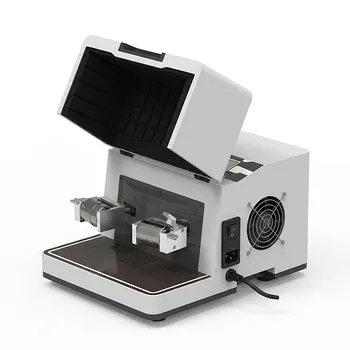
High Energy Hybrid Vibratory Ball Mill for Grinding Mixing and Cell Disruption
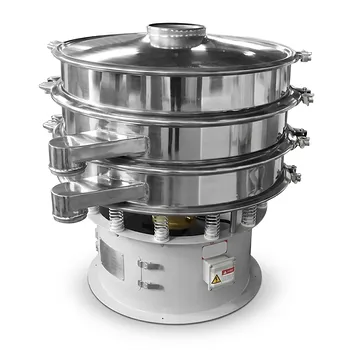
Three Dimensional Rotary Vibrating Sieve
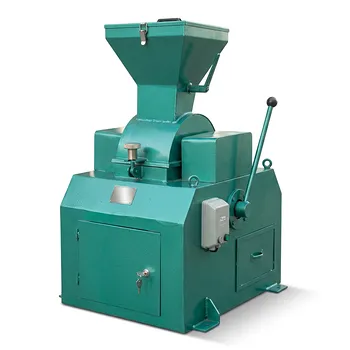
Laboratory Sealed Hammer Blade Crusher Divider for High Hardness Sample Preparation