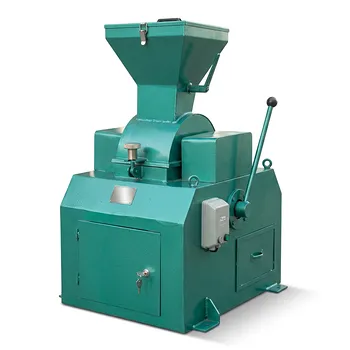
Why use vibratory shakers & sieves for adsorbent sizing? Ensure Precision and Accurate Model Fitting
Updated 4 months ago
Precision particle size classification is the cornerstone of adsorbent characterization. Vibratory sieve shakers and standard test sieves are necessary because they provide a mechanical, repeatable method to isolate specific particle dimensions from bulk ground material. By physically separating particles into uniform grades (such as 140 µm or 300 µm), these tools ensure that experimental data reflects the true relationship between surface area and adsorption performance rather than random size variations.
The use of vibratory shakers and standardized sieves eliminates "noise" in experimental data by ensuring particle uniformity. This consistency is a fundamental requirement for accurate mathematical modeling of adsorption kinetics, fluid dynamics, and mass transfer rates.
Ensuring Experimental Reproducibility and Accuracy
The Necessity of Particle Uniformity
Achieving a high degree of particle uniformity is a prerequisite for any scientific study involving adsorbents. Vibratory shakers ensure that ground powders are filtered and classified into specific ranges, which allows researchers to isolate the effects of size on chemical reactions. Without this uniformity, variations in particle dimensions can lead to inconsistent results that are impossible to replicate.
Reliability in Mathematical Model Fitting
Accurate particle sizing is critical for validating mathematical models such as pseudo-second-order kinetics and isotherm analysis. These models rely on the assumption that the adsorbent material behaves consistently across the sample. Standard test sieves provide the precise data needed to ensure that the material fits these theoretical frameworks without errors caused by physical size discrepancies.
Eliminating Diffusion Rate Variations
Inconsistent particle sizes create unpredictable diffusion rates within a sample. By using mechanical vibration to stratify and isolate particles within a specific size range, researchers can ensure consistent mass transfer paths. This control is essential for determining how quickly a contaminant is adsorbed by the material.
Analyzing Physical and Fluid Dynamics
Investigating Adsorption Efficiency
There is often an inverse relationship between particle size and adsorption efficiency, largely due to the increase in available surface area in smaller particles. Using a series of high-precision sieves (ranging from 38 µm to 850 µm) allows researchers to calculate the solid mass fraction of each grade. This data is vital for determining the optimal size for maximizing surface physicochemical reactions.
Predicting Performance in Filtration Beds
In practical applications like water treatment, particle size determines bed tortuosity, porosity, and fluid dynamics. Vibratory sieve shakers allow for the preparation of specific distributions (e.g., 0.124 mm to 1.19 mm) to predict pressure loss and breakthrough curves in fixed-bed experiments. This precision ensures that the adsorbent will perform reliably in industrial-scale filtration systems.
Improving Sieving Efficiency through Vibration
Mechanical vibration is superior to manual sieving because it ensures aggregate samples flow and stratify effectively across the sieve stack. High-frequency vibration provides the consistent mechanical force necessary to separate fine particles from coarse aggregates. This process improves the workability and density of the final material by providing a clear passage percentage curve.
Understanding the Trade-offs and Limitations
Mechanical Degradation of Fragile Materials
While vibratory shakers are efficient, the mechanical energy used can sometimes cause particle attrition. If an adsorbent is particularly brittle, the vigorous shaking action may break down particles during the test itself, leading to an overestimation of the "fine" fraction.
The Challenge of Screen Blinding
Fine powders, especially those that are moist or prone to static, can cause screen blinding, where particles clog the sieve openings. This requires the use of sieving aids or specific amplitude adjustments on the shaker. Failure to account for blinding results in incomplete separation and inaccurate size distribution data.
Limitations of Shape Characterization
Standard sieves classify particles based on their smallest cross-section. They cannot distinguish between a spherical particle and a long, needle-like particle that happens to pass through the mesh end-first. For highly irregular adsorbents, sieving provides a "nominal" size rather than a complete geometric profile.
How to Apply This to Your Research
When selecting equipment for particle size distribution analysis, your choice should align with the specific goals of your adsorption study.
- If your primary focus is kinetic modeling: Use a high-frequency vibratory shaker to isolate a very narrow size range (e.g., a single mesh grade) to ensure uniform mass transfer paths.
- If your primary focus is industrial filtration design: Utilize a full stack of standard test sieves to generate a complete passage percentage curve and calculate potential pressure loss.
- If your primary focus is maximizing adsorption capacity: Focus on the finest mesh sizes (under 150 µm) to investigate the correlation between increased surface area and ion uptake.
By utilizing standardized mechanical sieving, you transform a raw ground powder into a controlled scientific variable, ensuring that your adsorption data is both defensible and reproducible.
Summary Table:
| Key Factor | Role of Sieve Equipment | Benefit to Research |
|---|---|---|
| Particle Uniformity | Isolates specific size ranges from bulk powder | Eliminates data noise and ensures reproducibility |
| Model Validation | Provides data for kinetic & isotherm models | Ensures theoretical frameworks fit experimental data |
| Mass Transfer | Controls diffusion rates by sizing particles | Predicts breakthrough curves and fluid dynamics |
| Efficiency | Maximizes surface area for reaction | Optimizes ion uptake and adsorption capacity |
Elevate Your Adsorbent Research with Precision Sample Preparation
Precision in particle size distribution is non-negotiable for high-impact material science. As specialists in powder processing and compaction, we offer a comprehensive range of equipment to ensure your research is both defensible and reproducible.
Our Complete Laboratory Solutions Include:
- Particle Sizing & Classification: Vibratory and air-jet sieve shakers equipped with high-precision test sieves and meshes.
- Advanced Milling: Planetary ball mills, jet mills, rotor mills, and liquid nitrogen cryogenic grinders for ultrafine preparation.
- Sample Compaction: A full spectrum of hydraulic presses, including Cold/Warm Isostatic Presses (CIP/WIP), standard lab presses, and vacuum hot presses.
- Processing Equipment: Jaw/roll crushers, powder mixers, and defoaming mixers for uniform material blending.
Whether you are optimizing kinetic models or designing industrial filtration beds, our tools provide the accuracy and reliability your lab demands.
Contact Our Technical Experts Today for a Solution
References
- Conrad K. Enenebeaku, Ikechukwu C. Ukaga. Adsorption and Equilibrium Studies on the Removal of Methyl Red from Aqueous Solution Using White Potato Peel Powder. DOI: 10.56431/p-02ri34
Mentioned Products
- Stainless Steel Laboratory Vibratory Test Sieve Shaker
- Laboratory Vibratory Test Sieve Shaker for Precision Particle Size Analysis and Powder Grading
- Vibratory Sieve Shaker Electromagnetic 3D Motion Powder Particle Size Analyzer for Dry and Wet Sieving
- Small Laboratory Vibrating Sieve Shaker for Precise Particle Size Analysis
- Small Laboratory Vibratory Sieve Shaker for Powder Gradation and Particle Size Analysis
People Also Ask
- What function does a laboratory vibratory sieve shaker serve in the production process of metakaolin? Optimize Reactivity
- Why is a precision laboratory vibratory sieve shaker necessary for particle size control? Optimize Biomass Carbonization
- What is the function of a laboratory vibratory sieve shaker? Enhance Coal Particle Size Distribution (PSD) Analysis
- What role do laboratory vibratory sieve shakers and test sieves play before the molding of Nb-Cu composite powders?
- What is the primary function of a laboratory vibratory sieve shaker in the evaluation of sand liquefaction potential?

Tech Team · PowderPreparation
Last updated on Jun 03, 2026
Related Products
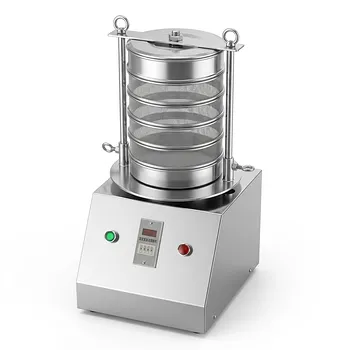
Stainless Steel Laboratory Vibratory Test Sieve Shaker
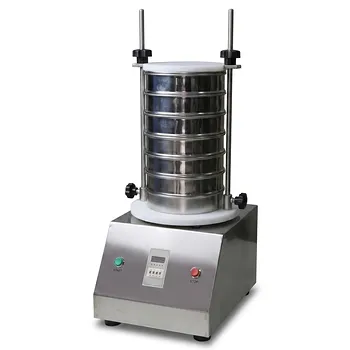
Laboratory Vibratory Test Sieve Shaker for Precision Particle Size Analysis and Powder Grading
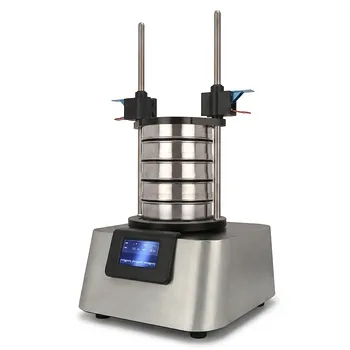
Vibratory Sieve Shaker Electromagnetic 3D Motion Powder Particle Size Analyzer for Dry and Wet Sieving
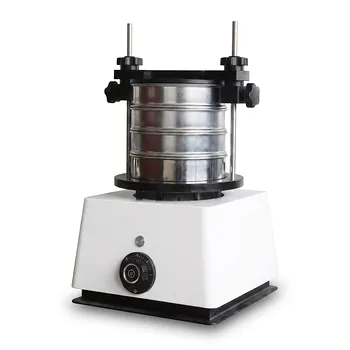
Small Laboratory Vibrating Sieve Shaker for Precise Particle Size Analysis
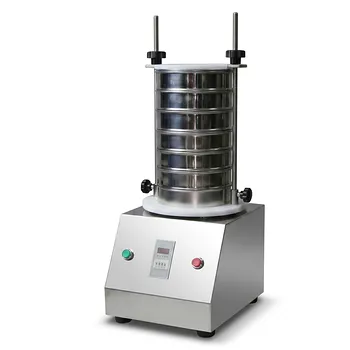
Small Laboratory Vibratory Sieve Shaker for Powder Gradation and Particle Size Analysis
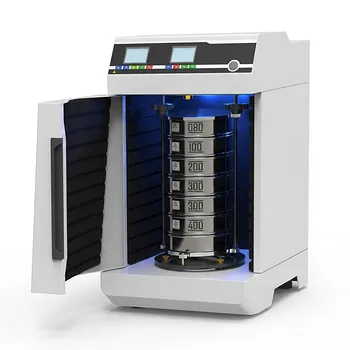
Laboratory Dry and Wet Three Dimensional Vibratory Sieve Shaker for Particle Analysis
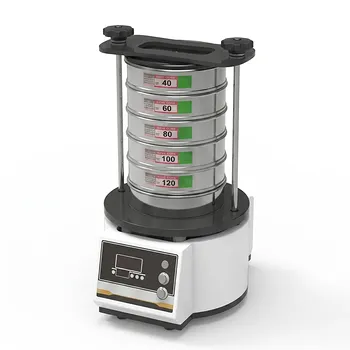
Dry Three Dimensional Vibratory Sieve Shaker
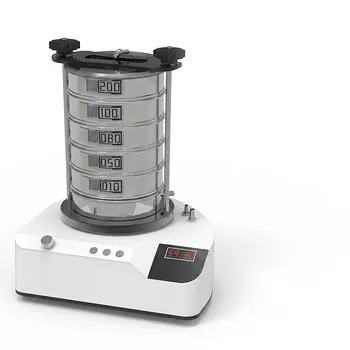
Heavy Duty Dry Three Dimensional Vibratory Sieve Shaker for Particle Separation
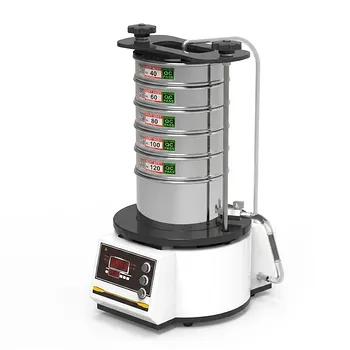
High Frequency Wet Three-Dimensional Vibrating Sieve Shaker for Dry and Wet Particle Size Analysis
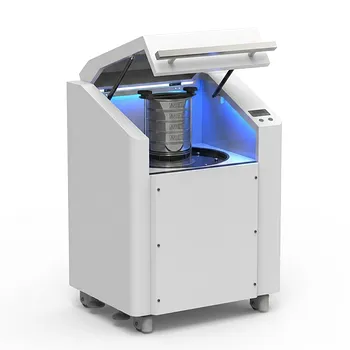
High Frequency Cabinet Type Three-Dimensional Rotary Vibrating Sieve Shaker for Dry Sieving and Particle Classification
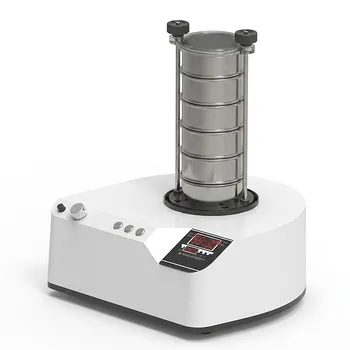
三维电磁微量振动筛分仪
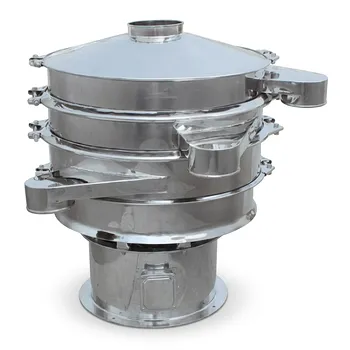
Stainless Steel Rotary Vibrating Sieve High Precision Circular Vibratory Separator Industrial Powder Grading Machine Multi Layer Sifting Equipment
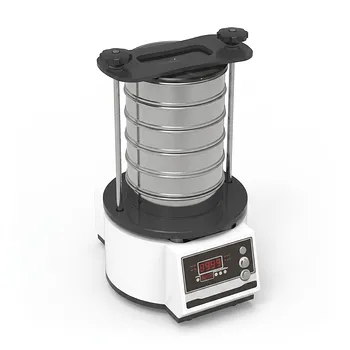
Tapping Oscillating Sieve Shaker for Dry and Wet Particle Size Analysis
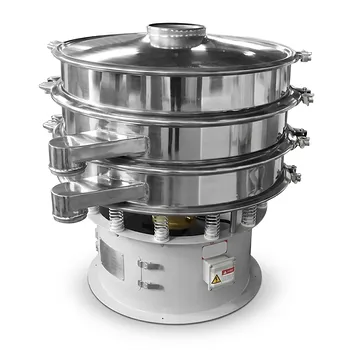
Three Dimensional Rotary Vibrating Sieve
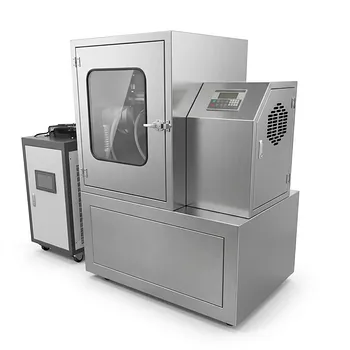
Vibratory Superfine Grinder for Ultra Fine Laboratory Powder Milling
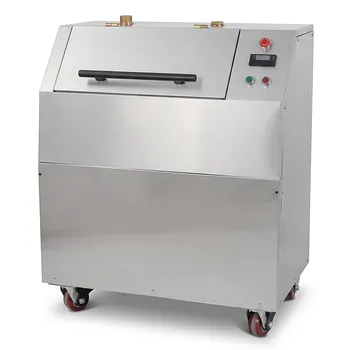
Vibratory Disc Mill for Rapid Fine Grinding and High Throughput Sample Preparation of Hard and Brittle Materials
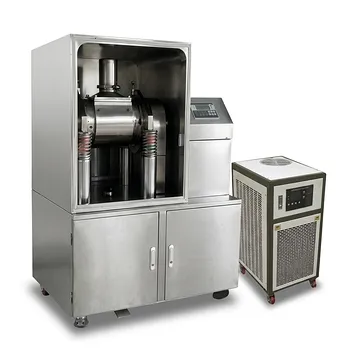
Small Vibrating Ultrafine Grinder for Traditional Chinese Medicine
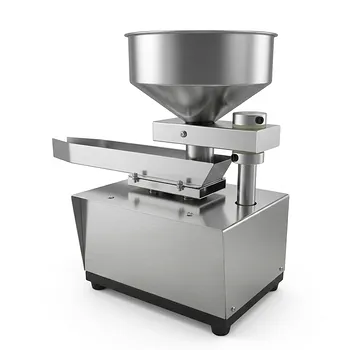
Automatic Vibrating Powder Feeder for Laboratory Material Processing Precision Vibratory Hopper Feeder for Granular and Powder Material Handling Industrial Grade Vibrating Tray Feeder for Consistent Material Sample Preparation
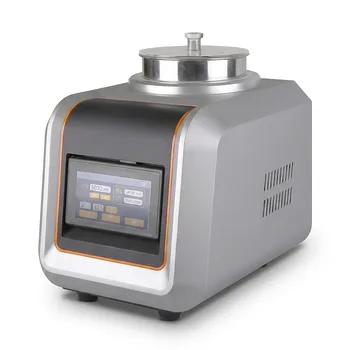
Laboratory Air Jet Sieving Machine for Fine Powder Particle Size Analysis and Deagglomeration