Why is the use of a planetary ball mill critical for achieving solid-phase reactions in BaO–MgO–ZrO2 powder preparation?
Updated 4 months ago
The planetary ball mill is the fundamental engine of chemical reactivity in complex oxide synthesis.
By utilizing high-speed rotation to generate intense impact and shear forces, the planetary ball mill refines BaO, MgO, and ZrO2 powders to sub-micron levels. This drastic reduction in particle size is critical because it exponentially increases the specific surface area and introduces lattice defects, providing the necessary kinetic energy to promote solid-phase diffusion and ensure the complete conversion of raw materials into target products like barium metazirconate (BaZrO3).
The planetary ball mill acts as a mechanical activator that lowers the energy barrier for solid-phase reactions. By maximizing particle contact and increasing the internal energy of the powder, it transforms inert raw oxides into a highly reactive, microscopically uniform precursor.
The Mechanisms of Mechanical Activation
Particle Size Refinement to Sub-Micron Levels
The primary function of the planetary ball mill is the physical reduction of raw oxides into the 150–200 nanometer range. Smaller particles mean a higher number of contact points between the BaO, MgO, and ZrO2 constituents. This high contact density is the prerequisite for the diffusion required in solid-phase reactions.
Increasing Specific Surface Area and Reactivity
As particle size decreases, the specific surface area increases dramatically, exposing more atoms to the surface. These surface atoms are more chemically active than those in the bulk material. This heightened state of activity allows the chemical reaction to initiate at lower temperatures during subsequent heat treatments.
Induction of Lattice Defects and Strain
The high-energy impact does more than just break particles; it distorts their crystalline structures. These lattice defects serve as high-energy pathways that facilitate the movement of ions through the solid. This mechanical energy storage effectively "pre-activates" the powder before it even enters the furnace.
Achieving Microscopic Homogeneity
Overcoming Atomic-Level Diffusion Barriers
In a BaO–MgO–ZrO2 system, the formation of complex structures like barium metazirconate requires atoms to travel across grain boundaries. The planetary ball mill ensures atomic-level uniform mixing, which minimizes the distance these atoms must travel. Shortening the diffusion distance is the most effective way to ensure a pure phase is formed.
Prevention of Powder Agglomeration
Fine powders naturally tend to clump together, which creates "dead zones" where reactions cannot occur. The high shear forces of the planetary mill effectively break down these agglomerations. This ensures that the magnesium and barium ions are evenly distributed throughout the zirconia matrix.
Optimization of Kinetic Conditions
By achieving a high degree of microscopic uniformity, the mill provides ideal kinetic conditions for sintering. This uniformity ensures that the entire sample reacts at a consistent rate. Without this, the final ceramic would likely contain unwanted secondary phases or unreacted raw oxides.
Understanding the Trade-offs and Pitfalls
Contamination from Grinding Media
The intense energy required for refinement often leads to wear and tear on the milling vials and balls. This can introduce impurities (such as alumina or steel) into the BaO–MgO–ZrO2 mixture. Choosing the correct grinding media material is essential to maintain the high purity required for nuclear or electronic applications.
Managing Thermal Energy and Phase Changes
The mechanical energy of a planetary mill can sometimes generate enough heat to trigger unwanted phase transitions prematurely. If the milling duration is too long or the speed is too high, the powder may begin to react in ways that are difficult to control. Precise timing and the use of cooling breaks are often necessary to maintain the desired precursor state.
Strategic Implementation for Your Project
Optimizing Your Milling Protocol
To achieve the best results in BaO–MgO–ZrO2 preparation, your milling strategy must align with your final material requirements. Small adjustments in the milling environment can lead to significant changes in the final product's density and phase purity.
- If your primary focus is Phase Purity: Utilize high-speed rotation for extended durations to ensure atomic-level mixing and the elimination of raw oxide residues.
- If your primary focus is Minimizing Contamination: Select stabilized zirconia grinding media and use a liquid medium like anhydrous ethanol to cushion the impact while maintaining shear forces.
- If your primary focus is Sintering Speed: Maximize the mechanical activation by increasing the RPM to induce the highest possible density of lattice defects in the precursor powder.
Mastering the mechanical activation of these powders is the single most important step in ensuring the structural integrity of the final ceramic product.
Summary Table:
| Key Mechanism | Effect on BaO-MgO-ZrO2 | Benefit to Solid-Phase Reaction |
|---|---|---|
| Particle Refinement | Reduces size to 150–200 nm | Dramatically increases contact points and surface area |
| Mechanical Activation | Induces lattice defects and strain | Lowers the energy barrier for ion diffusion |
| Microscopic Homogeneity | Atomic-level uniform mixing | Shortens diffusion distance for complete phase conversion |
| High Shear Forces | Eliminates powder agglomerates | Prevents "dead zones" and ensures consistent sintering |
Elevate Your Material Research with Expert Sample Preparation Solutions
Mastering the synthesis of complex oxides like BaO–MgO–ZrO2 requires high-performance equipment that ensures precision at the atomic level. We provide complete laboratory sample preparation solutions specifically designed for material science, focusing on advanced powder processing and compaction.
Whether you are refining precursors or compacting final ceramics, our specialized equipment delivers the reliability your research demands:
- Advanced Milling & Grinding: High-energy planetary ball mills, jet mills, and liquid nitrogen cryogenic grinders for sub-micron particle refinement.
- Precision Mixing: Specialized powder mixers and defoaming mixers to ensure microscopic homogeneity.
- Superior Compaction: A full spectrum of hydraulic presses, including Cold/Warm Isostatic Presses (CIP/WIP), vacuum hot presses, and XRF pellet presses.
Why Partner With Us? We specialize in helping researchers achieve phase purity and structural integrity through optimized kinetic conditions and high-purity processing environments.
Optimize your lab's workflow—contact our experts today!
References
- О. Н. Борисенко, Oleksandr Tymchenko. SUBSOLIDUS STRUCTURE OF THE SYSTEM BaO – MgO – ZrO2. DOI: 10.20998/2413-4295.2025.03.06
Mentioned Products
- Vertical Semi Circular Planetary Ball Mill for Laboratory Precision Grinding
- High Energy Planetary Ball Mill for Nano Scale Grinding and Mechanical Alloying
- Heavy Duty Horizontal Planetary Ball Mill for Efficient Industrial Grinding and Sample Preparation
- Vertical Production Planetary Ball Mill for High Throughput Powder Processing
- 360° Rotating Omnidirectional Laboratory Planetary Ball Mill for Homogeneous Ultra-Fine Grinding and Mixing
People Also Ask
- What role does a planetary ball mill play in the synthesis of Li6PS5Cl (LPSCl)? Unlock High Ionic Conductivity
- Why is a planetary ball mill essential for SiBCN-rGO wet-spinning? Achieve Superior Dispersion and Spinnability
- Why is an intermittent grinding process required for perovskites in a planetary ball mill? Ensure Stability & Purity
- Why is a planetary ball mill required for PET micronization? Ensure Accurate Chemical Analysis of Reprocessed PET
- How does mechanized planetary ball milling compare to manual agate grinding? Optimize sulfide standard material precision.

Tech Team · PowderPreparation
Last updated on Jun 03, 2026
Related Products
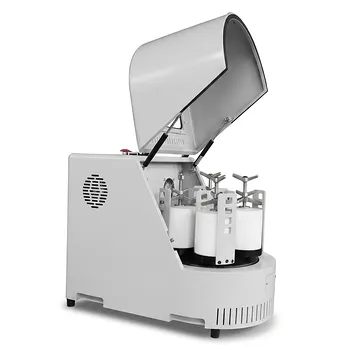
Vertical Semi Circular Planetary Ball Mill for Laboratory Precision Grinding
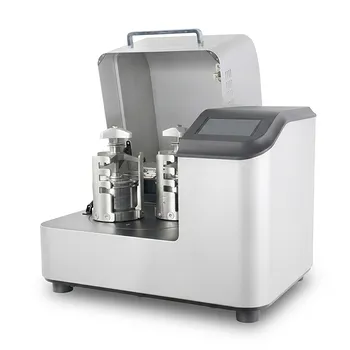
High Energy Planetary Ball Mill for Nano Scale Grinding and Mechanical Alloying
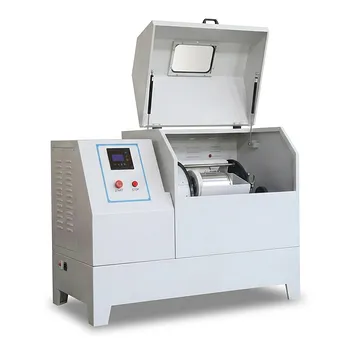
Heavy Duty Horizontal Planetary Ball Mill for Efficient Industrial Grinding and Sample Preparation
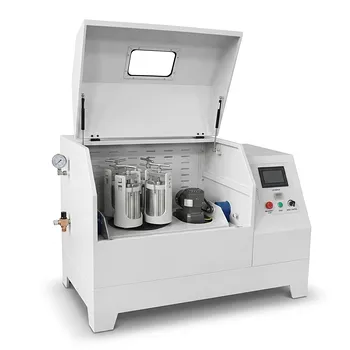
Vertical Production Planetary Ball Mill for High Throughput Powder Processing
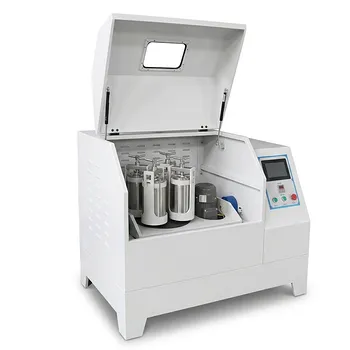
360° Rotating Omnidirectional Laboratory Planetary Ball Mill for Homogeneous Ultra-Fine Grinding and Mixing
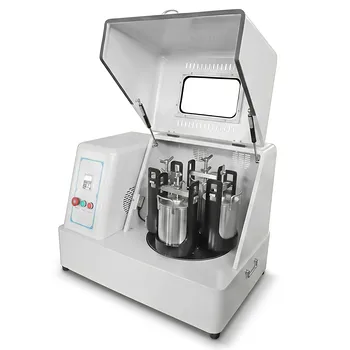
Vertical Square Planetary Ball Mill for Laboratory Sample Preparation and Nanoscale Grinding
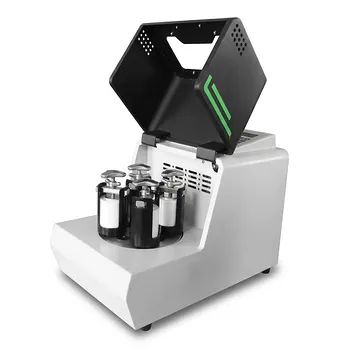
Miniature Planetary Ball Mill with Vacuum Grinding and High Efficiency for Laboratory Sample Preparation
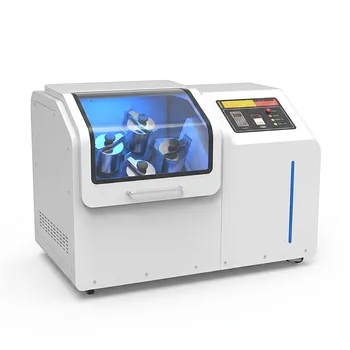
High Energy Omnidirectional Planetary Ball Mill 16L
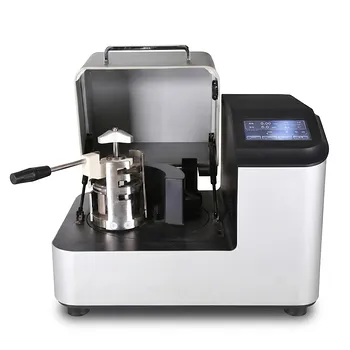
High Energy Laboratory Planetary Ball Mill for Nano Grinding and Material Science Sample Preparation
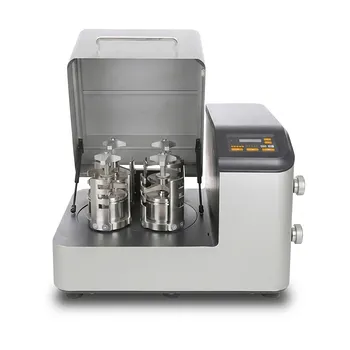
High Energy Planetary Ball Mill for Nano Scale Grinding and Colloidal Mixing in Material Science Research
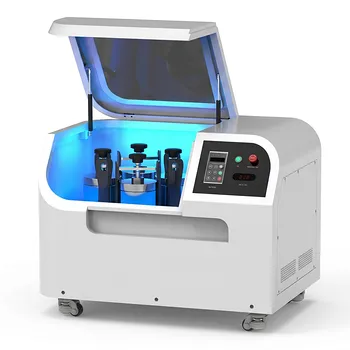
Planetary Ball Mill 12L
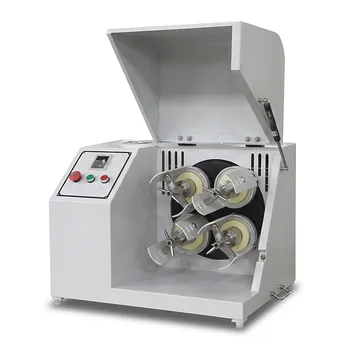
Horizontal Light Duty Planetary Ball Mill for Laboratory Sample Preparation
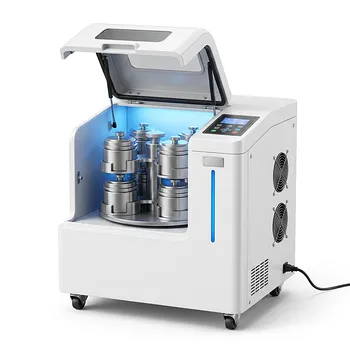
High Energy Omnidirectional Planetary Ball Mill 20L
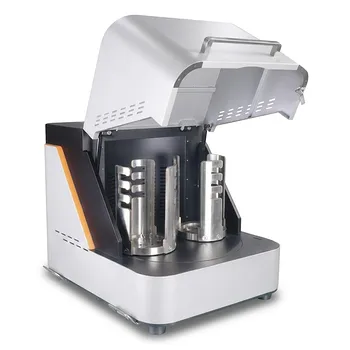
High Energy Laboratory Planetary Ball Mill for Nano Grinding and Colloidal Mixing of Hard and Brittle Materials

8L Planetary Ball Mill for Laboratory Grinding and Sample Preparation
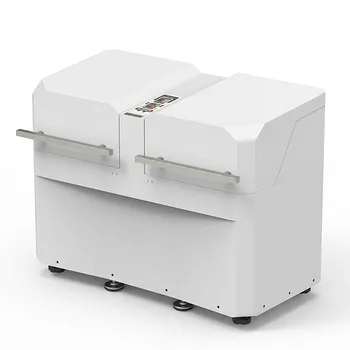
Dual Station Planetary Ball Mill 24L

Multi-Platform Nanoscale High-Energy Vibratory Ball Mill

Nano High Energy Vibratory Ball Mill for Laboratory Sample Preparation
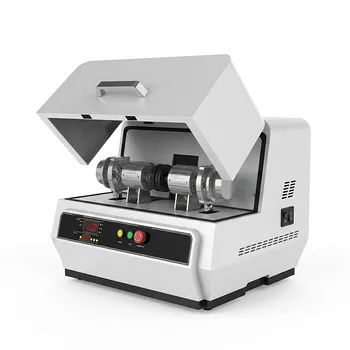
Dual Jar High Energy Vibratory Ball Mill