Why is the dry ball milling process employed for mixing ternary ceramic powders? Optimize Material Homogeneity & Density
Updated 4 months ago
The dry ball milling process is the primary choice for ternary ceramic powders because it provides the intense mechanical shear and dispersion necessary to homogenize materials of varying densities without using liquid media. This ensures that components like kaolin, feldspar, and quartz are distributed uniformly at the microscale, preventing component segregation that would otherwise cause structural defects or inconsistent performance after sintering.
Dry ball milling transforms heterogeneous raw materials into a uniform molecular-level blend through continuous high-energy impact and shear. By eliminating composition gradients and refining particle sizes, it creates the essential foundation for predictable atomic diffusion and consistent microstructures during the final sintering stage.
Overcoming Component Segregation and Density Variance
Managing Heterogeneous Densities
Ternary systems often involve raw materials with significantly different specific gravities, such as kaolin, feldspar, and quartz. In a standard mixing environment, heavier particles tend to settle or separate, but the continuous movement of grinding balls forces these powders into a consistent, interspersed state.
Eliminating Composition Gradients
Without the mechanical force of a ball mill, powders often develop localized regions that are either rich or poor in specific components (e.g., yttria-rich regions). Dry ball milling ensures that every cubic millimeter of the powder has the same chemical ratio, which is vital for the integrity of the finished ceramic.
Uniform Dispersion of Minor Additives
Sintering aids like Li2CO3 or SiO2 are often added in very small quantities to high-entropy ceramic hosts. The high-energy impact of the milling media is required to disperse these minor phases uniformly, preventing local additive enrichment that could degrade dielectric performance.
Enhancing Microstructural Uniformity through Mechanical Energy
Particle Size Refinement
Beyond simple mixing, the milling process provides particle size refinement by breaking down larger aggregates into micron-sized or molecular-level particles. This increased surface area facilitates faster and more complete chemical reactions during the subsequent heating phases.
Breaking Van der Waals Forces
Small particles naturally stick together due to Van der Waals forces, forming clumps that resist uniform mixing. The high mechanical energy of ball milling effectively breaks these bonds, allowing for the physical intercalation and uniform coating of heterogeneous powders.
Foundation for Atomic Diffusion
A uniform distribution of components at the microscale is the prerequisite for efficient atomic diffusion. When components are perfectly mixed, the "diffusion distance" during sintering is minimized, leading to a more consistent and high-quality green body.
Understanding the Trade-offs and Limitations
Contamination Risks
The high-speed impact and friction of alumina grinding balls or other media can lead to "media wear." This introduces small amounts of the grinding media material into the ceramic powder, which may act as an unintended impurity in high-purity applications.
Heat Generation and Structural Changes
Extended milling for four hours or more generates significant thermal energy. While this energy can help in "mechanical stirring," excessive heat may cause unwanted phase changes or oxidation in sensitive ternary powders before they even reach the furnace.
Dry vs. Wet Milling Considerations
While dry milling eliminates the need for liquid media and drying steps, it can be less efficient at preventing fine powder agglomeration compared to wet milling (e.g., in ethanol). Users must balance the convenience of a dry process against the potential for finer particle control found in wet systems.
How to Apply This to Your Project
Making the Right Choice for Your Goal
- If your primary focus is preventing component segregation: Utilize extended milling times (up to 4 hours) to ensure materials with varying densities achieve a highly uniform distribution at the molecular level.
- If your primary focus is optimizing the sintering process: Focus on achieving a precise particle size distribution through milling to establish a foundation for high-efficiency atomic diffusion.
- If your primary focus is enhancing dielectric or magnetic properties: Use high-energy milling to break down Van der Waals forces and create a synergistic network between components like NiZn ferrite and carbon black.
- If your primary focus is minimizing contamination: Select grinding media (such as high-purity alumina) that matches one of your primary ceramic components to ensure that media wear does not introduce foreign impurities.
By mastering the mechanical forces of dry ball milling, you ensure that your ceramic materials transition from a simple mixture of powders into a high-performance, cohesive technical material.
Summary Table:
| Key Advantage | Technical Benefit | Impact on Final Product |
|---|---|---|
| Density Balancing | Mixes materials with varying specific gravities (Kaolin/Quartz). | Prevents component segregation & defects. |
| Micro-Dispersion | Eliminates composition gradients at the molecular level. | Ensures consistent atomic diffusion. |
| Particle Refinement | Breaks down aggregates and Van der Waals bonds. | Increases surface area for faster reactions. |
| Additive Uniformity | Disperses minor sintering aids (e.g., Li2CO3) evenly. | Prevents localized enrichment & stabilizes properties. |
Elevate Your Material Research with Precision Sample Preparation
Achieving the perfect ternary ceramic blend requires more than just mixing—it requires high-energy, precision equipment. [Brand Name] provides complete laboratory sample preparation solutions for material science, specializing in advanced powder processing and compaction equipment.
Our extensive product lines are designed to meet the rigorous demands of ceramic engineering, including:
- Advanced Milling: Planetary ball mills, jet mills, and rotor mills for achieving molecular-level homogeneity.
- Precision Compaction: A full spectrum of hydraulic presses, including Cold/Warm Isostatic Presses (CIP/WIP), vacuum hot presses, and XRF pellet presses.
- Material Processing: Jaw/roll crushers, sieve shakers, and powder/defoaming mixers.
Whether you are refining particle size or preparing high-density green bodies, our solutions ensure consistent, repeatable results for your research and production.
Ready to optimize your ceramic processing workflow? Contact us today to consult with our experts and find the ideal equipment for your application!
References
- A Zainudin, Woon Kiow Lee. Performance Properties Optimization of Triaxial CeramicPalm Oil Fuel Ash by Employing Taguchi Grey Relational Analysis. DOI: 10.30880/ijie.2019.11.01.026
Mentioned Products
- Single Tank High Energy Vibratory Ball Mill for Laboratory Grinding and Mixing
- Vertical Square Planetary Ball Mill for Laboratory Sample Preparation and Nanoscale Grinding
- Miniature Planetary Ball Mill with Vacuum Grinding and High Efficiency for Laboratory Sample Preparation
- High Throughput Micro Ball Mill for Cryogenic Grinding and Laboratory Cell Disruption
- Heavy Duty Horizontal Planetary Ball Mill for Efficient Industrial Grinding and Sample Preparation
People Also Ask
- What is the primary purpose of using a vibratory ball mill in the preparation of respirable carbon fiber fragments?
- What is the purpose of using a vibratory ball mill for Al-Ni-Fe alloy ribbons? Achieve High Catalytic Activity
- Why is a vibratory ball mill preferred over a planetary ball mill for rapid powder particle refinement? High-Speed Impact
- How does a high-energy vibratory ball mill improve the performance of MgH2? Optimize Hydrogen Storage Kinetics
- What role do high-energy ball mills play in the preparation of reinforcements for hybrid metal matrix composites?

Tech Team · PowderPreparation
Last updated on May 14, 2026
Related Products
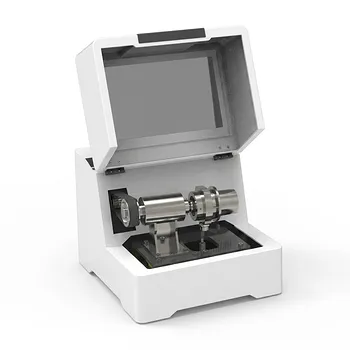
Single Tank High Energy Vibratory Ball Mill for Laboratory Grinding and Mixing
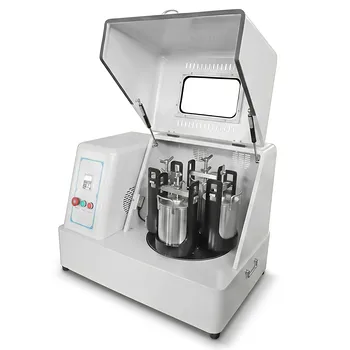
Vertical Square Planetary Ball Mill for Laboratory Sample Preparation and Nanoscale Grinding
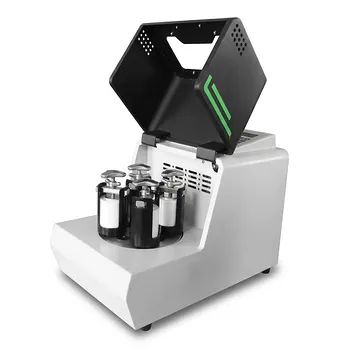
Miniature Planetary Ball Mill with Vacuum Grinding and High Efficiency for Laboratory Sample Preparation

High Throughput Micro Ball Mill for Cryogenic Grinding and Laboratory Cell Disruption
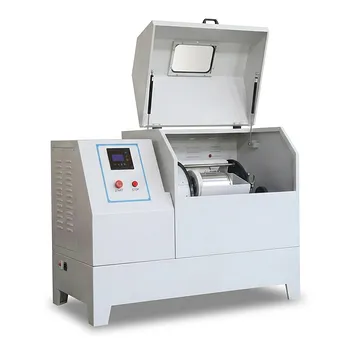
Heavy Duty Horizontal Planetary Ball Mill for Efficient Industrial Grinding and Sample Preparation
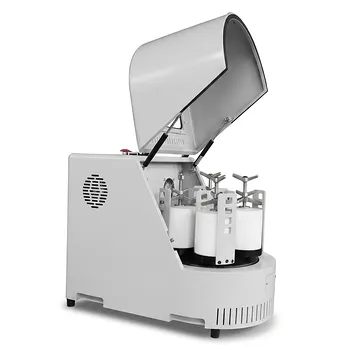
Vertical Semi Circular Planetary Ball Mill for Laboratory Precision Grinding
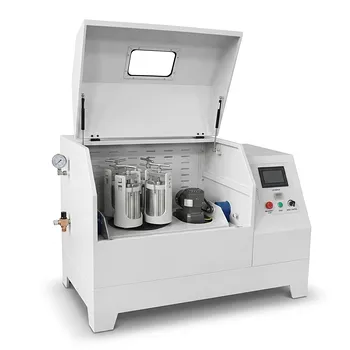
Vertical Production Planetary Ball Mill for High Throughput Powder Processing
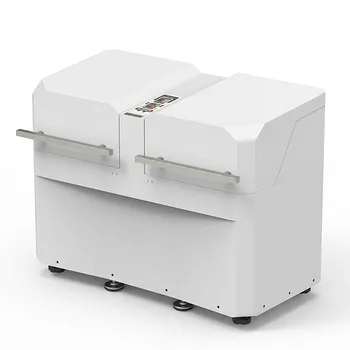
Dual Station Planetary Ball Mill 24L
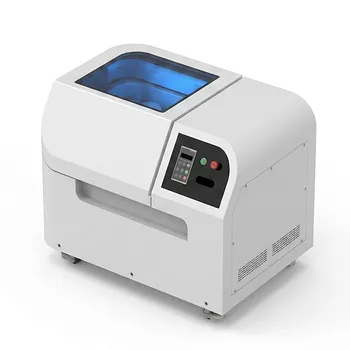
8L Planetary Ball Mill for Laboratory Grinding and Sample Preparation
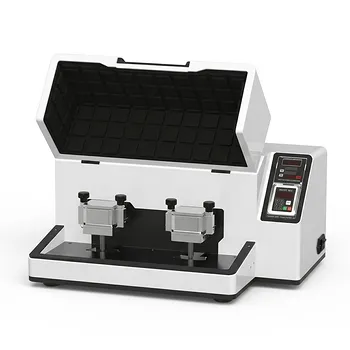
Nanoscale High Energy Vibratory Ball Mill Low Temperature
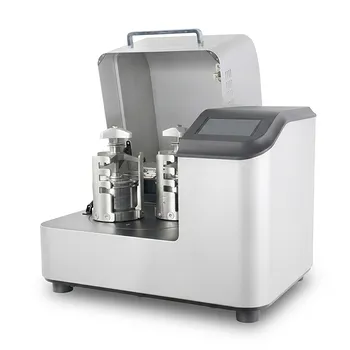
High Energy Planetary Ball Mill for Nano Scale Grinding and Mechanical Alloying
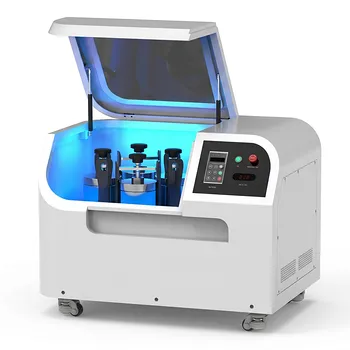
Planetary Ball Mill 12L
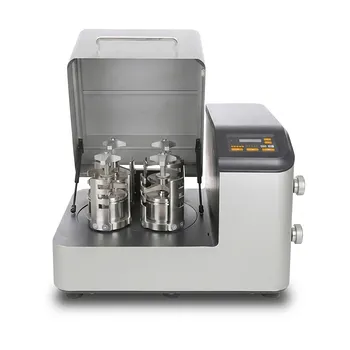
High Energy Planetary Ball Mill for Nano Scale Grinding and Colloidal Mixing in Material Science Research
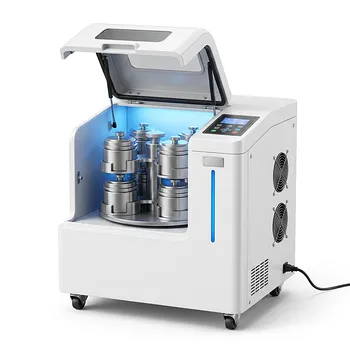
High Energy Omnidirectional Planetary Ball Mill 20L
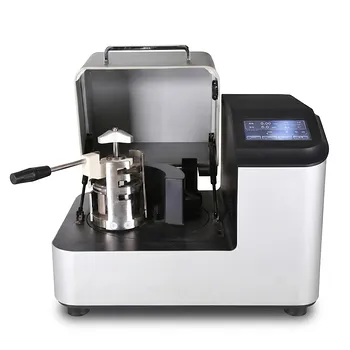
High Energy Laboratory Planetary Ball Mill for Nano Grinding and Material Science Sample Preparation
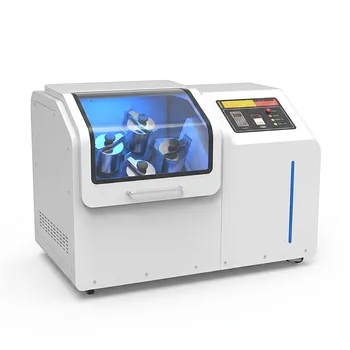
High Energy Omnidirectional Planetary Ball Mill 16L
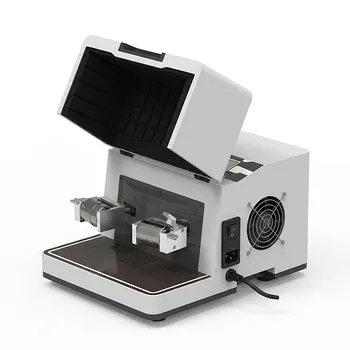
High Energy Hybrid Vibratory Ball Mill for Grinding Mixing and Cell Disruption
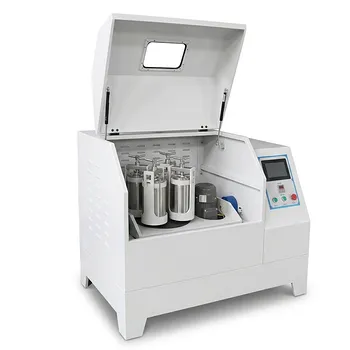
360° Rotating Omnidirectional Laboratory Planetary Ball Mill for Homogeneous Ultra-Fine Grinding and Mixing
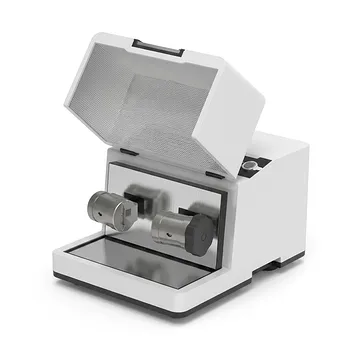
Heating Temperature Controlled High Energy Vibratory Ball Mill