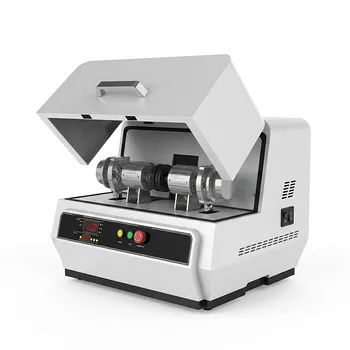
Why is prolonged ball milling necessary for CI and CB powders? Unlock Superior Composite Synergy & Performance
Updated 4 months ago
Prolonged ball milling is a critical preparatory step required to refine particle sizes, eliminate large-scale agglomerations, and increase the surface activity of Carbonyl Iron (CI) and Carbon Black (CB) fillers. This mechanical process ensures that these materials, which possess vastly different physical properties, can achieve a state of microscopic uniform mixing essential for the performance of the final ternary composite.
The primary objective of extended ball milling is to transition from simple physical mixing to mechanical activation and alloying. By repeatedly fracturing and re-welding particles, the process creates a stable, high-energy precursor that maximizes the synergistic electromagnetic effects between magnetic and dielectric components.
The Mechanics of Particle Refinement and Activation
Overcoming Van der Waals Forces and Agglomeration
Original CI and CB powders often contain large clusters held together by Van der Waals forces that inhibit uniform dispersion. Prolonged milling uses high-energy impact and shear forces to break these clusters apart, ensuring that the fillers are reduced to their primary particle sizes.
Increasing Surface Energy and Activity
The continuous mechanical work performed on the powders increases their surface activity by creating new, unreacted surfaces and lattice defects. This higher energy state is vital for ensuring that the CI and CB particles can form stable interfacial bonds with the Ni0.5Zn0.5Fe2O4 matrix during subsequent processing.
Facilitating Mechanical Alloying
Through the superposition of revolution and rotation in a planetary mill, particles undergo repeated deformation and cold welding. This process, often conducted at speeds like 300 rpm, induces a form of mechanical alloying where the different phases are forced into intimate contact at the molecular level.
Achieving Synergistic Performance in Ternary Composites
Balancing Magnetic and Dielectric Loss
In a (Ni0.5Zn0.5Fe2O4/CI/CB) composite, the ferrite and CI provide magnetic loss, while the CB provides dielectric loss. Microscopic uniformity is required to ensure these two mechanisms work in tandem rather than acting as isolated pockets, which significantly enhances the overall electromagnetic shielding effectiveness.
Preventing Component Segregation
CI is significantly denser than CB, which typically leads to component segregation during standard mixing. High-energy milling generates powerful centrifugal forces that overcome these density differences, locking the particles into a uniform distribution that remains stable during the final composite formation.
Establishing Conductive and Magnetic Networks
Prolonged milling facilitates the formation of a continuous conductive network by embedding CB particles onto the surface of the larger CI and ferrite particles. This reduces interfacial charge transfer resistance and ensures the material achieves its theoretical performance limits.
Understanding the Trade-offs and Pitfalls
The Risk of Oxidation and Contamination
While 12 to 24 hours of milling is necessary for refinement, it exposes the powders to potential oxidation. Using grinding aids like anhydrous ethanol or inert gas environments is often required to maintain the purity and magnetic integrity of the Carbonyl Iron.
Structural Degradation from Over-Milling
There is a point of diminishing returns where excessive milling can lead to amorphous structures or unwanted phase transformations. If the milling duration is too long, the magnetic permeability of the CI may decrease due to excessive lattice strain and grain refinement beyond the optimal size.
Media Wear and Impurities
Extended milling increases the likelihood of material contamination from the grinding jars and balls. Selecting high-hardness media, such as zirconia or high-strength stainless steel, is essential to prevent the introduction of foreign elements that could alter the composite's electromagnetic profile.
How to Apply This to Your Project
When preparing CI and CB powders for ternary composites, your milling strategy should be dictated by your specific performance requirements and equipment.
- If your primary focus is Maximum Electromagnetic Shielding: Utilize high-energy planetary milling for at least 12 hours to ensure the absolute de-agglomeration of Carbon Black and its uniform distribution across the magnetic phases.
- If your primary focus is Maintaining High Magnetic Permeability: Monitor the milling temperature and use wet-milling with ethanol to prevent oxidation of the Carbonyl Iron, potentially using shorter intervals with high-frequency impact.
- If your primary focus is Reducing Interfacial Resistance: Prioritize the mechanical alloying aspect of milling to ensure Carbon Black is physically embedded into the iron matrix, creating a more robust conductive path.
A disciplined approach to prolonged milling transforms raw powders into a high-performance precursor, ensuring the final composite achieves a true synergy of its constituent parts.
Summary Table:
| Key Milling Objective | Mechanical Mechanism | Impact on Ternary Composite |
|---|---|---|
| Particle Refinement | Breaking Van der Waals forces | Eliminates agglomerates for uniform dispersion |
| Surface Activation | Creating lattice defects/new surfaces | Enhances interfacial bonding with the matrix |
| Mechanical Alloying | Repeated deformation & cold welding | Ensures microscopic uniformity of magnetic/dielectric phases |
| Network Formation | Embedding CB onto CI/Ferrite | Establishes stable conductive and magnetic networks |
| Density Balancing | High-energy centrifugal forces | Prevents component segregation between CI and CB |
Elevate Your Material Research with Precision Powder Processing
Achieving the perfect synergistic effect in ternary composites requires more than just mixing—it requires precise mechanical activation. [Our Company] provides complete laboratory sample preparation solutions specifically designed for material science and advanced powder processing.
Whether you are refining Carbonyl Iron or embedding Carbon Black, our extensive equipment line ensures optimal results:
- High-Energy Milling: Planetary ball mills, jet mills, and cryogenic grinders for superior particle refinement.
- Advanced Compaction: A full spectrum of hydraulic presses, including Cold/Warm Isostatic Presses (CIP/WIP), vacuum hot presses, and XRF pellet presses.
- Precision Handling: Sieve shakers, powder mixers, and defoaming mixers to ensure material consistency.
Don't let sub-optimal mixing limit your material's performance. Contact our experts today to find the ideal milling and compaction solution for your laboratory!
References
- anas houbi, Beibit Karibayev. Synthesis and Microwave Absorption Properties of (Ni0.5Zn0.5Fe2O4/CI/CB) Ternary Composites. DOI: 10.31489/2022ch4/4-22-9
Mentioned Products
- Heavy Duty Horizontal Planetary Ball Mill for Efficient Industrial Grinding and Sample Preparation
- Vertical Semi Circular Planetary Ball Mill for Laboratory Precision Grinding
- Vertical Square Planetary Ball Mill for Laboratory Sample Preparation and Nanoscale Grinding
- High Energy Planetary Ball Mill for Nano Scale Grinding and Mechanical Alloying
- Vertical Production Planetary Ball Mill for High Throughput Powder Processing
People Also Ask
- Why grind lime-pozzolan specimens for TG/DTA for 3 mins? Master sample prep for high-precision thermal analysis.
- What is the role of a planetary ball mill in the mechanical activation of ZTA powder? Boost Sintering Performance
- What is the function of a planetary ball mill in wollastonite ceramic prep? Achieve Molecular Homogenization & Reactivity
- How does a planetary ball mill contribute to the homogenization of trace elements? Achieve Sub-Micron Uniformity
- What is the function of a high-performance planetary ball mill in AMZ laminates? Master Ceramic Homogenization.

Tech Team · PowderPreparation
Last updated on Jun 03, 2026
Related Products
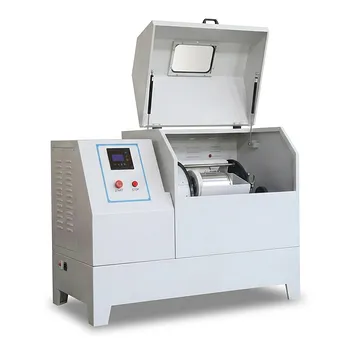
Heavy Duty Horizontal Planetary Ball Mill for Efficient Industrial Grinding and Sample Preparation
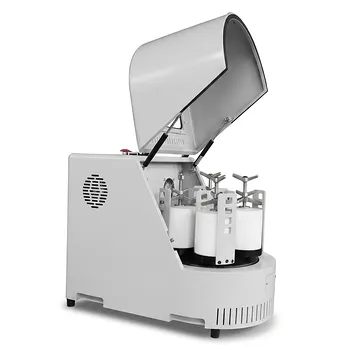
Vertical Semi Circular Planetary Ball Mill for Laboratory Precision Grinding
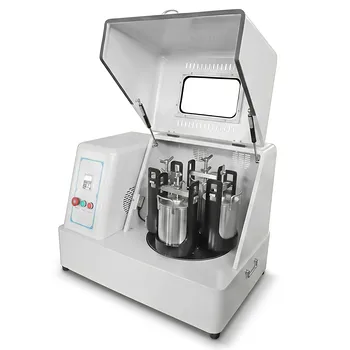
Vertical Square Planetary Ball Mill for Laboratory Sample Preparation and Nanoscale Grinding

High Energy Planetary Ball Mill for Nano Scale Grinding and Mechanical Alloying
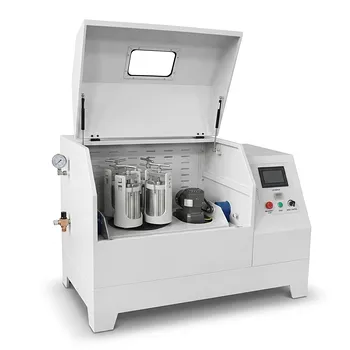
Vertical Production Planetary Ball Mill for High Throughput Powder Processing
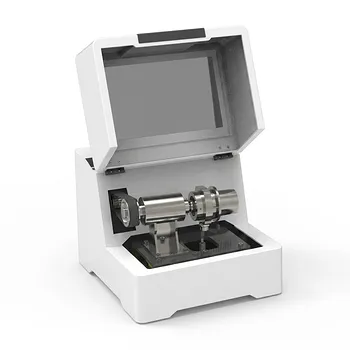
Single Tank High Energy Vibratory Ball Mill for Laboratory Grinding and Mixing
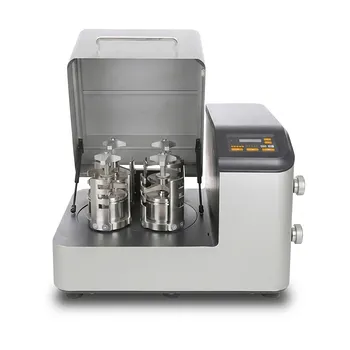
High Energy Planetary Ball Mill for Nano Scale Grinding and Colloidal Mixing in Material Science Research

High Energy Laboratory Planetary Ball Mill for Nano Grinding and Material Science Sample Preparation
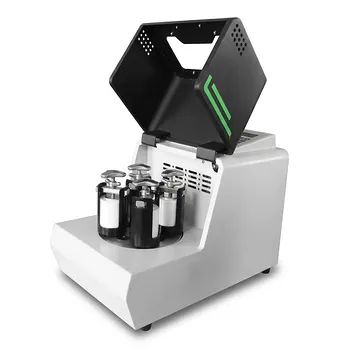
Miniature Planetary Ball Mill with Vacuum Grinding and High Efficiency for Laboratory Sample Preparation
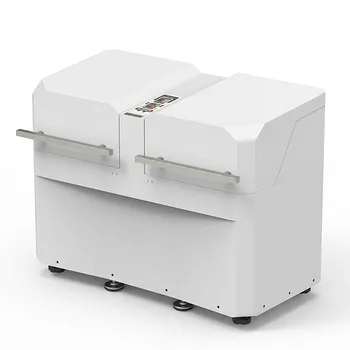
Dual Station Planetary Ball Mill 24L
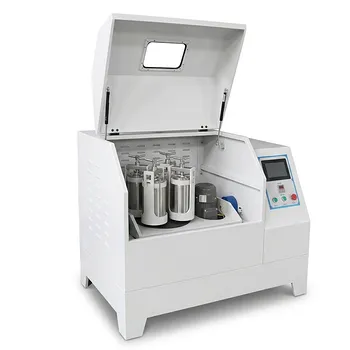
360° Rotating Omnidirectional Laboratory Planetary Ball Mill for Homogeneous Ultra-Fine Grinding and Mixing
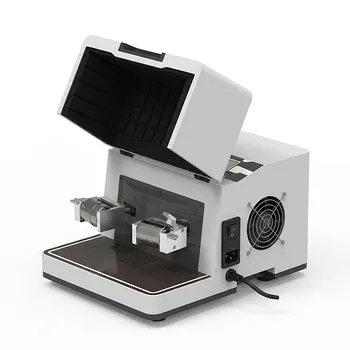
High Energy Hybrid Vibratory Ball Mill for Grinding Mixing and Cell Disruption
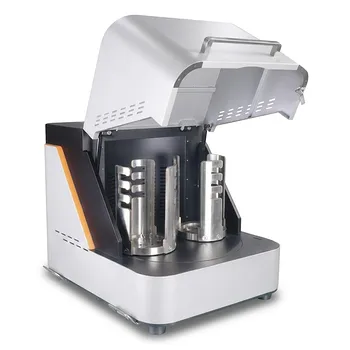
High Energy Laboratory Planetary Ball Mill for Nano Grinding and Colloidal Mixing of Hard and Brittle Materials
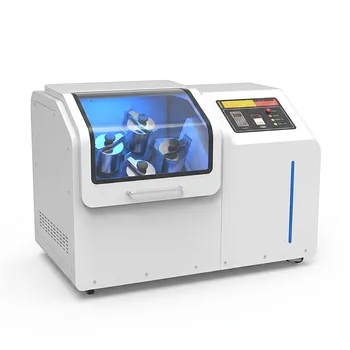
High Energy Omnidirectional Planetary Ball Mill 16L
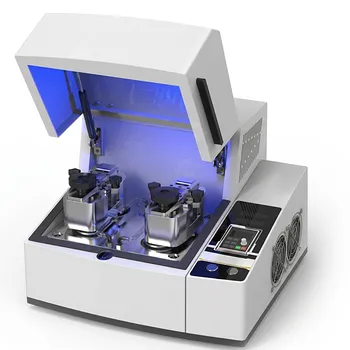
Laboratory Nano High Energy Ball Mill Ultrafine Grinding Mechanical Alloying
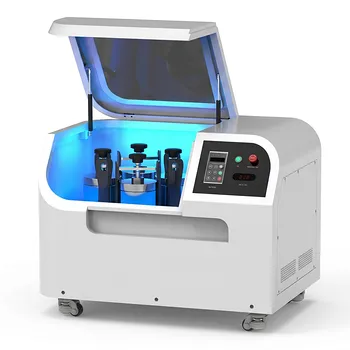
Planetary Ball Mill 12L

High Throughput Micro Ball Mill for Cryogenic Grinding and Laboratory Cell Disruption

8L Planetary Ball Mill for Laboratory Grinding and Sample Preparation
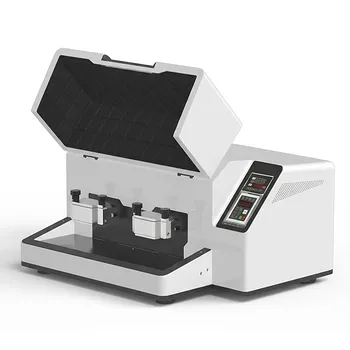
Nanoscale High-Energy Vibratory Ball Mill for Laboratory Sample Preparation, Mechanochemistry, and Mechanical Alloying